

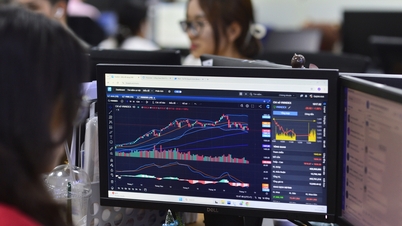
However, to truly attract this large-scale capital flow sustainably, the challenge lies not only in improving technical infrastructure, trading mechanisms, or expanding market access, but more importantly, in improving the quality of securities on the stock market.
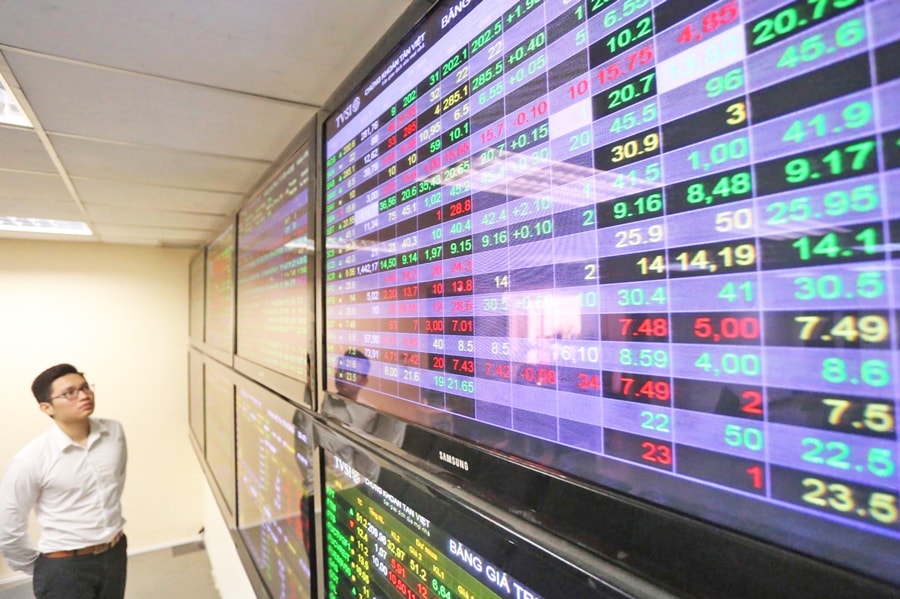
The "bottlenecks" that need to be resolved.
Assessing the current market situation, Nguyen The Minh, Director of the Individual Customer Research and Development Division (Yuanta Securities Vietnam), stated that the domestic stock market still faces several limitations, most notably a lack of quality securities. The market capitalization relative to the Gross Domestic Product (GDP) is approximately 70%. This is quite low compared to other emerging markets where this ratio is commonly 100% of GDP, or even higher. Furthermore, market liquidity is uneven, with capital flows mainly concentrated in mid- and large-cap stocks.
Another issue is the ownership limit for foreign investors. Many high-quality stocks with strong business fundamentals have quickly reached their foreign credit growth limits, while increasing these limits remains difficult due to regulations on conditional business sectors. This makes it difficult for many foreign investment funds, despite their interest in the Vietnamese market, to increase their investment holdings.
Some other experts believe that the market's industry structure is not yet truly balanced. The proportion of market capitalization and influence on the index remains too heavily concentrated in the banking and real estate sectors. Particularly in the last months of the year and recent trading sessions, the impact of some very large-cap stocks, notably the Vingroup group, on the VN-Index has become increasingly evident. This reality leads to the paradox that while the market index has risen sharply, many investors still suffer losses because their portfolios haven't kept pace with the leading stocks. Meanwhile, high-tech, modern retail, and renewable energy sectors remain relatively thin and lack sufficiently large representatives. This lack of diversity in listed industries means the market doesn't fully reflect the structure and vitality of the economy...
Unlocking access to quality goods
According to many experts, in order to turn the opportunity for an upgrade into a real driving force for the economy , the stock market needs a comprehensive strategy to improve the quality of its offerings.
The first and most fundamental solution is to improve governance standards and information transparency. A roadmap should be established to mandate the adoption of International Financial Reporting Standards (IFRS) by large listed companies. This would not only remove the "language barrier" in accounting but also enable foreign investors to more accurately assess the value of businesses.
Along with financial reporting, the requirement to disclose information on sustainable development, environmental, social, and governance (ESG) should also be elevated to a mandatory obligation, instead of remaining voluntary.
Another crucial solution is to accelerate the equitization and listing of large-scale state-owned enterprises. Listing large state-owned corporations and companies such as Agribank , Mobifone, and other leading enterprises will create a source of high-quality assets and diversify the industry structure on the stock market. However, the equitization process still faces many obstacles, most notably the issue of land and fixed assets. According to experts from Nhat Viet Securities Company, this is considered the biggest "bottleneck," with approximately 70% of enterprises encountering difficulties in the equitization process. The unclear determination of land value, intended use, and disposal methods prolongs the valuation process, increasing legal risks and creating apprehension. To unlock the supply for the market, the land issue needs to be resolved definitively, while simultaneously ensuring transparency in asset structure – a key factor in building investor confidence.
Expanding foreign credit growth limits through new instruments is also considered a viable solution. In particular, non-voting depositary receipts (NVDRs) – a type of certificate representing shares but not granting voting rights to the holder – could help resolve the ownership limit issue and should be implemented more quickly.
Besides stocks, the development of a publicly traded corporate bond market also needs to be promoted to diversify the products in the capital market. Simultaneously, continuing to improve trading infrastructure, implementing mechanisms such as intraday trading, selling securities pending settlement, and developing voluntary investment and pension fund models will help the market enhance its ability to absorb large capital flows when it is upgraded.
Once the "bottlenecks" related to commodities are resolved comprehensively, the Vietnamese stock market can transform from a "potential destination" to a "sustainable destination" for global capital flows, thereby making a more practical contribution to socio-economic development goals in the new era.
At its September 2025 review, FTSE Russell confirmed that Vietnam fully meets the criteria to be classified as a secondary emerging market. This is a significant step forward, acknowledging Vietnam's persistent reform efforts in improving its institutions, enhancing transparency, and modernizing its stock market infrastructure. The official market upgrade will take effect in September 2026, subject to the results of the mid-term review in March 2026.
Source: https://hanoimoi.vn/thi-truong-chung-khoan-bai-toan-nang-chat-luong-sau-nang-hang-729602.html
![[Photo] General Secretary and President To Lam presides over a working session with the Central Policy and Strategy Committee on the development of the materials industry.](https://vphoto.vietnam.vn/thumb/1200x675/vietnam/resource/IMAGE/2026/05/21/1779359935432_a3-bnd-3129-1412-jpg.webp)

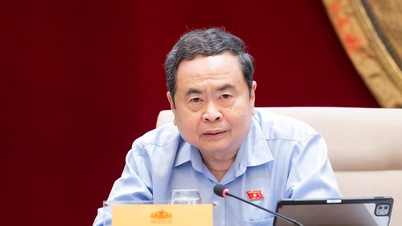
![[Photo] National Assembly Chairman Tran Thanh Man working with the Standing Committee of the Law and Justice Committee](https://vphoto.vietnam.vn/thumb/1200x675/vietnam/resource/IMAGE/2026/05/21/1779378929214_ndo_br_1-4610-jpg.webp)



















































































Comment (0)