

 |
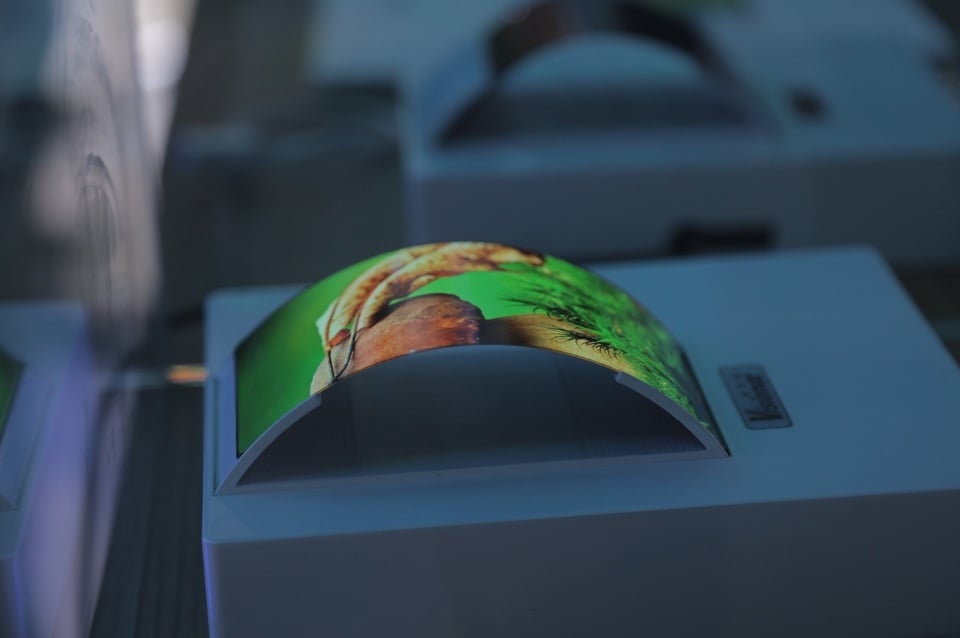
BOE 's flexible OLED display panel. Photo: BOE . |
At a press conference of the Korea Display Association, Lee Cheong, Chairman of Samsung Display, warned about the situation where Chinese companies are pursuing large-format OLED solutions. Currently, businesses from the world's most populous nation have surpassed Samsung and LG in smaller sizes, which are used in phones. This revives fears of losing the LCD market in the past.
"While a technological gap still exists, the growing sense of crisis in the industry means South Korea cannot afford to let its guard down," Ddaily commented.
In his inaugural address as chairman of the Korea Display Association, Lee Cheong emphasized that China had already acquired key features. However, the Samsung leader maintained that they were secure in their core technology and would not stand idly by waiting for their competitor to overtake them.
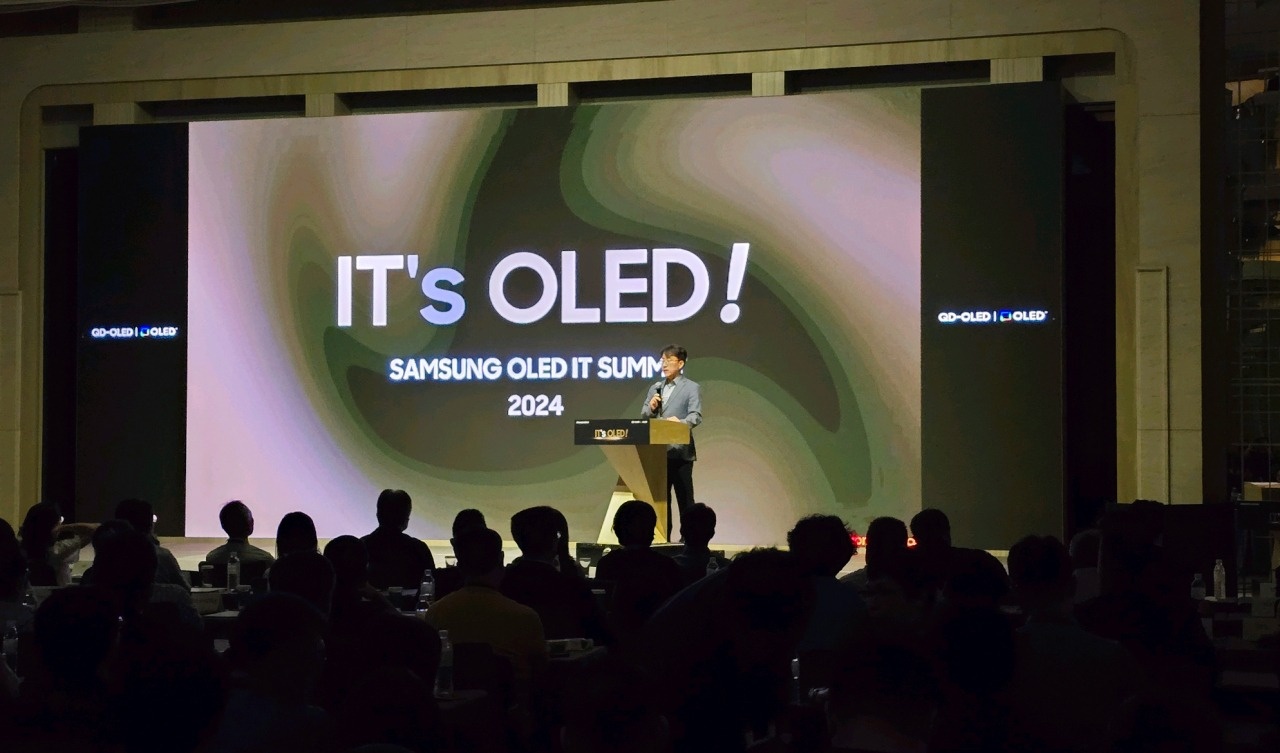 |
Korean companies still lead in OLED technology, but the gap is narrowing. Photo: Samsung. |
According to a TrendForce report, BOE (China) shipped 202 million OLED phone displays in 2024, surpassing Samsung (201 million). The company is not stopping there but is expanding its $9 billion 8.6 generation (2,250x2,600mm) production line. TCL CSOT is also ramping up production of medium-sized OLEDs for tablets and laptops. They are beginning mass production thanks to inkjet printing technology.
This expansion has caused concern for Samsung and LG. They once surpassed Sharp, Sony, and Panasonic in the LCD market. However, these companies eventually stopped producing liquid crystal displays because they could not compete with China, which had the advantage of scale and low prices.
However, South Korea still has the technological edge. Samsung has a near-exclusive supply of high-quality LTPO displays, with Apple as its main partner. BOE also produces this type of display, but struggles with quality control. Many of the problems seen in the iPhone 13 Pro/Pro Max are believed to have originated from the BOE panels shipped to the factory.
Similar display capabilities are also found in medium-sized OLEDs. Apple implemented a dual-screen (Tandem OLED) solution for the iPad Pro last year. This solution is currently only offered by LG and Samsung. TCL CSOT has not yet fully mastered this technology on a large scale. Korean companies are also ahead with new solutions such as OLEDoS, MicroLED, and inorganic light-emitting diodes (EL). This is the future of display technology, applicable to specialized needs such as XR, VR, and AR.
Source: https://znews.vn/thu-khien-samsung-lg-phai-run-so-post1541655.html


![[Photo] Conference on the transfer and reception of Party organizations and Party members between the Party Committee of the Government and the Party Committees of the Central Party Agencies](https://vphoto.vietnam.vn/thumb/1200x675/vietnam/resource/IMAGE/2026/04/01/1775036784472_ndo_br_bnd-2620-jpg.webp)
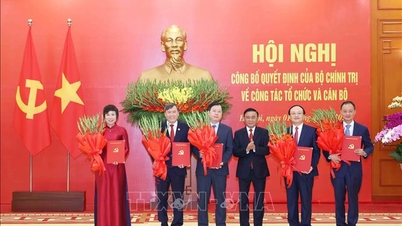
![[Photo] Conference announcing the Politburo's Decision on organizational and personnel matters](https://vphoto.vietnam.vn/thumb/1200x675/vietnam/resource/IMAGE/2026/04/01/1775017881825_bnd-2410-1472-jpg.webp)































































Comment (0)