

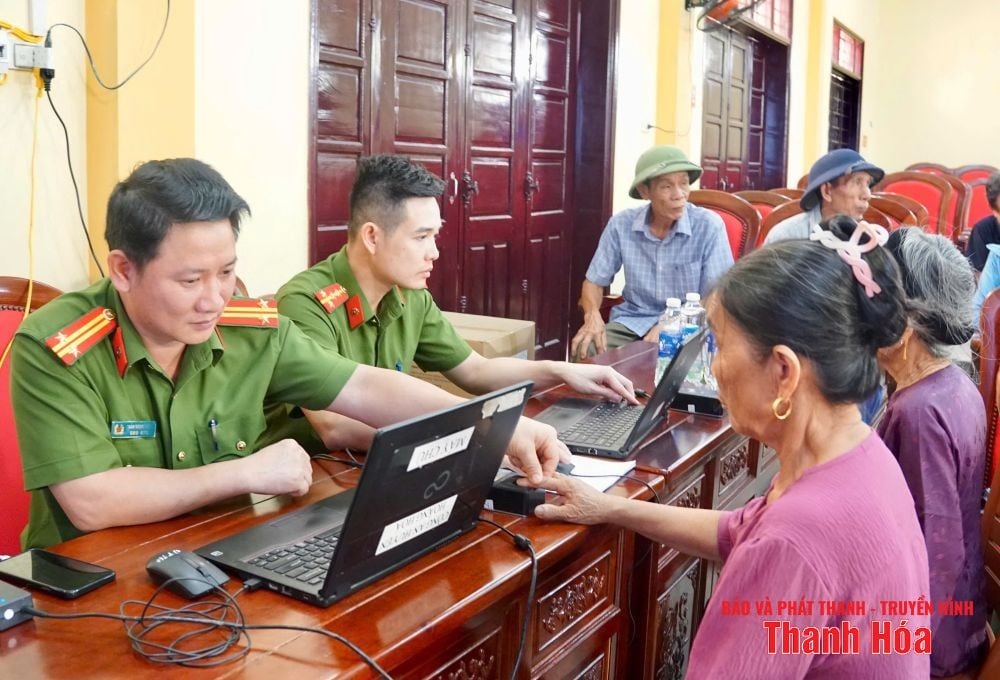
The new Hoang Loc commune was formed by rearranging the entire natural area and population of six communes: Hoang Thinh, Hoang Thai, Hoang Thanh, Hoang Trach, Hoang Tan, and Hoang Loc. According to statistics, there are 772 martyrs in the commune, many of whom still have unidentified information and identities.
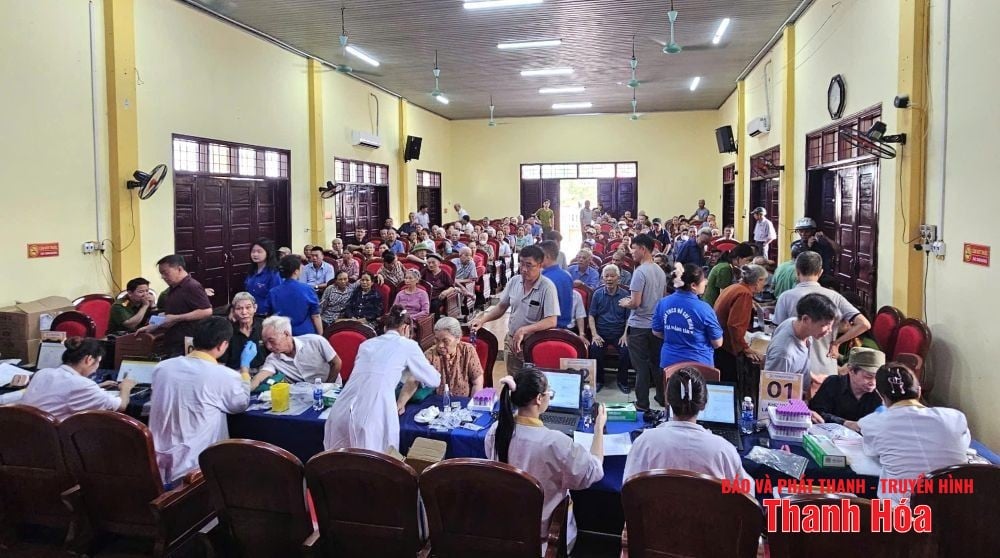
To ensure the effectiveness of DNA sample collection, the Hoang Loc Commune Police actively coordinated with relevant forces to establish working groups, meticulously prepared equipment and facilities, and proactively collaborated in reviewing and compiling lists of martyrs' relatives in the commune.
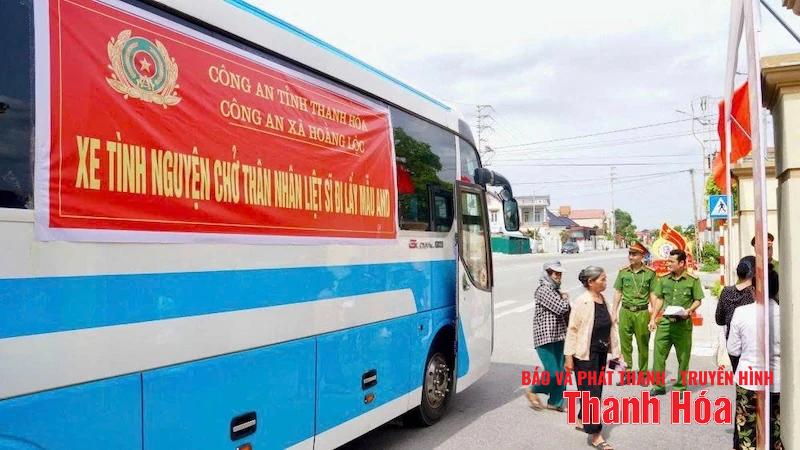
Lieutenant Colonel Hoang Van Ngo, Head of Hoang Loc Commune Police, said: "Through a review, this time there are 480 cases of relatives of martyrs in the commune who need to have DNA samples taken. To create the most favorable conditions for the relatives of martyrs in the process of going to the sample collection points, especially in the hot weather, Hoang Loc Commune Police have proactively arranged transportation to pick up elderly and frail relatives from the centralized sample collection points. At the same time, officers have been assigned to wholeheartedly support and guide the relatives of martyrs in filling out the information completely and correctly according to regulations and to quickly collect biological samples, ensuring that no one is missed or mistakenly included in the DNA data collection process."
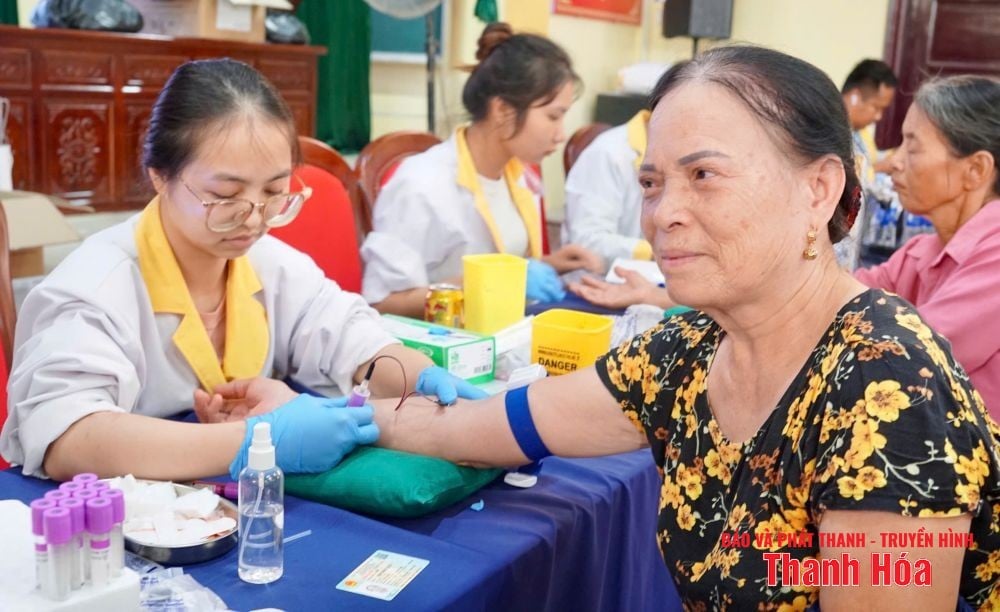
Ms. Le Thi Xuan is the younger sister of martyr Le Van Hoa, from Binh Tay village, formerly Hoang Thinh commune. Like many families whose loved ones fell on the battlefields, for many years, she and her family have been deeply concerned about finding her brother. Now, with the DNA sample collected, the family has renewed hope that one day they may be reunited with their loved one after so many years of longing and waiting.
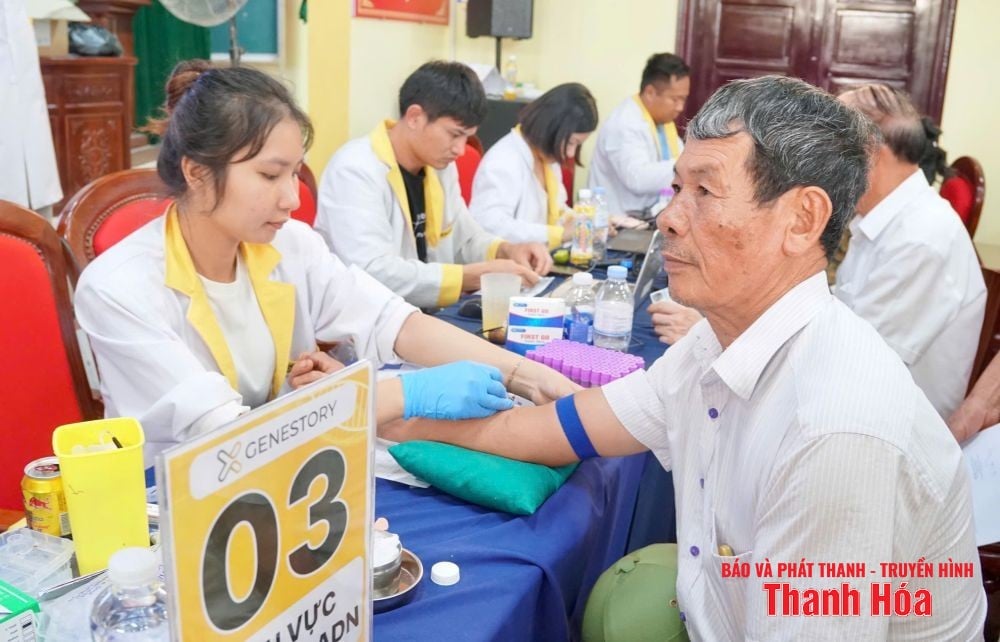
Mr. Hoang Ngoc Khu, from Xuan Tien village, also felt nervous at the DNA sample collection site, sharing: "My family has six siblings, including my older brother, Hoang Ngoc Rong, a martyr born in 1952 and who died in 1972. More than 50 years have passed, and my family has made efforts to search everywhere but has not yet found him to bring him home."
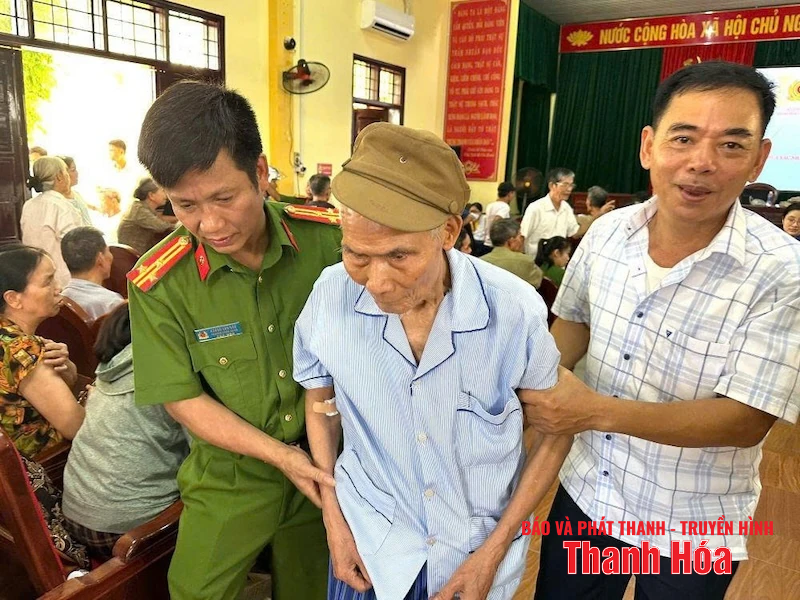
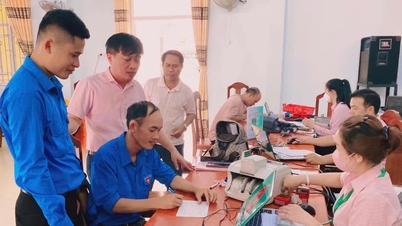
Right at the program in Hoang Loc commune, the functional unit collected hundreds of DNA samples from relatives of fallen soldiers to supplement the gene bank, serving to identify the remains of fallen soldiers whose identities are still unknown.
According to statistics, there are currently about 500,000 unidentified martyrs nationwide, including 300,000 remains that have been buried but lack complete information, and 200,000 remains that have not yet been collected. In Thanh Hoa province alone, there are 37,720 unidentified martyrs and over 39,000 cases where relatives need to provide DNA samples. Following the directives of the Ministry of Public Security and the People's Committee of Thanh Hoa province regarding the implementation of the project to identify the remains of martyrs whose identities are still unknown through DNA testing, the Thanh Hoa Provincial Police force mobilized officers and soldiers from the provincial to the commune level to coordinate with relevant agencies and units to simultaneously launch a peak period of reviewing and collecting DNA samples from the relatives of martyrs. During the first phase, from May 12th to 16th, 2025, authorities collected DNA samples from 933 individuals, including the mothers of fallen soldiers and their close maternal relatives. The Thanh Hoa Provincial Police will continue with the second phase, from July 1st to before July 27th, 2025, coinciding with the 78th anniversary of the Day of War Invalids and Martyrs. The target for DNA sample collection will be all relatives of fallen soldiers whose information has not yet been identified, belonging to the remaining groups whose DNA has not yet been collected. |
Viet Huong and collaborators
Source: https://baothanhhoa.vn/thu-nhan-mau-adn-cho-than-nhan-liet-sy-chua-xac-dinh-duoc-thong-tin-tai-xa-hoang-loc-255335.htm
![[Live] 2025 Community Action Awards Gala](/_next/image?url=https%3A%2F%2Fvphoto.vietnam.vn%2Fthumb%2F1200x675%2Fvietnam%2Fresource%2FIMAGE%2F2025%2F12%2F16%2F1765899631650_ndo_tr_z7334013144784-9f9fe10a6d63584c85aff40f2957c250-jpg.webp&w=3840&q=75)
![[Photo] Prime Minister Pham Minh Chinh receives Lao Minister of Education and Sports Thongsalith Mangnormek](/_next/image?url=https%3A%2F%2Fvphoto.vietnam.vn%2Fthumb%2F1200x675%2Fvietnam%2Fresource%2FIMAGE%2F2025%2F12%2F16%2F1765876834721_dsc-7519-jpg.webp&w=3840&q=75)
![[Image] Leaked images ahead of the 2025 Community Action Awards gala.](/_next/image?url=https%3A%2F%2Fvphoto.vietnam.vn%2Fthumb%2F1200x675%2Fvietnam%2Fresource%2FIMAGE%2F2025%2F12%2F16%2F1765882828720_ndo_br_thiet-ke-chua-co-ten-45-png.webp&w=3840&q=75)


![[Photo] Prime Minister Pham Minh Chinh receives the Governor of Tochigi Province (Japan)](/_next/image?url=https%3A%2F%2Fvphoto.vietnam.vn%2Fthumb%2F1200x675%2Fvietnam%2Fresource%2FIMAGE%2F2025%2F12%2F16%2F1765892133176_dsc-8082-6425-jpg.webp&w=3840&q=75)




















































Comment (0)