

According to data from the International Coffee Organization, Vietnam ranks second in the world in terms of coffee export market share (February 2021-January 2022), second only to Brazil. The country also leads the world in coffee yield, reaching 2.4 tons/ha.
In 2022, coffee exports reached $4 billion, a 32% increase compared to 2021. In the first nine months of this year, this commodity brought in nearly $3.13 billion for Vietnam, a slight increase of 0.7% compared to the same period last year.
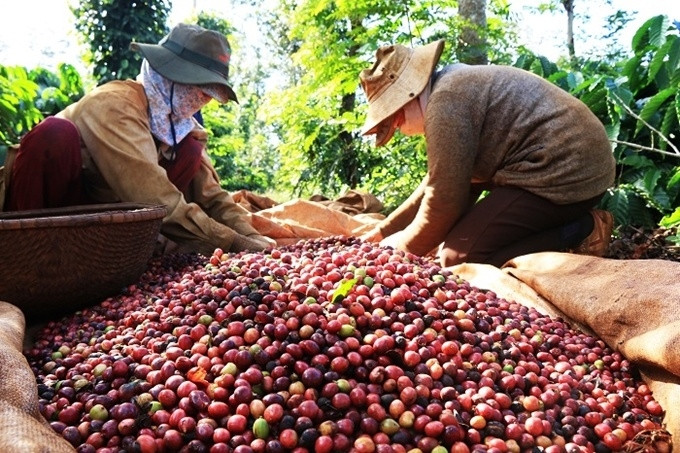
In Vietnam, coffee farming has become the livelihood of 1.2 million farming households. Thanks to this crop, farmers in many producing regions have been able to escape poverty, rise to wealth, and even become millionaires.
However, facing challenges from the market, climate change, the European Commission's Anti-Forestry Regulation (EUDR), etc., the Vietnamese coffee industry is gradually shifting towards green, transparent, and responsible growth, aiming to increase its competitiveness in the global market.
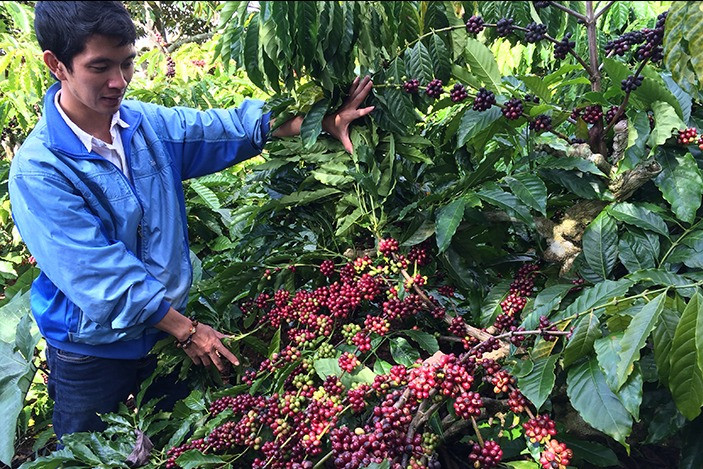
Mr. Nguyen Do Anh Tuan, Director of the International Cooperation Department (Ministry of Agriculture and Rural Development), acknowledged that, with the EU's EUDR regulations, we have no other option but to strictly comply with their requirements. This is because Europe imports more than 60% of Vietnam's agricultural products annually.
However, this also presents an opportunity for Vietnamese coffee. If done well, it will lead to green and sustainable production, and Vietnamese products will have a significant competitive advantage in the EU compared to similar products from countries that have not yet adapted to the EUDR.
Minister Le Minh Hoan stated that the Vietnamese government's policy is to transform agriculture towards an ecological, green, and sustainable direction. Vietnam considers this not only as fulfilling international commitments, but also as creating new values for agricultural development while protecting and developing a sustainable environment, preserving resources for future generations, and contributing to global sustainable development.
The Minister also emphasized the Vietnamese Government 's commitment to developing a transparent, responsible, and sustainable agricultural sector, as Vietnam has become a major food supplier in the world.
Regarding the EUDR, Minister Le Minh Hoan affirmed that compliance with this regulation is not only about meeting the requirements for exporting coffee to the EU market, but also about creating an opportunity for the development of Vietnam's agricultural sector in line with its strategic direction of transparency, responsibility, sustainability, and green growth.
In addition to adapting to the EUDR, the Ministry of Agriculture and Rural Development and local authorities have issued technical procedures on cultivation, replanting, and processing, while also guiding localities to apply the certification standards. Accordingly, certification in coffee production is a crucial criterion in the production of high-quality and specialty coffee in Vietnam, thereby enhancing the value chain in coffee production.
According to statistics from the Department of Crop Production (Ministry of Agriculture and Rural Development), as of 2022, approximately 26.14% of Vietnam's coffee growing area had been certified for standard and sustainable coffee production, including: 4C UTZ Certified, VietGAP, Organic, Rainforest Alliance, FLO, GlobalGAP, FairTrade, and HACCP.
Specifically, Dak Lak currently has 45,674 hectares of coffee plantations applying certified sustainable production processes. In Gia Lai, in addition to 36,620 hectares of coffee produced according to certified standards, the province also has over 12,069 hectares of coffee plantations applying advanced, water-saving irrigation technologies...
Quang Tri province is also implementing the "Agroforestry coffee" project in Huong Hoa district. Through a sustainable, high-quality, equitable, and forest-friendly agroforestry coffee model, the project is expected to improve the livelihoods of small-scale coffee producers in the district; contributing to reducing vulnerability and effectively managing natural forest areas.
In particular, the transition to an organic agroforestry model will support Vietnam's national adaptation plan. The amount of carbon absorbed could help Vietnam meet its nationally determined contributions to reduce greenhouse gas emissions by 9% compared to the business-as-usual scenario.
Earlier this year, three low-emission coffee production projects were launched in the Central Highlands. Under these projects, over 48,000 farmers will have their production capacity enhanced, crops diversified, and adopt and practice sustainable production methods. This will improve plantation conditions, conserve soil and water resources, and increase their income.
According to Minister Le Minh Hoan, the current trend in food and beverage consumption can be summarized in three words: health, happiness, and harmony. If a cup of coffee embodies all these elements, then the coffee industry has much room for development. The value of Vietnamese coffee beans will increase, simultaneously enhancing its competitiveness on the global stage.
Peace of Mind
Source

![[Photo] Prime Minister Pham Minh Chinh receives the Governor of Tochigi Province (Japan)](/_next/image?url=https%3A%2F%2Fvphoto.vietnam.vn%2Fthumb%2F1200x675%2Fvietnam%2Fresource%2FIMAGE%2F2025%2F12%2F16%2F1765892133176_dsc-8082-6425-jpg.webp&w=3840&q=75)
![[Live] 2025 Community Action Awards Gala](/_next/image?url=https%3A%2F%2Fvphoto.vietnam.vn%2Fthumb%2F1200x675%2Fvietnam%2Fresource%2FIMAGE%2F2025%2F12%2F16%2F1765899631650_ndo_tr_z7334013144784-9f9fe10a6d63584c85aff40f2957c250-jpg.webp&w=3840&q=75)

![[Image] Leaked images ahead of the 2025 Community Action Awards gala.](/_next/image?url=https%3A%2F%2Fvphoto.vietnam.vn%2Fthumb%2F1200x675%2Fvietnam%2Fresource%2FIMAGE%2F2025%2F12%2F16%2F1765882828720_ndo_br_thiet-ke-chua-co-ten-45-png.webp&w=3840&q=75)
![[Photo] Prime Minister Pham Minh Chinh receives Lao Minister of Education and Sports Thongsalith Mangnormek](/_next/image?url=https%3A%2F%2Fvphoto.vietnam.vn%2Fthumb%2F1200x675%2Fvietnam%2Fresource%2FIMAGE%2F2025%2F12%2F16%2F1765876834721_dsc-7519-jpg.webp&w=3840&q=75)








































![[Video] Independence and self-reliance linked with international integration through 40 years of reform](https://vphoto.vietnam.vn/thumb/402x226/vietnam/resource/IMAGE/2025/12/16/1765899635777_1-1-8054-png.webp)


















Comment (0)