

 |
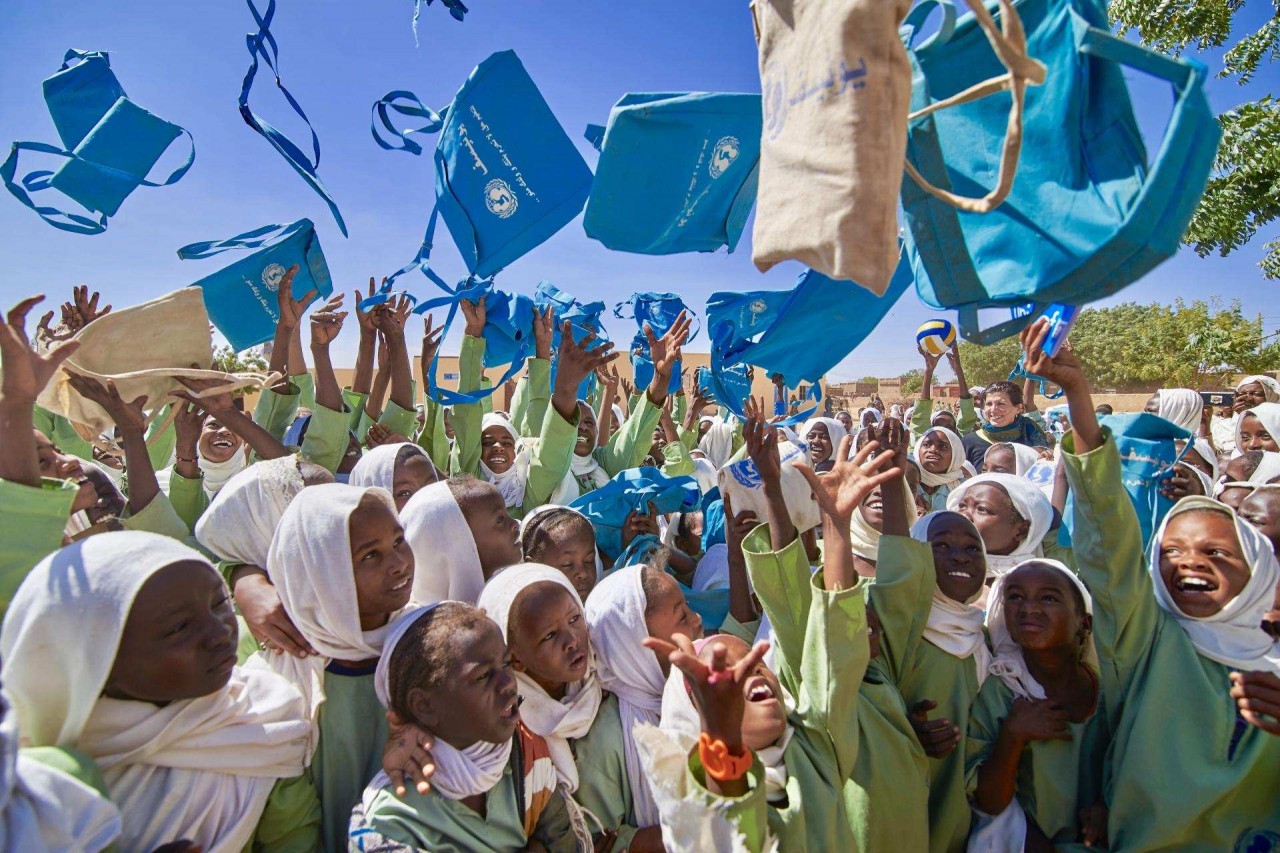
| Women in the MENA region face significant pressure from social norms and the legal system; therefore, the government needs to seriously listen to and respond to their needs and aspirations. (Source: MZEMO) |
The United Arab Emirates (UAE) is preparing to host the COP 28 agenda from November 30 to December 12, which will be the largest United Nations Climate Change Conference ever.
Therefore, COP 28 will serve as a platform for the Middle East and North Africa (MENA) region to address existing challenges, particularly the issue of women's empowerment, adding inclusiveness to policy and promoting the interests of all citizens.
So what challenges are women in the MENA region currently facing, and what solutions can help reverse this situation?
Difficulties abound.
Currently, the MENA region faces significant barriers in agriculture, food security, and water resources. According to a United Nations report, food crises severely impact women more than men, as women have difficulty accessing and managing water resources, which are crucial for agricultural production.
Women suffer greatly from the food crisis because of gender inequality in the MENA region. According to the United Nations, social prejudices have limited women's opportunities for advancement and forced them to accept a lower social status than men.
Traditional gender norms not only hinder women's access to resources, including land, water, and credit, but also prevent them from contributing to food security. This very risk poses significant barriers to the region's sustainable development.
Regarding land, according to a report by the International Centre for Agricultural Research in the Dry Areas (ICARDA), women own only about 5% of agricultural land in the MENA region, and they have limited opportunities to participate in decisions and policies related to land management. This can limit agricultural productivity and women's income, contributing to food insecurity.
Regarding credit, according to a World Bank report, women in the MENA region are forced to comply with discriminatory legal systems that prevent them from accessing financial services. Therefore, women find it difficult to secure sufficient funds to improve productivity, upgrade farm facilities, and gradually weaken their financial foundations, contributing to the risk of food insecurity.
Regarding water, the MENA region is ranked among the most water-scarce areas in the world. Women there are often responsible for managing water, although this work is time-consuming and labor-intensive. Therefore, the World Bank notes that, with women and children in the MENA region spending up to six hours a day fetching water, they have no time left for education or employment to improve their quality of life.
The vision ahead
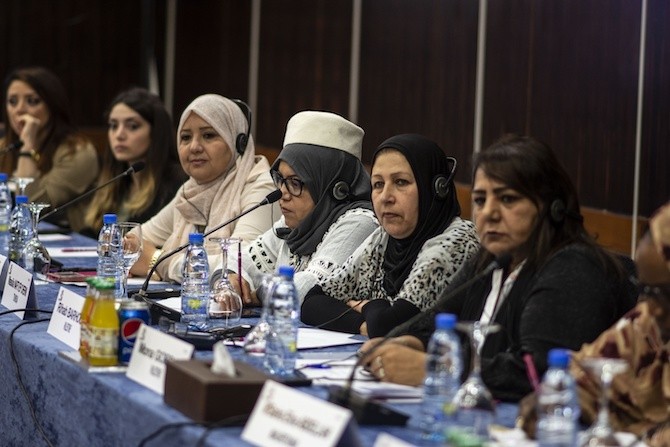 |
| Land, water, and credit are three of the major barriers preventing women from achieving financial equality in the MENA region. (Image: Delegates discuss the role and rights of women at the IndustriALL MENA forum in Beirut, Lebanon in 2019. Source: Industriall-union.org) |
Women face so many difficulties because the government has not paid enough attention to their precarious lives. Therefore, empowering women in leadership positions is an inevitable trend, aiming to involve them in policy-making and addressing the issues that concern them.
In this context, governments need to ensure women have full and equal access to resources and opportunities for development in education and employment. This is a solid foundation for MENA countries to move towards sustainable food security.
Besides education and employment, gender equality is a goal that the state needs to pay attention to and implement. Research by UN Women shows that gender equality programs can encourage women's participation in policy-making in areas related to agriculture, food security, and water.
UAE Minister for Climate Change and Environment Mariam bint Mohammed Almheiri once stated that women have the right to be active contributors to agriculture. Because they are affected by global issues such as climate change and food crises, empowering women is a moral obligation, especially in the MENA region.
Thus, the challenges faced by the MENA region in agriculture, food security, and water resources have severely impacted women. Furthermore, gender inequality and social prejudice continue to limit women's access to full resources and development opportunities.
However, these barriers can be overcome by incorporating women into policymaking processes and facilitating their access to education and employment. Furthermore, gender equality programs will strengthen women's voices in society and strongly promote the sustainable development of the MENA region.
Source


![[Photo] Solemn bathing ceremony and Buddha procession in Hue](https://vphoto.vietnam.vn/thumb/1200x675/vietnam/resource/IMAGE/2026/05/31/1780228263543_1-jpg.webp)
![[Photo] Admire the coral "masterpiece" amidst the million-year-old heritage of Dak Lak province.](https://vphoto.vietnam.vn/thumb/1200x675/vietnam/resource/IMAGE/2026/05/31/1780221235105_anh-man-hinh-2026-05-31-luc-16-53-27.png)
![[Photo] The General Secretary, President and his wife begin their state visit to the Philippines.](https://vphoto.vietnam.vn/thumb/1200x675/vietnam/resource/IMAGE/2026/05/31/1780230559452_anh-man-hinh-2026-05-31-luc-19-28-11.png)
![[Image] Hanoi Police officially crowned champions of V-League 2025/2026](https://vphoto.vietnam.vn/thumb/1200x675/vietnam/resource/IMAGE/2026/05/31/1780244769054_ndo_br_039d561b692be875b13a-jpg.webp)











![[Video] Sunset at Lap An Lagoon – Where the sun sets over the fishing nets](https://vphoto.vietnam.vn/thumb/340x192/vietnam/resource/IMAGE/2026/05/31/1780192137701_beach-landscape-sea-water-nature-grass-745871-pxhere-com.jpeg)






























![[Photo] Admire the coral "masterpiece" amidst the million-year-old heritage of Dak Lak province.](https://vphoto.vietnam.vn/thumb/402x226/vietnam/resource/IMAGE/2026/05/31/1780221235105_anh-man-hinh-2026-05-31-luc-16-53-27.png)
























Comment (0)