

1. The river's "new look" is also a story that Saigon - Ho Chi Minh City residents can be proud of. Previously, mentioning the Nhieu Loc - Thi Nghe canal instilled fear in people. Back then, both sides of the canal were lined with dilapidated houses, overgrown with weeds and garbage, looking unsightly; the water in the canal was black, thick, and emitted a strong, foul odor. Now, the river has been revived.
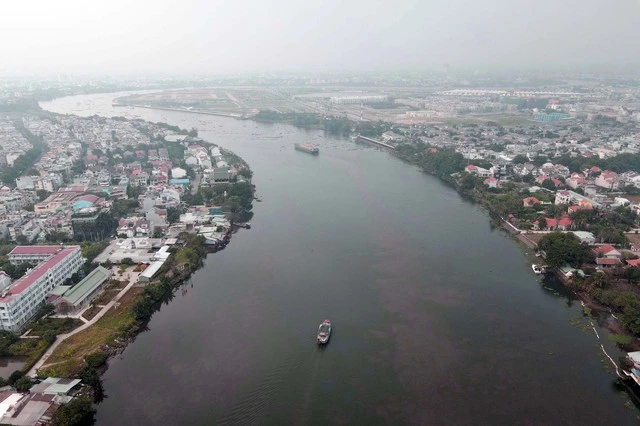
The Saigon River section flowing through Binh Thanh District, Ho Chi Minh City.
In the late afternoons, people can stroll along Truong Sa and Hoang Sa streets and listen to the city breathe. Around noon, they can relax under the shade of trees, drifting off into a midday nap. In the mornings, people sit in cafes, sipping coffee, energizing themselves for a new day in the fresh, green air. No one talks about the changes to the canal, but everyone knows their living environment has improved significantly!
The river will eventually turn green! And bridges not only solve traffic problems but also stimulate inter-regional socio -economic development, propelling the city's economy to the top of the country in terms of income. Binh Trieu Bridge, Ba Son Bridge, Thu Thiem Bridge, Phu My Bridge, Saigon Bridge, Nguyen Van Cu Bridge, Binh Loi Bridge, Ong Lon Bridge, Khanh Hoi Bridge..., over the years, these bridges have become a part of the memories that those far away recall of Saigon - Ho Chi Minh City.
2. Cultures from all over the country, and even the world , converge in Saigon - Ho Chi Minh City due to its flexible social structure. Residents living, studying, and working here come from diverse regions of the country, including foreigners. They bring with them many differences, such as religion, ethnicity, customs, culture, and lifestyles, blending into an open and tolerant community spirit. This adds to the beauty of Saigon - Ho Chi Minh City's cultural landscape, creating the charm of its people: hospitable, friendly, lovable, and deeply compassionate.
Saigon - Ho Chi Minh City is a "blessed land," a "mixed bag," but it embodies the strength of the traditional national unity. In short, the culture of Saigon - Ho Chi Minh City, built on the foundation of national culture, socialist culture, and Ho Chi Minh Thought, has steadily progressed step by step.
Nowadays, venturing into the winding alleyways that run parallel to Alley 148 on Ton Dan Street in District 4, one no longer feels the eerie silence of the area. The old and the new are intertwined, with the old changing daily in rhythm with modern life… The alleyways and the people of District 4 are different now than they used to be, many Saigonese affirm.
3. Visiting Ho Chi Minh City is like visiting a "culinary paradise." The cuisine here is a fusion of many delicious and unique dishes from both Eastern and Western cultures, modern and traditional. And whether in the city center or the suburbs, people still love to eat steamed cassava with coconut milk and sesame salt dip – and only cassava from Cu Chi is truly delicious!
I have a boss who, every year on the anniversary of his mother's death, places steamed cassava with coconut milk on the altar as an offering. He says his mother loved this dish when she was alive. During the subsidy period, life was quite difficult for my boss's family. Every day, his parents toiled in the fields to earn a living for their family of six. Their meals usually consisted of corn, cassava, and water spinach...
Every morning before going to school, my boss's sisters would have cassava as a breakfast. Sometimes, the old lady would meticulously make cassava noodles or baked cassava cakes for them to enjoy as a change of pace. Eating it so often, seeing it so often... the smell of cassava seemed to permeate my boss's very being, becoming a cherished feeling full of memories, so that when she recalls it, she reminisces about a time of hardship.
Now, not only for the people of Cu Chi, steamed cassava with coconut milk has become a memorable dish for tourists from near and far, and surely for heads of state and friends when they visit the Cu Chi Tunnels.
And the "sa bi chuong" broken rice dish – a play on words for "pork rib, pork skin, and pork patty" broken rice – is also considered one of Saigon's top delicacies. Some say pork ribs, pork skin, and pork patties can be found anywhere. But, to say it's truly delicious, the broken rice with pork ribs, pork skin, and pork patties in Saigon is "exceptionally delicious," I can confidently say! Here, the best time to eat this dish is at midnight or in the early morning. Therefore, if you take a leisurely drive around the city at a quiet time, you won't have difficulty finding humble roadside stalls selling this dish, without signs, but bustling with customers.
Visiting Saigon – Ho Chi Minh City without trying "sa bi chuong" broken rice is like not having experienced all the delicious food here!
4. Epilogue…
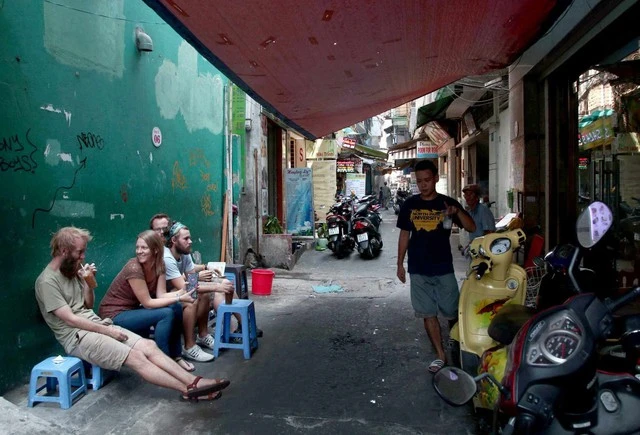
When telling the story of Saigon – Ho Chi Minh City, one must begin with its small alleys...
And in Saigon – Ho Chi Minh City – if you haven't lived in one of the winding, narrow alleyways, or lingered at a small coffee shop at the entrance listening to people discussing the day's news... it's a real shame! In the evenings, you can watch the women and girls walking from one end of the alley to the other, feeding their children, chatting with their neighbors. The children take advantage of the small space in the alley to play and have fun... every now and then, a motorbike comes and goes, and the children huddle against the wall, waiting for the vehicle to pass before continuing their fun... If you haven't experienced this atmosphere, then you haven't fully understood Saigon's culture.
And when telling the story of Saigon – Ho Chi Minh City, one must begin with the small alleys, so narrow that it seems impossible for two motorbikes going in opposite directions to pass each other, yet they are where the soul of the countryside resides amidst the bustling city, where people live to love one another!

Source link
![[Photo] Ba Lang An Lighthouse - the "eye of the sea" amidst the "rock museum" of Quang Ngai province.](https://vphoto.vietnam.vn/thumb/1200x675/vietnam/resource/IMAGE/2026/05/29/1780038698840_anh-man-hinh-2026-05-29-luc-14-10-42.png)

![[Image] Pleasant weather helps students enter the 10th grade entrance exam with confidence.](https://vphoto.vietnam.vn/thumb/1200x675/vietnam/resource/IMAGE/2026/05/29/1780034401612_ngay-1-thi-lop-10-minh-duy-8-5009-jpg.webp)


































































Comment (0)