

 |
| Women of the ethnic groups in Lam Binh commune shine brightly in their traditional costumes. |
The Lo Lo people's unique custom of "stealing for good luck".
In the heart of the rocky plateau, the Lo Lo people's New Year's Eve is filled with the lively custom of "Khu Mi" (stealing for good luck). The Lo Lo believe that if they bring something home on New Year's Eve, their family will reap many blessings and have a bountiful harvest throughout the year. However, this act of "stealing" must adhere to strict rules. They are only allowed to take things of no value, symbolizing life and fertility, such as onions, garlic, vegetables, or small pieces of firewood. Stealing valuable items is strictly forbidden.
"Khù Mi" is not a game of winning or losing, but a deeply humane spring cultural tradition, expressing the profound aspirations of the highland people for a peaceful and prosperous new year.
The slow Thanksgiving ceremony of the Dao people.
The Dao ethnic group has a very unique year-end ceremony called the "Nhang Cham" Ceremony (also known as the Year-End Thanksgiving Ceremony or the Year-End Festival), usually taking place from the beginning of the twelfth lunar month until before New Year's Eve. This is the most important occasion for families to perform rituals to ward off bad luck, cleanse away misfortune, and give thanks to their ancestors, the Ban Vuong clan, and other deities who have protected them throughout the year.
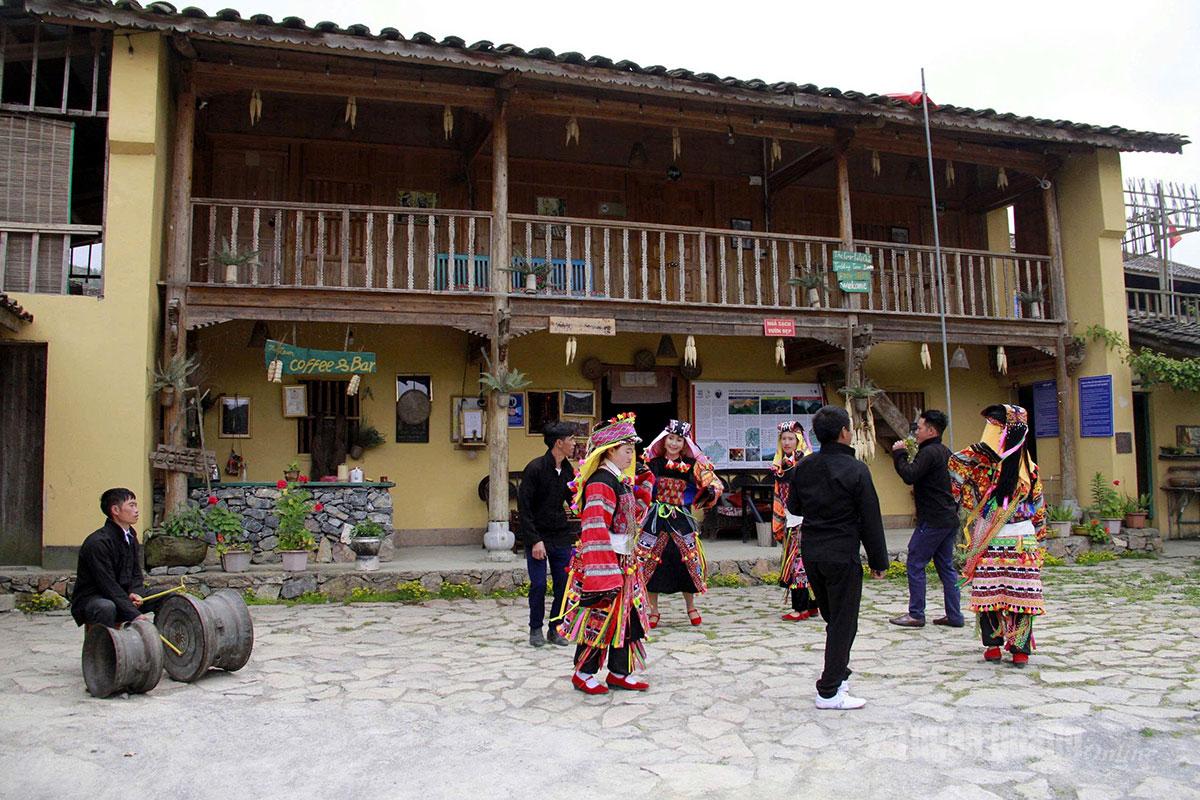 |
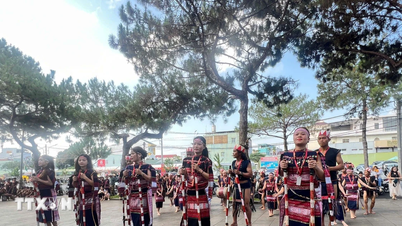
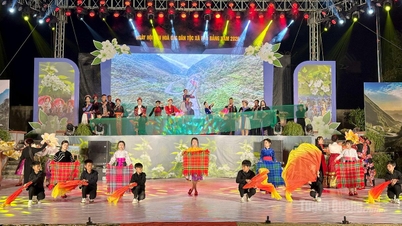
| The Lo Lo people of Lung Cu commune maintain their traditional drum dance in the spring festival rituals. |
The Hmong people's "rules" of food taboos.
The Lunar New Year of the Hmong people contains strict and unique taboos, deeply reflecting their beliefs in praying for a good harvest and worshipping deities.
The strictest custom is the culinary tradition on the first day of the Lunar New Year. During the three days of the New Year, the Hmong people's feast always lacks soup and green vegetables. They believe that eating rice with soup will bring heavy rain, causing floods and crop failure. Similarly, abstaining from green vegetables is a wish for a prosperous new year. Instead, the whole family gathers around elaborately prepared pork and chicken dishes, and, of course, sticky rice cakes – sacred symbols of the sun and moon.
The Tay people carry "bounty" from the springs.
When the first rooster crows, signaling the start of the Lunar New Year, the Tay people eagerly perform a beautiful custom: fetching water for the new year. Accordingly, the homeowner or a healthy family member will carry a bamboo tube and incense to the stream or spring at the village's source. There, they respectfully light incense and ask permission from the Stream God and the Earth God to draw the purest water, symbolizing the source of wealth and prosperity for the new year.
On their way back, those who fetch water also pick a small branch and gather 12 pebbles (symbolizing 12 months of abundance). The freshly brought water is then placed respectfully before the altar. The custom of fetching water at the beginning of the year not only expresses gratitude to nature but also reinforces the belief in a year of favorable weather and a bountiful harvest.
The unique vegetarian New Year's meal of the San Diu people.
On the morning of the first day of the Lunar New Year, while every family gathers around a feast of savory dishes, the San Diu (San Chi) people quietly welcome the Spring with a pure vegetarian meal. This is a unique spiritual cultural feature, creating a rare difference compared to other ethnic groups.
According to tradition, the morning of the first day of Tet (Lunar New Year) is the day to worship Buddha and ancestors with an offering consisting only of rice porridge (made from glutinous rice, mung beans, and sugar) instead of chicken or pork. After the ceremony with five incense sticks, praying for prosperity, decline, hardship, success, and good fortune, the whole family enjoys this sweet and wholesome rice porridge together.
The custom of eating vegetarian food at the beginning of the year expresses reverence, a wish for a pure and peaceful new year, and an avoidance of killing. It is not until the morning of the second day of Tet that the San Diu people officially prepare a lavish feast with meat to entertain relatives and friends, turning this day into their "main Tet" celebration.
Duc Hai
Source: https://baotuyenquang.com.vn/van-hoa/du-lich/202602/tuc-dep-trong-dong-bao-dan-toc-f320c66/

































![[Infographic] Vietnam's Economic Situation Report, Q1 2026: Strong Growth Momentum](https://vphoto.vietnam.vn/thumb/402x226/vietnam/resource/IMAGE/2026/04/04/1775298512042_tang-truong-kinh-te-viet-nam.jpeg)
![[Image] Close-up view of the 10-lane road connecting to Long Thanh Airport](https://vphoto.vietnam.vn/thumb/402x226/vietnam/resource/IMAGE/2026/04/04/1775291871988_ndo_br_1-resize-5690-jpg.webp)













Comment (0)