


The origins of the first rural Party branch.
Going back in history, in the 1950s, famine gripped the Thai-Mèo Autonomous Region (comprising the provinces of Lai Châu and Sơn La; the districts of Văn Chấn and Than Uyên in Yên Bái province; and Phong Thổ district in Lào Cai province). Taking advantage of our difficulties, reactionary forces continuously organized subversive activities. In Tuần Giáo (Lai Châu), a notable feature at this time was the establishment of a local government, yet the lack of a local Party branch and Party members.
The establishment of grassroots Party organizations as the leading nucleus of the revolutionary movement became an urgent requirement. At this time, Quài Cang commune was chosen by the Tuần Giáo District Party Committee as a pilot location for the first commune-level Party branch, because it was a locality with relatively active movements, and the people's lives were more stable and developed than other communes. In August 1955, the Quài Cang commune Party branch was officially established with 5 members (1 full member, 4 probationary members). Among them, Comrade Lò Văn Đôi (Két village) was a model Party member in the locality, trusted and chosen by the District Party Committee to be the Branch Secretary.

Under the direct leadership of the Regional and District Party Committees, the commune's Party branch determined: to focus on strengthening the Party's leadership in the economy , paying attention to highland and interspersed areas, and not neglecting lowland areas; to boost food production, aiming for sufficiency and reserves; to reclaim land for increased crop yields; and to improve techniques. The area of upland rice cultivation in lowland areas was reduced... These "revolutions" in labor and production; learning and training; and village construction subsequently flourished, with Party members playing a core and leading role.
In his spacious house surrounded by vegetable gardens, fish ponds, and livestock facilities (raising pigs, chickens, and ducks) in Cuong village, Mr. Lo Van Chung (70 years old) couldn't help but recall the proud moment when he officially became a member of the Communist Party, participating in activities at the Quai Cang Party branch. With the guidance and support of the Party organization, Mr. Chung was able to attend school; then he became the Youth Union Secretary, Committee Secretary, Chairman of the People's Committee, and Secretary of the Commune Party Committee... Before retiring, he served for many years as the Chairman of the Commune's Veterans Association.

Mr. Chung recalled: “In the Cuong village Party branch, we used to have to share meetings with several other branches and only had 5 Party members. Now there are 24 Party members. As early enlightened individuals, we have utilized the knowledge we gained, as well as our leading and exemplary roles in the locality, guiding and helping the people to develop together. This started with changing mindsets in production to increase income and improve living standards.”
After 69 years of development, the Party organization in Quài Cang has truly grown strong in both quantity and quality. To date, the commune's Party Committee has 20 subordinate branches, with a total of 364 Party members. In addition to the 7 branches in agencies and units located within the commune, all 13 villages have their own Party branches.
“Inheriting the experience and correct direction that previous generations have accumulated, we always strive to effectively promote the role and strength of the Party organization and Party members in leading and accompanying the government and the people in developing all aspects of socio-economic life, national defense and security,” emphasized Ms. Tong Thi Cuc, Secretary of the Party Committee and Chairwoman of the People's Council of Quai Cang commune.

With the Party, our people are well-fed and prosperous!
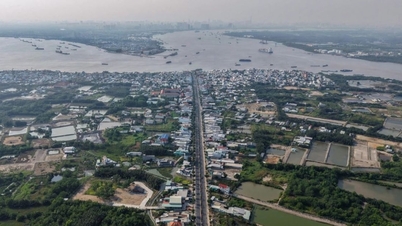
Along National Highway 6, from the center of Tuan Giao district, it only takes a few minutes by motorbike on a straight paved road to reach Quai Cang commune. From a once remote rural area, it now has the appearance of a modern countryside, with increasingly improved infrastructure.
As the entire Dien Bien province celebrates the 75th anniversary of the founding of the Provincial Party Committee, the officials and people of Quai Cang are also filled with emotion and excitement. The first Party branch secretary and many Party members are no longer with us. However, through the stories of later generations about the inheritance and continuation of traditions to build the locality to this day, we can also sense the resilience and unity of the officials and people of various ethnic groups in this region.
Following the directions of the commune officials, we arrived at Cuong village. Right at the beginning of the village was a 2-hectare field with a greenhouse, showing that science, technology, and modern agriculture are already present here. Welcoming the visitors, Mr. Lo Van Tun was not too surprised. He said, "Since the commune facilitated the implementation of this model, many people from other localities have come to learn and study!"

This is a safe vegetable production model implemented since 2023, following the policy of the commune's Party Committee. Mr. Tún is one of 33 households participating in the model. Previously, his family and other households only grew rice and intercropped vegetables using traditional methods. Due to the lack of control over water sources and limitations in techniques, crops were frequently affected by pests and diseases, resulting in low yields and unsatisfactory income.
“With the support and funding from the commune, my family converted 700 square meters of land to specialize in clean vegetable farming. From building greenhouses to protect the plants and using biological products to prevent pests and diseases, we were guided on growing vegetables according to the seasons. Currently, we are growing tomatoes, cabbage, and some winter vegetables. The yield and quality of the crops have increased significantly, and the market is also favorable. Farmers no longer have to take their produce to retail markets; purchasing centers come directly to the farm to pick it up,” Mr. Tún shared.

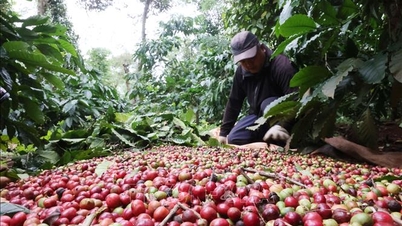
Besides the clean vegetable farming model, Quài Cang currently has many other effective production models being implemented, contributing to increasing income and improving the lives of the people. To ensure local food security, the commune maintains 161.4 hectares of winter-spring rice and 245 hectares of summer rice, with an estimated yield of 52-62 quintals/hectare. The area of new crops has been expanded, such as: 742.34 hectares of macadamia nuts; 61.15 hectares of coffee; 13.5 hectares of peanuts; 15 hectares of fruit trees; and livestock farming with over 6,000 head of cattle and nearly 49,000 poultry of various types...
Mr. Lo Van Khuyen, Chairman of the People's Committee of Quai Cang commune, said: "With the attention of all levels, especially the guidance and leadership of the Party organization, the entire commune now only has 20% of households living in poverty. Infrastructure serving the lives and activities of the people is ensured and is constantly improving. Currently, we are striving to achieve the goal of becoming a New Rural Area by 2025"...

Nearly seven decades have passed, and under the guidance of the Party and the steadfast leadership of its members, Quài Cang has not only become a beacon for the local revolutionary movement but is also strongly progressing on its journey to build a new rural area.
Source: https://baodienbienphu.com.vn/tin-tuc/chinh-polit/218758/ve-noi-%E2%80%9Cthap-lua%E2%80%9D-dang-trong-dong-bao-mien-nui



![[Photo] Prime Minister Pham Minh Chinh receives the Chinese Ambassador to Vietnam](https://vphoto.vietnam.vn/thumb/1200x675/vietnam/resource/IMAGE/2026/04/05/1775397481797_ndo_br_dsc-5512-jpg.webp)







































Comment (0)