

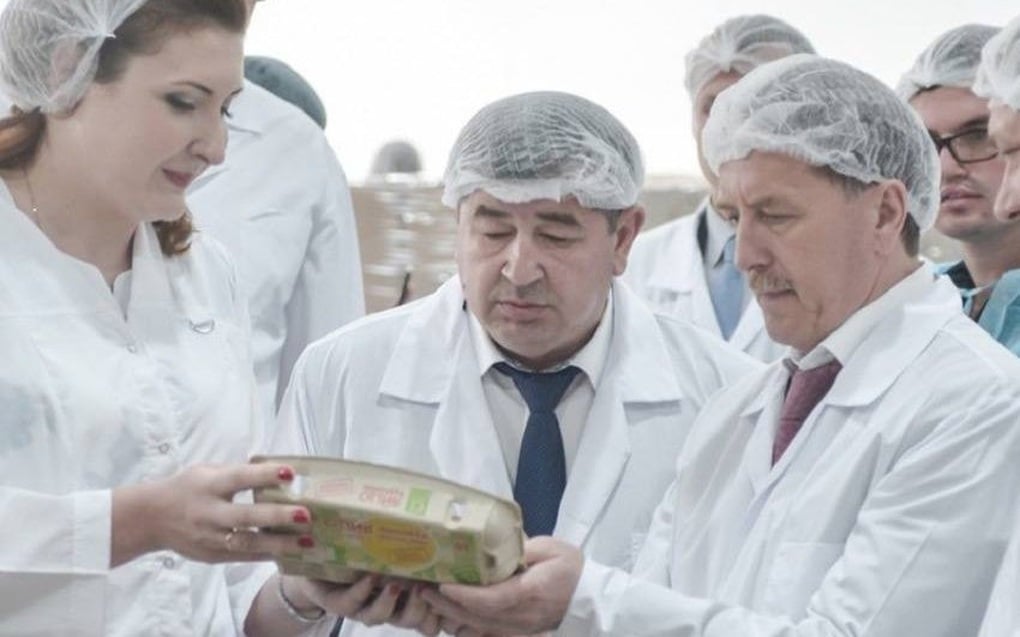
Gennady Shiryaev (center) was ambushed by a gunman who fired two shots at the BMW that "Egg King" was driving (Photo: Telegraph).
One day in late 2023, Gennady Shiryaev, 59, owner of the Tretykov poultry farm, the largest in Russia's western Voronezh region, was driving home when he was ambushed by a stranger. The assailant fired two shots, but Shiryaev was not hit.
Police have not released a motive for the assassination, but Mash 's Telegram channel reported that the incident stemmed from "local residents' dissatisfaction with the price increases" imposed on Shiryaev. Two days earlier, he and two other egg producers were under investigation by authorities for raising egg prices.
The reason for the increase in egg prices is a convergence of factors that the Wall Street Journal considers characteristic of the current Russian economy .
Specifically, Western sanctions have disrupted the supply chain of agricultural equipment that previously came from Europe, negatively impacting the Russian poultry industry.
The weak ruble also makes importing animal feed and veterinary products more expensive, while labor shortages mean some suppliers don't have enough farmhands. Meanwhile, booming government spending has raised wages, boosting demand for food and other goods.
All of that makes the egg shock a manifestation of the imbalances forming in Russia's wartime economy, according to the Wall Street Journal .
In recent months, Russians from Belgorod to Siberia have lined up for eggs as this essential food item has become scarce and its price has soared. President Vladimir Putin has publicly apologized for the high egg prices.
Egg prices rose by approximately 60% in December 2023 compared to the same period the previous year, according to data released on January 12th. The egg crisis highlights Russia's efforts to balance conflicting economic needs, such as funding the war effort, appeasing public sentiment, and maintaining economic equilibrium, including price stability.
Ahead of the New Year holidays, customers were lining up in long queues to buy eggs. Some supermarkets in Siberia and the Crimean Peninsula, which Russia annexed from Ukraine in 2014, sold eggs by the egg, at a price of around 12 rubles each. One local leader even used eggs as gifts for subordinates during the holidays.
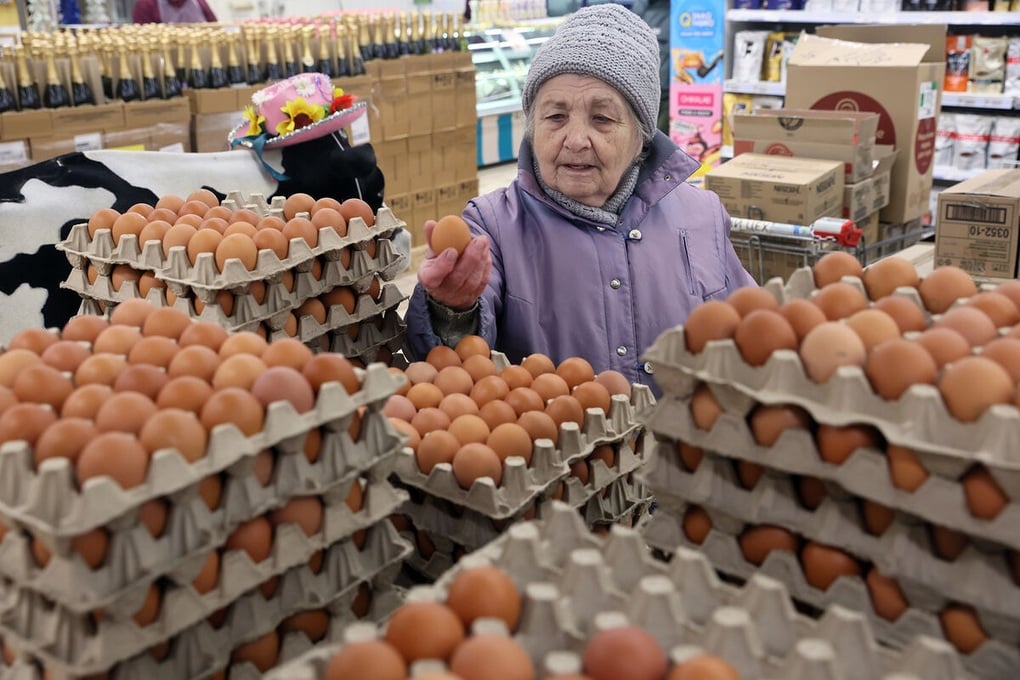
Some supermarkets in Siberia and the Crimean Peninsula, which Russia annexed from Ukraine in 2014, sold eggs individually (Photo: Zuma Press).
The social media platform Telegram quickly became flooded with hundreds of posts from people worried about the egg shortage, exchanging tips on buying cheap eggs, or simply joking around.
"Everyone keeps talking about bitcoin, bitcoin, but I said you need to invest in eggs," another user wrote.
After President Putin admitted the government was at fault for not importing enough eggs in a timely manner, authorities took action. Russia increased its egg orders from Türkiye, Belarus, and Azerbaijan, and eliminated import duties on the product.
Authorities are also investigating antitrust issues involving egg and chicken producers, including Shiryaev's Tretykovskaya poultry farm, who is known as the "Egg King".
One potentially difficult factor to overcome is the vaccine shortage following Western sanctions that have further complicated imports of the product.
"There's nothing to vaccinate them with, so the poultry gets sick," said a veterinarian in St. Petersburg. "Poultry is quite fragile, and because they're kept in flocks, when one gets sick, almost all of them get sick."
According to Tatiana Orlova, a leading economist specializing in emerging markets at Oxford Economics, eggs are a relatively small part of the consumer basket, but people are usually quick to notice when egg prices rise sharply.
Experts predict that egg inflation will soon stabilize, but prices will remain high. Developments in other countries, including the US, show that after a sharp price increase, consumer sentiment continues to be affected long after inflation stabilizes.
Source
![[Photo] General Secretary and President To Lam presides over a meeting with the Central Organizing Committee.](https://vphoto.vietnam.vn/thumb/1200x675/vietnam/resource/IMAGE/2026/06/03/1780482764658_a1-bnd-4741-3342-jpg.webp)
![[Photo] First session of the 14th Congress of the Vietnam Trade Union](https://vphoto.vietnam.vn/thumb/1200x675/vietnam/resource/IMAGE/2026/06/03/1780465947883_ndo_br_img-3852-jpg.webp)

![[Photo] Secretary of the National Assembly Party Committee, Chairman of the National Assembly presides over the meeting of the Standing Committee and Executive Committee of the National Assembly Party Committee.](https://vphoto.vietnam.vn/thumb/1200x675/vietnam/resource/IMAGE/2026/06/03/1780480353201_ndo_br_bnd-2585-jpg.webp)









































![[Video] Sunset at Lap An Lagoon – Where the sun sets over the fishing nets](https://vphoto.vietnam.vn/thumb/1200x675/vietnam/resource/IMAGE/2026/05/31/1780192137701_beach-landscape-sea-water-nature-grass-745871-pxhere-com.jpeg)





























Comment (0)