

The story of a customer in the North whose credit card debt of 8.5 million VND to a bank increased to 8.8 billion VND after 11 years has caused widespread concern among credit card users and those with bad debt, especially among women working in companies. As a result, they are now getting tested for bad debt…
Don't let yourself be caught off guard.
Some time ago, in Bac Binh district, dozens of people incurred bad debt due to credit card purchases without realizing it. The bad debt only became apparent when they went to Bank A to apply for a loan and had their credit history checked. At that time, the head of the credit department at Bank A called me to tell me about this unusual situation. He said: Many farmers, after hearing vague advice from employees of Banks O and M about the benefits of credit cards, were misled by the lack of clear explanation of the fees and interest rates, leading many to mistakenly apply for credit cards. However, upon learning that the fees and interest rates on credit cards were many times higher than the interest rates on loans from state-owned banks, many refused to accept the cards, even though they had been sent by mail . Despite not accepting the cards, these households did not attempt to cancel them, so over the years, the card fees were automatically deducted from the card balance, and the cardholders incurred overdue debt without knowing it because they were unaware of the issuing bank's regulations.
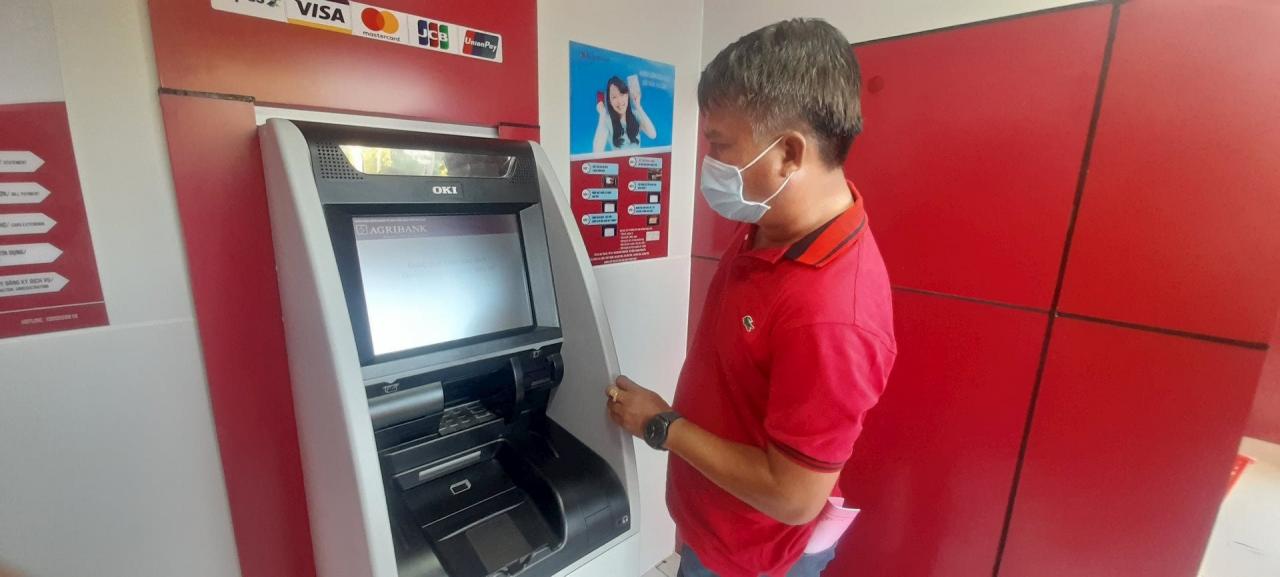
From another perspective, many people "get into trouble" when buying goods on installment plans. With most finance companies, a delay of just a few days results in the customer being charged overdue. Ms. Nguyen Thi Binh, from Cho Lau town, recounted: "I often buy things on installment plans, from TVs and refrigerators to motorbikes, because of the convenience of having time to save up for installment payments. However, once I was on a long business trip and forgot to pay for just 3 days, resulting in overdue debt. When I needed to borrow a large sum of money from the bank for a family matter, the bank employee checked the CIC (Credit Information Center) and found out that my loan history was quite... bad. Therefore, when applying for a credit card or buying goods on installment plans, customers should proactively manage their time and money to make payments on time, avoiding situations where they inadvertently damage their loan history..."
Beware of scams.
Following the case of a credit card debt of 8.5 million VND that, after 11 years, escalated to 8.8 billion VND, causing widespread concern among credit card users, those making installment purchases, and even those only involved with ATM overdrafts, leading many to rush to get their credit history checked. Compared to finance companies where even a 1-2 day delay in payment results in overdue debt, banks, especially state-owned banks like Agribank , politely notify loyal customers of their loan repayment deadlines. Even if principal and interest payments are delayed by a few days or more than the stipulated amount, Agribank may still allow it to be classified as overdue if there is a valid reason. Returning to the story of checking for bad debt, Ms. Nguyen Thuy Chi, who works for a garment company in Phan Thiet Industrial Park, recounted: "My colleagues and I, who have credit cards at banks M and O, have been extremely worried lately after hearing about the 8.5 million VND becoming 8.8 billion VND. Every day we've been whispering and discussing whether we might have bad debt. So, taking advantage of our day off, we all went to the bank to check for bad debt to be safe."
Mr. Thanh, who works at a construction company, recounted: "Many people at my company get credit cards for convenience when they're often away from home. However, when the 8.5 million VND incident happened, everyone was worried. Then, seeing advertisements on social media offering credit history checks for only 200,000-300,000 VND, we signed up. Unexpectedly, after transferring money to have it processed, they blocked all communication. One colleague, upon being asked for her Mobibanking login password and OTP verification code, panicked and ran to ask her colleagues for help, only to be advised to stop immediately, otherwise the scammers would steal money from her account." According to a bank manager in charge of credit, "You shouldn't give personal information to strangers asking to check your credit history, as this is a trap set by online scammers." To check your credit history, there are three safe and proper methods: checking via the CIC website, checking for bad debt through the CIC app on your phone, and going directly to the bank to have a staff member check it for you.
How to check bad debt online via the CIC app on your phone.
Register an account > Enter the OTP code to confirm. After successfully installing and registering an account, please check your bad debt status by following these steps: Step 1: Select “Report Access” to start checking your debt on CIC. Step 2: Authenticate the report access using one of the following methods: password/fingerprint/Face ID. Step 3: Select “Report Access”. Step 4: Enter the OTP verification code. Step 5: Go to “View Report” to see the bad debt results. In the credit report, users should pay attention to the “Risk Level” section to compare information to see if they have been recorded as having bad debt…
Source


![[Photo] National Assembly Chairman Tran Thanh Man working with the Standing Committee of the Law and Justice Committee](https://vphoto.vietnam.vn/thumb/1200x675/vietnam/resource/IMAGE/2026/05/21/1779378929214_ndo_br_1-4610-jpg.webp)


![[Photo] General Secretary and President To Lam presides over a working session with the Central Policy and Strategy Committee on the development of the materials industry.](https://vphoto.vietnam.vn/thumb/1200x675/vietnam/resource/IMAGE/2026/05/21/1779359935432_a3-bnd-3129-1412-jpg.webp)






















































































Comment (0)