

"Breathing life" into the land
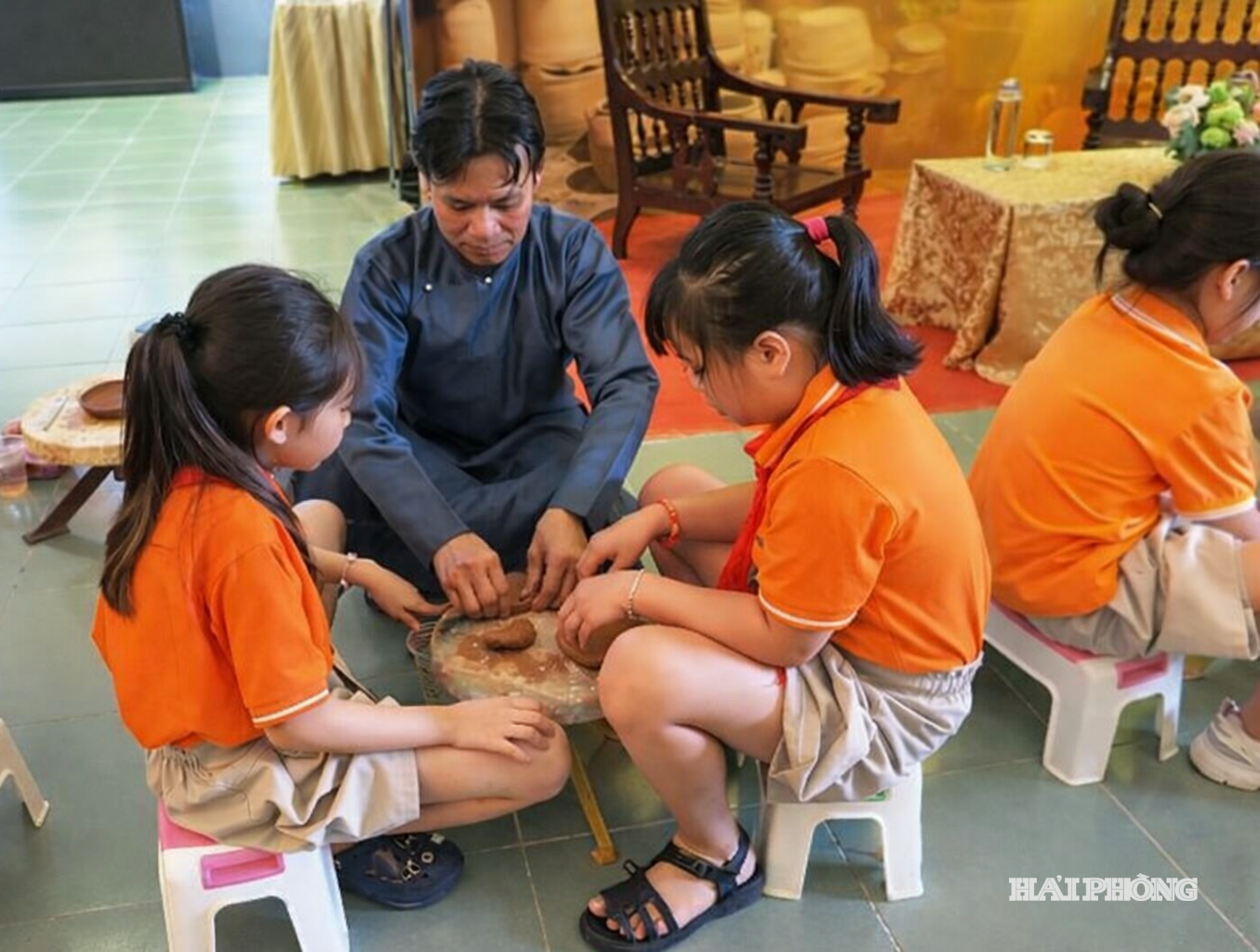
One late morning at the end of the year, with dew still clinging to the old tiled roofs, the small pottery workshop in Bach Dang ward was warmed by the rhythmic sound of the potter's wheel. In the midst of a circle of children, artisan Vu Manh Huy sat quietly, his calloused hands gently guiding the rhythm and shaping each soft piece of clay.
The clay spun around. Time seemed to slow down. The children's eyes lit up, eager as if they had just touched something new yet familiar – the smell of their hometown earth, the scent of the approaching Tet holiday. "Don't rush, children, gently mold each piece of clay to create your shapes," Huy said with a smile. Each child before him was a budding sprout, not yet fully understanding the craft, but already beginning to love the smell of the earth, the feeling of their hands getting dirty with the pottery of their village. For Huy, this was a great joy as he passed on his love of the craft to young children, nurturing a love of pottery in the younger generations of his homeland, even though he knew this journey wouldn't be easy. Diligently molding clay with the children, he hoped that this Tet, on their small, pretty study desks, there would be a Duong Dong pottery vase with its characteristic peach blossom glaze.
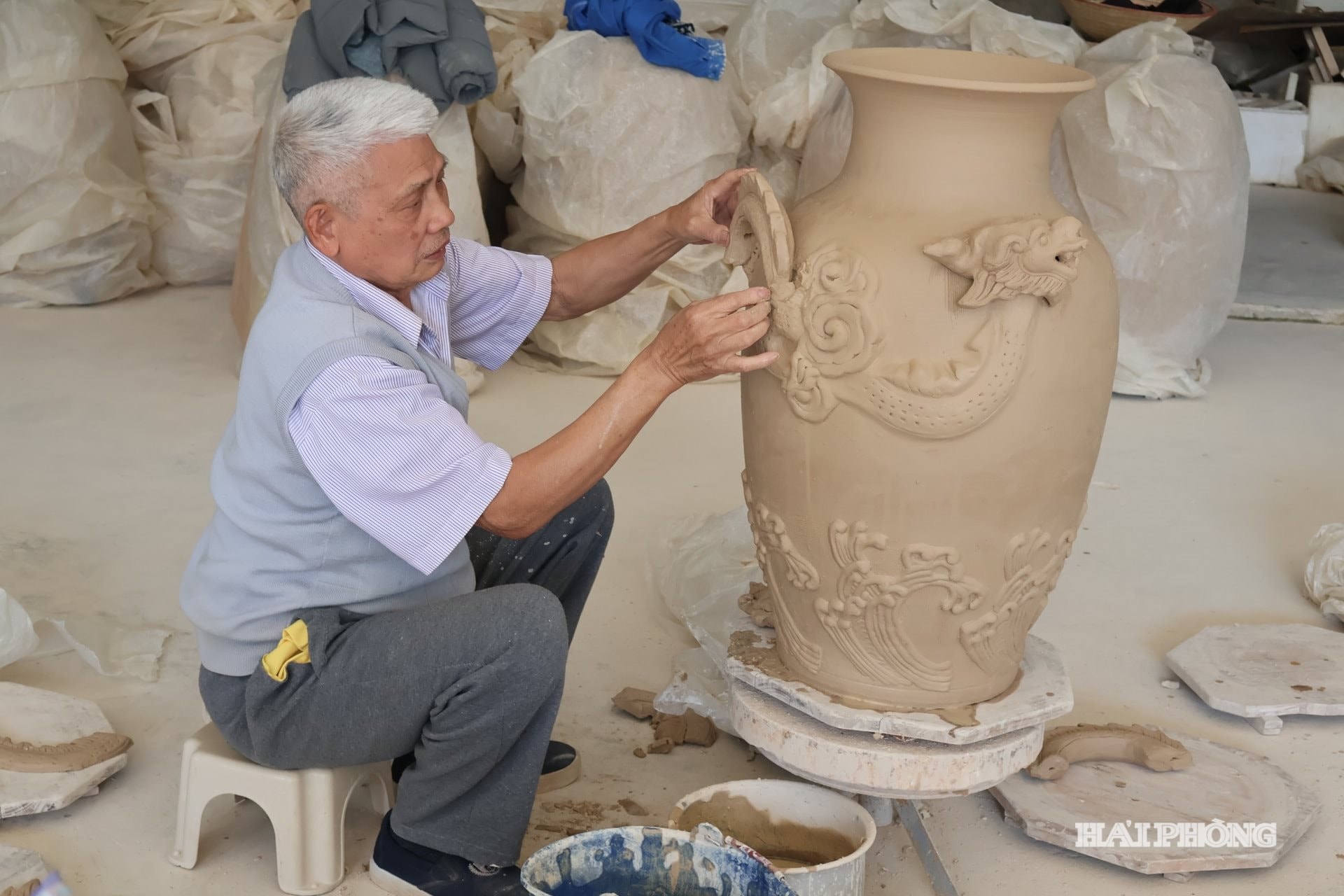
Duong Dong pottery is not flashy or ostentatious, but possesses a gentle pinkish-red hue, like a peach blossom just beginning to bloom when spring is still shyly unfolding on the porch. This glaze color is unmixed and undyed, born from the iron-rich clay along the Gia River and from a precisely controlled fire. Even a slight difference in temperature will alter the glaze's hue. Therefore, each batch of pottery is the result of patience and experience accumulated over generations. Mr. Huy often tells the children: "The color of peach blossoms is the color of Tet (Vietnamese New Year). Looking at Duong Dong pottery, you can feel Tet has arrived."
In another rural area, the Cay pottery village in Binh Giang commune, the colors of Tet (Vietnamese Lunar New Year) are expressed in a unique way. Not the pale pink of peach blossoms, but rather shades of light blue, earthy brown, and deep red – colors that are profound and ancient. Beside the potter's wheel, the skilled hands of artisan Vu Xuan Nam slowly refine each line. There is no haste, only the precision and serenity of those who have been familiar with the potter's wheel and the clay their whole lives.
Cậy pottery, like Dưỡng Động pottery, begins with the hands of skilled artisans. Hand-shaping and hand-molding give each product its own unique "color." Mr. Năm said: "This pottery village is nearly 500 years old, having gone through many ups and downs, but the flow of the craft has never been interrupted."
Painting the colors of Tet
During breaks, Huy often tells the children about the pottery village – a place where fires once burned day and night, immortalized in an old folk song: “Whoever visits the pottery village/Will see the bowls shining with glaze.” That golden age now only remains in memory. Born into a family of four generations of pottery makers, Huy left his hometown when the craft declined. But then, the longing for the smell of fired clay, for the colors of peach blossom pottery, smoldered, drawing him back. Back to keep a spark alive, however small, but never extinguished.
In Cay village, the distinguished artisan Vu Xuan Nam also preserves the craft with the same quiet dedication. The unique characteristic of Cay pottery is its completely natural glaze. The glaze is made from kaolin clay, lime, rice husk ash, and wood ash, all carefully filtered and mixed. Because it is fired with wood and uses natural glaze, the glaze of Cay pottery has a very unique depth; the more you look at it, the more serene it seems. The dominant color of Cay pottery is light blue. Furthermore, through special mixing techniques and the ability to adjust the flame, the villagers of Cay create unique shades of red, pink, and earthy brown. This is called "breathing life into pottery." Only pottery made entirely by hand can possess this characteristic – each product is unique, no two are alike.
Following in his father's footsteps, Vu Xuan Hung, the son of artisan Vu Xuan Nam, after receiving formal training at the University of Industrial Fine Arts, returned to his hometown and, together with his family, revived the traditional craft. Instead of chasing quantity or rushing, they chose to work meticulously, slowly, and faithfully according to the old methods, from bricks, tiles, and decorative patterns for the base of towers used in the restoration of historical sites, to incense burners, vases, and candlesticks for those who appreciate traditional crafts. Later, Hung was awarded the title of Artisan of Small-Scale Handicrafts – a recognition of his quiet yet persistent journey.
The Year of the Horse is fast approaching. Although the pottery village no longer boasts the bustling rows of red-hot kilns of the past, the craft continues to smolder persistently in the small workshops. Huy and his friends create ceramic vases, horse figurines symbolizing "success and prosperity," and flower pots and teapots in warm pink glaze. In Cay village, batches of traditional pottery continue to quietly emerge from the kilns, like the steady rhythm of the countryside.
As Tet approaches, simply placing a ceramic vase on the table instantly warms the space. Not because of the glaze, but because of the story behind it – the story of tireless hands, of people who choose to slow down to preserve the old traditions.
As spring arrives, seeing the hands of young and old alike covered in clay, one understands that traditional crafts are not merely a thing of the past, but are alive, being passed down, and flourishing. So that every Tet holiday, amidst the hustle and bustle of modern life, there remains a place to remember, to touch, and to believe that the soul of pottery, the soul of the countryside, is still there, warm as the blossoming peach flowers at the beginning of the year!
LAN ANH - HUYEN TRANGSource: https://baohaiphong.vn/xuan-ve-tren-mau-gom-535908.html

![[Photo] National Assembly Chairman Tran Thanh Man working with the Standing Committee of the National Assembly's Ethnic Council](https://vphoto.vietnam.vn/thumb/1200x675/vietnam/resource/IMAGE/2026/05/21/1779337435930_ndo_br_1-jpg.webp)
![[Image] "Journey of Hope" promotes the organ and tissue donation movement in Vietnam.](https://vphoto.vietnam.vn/thumb/1200x675/vietnam/resource/IMAGE/2026/05/20/1779294400833_1-8910-jpg.webp)

































































Comment (0)