

The fields are cracked and parched, the irrigation system is in ruins.
More than a month after Typhoon No. 10 passed, Au Lau ward in Lao Cai province remains in disarray. What remains in Doan Ket residential area are cracked rice fields, collapsed embankments, irrigation canals buried under mud, and many broken water pipes. The Doan Ket dam – a structure serving both irrigation and as a vital transportation route – has suffered extensive landslides and is now covered with temporary tarpaulins, but many sections have also collapsed.
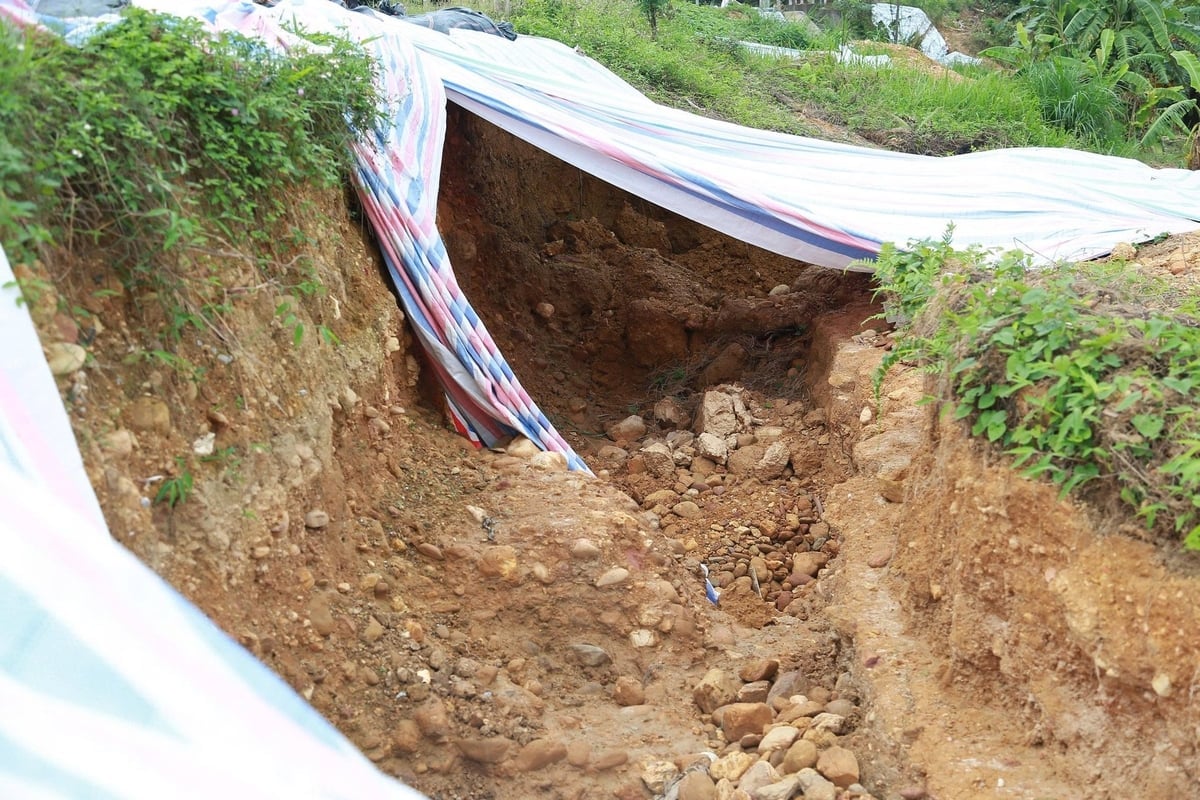
The base of the irrigation dam in Doan Ket residential area has suffered serious landslides in many places. Photo: Thanh Nga.
Doan Ket village suffered the most severe damage due to the overflowing Ngoi Lau stream, carrying mud and debris from flash floods. According to locals, this area has been affected by natural disasters for two consecutive years, but this year the damage is much more serious. Many rice fields were buried under a layer of soil up to 60-70cm thick, making cultivation almost impossible.
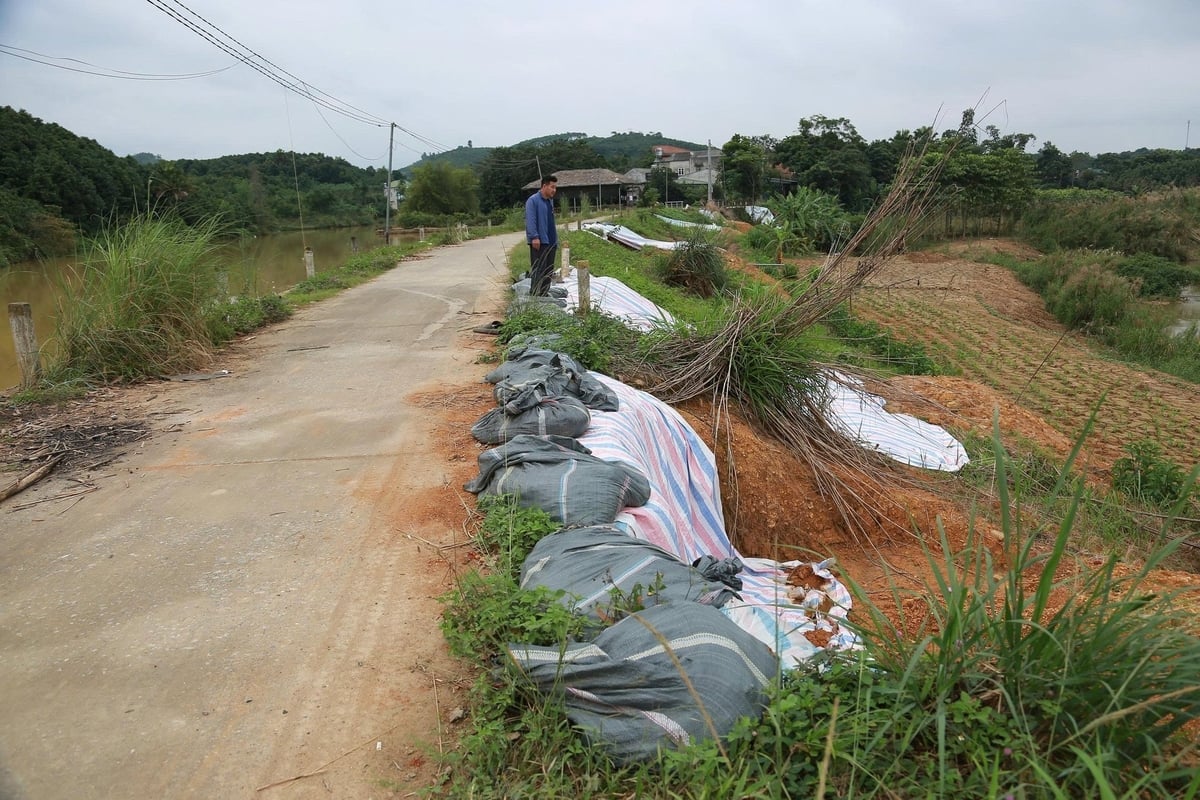
Nearly a hundred meters of the dike have collapsed. Photo: Thanh Nga.
In Doan Ket village, the family of Ms. Dang Thi Thuy Nga owned 7 sao (approximately 0.7 hectares) of rice fields, all of which were flooded and silted up. For two consecutive years, the entire area of their vegetable crops was completely lost. Unable to cultivate rice or vegetables as before, Ms. Nga switched to growing corn – a crop that requires less water and is used as animal feed. However, the economic efficiency is low, only enough to sustain them. "If we don't plant anything, weeds grow rampant, and the soil quickly becomes depleted," Ms. Nga shared.
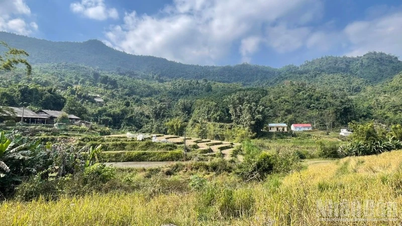
The canal system has become silted up, preventing water from flowing to the fields, forcing people to adapt and temporarily switch crops. The fields that were once the main source of livelihood are now just patches of dry, cracked land with sparse trees. If this situation continues, it is highly likely that the upcoming winter-spring crop will also be a failure.
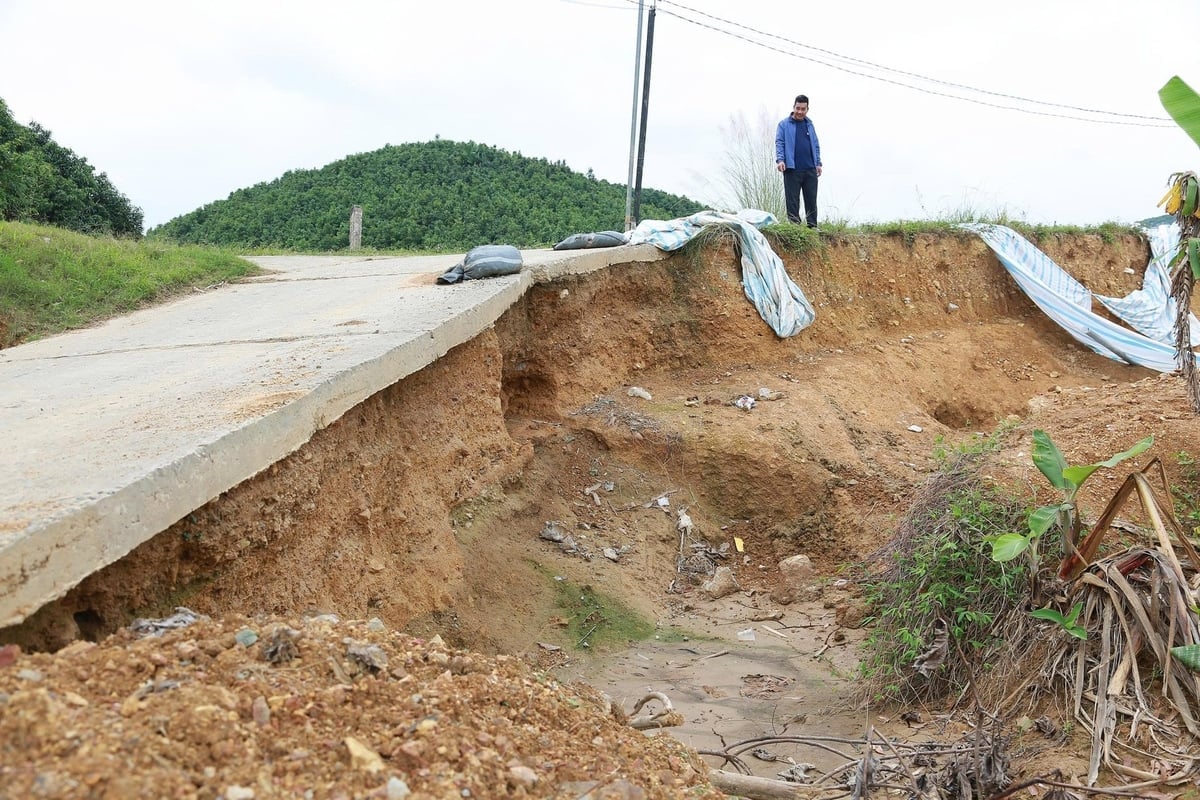
Many sections of the dike have been severely eroded, resembling frog-mouths, posing a significant danger to road users. Photo: Thanh Nga.
Mr. Nguyen Tai Tue, head of the Doan Ket residential group in Au Lau ward, said: “The village's dike has collapsed for nearly a hundred meters, with some sections deeply eroded like a frog's mouth. After the storm, the units covered it with tarpaulin to protect the soil, but now the tarpaulin is torn, and water seeping in has caused the road surface to crack.” The Doan Ket irrigation reservoir, covering 4.6 hectares, which supplies water to more than 17 hectares of rice and vegetables, now has all its canals and ditches buried in mud, and the water flow has stopped. Currently, only about 7 hectares have been cleared to serve the canals, while the remaining 10 hectares are still unsuitable for planting.
This needs to be rectified soon.
Not only in Doan Ket residential area, Typhoon No. 10 also caused severe damage to other irrigation works in the area. At the De Cong Da dike area, a 300-meter section was breached at the sluice gate; the Thanh Giang transfer reservoir suffered erosion downstream of the dam by about 8 meters. In addition, 7 pumping stations and more than 25km of canals were deeply flooded and heavily silted.
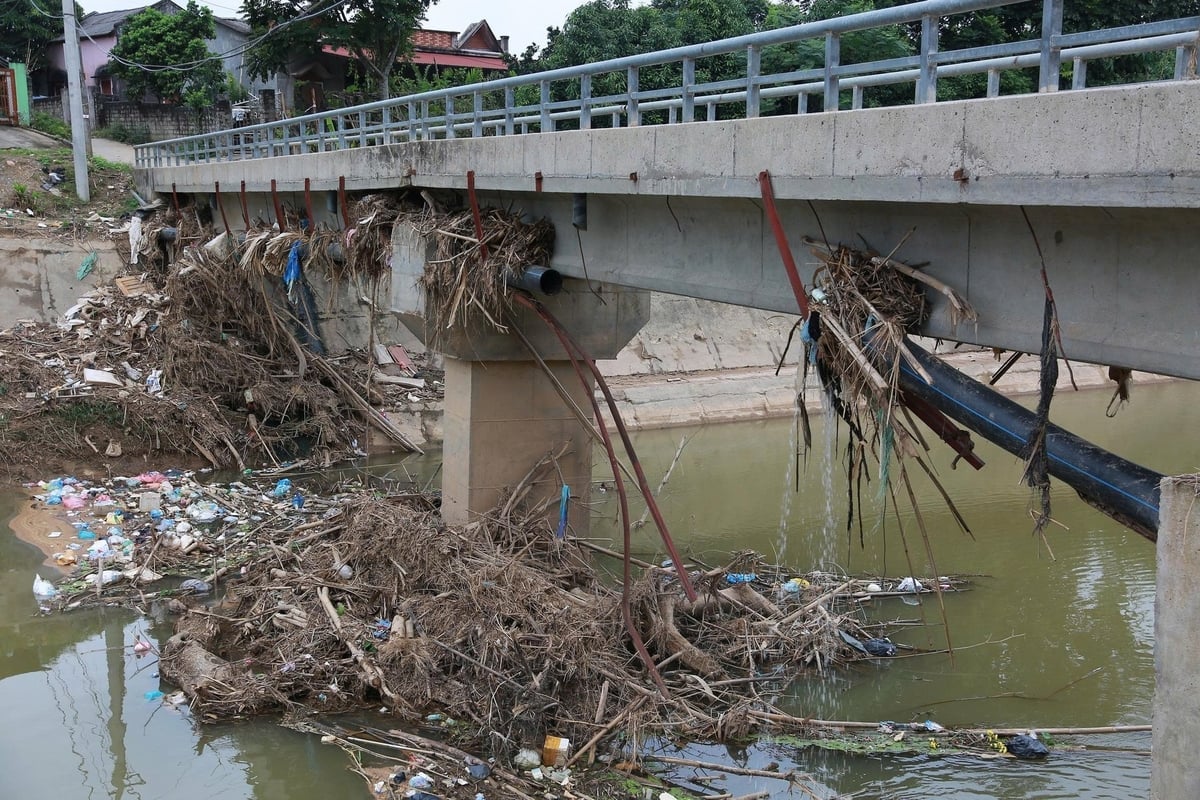
Many water pipelines have been broken. Photo: Thanh Nga.
Mr. Nguyen Tai Tue, head of the Doan Ket residential group, shared: After the storm, many households had to switch to temporarily planting drought-resistant sweet potatoes and corn. But according to Mr. Tue, that is only a temporary solution. If water is not available soon, the land left fallow for a long time will become barren, and many people will abandon farming to work as laborers elsewhere.
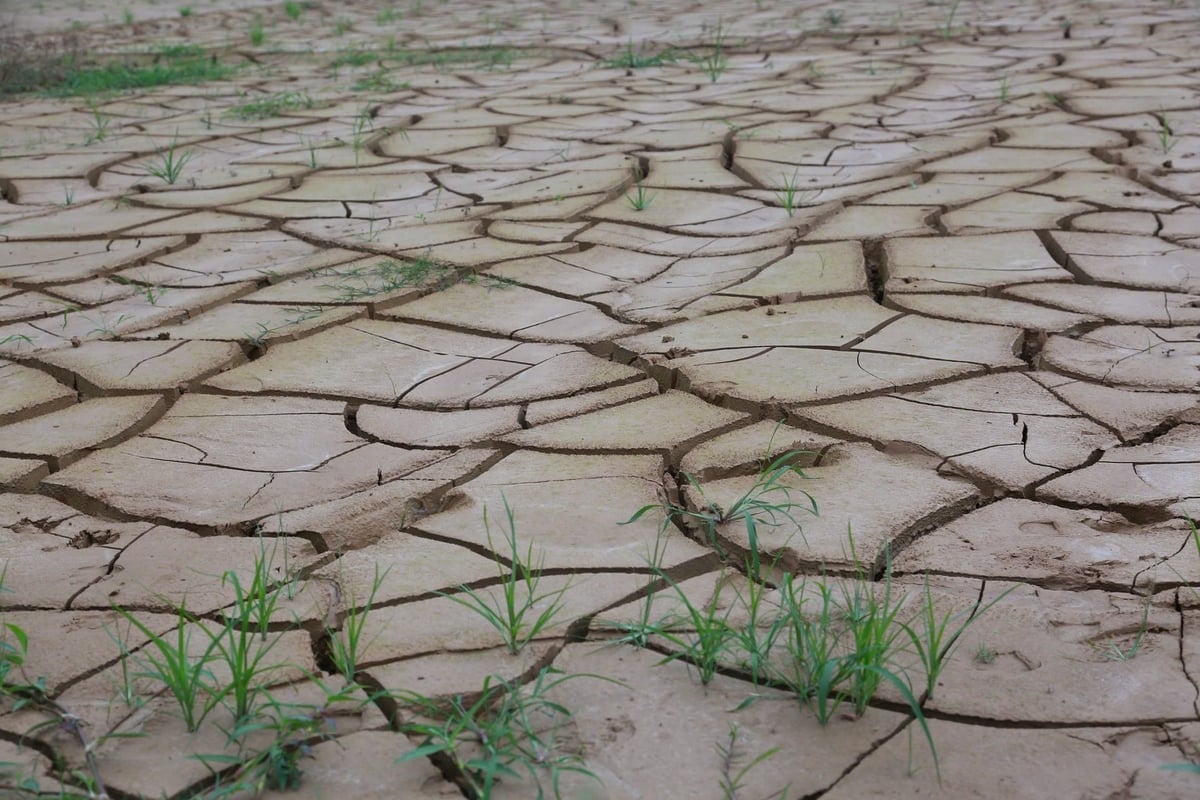
The rice fields are dry and cracked due to lack of water. Photo: Thanh Nga.
Sharing the concerns of the people, the authorities of Au Lau ward, Lao Cai province, are also racing against time. Mr. Nguyen Quoc Huy, Vice Chairman of the People's Committee of Au Lau ward, Lao Cai province, said that immediately after the storm, the ward established working groups to conduct on-site inspections, especially at points where canals and ditches were severely silted up. The ward is focusing on addressing the most urgent issues to ensure that water can be diverted to wider areas in time.
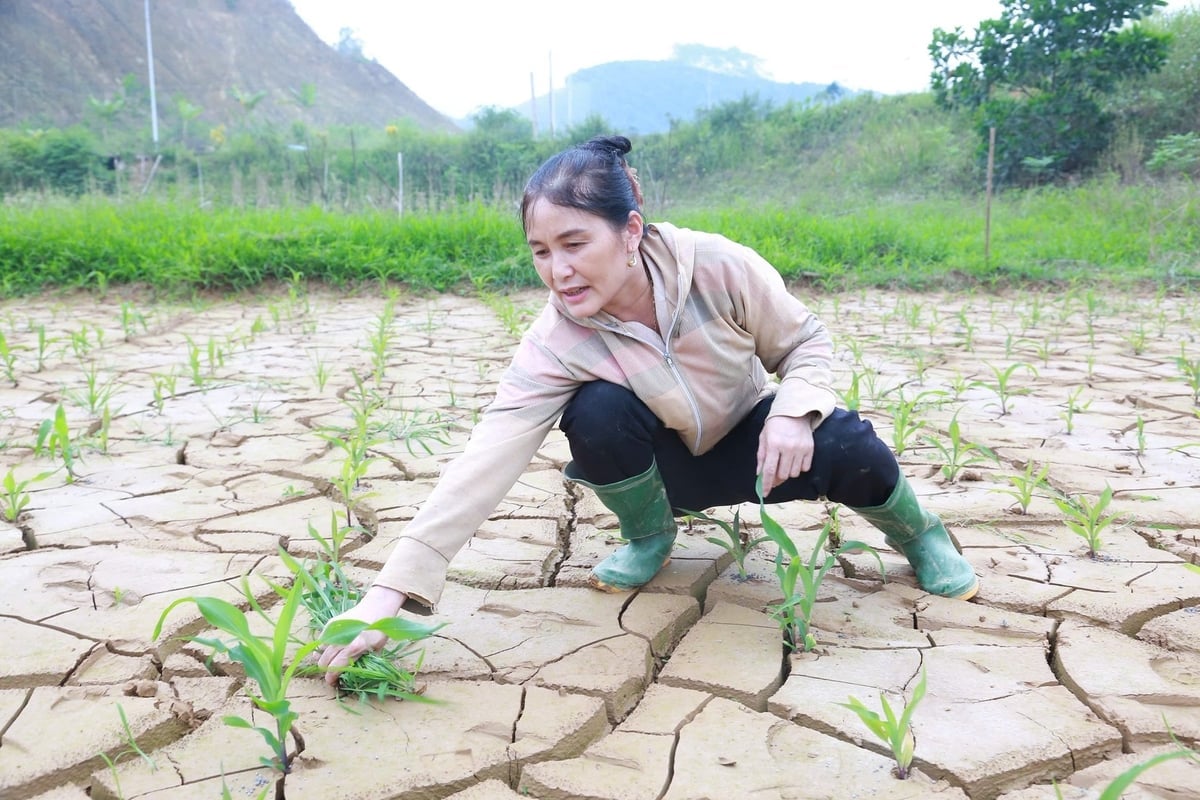
Ms. Dang Thi Thuy Nga, a resident of Doan Ket village, Au Lau ward, has had to switch her annual vegetable farming area to corn cultivation due to water shortages. Photo: Thanh Nga.
For the canals managed by Tan Phu Co., Ltd., the ward is coordinating with the company to expedite repairs. For the canals under local responsibility, the ward has proactively hired excavators and mobilized residents to participate in dredging. To date, only about 30% of the work has been completed, with many sections still needing to be cleared.
Source: https://nongnghiepmoitruong.vn/au-lau-khat-nuoc-vu-dong-xuan-d782968.html
![[Photo] General Secretary and President visit the China-ASEAN AI Application Cooperation Center](https://vphoto.vietnam.vn/thumb/1200x675/vietnam/resource/IMAGE/2026/04/17/1776404277677_vna-potal-tong-bi-thu-chu-tich-nuoc-tham-trung-tam-hop-tac-ung-dung-ai-trung-quoc-asean-8706616-2286-jpg.webp)

















![OCOP during Tet season: [Article 4] Elevating local products](https://vphoto.vietnam.vn/thumb/402x226/vietnam/resource/IMAGE/2026/01/29/1769652810578_2935-z6982071462129_649e82db06fb2f2ea701388b1f5f5b0b-173322_176-185229-202804_457.jpeg)


![[Photo] National Assembly Chairman Tran Thanh Man attends the policy seminar to promote Vietnam-Türkiye cooperation.](https://vphoto.vietnam.vn/thumb/1200x675/vietnam/resource/IMAGE/2026/04/16/1776351415367_vna-potal-chu-tich-quoc-hoi-tran-thanh-man-du-toa-dam-chinh-sach-thuc-day-hop-tac-viet-nam-tho-nhi-ky-8705791-jpg.webp)































































Comment (0)