

Starting with nothing nearly 30 years ago, Mr. Le Manh Quy (Bao Thang commune, Lao Cai province) has now built a closed livestock farm chain that meets VietGAP standards, becoming a typical model of Lao Cai province.
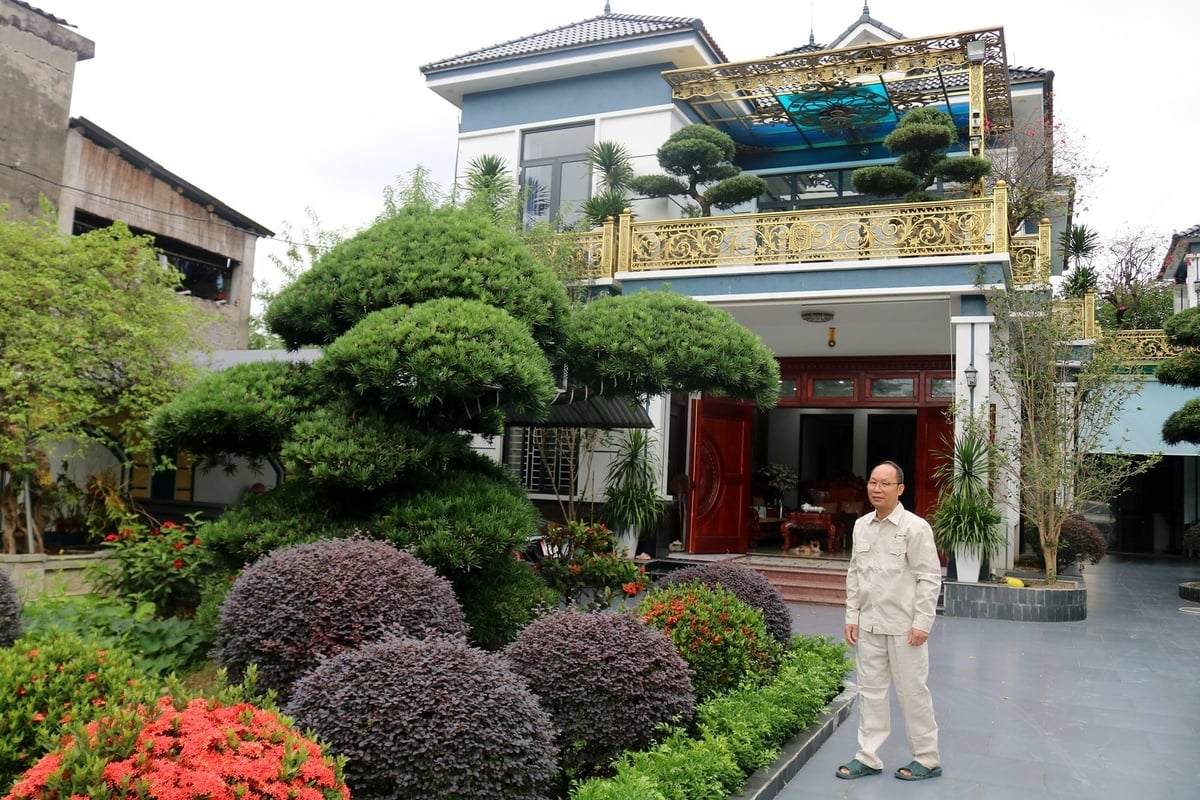
Mr. Le Manh Quy has written miracles in his hometown of Bao Thang, Lao Cai. Photo: Bich Hop.
After passing dozens of kilometers of winding mountain roads, the concrete road led us to the spacious house of typical farmer Le Manh Quy. Mr. Quy said that in 1993 he got married, life was precarious when both husband and wife had no jobs, had to go to the forest to collect firewood to sell for a living, then did all kinds of jobs to make a living but the future was still uncertain.
In 1999, Mr. Quy decided to start a business by raising pigs. In the early days, due to lack of capital and technique, he suffered consecutive losses. But with a strong will, he did not give up but studied on his own, going to many places in and outside the province to learn breeding techniques, care and disease prevention for livestock.
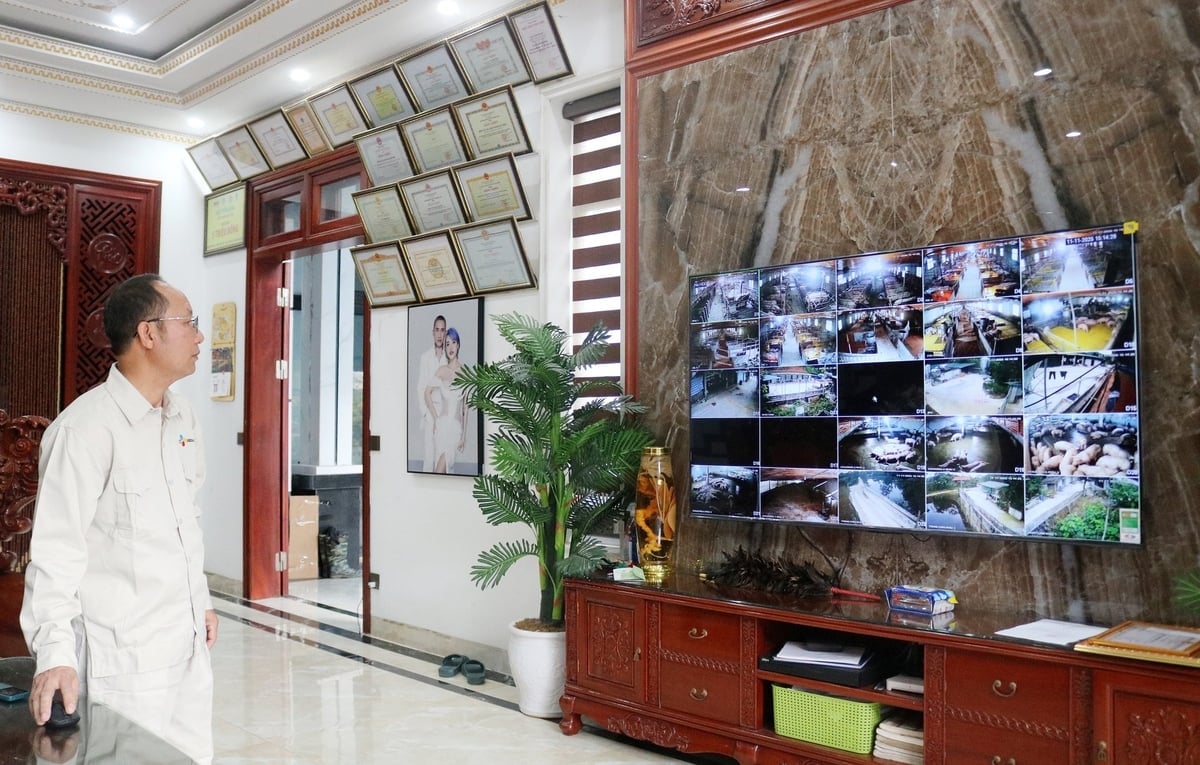
Managing and supervising livestock farming using technology, Mr. Quy is a model farmer in the integration era. Photo: Bich Hop.
By 2015, realizing that the trend of sustainable development must be based on linkage, Mr. Quy established Quy Hien Livestock Cooperative, gathering like-minded livestock households. Under his management, the Cooperative quickly applied VietGAP livestock farming process and biological waste treatment technology, ensuring environmental sanitation.
"Since its establishment, we have determined that we must raise livestock in a closed system, strictly following biosafety. From breeding stock, feed to care processes, everything is strictly controlled. Therefore, despite the outbreak of disease, the Cooperative's livestock farm is still absolutely safe," Mr. Quy shared.
Thanks to being proactive in every step, Quy Hien Cooperative has produced 100% of its own breeding stock. Each link in the chain is closely linked, ensuring productivity, reducing costs, and preventing the risk of disease intrusion.
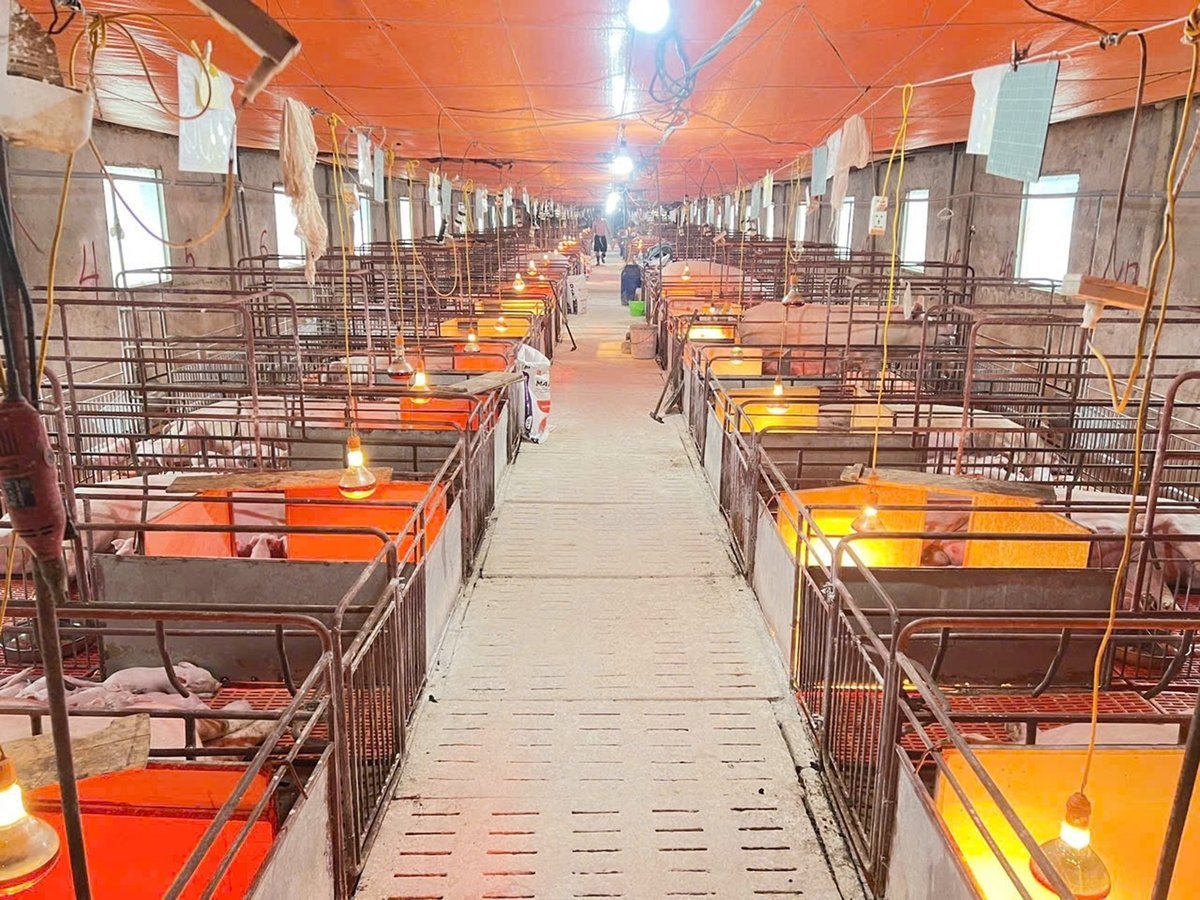
With a scale of more than 500 sows and nearly 10,000 pigs, Mr. Quy's farm is one of the typical farms in Bao Thang commune, Lao Cai province. Photo: Bich Hop.
Currently, Quy Hien Cooperative maintains more than 500 sows, providing breeding pigs for 5 pig farms, stabilizing the herd of more than 6,000 pigs/litter. Each day, the Cooperative sells about 40 pigs, earning over 100 million VND/day.
Not only is Mr. Quy's family good at business , he also creates regular jobs for more than 30 local workers, actively shares experiences, and supports other households in developing production.
According to Mr. Quy, the greatest efficiency of the closed-loop farming model is the ability to source inputs, especially breeds. In the context of unstable prices, being proactive in breeding helps balance costs and ensure profits.
“The price of live pigs dropped to 18,000 VND/kg at one point, then increased to 100,000 VND/kg. If we depend entirely on the outside market, farmers will always be passive. But when we are self-sufficient in breeds, feed, and veterinary medicine, we can calculate and regulate production accordingly,” said Mr. Quy.
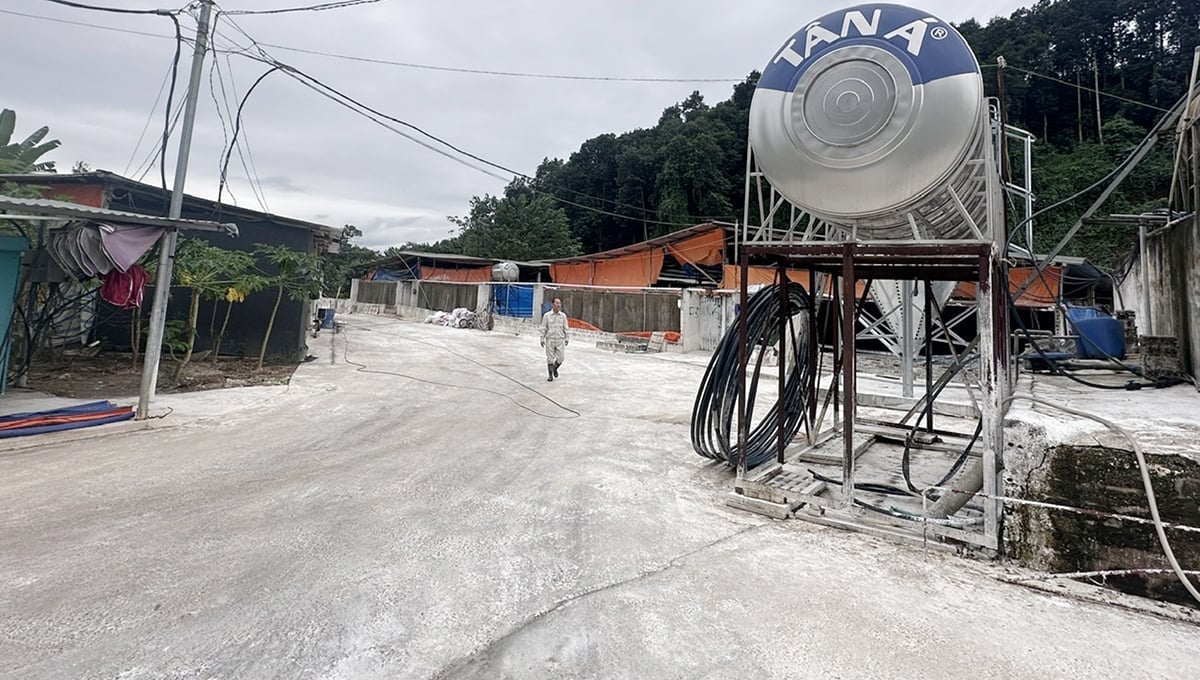
Farmer Le Dinh Quy inspects his family's livestock farm. Photo: Bich Hop.
According to calculations, the production cost of 1 pig (weight 100 kg) is about 6 - 6.5 million VND, of which the cost of breeding accounts for nearly 40%. When self-sufficient in breeding, the Cooperative saves billions of VND each year, ensuring a stable supply and improving competitiveness.
Not only is Mr. Quy good at business, he is also willing to share techniques and support breeds for people in the area. Many households, thanks to cooperation with Quy Hien Cooperative, have escaped poverty and become farms with an income of billions of dong each year.
Up to now, the whole Bao Thang commune has dozens of households raising livestock according to a closed model, self-sufficient in breeds, many households have received initial support from Quy Hien Cooperative in terms of techniques and sow sources.
Despite his many successes, Mr. Quy still continues to innovate. Quy Hien Cooperative has invested in a modern barn system, applied IoT technology in environmental monitoring, and automated feeding and barn cleaning. At the same time, the Cooperative also aims to build a meat processing plant to complete the value chain from production to consumption.
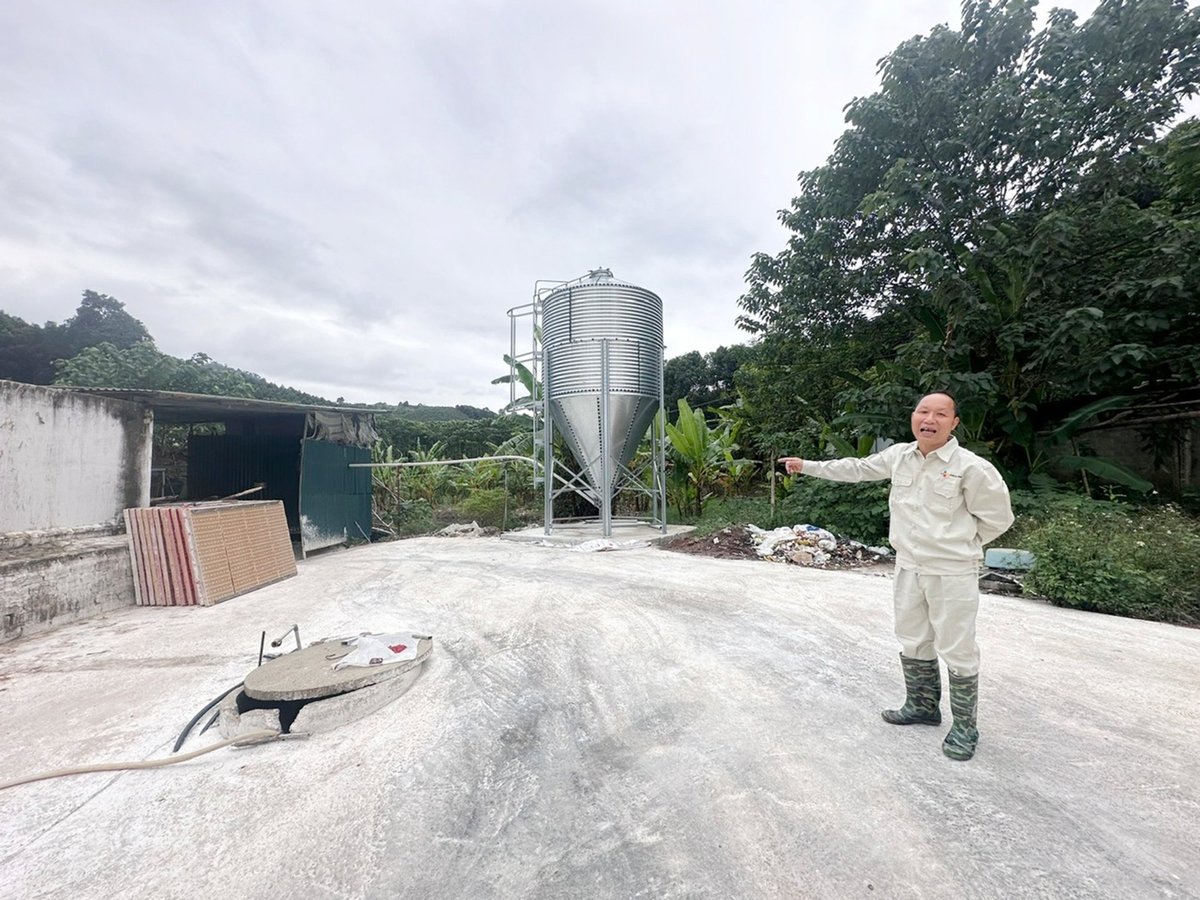
Farmer Le Dinh Quy introduces the farm's modern, human-free pig feeding system. Photo: Bich Hop.
Mr. Le Manh Quy shared: "We want to not only stop at animal husbandry but also create the brand of clean pork Quy Hien, with clear traceability. When the product is trusted by consumers, animal husbandry will be truly sustainable."
With nearly 30 years of experience in the profession, Mr. Le Manh Quy is not only a good farmer but also a manager and an inspiration to hundreds of livestock households in Lao Cai. He has received many Certificates of Merit from the Prime Minister, and the Certificate of Merit from the Ministry of Agriculture and Environment for "Outstanding Individual in patriotic emulation movements in the period 2021 - 2025", along with many other awards from Lao Cai province.
Standing in the middle of a farm of dozens of hectares, Mr. Quy smiled simply: "I just hope that people can get rich legitimately on their homeland. Raising pigs must be done scientifically and with heart to be sustainable."
From a small-scale farming household, Mr. Le Manh Quy has become a symbol of the creative spirit and daring spirit of farmers in the integration period. His story is a clear proof that when farmers know how to master technology and link production, they can absolutely write miracles right on their homeland.
Source: https://nongnghiepmoitruong.vn/nguoi-truyen-cam-hung-cho-hang-tram-ho-chan-nuoi-o-lao-cai-d783911.html



![[Photo] Deep sea sand deposits, ancient wooden ship An Bang faces the risk of being buried again](https://vphoto.vietnam.vn/thumb/1200x675/vietnam/resource/IMAGE/2025/11/13/1763033175715_ndo_br_thuyen-1-jpg.webp)









































![Dong Nai OCOP transition: [Article 3] Linking tourism with OCOP product consumption](https://vphoto.vietnam.vn/thumb/402x226/vietnam/resource/IMAGE/2025/11/10/1762739199309_1324-2740-7_n-162543_981.jpeg)





Comment (0)