

On the tree-lined Phan Dinh Phung street in Hanoi , stands a majestic and solemn ancient architectural structure, bearing the marks of time. This is the North Gate – the northern gate of the ancient Hanoi citadel. The capital has undergone many changes, and the old citadel now exists only in memory, but the presence of the North Gate – the only remaining citadel gate – has become a symbol of a part of Thang Long-Hanoi's history, with enduring cultural and historical values.
Thang Long, a thousand years of war and upheaval.
In 1010, Emperor Lý Công Uẩn issued a decree to move the capital of Đại Việt from Hoa Lư ( Ninh Bình ) to Đại La and named the new capital Thăng Long – a beautiful name reflecting many aspirations. Thăng Long citadel was built on the foundation of the old Đại La citadel, bordered to the north and west by West Lake and the Tô Lịch River, and to the east by the Red River. During the Trần and Later Lê dynasties, Thăng Long citadel basically continued to develop on the basis of the old citadel but with many architectural changes within the Imperial Citadel. During the Tây Sơn and Nguyễn dynasties, the capital moved to Phú Xuân (Huế), and Thăng Long citadel entered a period of unrest.
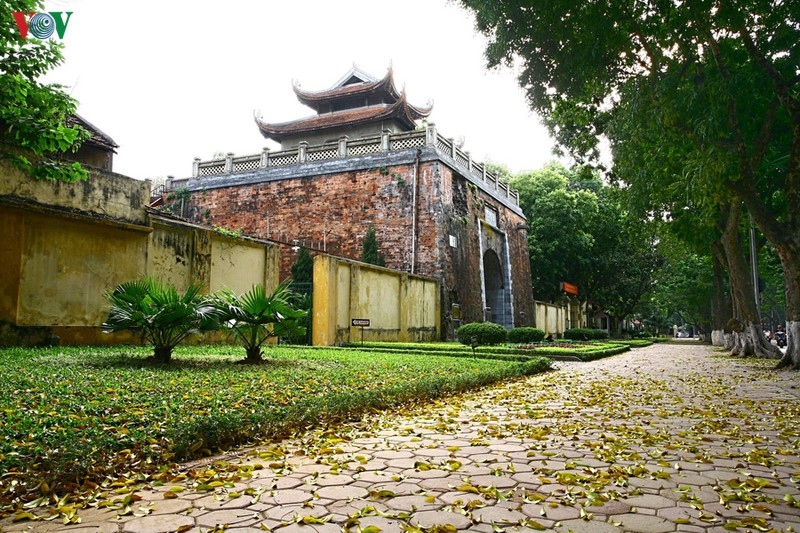
The old North Gate of Hanoi is now located on the sidewalk of Phan Dinh Phung Street.
From ancient times, the folk saying "Thang Long is not a battlefield" has been passed down, meaning that Thang Long is not a land of warfare. However, in reality, the capital city of Thang Long has experienced countless upheavals and was a fierce battlefield for both civil wars and foreign invasions. Throughout the 13th to the 19th centuries, Thang Long endured many wars, and much of the city was destroyed.
In 1805, since Thang Long was no longer the capital, King Gia Long issued a decree to demolish the Thang Long Imperial Citadel and build a new citadel based on the Vauban style – a contemporary Western military fortification. The new citadel was called Bac Thanh (Northern Citadel), and was much smaller in scale than the Thang Long citadel. In 1831, the second king of the Nguyen dynasty, Minh Mang, renamed Thang Long to Hanoi province. Bac Thanh was then named Hanoi Citadel.
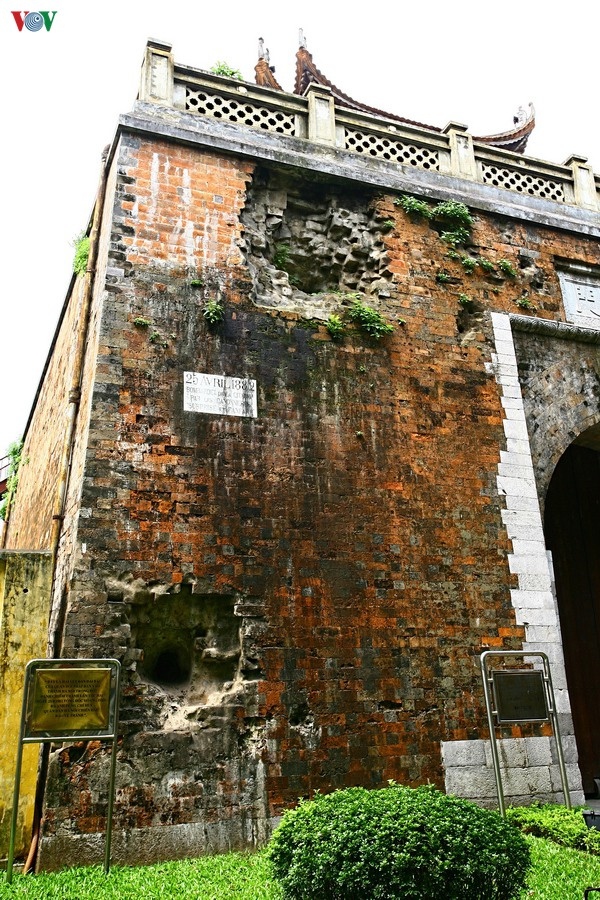
Two cannonball marks from French warships on the Red River struck the city gate during the battle to capture Hanoi on April 25, 1882.
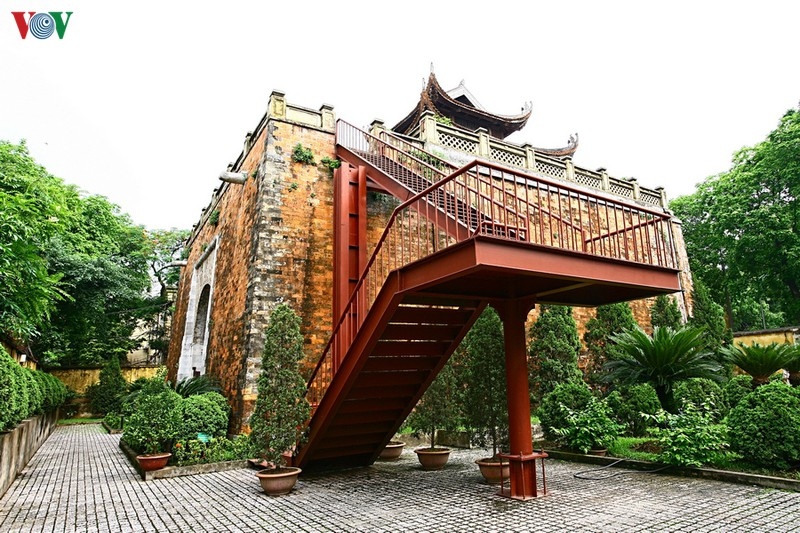
Next to the city gate, where it connects to the city wall, all the walls and access points have now been destroyed. A steel staircase has been erected to allow access to the top of the gate.
Although Hanoi was only the administrative center of the Northern Citadel, it was still commonly known as Thang Long. Due to the intermingling and overlapping of architecture and cultural layers, the name "Ancient Hanoi Citadel" later came to be understood as encompassing the Thang Long Citadel during the Ly, Tran, and Le dynasties, and the Hanoi Citadel during the Nguyen dynasty.
Tragedy and heroism
In 1873, the French army captured Hanoi for the first time. The Governor-General of Cochinchina dispatched Captain Francis Garnier with elite forces to Hanoi. Garnier made many demands, but these were not met by the Governor-General of Hanoi, Nguyen Tri Phuong. On the night of November 19th to 20th, 1873, the French army launched a surprise attack on Hanoi. Governor-General Nguyen Tri Phuong was captured. His son, Prince Consort Nguyen Lam, was killed by artillery fire, and Hanoi fell. Upholding his heroic spirit and loyalty to the country, Governor-General Nguyen Tri Phuong went on a hunger strike and died on December 20th, 1873.
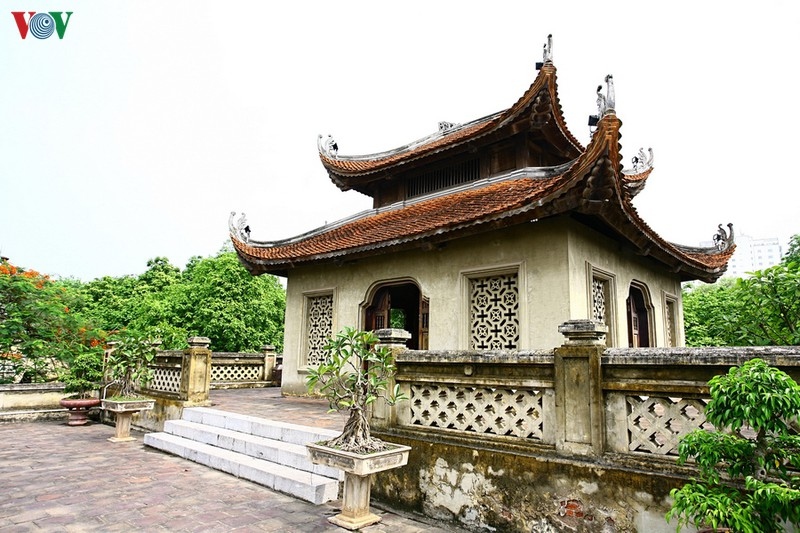
The "watchtower" is a reconstructed pavilion-like structure located on the city gate. It houses the ancestral tablets and statues of the two governors-general, Nguyen Tri Phuong and Hoang Dieu – heroes who sacrificed their lives fighting to defend Hanoi.
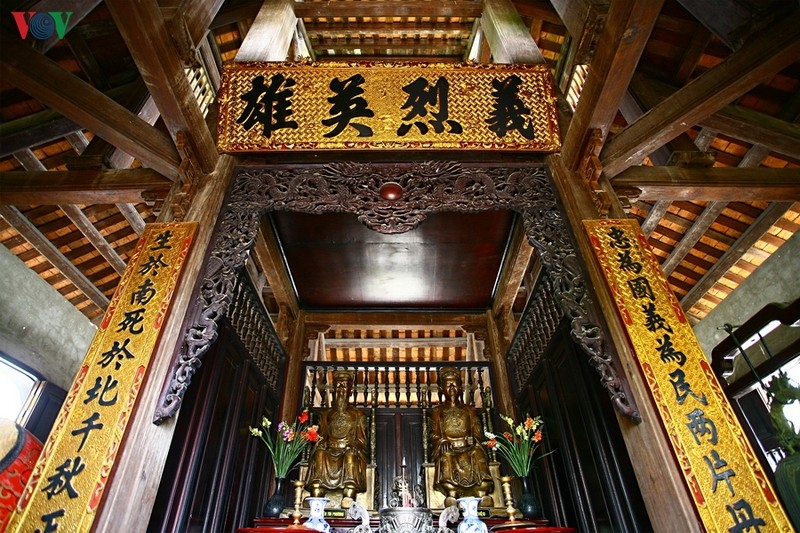
The interior of the "Watchtower" serves as a shrine.
In 1882, the French launched their second attack on Hanoi. After advancing from Saigon by sea, the French troops encamped at Thuy Fort on the Red River. Early in the morning of April 25, 1882, Navy Colonel Henri Rivière issued an ultimatum demanding that Governor-General Hoang Dieu surrender the citadel and comply with their demands. However, Governor-General Hoang Dieu and his troops were determined to defend the citadel to the death. At exactly 8:15 AM on April 25, 1882, the French troops began their attack, closing in on Hanoi. The people and soldiers of Hanoi fought bravely, forcing the French to retreat to regroup. During the fierce fighting, the gunpowder depot inside the citadel suddenly exploded. The French troops seized the opportunity to storm the citadel. In this dire situation, Governor-General Hoang Dieu remained calm and commanded the battle. Knowing that the citadel could no longer be held, he ordered his officers and soldiers to disperse to avoid casualties. Afterwards, he drafted a letter of apology to Emperor Tu Duc and the court before committing suicide in front of the Vo Mieu temple.
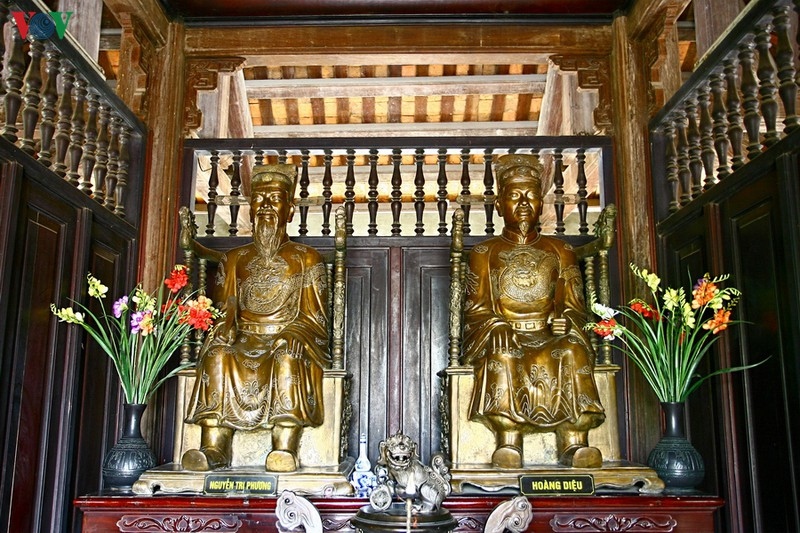
Bronze statues of Governor-General Nguyen Tri Phuong and Governor-General Hoang Dieu.
In 1888, the Nguyen dynasty officially ceded Hanoi to France. After conquering Indochina, the French chose Hanoi as their capital and began planning and constructing the city in a European style. The Hanoi citadel was demolished to make way for the construction of government offices and military barracks. Most of the old structures were destroyed. The North Gate, besides serving as an observation point to the north, was also preserved by the French as a war memorial to showcase their military strength. Despite this, the North Gate was also extensively damaged and altered. It became a tragic historical site, a ruin bearing the marks of suffering...
After the liberation of Hanoi in 1954, the French withdrew. The ancient citadel of Hanoi, including the North Gate, became the headquarters of the Vietnam People's Army and several other important agencies of the Party and State. Nearly half a century later, on the occasion of the 990th anniversary of Thang Long - Hanoi, after many efforts by cultural management agencies, historical researchers, and conservation experts, the North Gate area and the few remaining structures in the ancient citadel such as the steps of the Kinh Thien Palace, Doan Mon Gate, Hau Lau, etc., were restored and renovated. The North Gate and other ancient architectural works have now been given a worthy place in the complex of historical relics as well as in the thousand-year history of Thang Long - Hanoi.
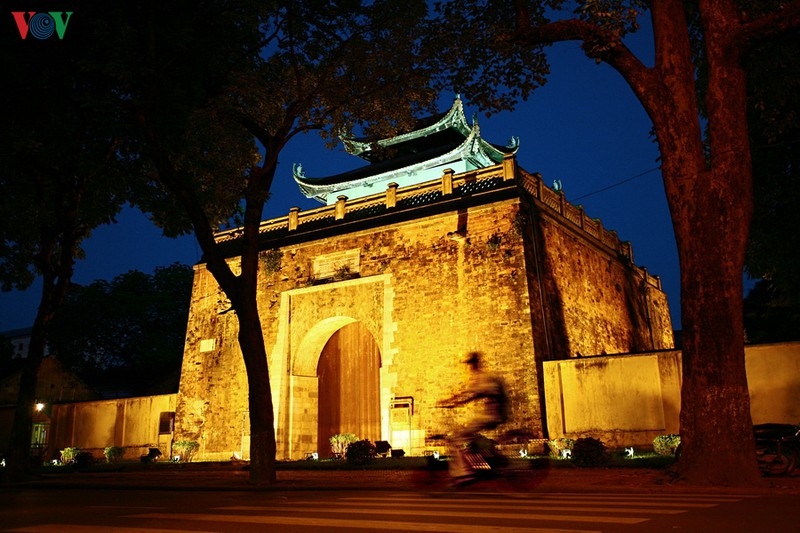
The North Gate of Hanoi, the last and only remaining city gate, bears witness to the tragic and heroic imprints of history.
In remembrance of the contributions of Governor-General Nguyen Tri Phuong and Governor-General Hoang Dieu – two heroes from the South who sacrificed their lives in the North during the battle to defend Hanoi – in 2003, the Hanoi People's Committee, the Thua Thien-Hue Provincial People's Committee (the hometown of Governor-General Nguyen Tri Phuong), the Quang Nam Provincial People's Committee (the hometown of Governor-General Hoang Dieu), and the Vietnam Historical Science Association commissioned the casting of statues of the two men and held an installation ceremony, enshrining them in the watchtower above the North Gate. The bronze statues of Governor-General Nguyen Tri Phuong and Governor-General Hoang Dieu are placed facing south, with a horizontal plaque bearing the four characters: "Heroic Loyalty," and couplets on either side composed by cultural scholar and Professor Vu Khieu.
The North Gate – a quintessential image of Thang Long Citadel and Hanoi Citadel – is one of the most precious historical relics of the capital. It is not only an architectural monument with a long history, but also a link connecting different cultural layers across dynasties, a mark of historical ups and downs. It is not just a tangible architectural heritage, but also contains enduring intangible values, a testament to the heroic struggle against foreign invaders by the people of Hanoi, and a representative monument to the courage and indomitable will of the Vietnamese nation.
Source: https://vov.vn/di-san/bac-mon-dau-tich-lich-su-bi-hung-1040819.vov


![[Photo] General Secretary To Lam attends the National Conference on studying, learning, understanding and implementing the Resolution of the 14th National Congress of the Party.](/_next/image?url=https%3A%2F%2Fvphoto.vietnam.vn%2Fthumb%2F1200x675%2Fvietnam%2Fresource%2FIMAGE%2F2026%2F02%2F07%2F1770434509574_ndo_br_bnd-4944-jpg.webp&w=3840&q=75)


Comment (0)