

Data journalism: An inevitable trend.
According to the Reuters Institute for Journalism (UK)'s 2024 Journalism and Media Trends Report, three main trends are impacting journalism and media: the emergence of many new types of devices; the explosive growth of specialized digital platforms and social networks for audio and video creation; and the wave of artificial intelligence (AI).
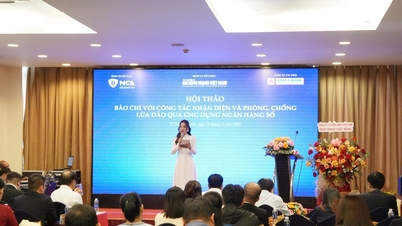
All three of these trends involve data journalism – a form of journalism that is increasingly asserting its position and role through the digital media environment.
![30495 [Converted].jpg](https://vstatic.vietnam.vn/vietnam/resource/IMAGE/2025/1/18/8ecd456ef53148e39db1513e52ab8652)
Data journalism is a new form of journalism that combines the information-gathering abilities of journalists with the analytical skills of statisticians and the graphical capabilities of modelers.
Implementing data-driven journalism is an inevitable trend today, as traditional journalistic and media presentations fail to capture public attention. Journalism must change its approach to ensure the public can access information as quickly as possible. Data, figures, and evidence must be visualized through charts, infographics, and other visual aids, creating an engaging and informative journalistic product.
With the widespread adoption of the "audience-first" model, public information consumption is gradually shifting to digital platforms, allowing information to reach the public regardless of its source. To connect with readers and the public, media organizations need unique characteristics and identities with their own strengths to avoid being lost among other information streams. Data journalism can help address this issue.
Technologies such as AI, cloud computing, big data, the Internet of Things (IoT), blockchain technology, and the metaverse are considered the "nutrients" for the development of data journalism.
In the context of the AI boom, data journalism is playing an increasingly important role in news organizations. With the support of AI, news organizations can tap into unlimited open data sources on the Internet, thereby gaining more data to build high-quality articles.
However, the data available on the internet that scientists collect to train AI software includes both accurate and inaccurate data. It's important to note that AI software can also be used and trained with this data to intentionally create misinformation and mislead. If misused in producing journalistic content, this could lead to misinformation and distortion. Therefore, censoring content generated by AI applications is a major challenge in journalism and media.
In practice, under the influence of the digital media environment, many Vietnamese news agencies have implemented data journalism quite effectively.
It can be said that we have integrated very quickly and are gradually approaching and catching up with media organizations in the region and the world in terms of journalistic and media activities in the AI era. Some "bright spots" in data journalism include Nhan Dan Newspaper, Vietnamplus, etc. However, generally speaking, the depth of data journalism products in Vietnam is still at a certain level.
Necessary and sufficient conditions
A journalistic product is only considered data journalism if the data plays a leading role in clarifying a particular issue. The public demands that reporters and journalists be able to analyze and evaluate data, not simply present it in a dry, empty way that leaves the public unable to fully understand it and forcing them to analyze and evaluate it themselves.
The process of applying data science to journalism and creating data-driven journalistic products by media organizations includes the following steps: Idea generation; Identifying and defining data and data sources; Selecting data from open data sources on the internet and existing data sources; Enriching data based on technological platforms; Analyzing, evaluating, and building content sets; Visualizing to create articles applying data-driven journalism.
![business_set_33 [Converted].jpg](https://vstatic.vietnam.vn/vietnam/resource/IMAGE/2025/1/18/15757f6dcfaa43919496baf53b8cdb29)
Based on AI, news organizations will be able to create a wealth of content that is engaging to the public. News organizations already possess a vast "treasure trove" of stored data. If they do a good job of linking and sharing this data, they can create many better and more effective articles.
I believe that Vietnamese journalism should build a journalistic ecosystem where media organizations can share data and collaborate to create a common data repository, thereby reducing concerns about the negative impacts of AI.
Regulatory bodies such as the Propaganda Department, the Ministry of Information and Communications, and professional associations like the Vietnam Journalists Association must provide guidance and direction, build a common platform for media organizations, create a "common playing field" where data can be shared when needed, and thereby maximize the potential of data journalism.
On the part of media organizations, it is necessary to develop a plan to transform their operating model based on building digital newsrooms and developing diverse digital journalistic products on different platforms to increase interaction with readers, aiming for sustainable development in the digital environment.
At the same time, media organizations need to conduct data analysis, processing, forecasting, and information quality monitoring to assess their digital maturity level and apply technology in a consistent, safe, and sustainable manner.
Journalism and media training institutions must also adapt their training programs to meet new requirements, based on technological platforms. It is necessary to expand, update, and develop digital journalism training programs to prepare a workforce for future digital newsrooms. Furthermore, it is essential to develop and implement training and retraining programs for leaders, reporters, editors, etc., of newsrooms on the basic and necessary skills in building, deploying, implementing, and operating digital newsrooms, prioritizing the development of data journalism.
Data journalism is playing an increasingly important role in media organizations. Accordingly, media organizations worldwide can apply AI and data journalism to newsroom management, create journalistic works, and diversify distribution channels.
Through the analysis of raw data collected using supporting tools/software, journalists and reporters, with their keen insight and professional skills, can identify anomalies or highlights of an event/phenomenon to plan and develop high-quality articles that meet the needs of the reading public. With the diverse applications of technology, data-driven journalistic articles can be created much faster and easier than with traditional journalistic methods.
Assoc. Prof. Dr. Tran Quang Dieu (Ho Chi Minh National Academy of Politics)
Source: https://vietnamnet.vn/bao-chi-du-lieu-trong-ky-nguyen-ai-2293522.html
![[Photo] Prime Minister Pham Minh Chinh presides over a meeting on private sector economic development.](/_next/image?url=https%3A%2F%2Fvphoto.vietnam.vn%2Fthumb%2F1200x675%2Fvietnam%2Fresource%2FIMAGE%2F2025%2F12%2F20%2F1766237501876_thiet-ke-chua-co-ten-40-png.webp&w=3840&q=75)






![[Photo] General Secretary To Lam visits the exhibition space showcasing books, photo exhibitions, and achievements of digital transformation in journalism.](https://vphoto.vietnam.vn/thumb/402x226/vietnam/resource/IMAGE/2025/12/19/1766110879215_1766110240024-jpg.webp)






















































































Comment (0)