

The water level in the Caspian Sea has dropped dramatically, putting what is considered the world's largest lake at risk of becoming a barren wasteland.
Satellite imagery shows that the Caspian Sea has been receding over the years. Some places that were once ideal swimming beaches are now just dry, barren land.
The situation in the Caspian Sea is deteriorating. Dam construction, overexploitation, pollution, and climate change are all pushing the Caspian Sea to the brink of irreversible damage.
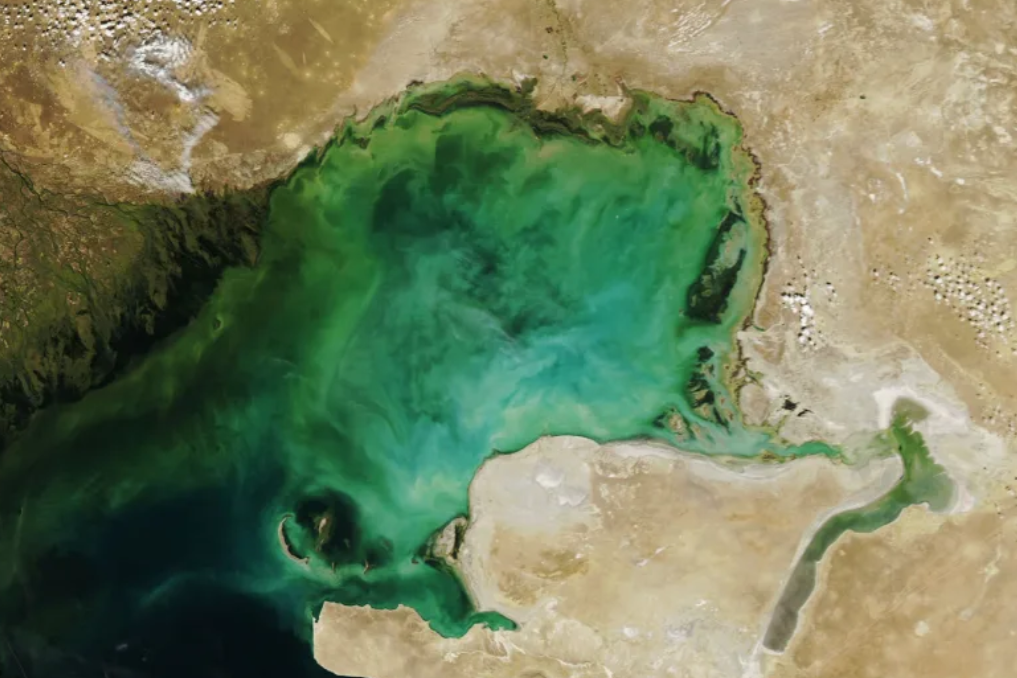
Satellite image of the northeastern Caspian Sea, taken in September 2006.
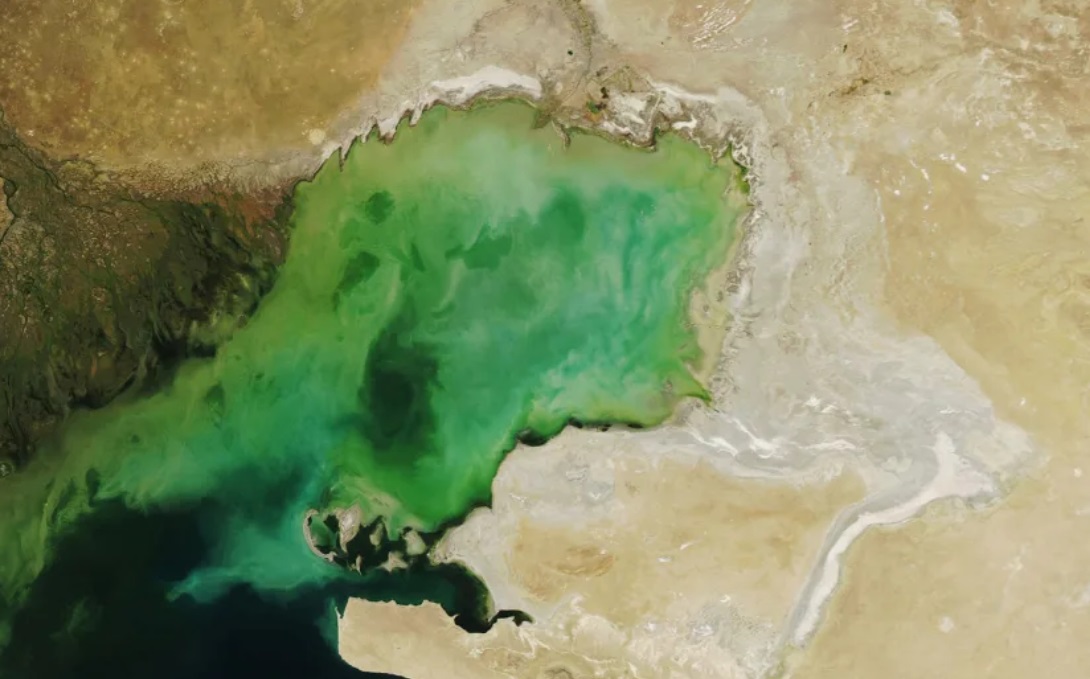
Water levels in the northeastern Caspian Sea partially receded in September 2022.
Caspian Sea alert
As the world's largest lake and having no ocean access, the Caspian Sea is often called a "sea" due to its vast size. The Caspian Sea covers an area of over 370,000 square kilometers, with a coastline stretching over 6,400 kilometers and shared by five countries: Kazakhstan, Iran, Azerbaijan, Russia, and Turkmenistan.
These countries also utilize the Caspian Sea for agriculture , fisheries, and tourism. The region also has large oil and gas reserves and helps regulate the climate, bringing moisture to Central Asia.
While climate change causes sea levels to rise, the opposite is true in landlocked areas like the Caspian Sea. Water levels there depend on the balance between water from rivers and lakes and rainfall. Warming climates are causing many lakes to shrink. Furthermore, the Caspian Sea is supplied by 130 rivers, and dam construction on these rivers is reducing the flow of water into the region.
If this situation continues, the Caspian Sea could face a similar fate to the Aral Sea, located about 2,500 km east of the Caspian Sea, between Kazakhstan and Uzbekistan. In less than 30 years, the Aral Sea, once one of the world's largest lakes, has almost completely dried up.
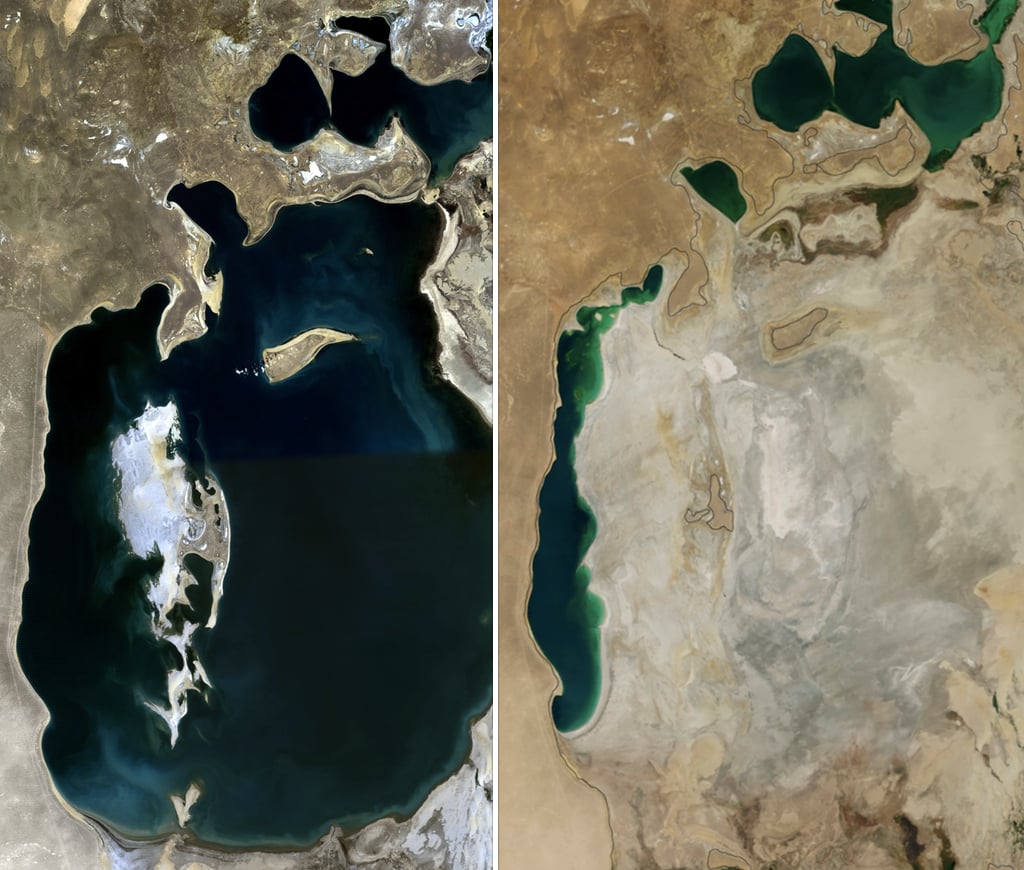
Satellite images of the Aral Sea in 1989 (left) and 2014.
Risk of ecological disaster
The Caspian Sea has been falling since the mid-1990s, but the rate of rise has accelerated since 2005. Earth system modeling expert Matthias Prange (University of Bremen, Germany) predicts that as the world warms, the Caspian Sea will continue to fall sharply. Prange forecasts a drop of 8-18 meters by the end of the 21st century, depending on the rate of global fossil fuel reduction.
Even in the more optimistic scenario, the shallow waters in the northern Caspian Sea, around Kazakhstan, could disappear by the end of this century, according to Joy Singayer, professor of paleoclimatology at the University of Reading (UK).
Observers believe this could be a crisis for countries surrounding the Caspian Sea. Fishing grounds will shrink, tourism will decline, and maritime transport will face difficulties as ships lack mooring space.
Mr. Singarayer also predicted geopolitical competition over dwindling resources, with Caspian Sea-bordering nations potentially intensifying their exploitation of water and oil and gas resources. Furthermore, the issue will be further complicated by changes in coastlines due to declining sea levels.
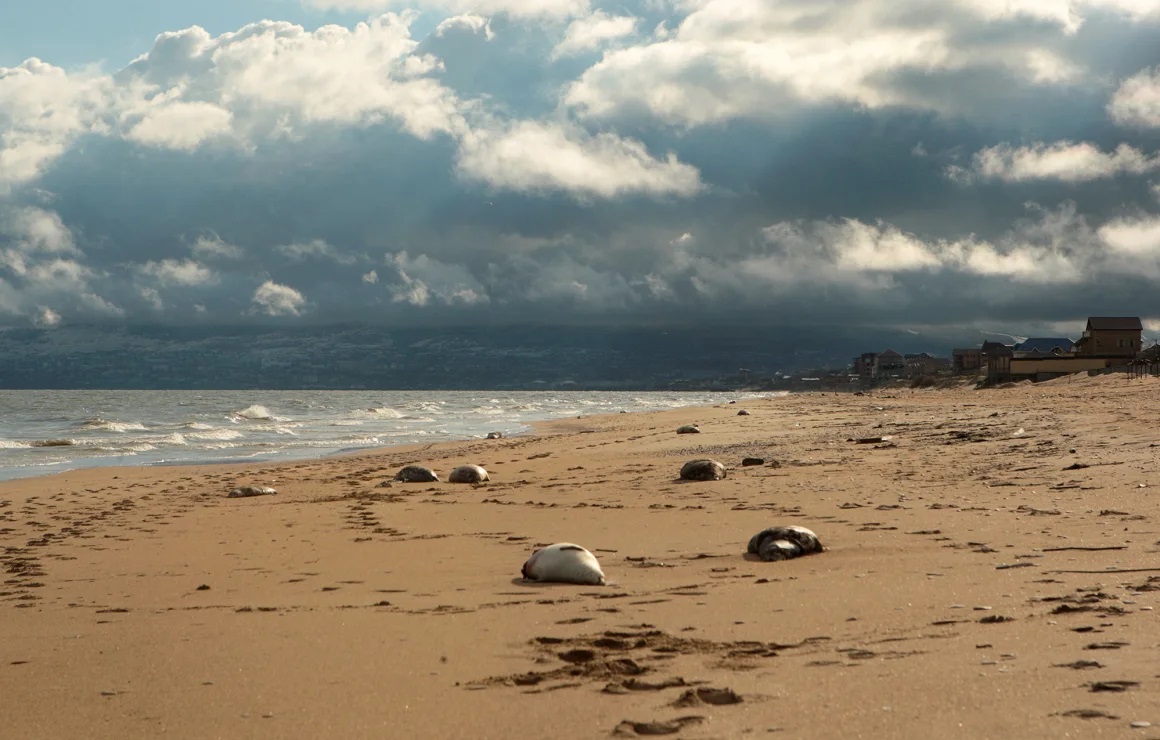
A Caspian seal carcass washed ashore on the coast of Makhachkala, Russia in December 2022.
Biodiversity and the life forms of the Caspian Sea are also threatened. In particular, it is home to the endangered sturgeon – a species that provides 90% of the world's caviar. This vast body of water has been surrounded by land for at least two million years, with harsh conditions providing the basis for the formation of many unique shellfish species, which could disappear if the situation worsens. Caspian seals, a unique species found only in these waters, also face the risk of habitat loss.
In August, Azerbaijani President Ilham Aliyev called the declining sea level in the Caspian Sea an ecological disaster.
Source: https://thanhnien.vn/bao-dong-do-o-ho-lon-nhat-the-gioi-185241029102104126.htm







































































































Comment (0)