

An unforgettable experience
Sophie Bennett (a tourist from England) stood for a long time in front of the triangular park area near An Hoi Bridge (Hoi An City) listening to the folk singers perform Bài Chòi. After watching a few rounds, she decided to buy some playing cards to try it out.
Seeing her fellow players listening intently, Sophie Bennett, while curiously staring at the cards, nodded along to the melodies of traditional Vietnamese folk songs like "xàng xê," "hò Quảng," and "xuân nữ," among others.
Throughout her turn, despite some initial difficulties due to not fully understanding the rules, Sophie Bennett said that what she gained was laughter. "It would be a shame to just watch without joining in the game. This will be a memorable experience for me in Hoi An," Sophie Bennett said.
Hoi An is continuing to implement many creative initiatives, combining heritage with contemporary flair to attract tourists in a new context. With this flexible approach, it is hoped that Hoi An will not only preserve its culture but also "transform memories into products," providing profound experiences for the community and visitors from all over the world.
(Ms. Truong Thi Ngoc Cam)
The joy of tourists is what Hoi An has achieved by identifying traditional art as the "core value" in cultural performances serving visitors. Despite the intermingling of modern elements, the folk spirit remains the foundation that shapes its identity.
Art forms such as Quang Nam folk singing, folk performances, and especially Bài Chòi (a traditional Vietnamese folk game) are receiving great attention from tourists. "Bài Chòi is almost an indispensable spiritual product for both locals and tourists visiting Hoi An," said Ms. Truong Thi Ngoc Cam, Director of the Hoi An City Cultural, Sports and Information Center.
Ms. Cam added that currently, the Center has a Traditional Performing Arts Hall with about 40 artists who regularly participate in events both locally and outside the area. Folk art performances are regularly organized in the Old Quarter with 3-4 daytime shows and outdoor programs in the evening.
In particular, Hoi An implements a "performance-and-teaching" model. Through this, outdoor classes are organized and directly instructed by center staff. Local students are regular participants, and tourists can also join. This is considered a unique cultural tourism product, taking place nightly in the ancient town.
Modern and ancient styles intertwine.
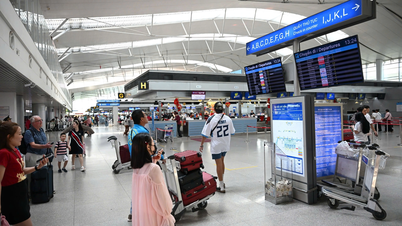
An interesting connection among the "memory tourism" products that the locality has developed is Hoi An's initiative to bring folk art performances to Da Nang International Airport. Thanks to the diverse activities, the performance space, and the audience to appreciate them, Hoi An's folk art has been given wings. Ms. Cam said that this has enabled the center to "nurture its staff," maintain its team, and pass on the craft to the next generation.
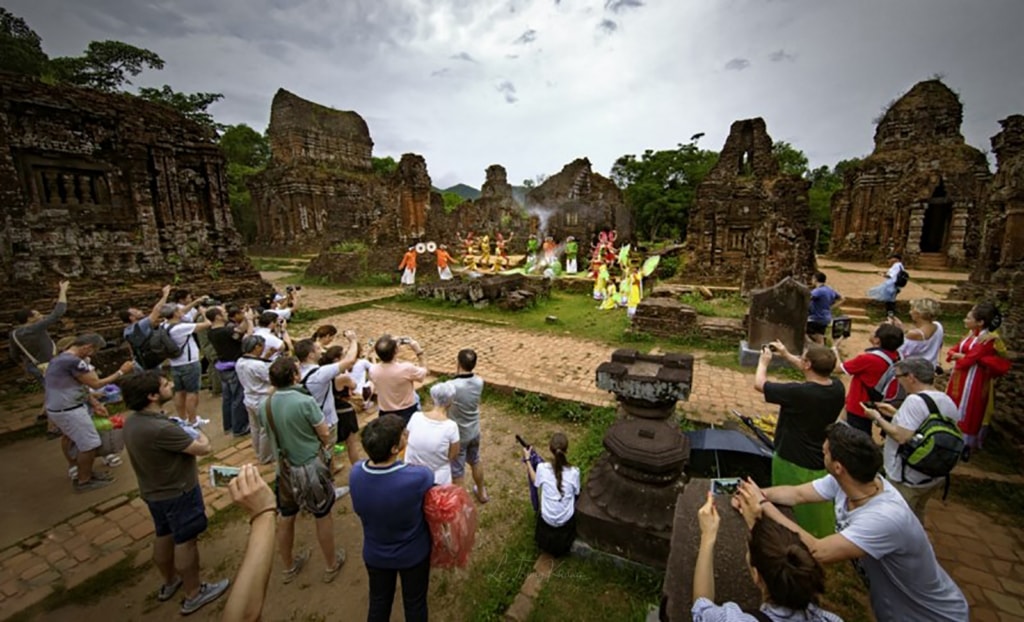
The modern space, bustling with international tourists arriving and departing from various countries, such as Da Nang Airport, has also been the venue for Quang Nam traditional opera performances by actors from the Nguyen Hien Dinh Traditional Opera Theatre for the past three years.
Lasting approximately 30 minutes (on Thursdays and Saturdays) and featuring easily understandable excerpts from traditional Vietnamese theater, visitors are amazed upon arriving at the airport by this spectacular "artistic feast."
Following this trend, hotels in Da Nang have partnered with theaters to bring traditional Vietnamese opera (tuong) performances to their hotels for tourists. In particular, the "Traditional Opera on the Streets" program, initiated by the Da Nang tourism industry many years ago, offers tourists relaxing moments rich in artistic value.
Another impressive blend of the old and the new is the space at the Da Nang Museum (new facility), which features many activities that combine traditional elements with modern, enhanced technology.
In late April, the museum held an exhibition titled "Echoes of Bài Chòi," which attracted a large number of visitors. The artworks showcased the distinctive patterns of the 30 playing cards on various materials. Even more uniquely, each piece was combined with sound, images, and QR codes to enhance the visitor experience and interaction.
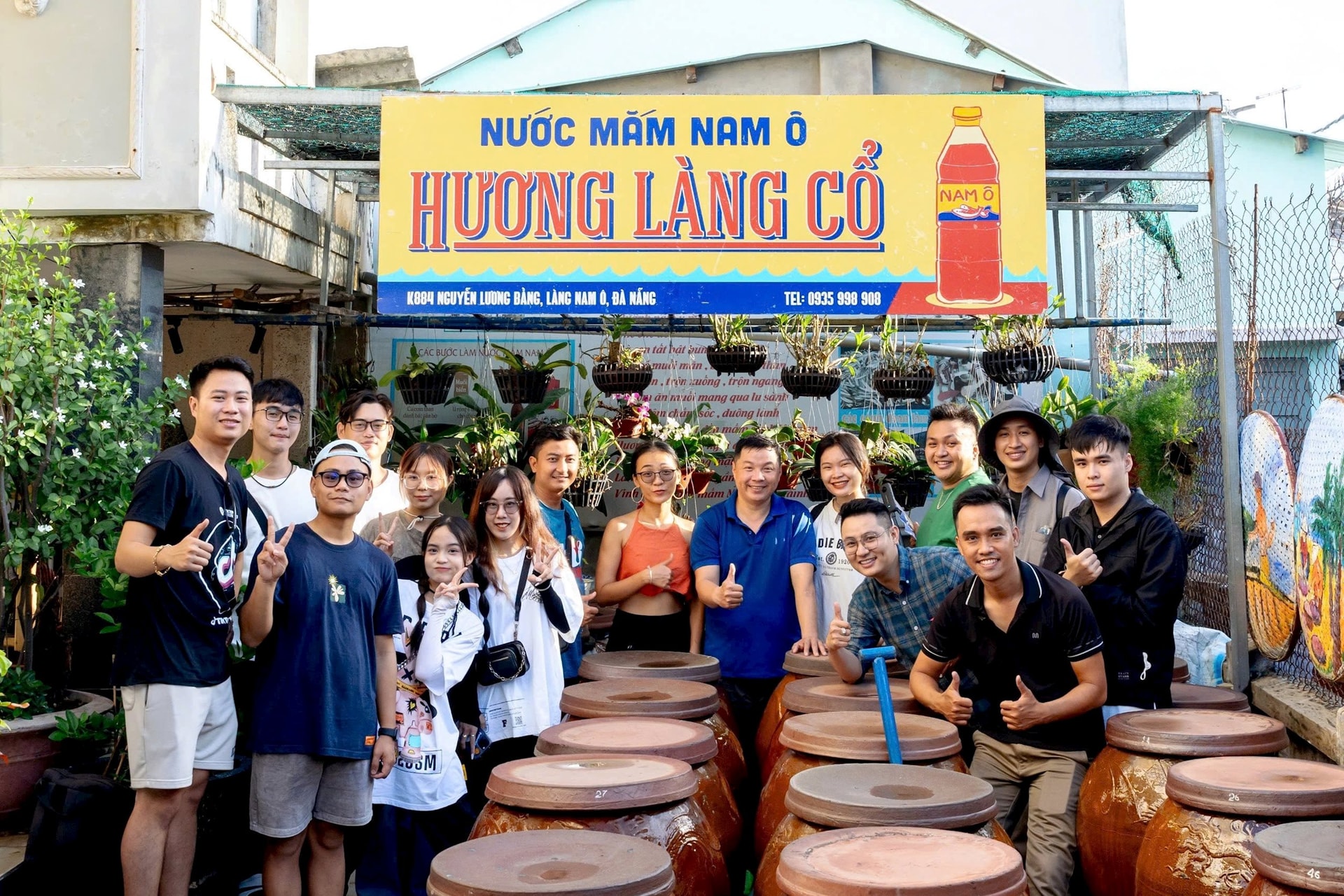
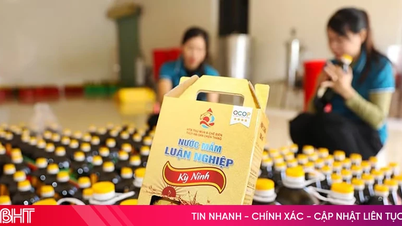
Furthermore, the development of river tourism routes, bringing visitors to experience the Tuy Loan rice paper making village, combined with visits to village communal houses and ancient houses, experiencing the La Huong vegetable village, eating Quang noodles, listening to traditional folk singing... or the Nam O fish sauce making village combined with the Hai Van historical site tour, is also being considered. This is a proposal by Cao Tri Dung, Chairman of the Da Nang City Tourism Association, aimed at increasing connectivity between tangible and intangible heritage, and between distinctive tourism products associated with destinations.
Mr. Dung noted that international tourists are very interested in exploring local culture. This is an opportunity for Da Nang to promote the value of its seven national intangible cultural heritage sites, including: Bài Chòi (a traditional folk game), Tuồng (traditional opera) of Quang Nam province, Non Nuoc stone carving, Nam O fish sauce making, the Fishing Festival, the Quan The Am Festival, and the Tuy Loan rice paper making.
Source: https://baoquangnam.vn/bien-ky-uc-thanh-san-pham-hut-khach-3156259.html
![[Photo] General Secretary and President To Lam meets with National Assembly delegates from ethnic minorities.](https://vphoto.vietnam.vn/thumb/1200x675/vietnam/resource/IMAGE/2026/04/20/1776696701056_a1-bnd-8331-3342-jpg.webp)


![[Image] National Assembly discusses the implementation of the socio-economic development plan.](https://vphoto.vietnam.vn/thumb/1200x675/vietnam/resource/IMAGE/2026/04/20/1776696707422_ndo_br_img-20260420-185419-jpg.webp)





![[Infographics] Hai Tien Beach Tourism Festival 2026 and celebratory activities](https://vphoto.vietnam.vn/thumb/402x226/vietnam/resource/IMAGE/2026/04/20/1776687221715_infographics-le-w1200t0-di2616d199d1165828t11358l1-2026-029.webp)




















































Comment (0)