


For the past three years or so, the rice paddies in Huoi Lung village (Sung Phai commune, Lai Chau city) have been frequently flooded during the rainy season. Farmers with cultivated land there have had to abandon their fields because the rice they planted cannot be harvested.
The flooded land area belongs to 18 households in the villages of Huổi Lùng, Sùng Chô, Gia Khâu 2, Tà Chải (Sùng Phài), and Thành Lập (Đoàn Kết ward), covering approximately 8 hectares. The cause of this situation is that since the construction of the Ao Xanh Dam to divert water to the fields of Gia Khâu village, the drainage system has become clogged during the rainy season, causing flooding in the rice fields of Huổi Lùng.
Located at the beginning of the village, near the 58m road, the area is convenient for farming and harvesting rice. Before the flooding, each household harvested an average of 50-60 bags of rice per season. However, for the past three years, many households have had to abandon their fields because the rice is deeply submerged during the rainy season, causing heavy losses. Among them, five families who do not have land elsewhere to cultivate rice have had to leave their fields and work as factory workers.
Among the households affected by flooding in this area, Mr. Phe A Vu's family suffered the most. His family not only lost their rice crops but were also isolated in a vast expanse of water. Mr. Vu shared: "Around 2015, this area was less flooded, but in the following years, the flooding became much deeper. The households with land here tried to divert the water flow at the Ao Xanh Dam, but without success. During the rainy season, this area is flooded for up to a month, so the households gradually stopped planting. During that time, my family had to use a boat to get around. Sometimes we had to cross the tea hills using the path of Company 30 (Provincial Military Command) during working hours. The flooding made daily life inconvenient, especially when taking the children to school. Because the water was so deep, my family hasn't cultivated the land for several years."
For farmers, every inch of land is precious, so the two brothers, Ma A Minh (from Huoi Lung village), still try their best to cultivate their land. Speaking about previous years, Ma A Minh shared: "Although we only cultivate one crop a year, my family usually harvests 60 bags of rice. For the past three years, the fields have been flooded, resulting in crop failure. The rice paddies are right next to our house, and seeing the weeds growing makes us feel so bad, so my family tries to cultivate them. But after planting, we can't rest easy; we're always worried and anxious."
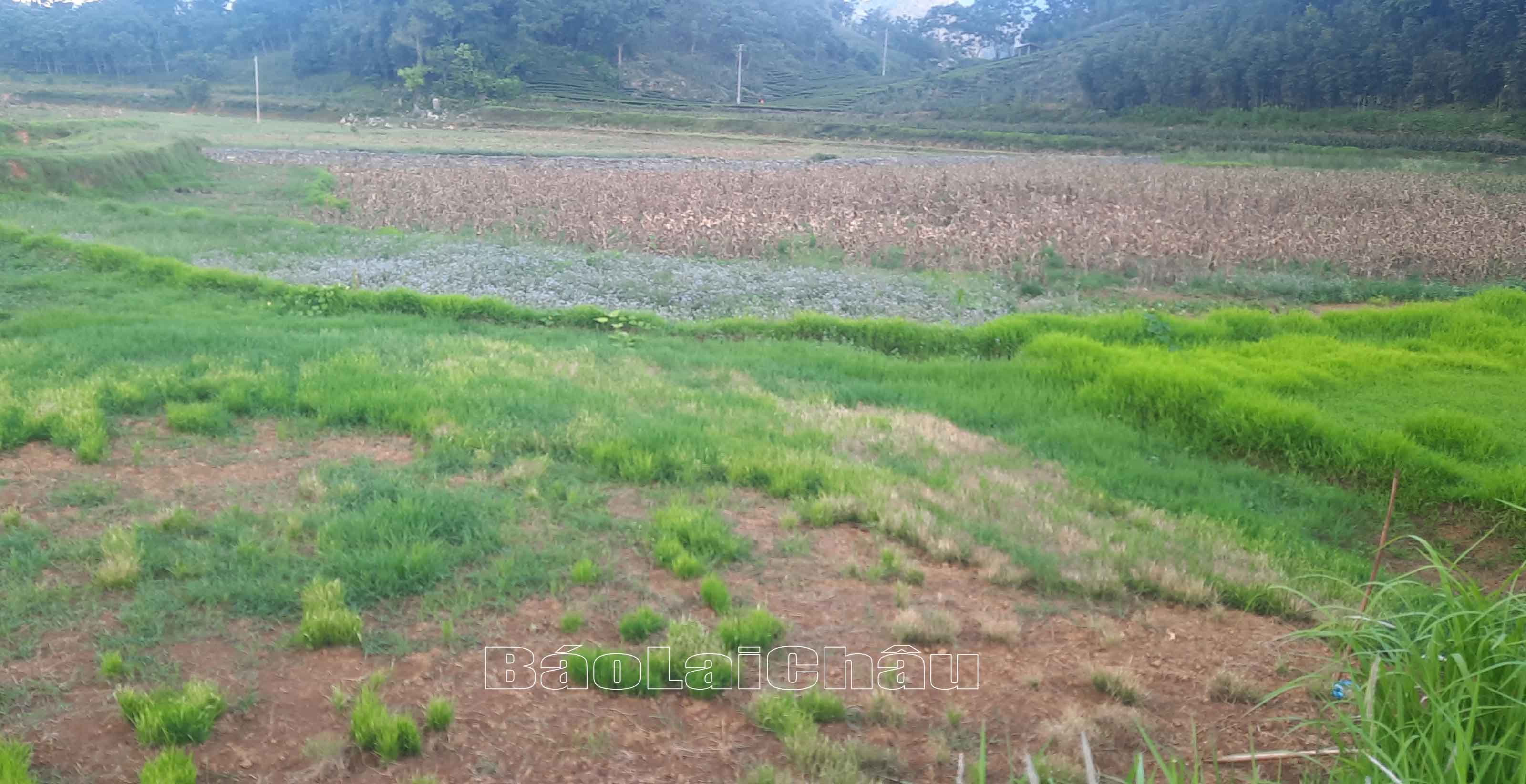
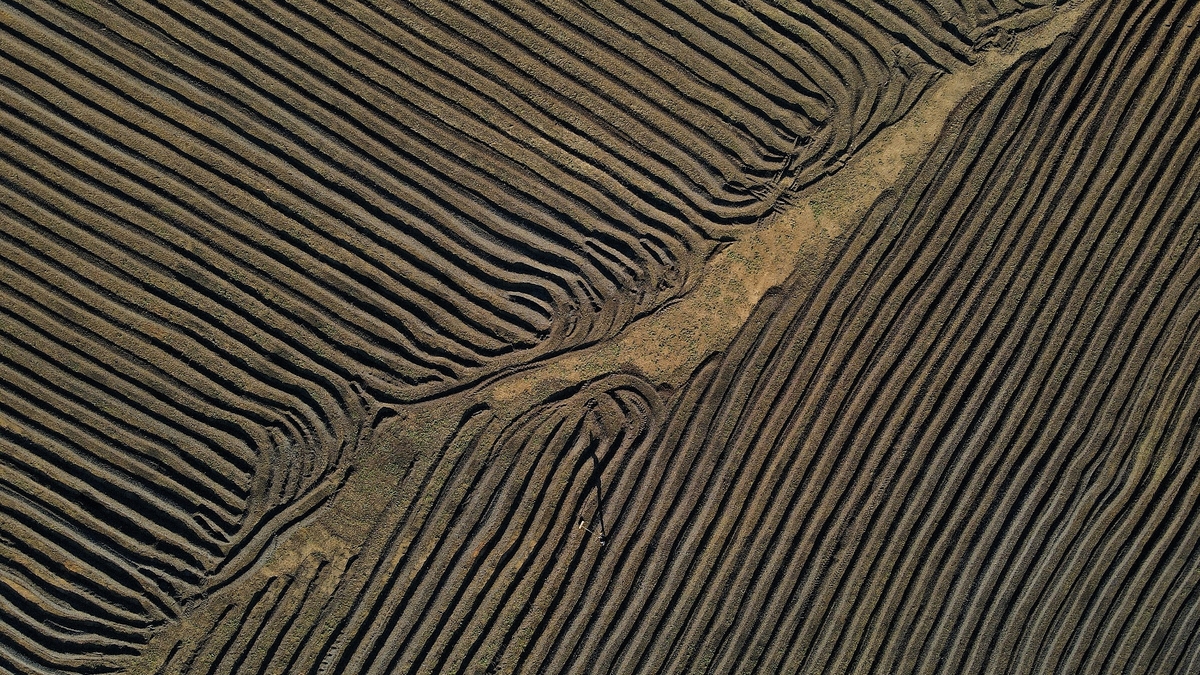
Large areas of farmland belonging to local households have to cease cultivation because it is flooded annually during the rainy season.
Driven by his passion for rice cultivation, during the 2021 harvest season, Minh's family faced a water shortage, forcing them to hire people to pump water for irrigation at a cost of 10 million VND. The rice grew lush and green, bringing hope for a successful harvest, but just as the grains were ripening, torrential rains in the seventh lunar month caused flooding, resulting in a total crop loss for Minh's family. Learning from this experience, last year Minh planted earlier. However, "man proposes, God disposes." In May, when the rice was already heading, heavy and prolonged rains flooded the entire rice field, causing the crops to rot. Minh lamented: "I'll try to cultivate one or two more crops before giving up, because all the effort I've invested is like 'a futile attempt to move sand in the East Sea'."
Most of the rice fields belonging to the 18 households are concentrated here; some families have additional land elsewhere, but the area is small. Due to the repeated flooding, the households are hesitant to do anything for fear of wasting time and money. Some families, reluctant to part with the land, have tried to grow spring-summer corn, but the area is not suited to the climate, resulting in low yields. Currently, it is time to plant the main crop, and although the villagers have land, they are forced to let weeds grow rampant, with some plots even cracked open.
The households have petitioned local authorities to take measures to address the flooding situation and facilitate agricultural production. Several options have been proposed, such as clearing the land in this rice field area, providing financial assistance to residents to purchase agricultural land elsewhere to continue farming, or constructing a drainage system from the rice fields to the Green Pond Dam and the Lung Thang rice paddies. However, due to the high cost of constructing the drainage system, the city cannot implement these plans. Furthermore, doing so could increase the risk. During heavy rains, water from the 58-meter road and the low-lying areas of Huoi Lung village could flow entirely into the Lung Thang rice paddies, severely impacting dozens of hectares of rice. Therefore, the city needs to conduct a thorough survey to develop a concrete plan.
At the most recent meeting between provincial and city People's Council representatives and voters in Sung Phai commune, the representative of the Lai Chau City People's Committee emphasized that the city acknowledges the voters' opinions and considers this an important issue that the city is concerned about and needs to address. The City People's Committee will report to the City Party Committee to seek approval, and the city will work with relevant agencies to conduct on-site surveys. They also expressed their hope that voters, residents, and elderly people who have lived near this rice field for many years will cooperate and contribute their opinions to help the city resolve the issue.
Source link



























































Comment (0)