

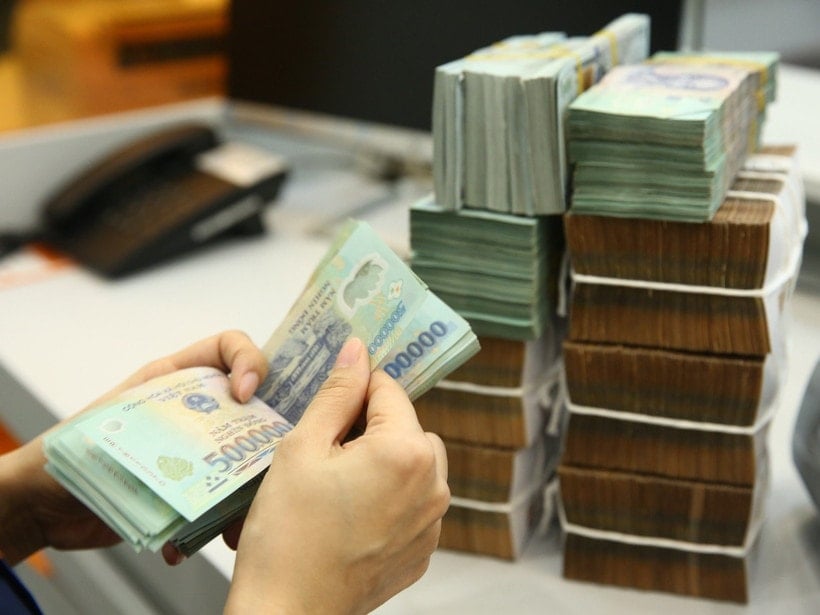
On October 23, the Ministry of Finance released information on the State Budget Estimate Report for 2026 to solicit broad public and organizational feedback.
With the goal of achieving GDP growth of 10% or more amidst a volatile global economy and a domestic economy recovering from difficulties, the budget report outlines a spending plan that prioritizes investment in development, science and technology, and social welfare.
According to the Ministry of Finance's assessment, amidst a global context facing numerous challenges from geopolitical conflicts and persistent inflation to increasing trade protectionism, Vietnam's economy in 2025 still stands out as a bright spot with impressive recovery results. This is a crucial foundation for the Government to develop an ambitious financial and budgetary plan for 2026, the opening year of the 5-year socio-economic development plan for the period 2026-2030.
Entering 2026, the year of the 14th National Party Congress, the Government has set ambitious goals, most notably a GDP growth rate of 10% or higher. To realize this goal, the 2026 State budget is being developed proactively, with reasonable expansion and a focus on key priorities.
Specifically, the projected total state budget revenue for 2026 is approximately 2.53 trillion VND, an increase of 5.9% compared to the estimated actual revenue in 2025. The ratio of revenue to the state budget is approximately 17.4% of GDP, of which revenue from taxes and fees accounts for about 13% of GDP.
Regarding budget expenditures, the projected total state budget expenditure for 2026 is approximately 3.16 million billion VND, an increase of 22.6% compared to the 2025 estimate. The biggest highlight is the overwhelming priority given to development investment. The projected expenditure for this sector reaches 1.12 million billion VND, accounting for 35.5% of the total state budget expenditure and increasing by 41.7% compared to the 2025 estimate. This is seen as a strong commitment by the Government to create breakthroughs in infrastructure and unlock resources for long-term growth. Alongside this, the projected expenditure for interest payments is 121.1 trillion VND, and the projected recurrent expenditure is approximately 1.8 million billion VND, accounting for about 57.2% of the total state budget expenditure.
Besides investment, the 2026 budget expenditure plan also clearly reflects other strategic priorities. Spending on science, technology, innovation, and digital transformation is targeted at 3% of total budget expenditure. At the same time, significant resources are allocated to ensure social welfare tasks, such as tuition fee exemption, universal preschool education, meal support for students in disadvantaged areas, and policies for human resources.
Accordingly, the projected state budget deficit for 2026 is VND 605.8 trillion (approximately 4.2% of GDP), of which the central government budget deficit is VND 583.7 trillion (approximately 4.0% of GDP), and the local government budget deficit is VND 22.1 trillion (approximately 0.2% of GDP).
The government report also outlines the national three-year financial and budgetary plan for the period 2026-2028. This plan aims to implement a proactive and flexible fiscal policy, ensuring the leading role of the central budget while maintaining national financial security and safety.
Over the next three years, total state budget revenue is projected to reach over 8.48 trillion VND, and total expenditure approximately 10.92 trillion VND. The average budget deficit will be controlled around 4.8% of GDP, and public debt by the end of 2028 is expected to be at 39-40% of GDP, within safe limits according to international standards.
To successfully achieve these goals, the report proposes a series of synchronized solutions, ranging from improving financial institutions and policies, promoting decentralization and delegation of power, to applying market principles in budget management, enhancing the efficiency of public asset utilization, and developing a comprehensive financial market.
Accordingly, the Ministry of Finance wishes to receive feedback from organizations and individuals to make the process of preparing the State budget estimates increasingly transparent and effective. All comments should be sent to the State Budget Department, Ministry of Finance, 28 Tran Hung Dao Street, Hanoi, or via email to: [email protected].
According to Vietnam+Source: https://baohaiphong.vn/bo-tai-chinh-lay-y-kien-dong-gop-xay-dung-du-toan-ngan-sach-nha-nuoc-nam-2026-524375.html
![[Photo] Closing Ceremony of the 10th Session of the 15th National Assembly](/_next/image?url=https%3A%2F%2Fvphoto.vietnam.vn%2Fthumb%2F1200x675%2Fvietnam%2Fresource%2FIMAGE%2F2025%2F12%2F11%2F1765448959967_image-1437-jpg.webp&w=3840&q=75)


![[Photo] Prime Minister Pham Minh Chinh holds a phone call with the CEO of Russia's Rosatom Corporation.](/_next/image?url=https%3A%2F%2Fvphoto.vietnam.vn%2Fthumb%2F1200x675%2Fvietnam%2Fresource%2FIMAGE%2F2025%2F12%2F11%2F1765464552365_dsc-5295-jpg.webp&w=3840&q=75)








































































Comment (0)