

Final article: Opening a phase of more sustainable and modern development.
Changes in fishing vessel management, fishermen's awareness, and production organization are ushering in a new phase of development: more modern, more sustainable, and in line with the requirements of international integration.
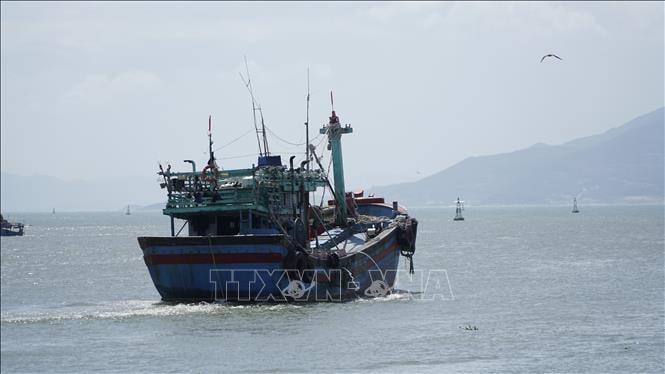
Towards a larger fish population and responsible fishing practices.
According to the National Steering Committee on Combating Illegal, Unreported, and Unregulated (IUU) Fishing, the entire country has completed the digitization of the database system for managing fishing vessel operations, ensuring interconnectedness, integration, multi-purpose functionality, and meeting the criteria of being "accurate, complete, clean, and active." The databases for managing fishing vessel information and monitoring and controlling fishing vessel operations at sea via vessel monitoring systems (VMS) now have regulations for data exploitation, use, and operation; relevant agencies, organizations, and individuals are now granted user accounts as per regulations.
Currently, each fishing vessel is managed with a unique identification code, with data synchronized across a software system for managing fishing vessels and vessel tracking devices. Local authorities organize departure control and traceability in a digitalized manner.
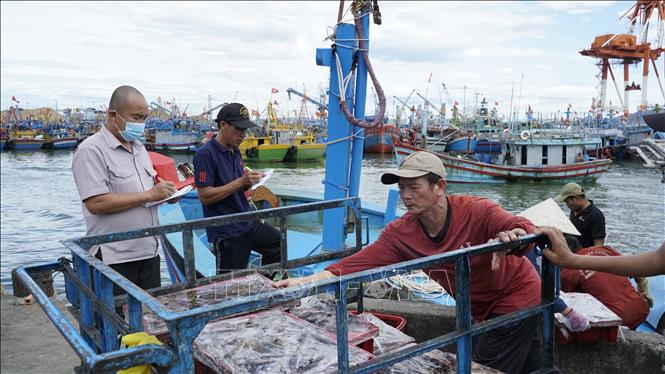
In Khanh Hoa , most captains and owners of fishing vessels are familiar with electronic reporting and submitting complete logbooks before being granted permits for new voyages or upon docking. Fishing teams and unions are well aware of the requirements for responsible fishing. Many boat owners share that they no longer hesitate to maintain vessel tracking devices 24 hours a day. The practice of reporting departures and returns has become a regular habit in the production activities of fishermen. Cooperation between fishermen and authorities is a crucial foundation for moving towards a modern and transparent fishing industry.
Mr. Nguyen Lai, Head of the Tho Quang Fishing Port and Dock Management Board, stated that fishing vessel management software such as VNFishbase and eCDT have recently been connected, improved, and updated with citizen identification numbers and related vessel documents, thereby reducing the amount of manual information entry required by the fishing port management unit.
"We hope that fishing vessel management software will continue to fully integrate user-friendly features, reduce manual operations, and shift to using voice commands and AI technology to make the reporting process more convenient and efficient for fishermen, as well as for management and monitoring," said Mr. Nguyen Lai.
In Gia Lai province, the loss of connectivity for vessel tracking devices on most ships has been attributed to satellite malfunctions. However, there have been cases of deliberate violations of the mandatory requirement to maintain vessel tracking device connectivity. To address this issue, Gia Lai provincial authorities have compiled a list of fishing vessels at high risk of violating regulations on combating IUU (Illegal, Unreported, and Unregulated) fishing and sent it to local authorities for monitoring and management. Since the end of October 2025, Gia Lai province has implemented an intelligent automatic warning system, which displays, signals, and sends notifications immediately when a vessel crosses a boundary or experiences prolonged connectivity loss.
Mr. Nguyen Huu Nghia, Head of the Gia Lai Provincial Fisheries Department, shared that when a fishing vessel loses connection, the system automatically alerts the owner or their family member via phone. According to regulations, a fishing vessel losing connection for 6 hours will be penalized for violations, but the system will provide a 4-hour warning. In many cases, the owner and their family are unaware that the vessel has lost connection even though the device is still flashing lights. Therefore, the system will alert the owner and their family so they can take corrective action and contact the network provider for guidance to avoid affecting their fishing trip. The system helps reduce manual inspection by 60-70% and increases the efficiency of continuous monitoring by authorities.
"Since the intelligent automatic warning system was implemented, it has yielded practical results, significantly reducing the number of disconnections from vessel tracking devices. Previously, the number of disconnections lasting over 6 hours per week reached 500-700 vessels, but now it's only about 10 fishing vessels per week," said Mr. Nguyen Huu Nghia.
Currently, some localities and functional agencies are proposing that relevant central ministries and agencies research, revise, and improve the national technical standards for vessel monitoring systems (VMS). This includes focusing on researching and integrating new technologies, as required by the European Commission (EC), for monitoring fishing vessels on VMS devices, such as electronic declaration features, automatic sending of logs and electronic reports on fishing vessel operations; integrating artificial intelligence (AI) technology in real-time monitoring and detection of fishing vessel violations, and automatically issuing alerts on VMS devices such as boundary crossing alerts, connection loss alerts, and device error alerts.
Shifting exploitation towards aquaculture
Faced with the reality of declining marine resources and the impact of climate change, many provinces and cities in the central region have issued policies to retrain and decommission fishing vessels that are no longer needed, shifting strongly towards sustainable aquaculture.
In Gia Lai, the Provincial People's Council has passed resolutions to support fishermen, especially those with fishing vessels that do not meet operating requirements, by providing monthly support in the form of rice and cash (3 million VND/vessel) from September to December 2025, with the condition that they do not engage in IUU fishing and commit to not going out to sea, in order to stabilize their lives and strictly manage fishing vessels. The Gia Lai Provincial People's Council also passed a resolution stipulating policies to support the conversion of occupations and decommissioning of fishing vessels that are no longer needed for operation or do not meet the requirements for fishing in the province.
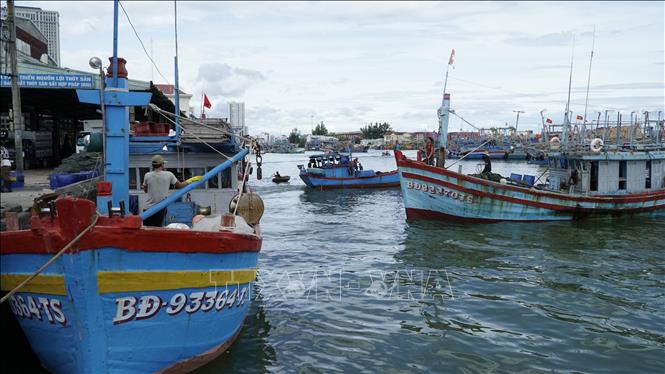
According to Tran Quoc Khanh, Deputy Director of the Department of Agriculture and Environment of Gia Lai province, the issuance of a policy to support the conversion and decommissioning of fishing vessels that are no longer in operation or do not meet the conditions for fishing is necessary. This policy creates a financial mechanism to encourage vessel owners to voluntarily and definitively remove risky vessels from the system, thoroughly addressing the root causes of IUU violations. This decommissioning policy is considered a fundamental step to thoroughly address the situation of small, unsafe fishing vessels, while also opening up alternative livelihoods for fishermen.
With its favorable natural conditions, Khanh Hoa is currently one of the leading localities in the country in developing high-value marine aquaculture, gradually reducing dependence on marine exploitation.
According to the Department of Agriculture and Environment of Khanh Hoa province, the locality harvests more than 32,000 tons of farmed aquatic products annually, with marine farming accounting for about 50%. In 2024, seafood export turnover reached nearly 850 million USD. Currently, Khanh Hoa has more than 80,800 lobster cages and 15,000 cages for various types of marine fish, and is also the largest aquatic seed production center in the country, accounting for about 30% of the total national seed production, with 558 production facilities supplying more than 41 billion seeds annually. The locality also brings together major research institutes, supporting seed selection, environmental control, and the application of technology in production.
People living along the coast of Khanh Hoa province are currently developing diverse farming models such as lobster, Pacific oyster, seaweed, marine fish, sea cucumber, and pearl. Many households combine and rotate farming to improve efficiency. In Dam Nai, oyster farming using hanging ropes in cages has become the main livelihood due to its ease of cultivation, low labor requirements, and suitability to the natural conditions, providing many households with a stable income.
Alongside traditional farming models, Khanh Hoa province is piloting many high-tech marine farming models. HDPE plastic cages used in farming grouper, pearl grouper, and lobster in Cam Ranh and Dai Lanh have shown higher profit margins than wooden cages and are safer in rough seas and strong winds. Many cooperatives, such as the Van Ninh High-Tech Marine Farming Cooperative and the Van Phong Aquatic Tourism Cooperative, have been established, applying science and technology while developing aquatic tourism, creating a sustainable value chain.
To reduce pressure on fishing and enhance the value of aquatic products, Khanh Hoa province is focusing on developing industrial marine aquaculture. Many businesses, such as Ngoc Trai Co., Ltd., Australis Vietnam Aquatic Products Co., Ltd., and various marine aquaculture centers, have invested in new cage models made of materials adapted to the deep-sea environment.
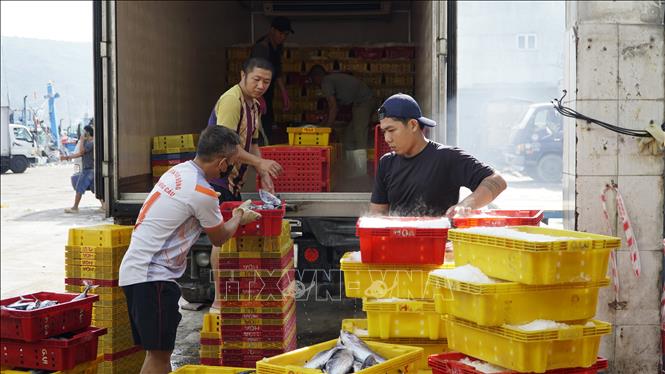
In early January 2025, Khanh Hoa province received approval from the Prime Minister for a pilot project on high-tech marine aquaculture development under Decision No. 231/QD-TTg. The project is expected to require an investment of 1,000 billion VND; of which, the provincial budget will provide 300 billion VND, farmers will contribute 400 billion VND, and the remainder will come from preferential loans and other credit institutions. This project will contribute to increasing the productivity and value of aquatic product production, improving income for people and related organizations, while also contributing to protecting the marine environment and promoting sustainable marine economic development, reducing pressure on coastal areas, and minimizing development conflicts between economic sectors in the locality.
According to Trinh Minh Hoang, Vice Chairman of the People's Committee of Khanh Hoa province, the pilot models of high-tech marine aquaculture are concrete steps in realizing the strategy of sustainable marine economic development. The locality is focusing on perfecting mechanisms and policies to support fishermen with preferential loans and risk-prevention insurance, while also investing 500 billion VND in the 2026-2030 period to build infrastructure for concentrated aquaculture areas at sea.
With this direction, Khanh Hoa, along with many other coastal localities in Central Vietnam, is building the foundation for a modern and sustainable fisheries industry. This also creates conditions for Vietnam to gradually advance, strive to completely remove the IUU warning, and develop its marine economy in a green and responsible manner.
Source: https://baotintuc.vn/kinh-te/buoc-chuyen-go-the-vang-iuu-bai-cuoi-20251216161848212.htm
![[Photo] Prime Minister Pham Minh Chinh receives the Governor of Tochigi Province (Japan)](/_next/image?url=https%3A%2F%2Fvphoto.vietnam.vn%2Fthumb%2F1200x675%2Fvietnam%2Fresource%2FIMAGE%2F2025%2F12%2F16%2F1765892133176_dsc-8082-6425-jpg.webp&w=3840&q=75)

![[Photo] Prime Minister Pham Minh Chinh receives Lao Minister of Education and Sports Thongsalith Mangnormek](/_next/image?url=https%3A%2F%2Fvphoto.vietnam.vn%2Fthumb%2F1200x675%2Fvietnam%2Fresource%2FIMAGE%2F2025%2F12%2F16%2F1765876834721_dsc-7519-jpg.webp&w=3840&q=75)
![[Image] Leaked images ahead of the 2025 Community Action Awards gala.](/_next/image?url=https%3A%2F%2Fvphoto.vietnam.vn%2Fthumb%2F1200x675%2Fvietnam%2Fresource%2FIMAGE%2F2025%2F12%2F16%2F1765882828720_ndo_br_thiet-ke-chua-co-ten-45-png.webp&w=3840&q=75)

![[Live] 2025 Community Action Awards Gala](/_next/image?url=https%3A%2F%2Fvphoto.vietnam.vn%2Fthumb%2F1200x675%2Fvietnam%2Fresource%2FIMAGE%2F2025%2F12%2F16%2F1765899631650_ndo_tr_z7334013144784-9f9fe10a6d63584c85aff40f2957c250-jpg.webp&w=3840&q=75)




































![[Photo] Prime Minister Pham Minh Chinh attends the Vietnam Economic Forum 2025](https://vphoto.vietnam.vn/thumb/402x226/vietnam/resource/IMAGE/2025/12/16/1765893035503_ndo_br_dsc-8043-jpg.webp)















Comment (0)