

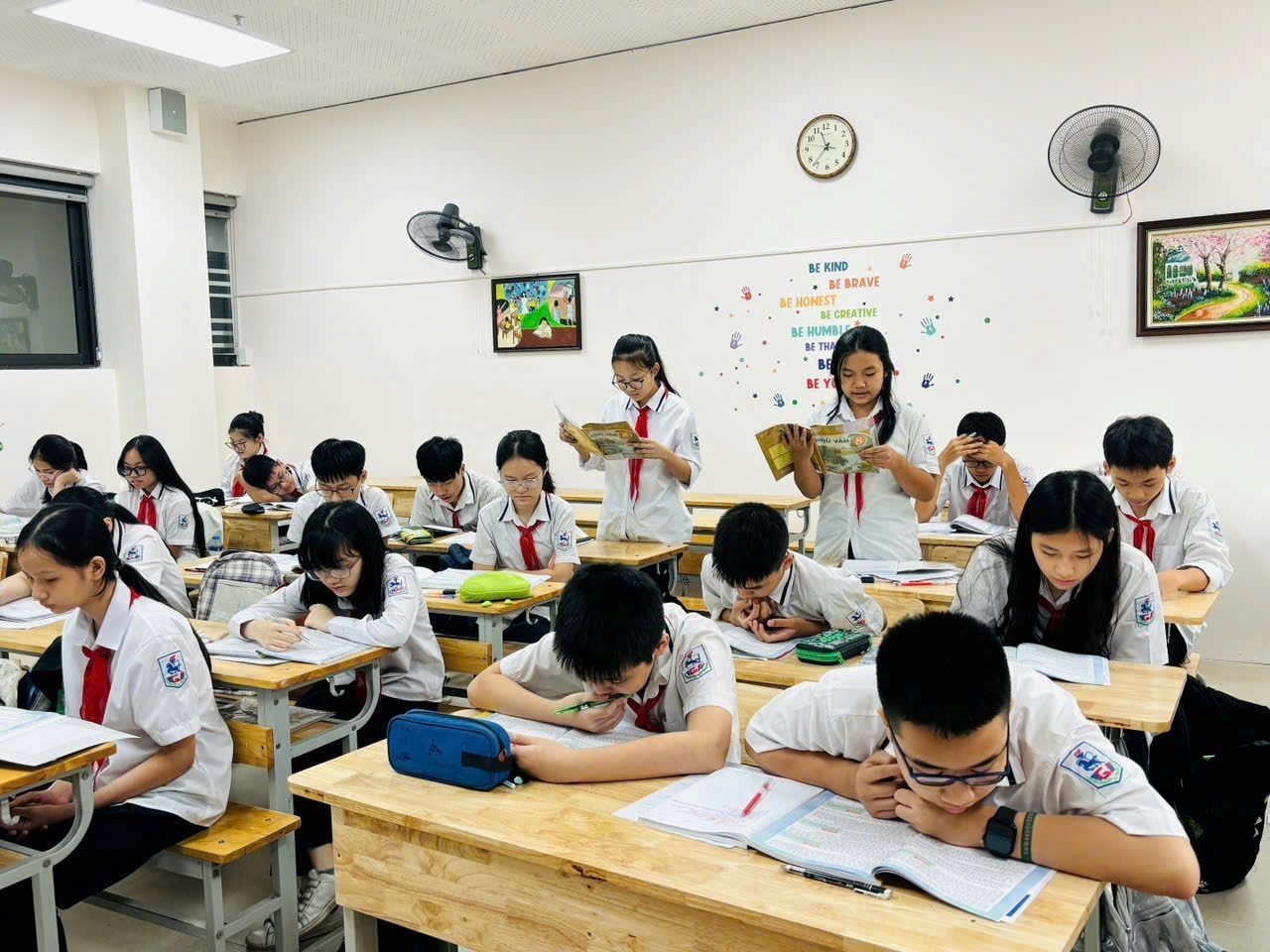
Many conflicting viewpoints
Recently, a parent shared their opinion about the poem "The Sound of Germinating Seeds" by Tô Hà in the 5th grade Vietnamese textbook, stating that it was convoluted and difficult to understand. Following this, many people on social media voiced their objections, questioning why this work was included in the textbook when the poem lacks rhyme, making it difficult for young students to learn. In particular, the appearance of words like "humming" and "quietly diligent" in the poem was criticized as uncommon, rarely encountered, difficult to read, and hard to remember.
However, shortly afterward, a series of opinions from poets, literary critics, education experts, authors of Vietnamese language textbooks, teachers, etc., analyzed the unique and creative aspects of the poem and affirmed that the work fully deserved to be included in textbooks. Specifically, Associate Professor Bui Manh Hung - the main coordinator of the 2018 General Education Curriculum Development Board, and the General Editor of the Vietnamese Language and Literature textbook series "Connecting Knowledge with Life" - analyzed several reasons why the poem became a "controversial" topic in public opinion, including the hasty reading of the poem without fully understanding the work before making judgments. He also pointed to outdated conceptions of poetry, especially poetry used in textbooks.
According to many, poetry must adhere to strict rhyme, and if it rhymes, it must be a perfect rhyme; poetry taught to students must be easy to read and understand, and its content must be clear. Furthermore, educational concepts remain rigid. Many only want today's students to learn the poems they learned in the past, regardless of the fact that many things have changed today, such as students preferring different types of music , and their tastes in clothing and food have also changed.
In fact, anyone reading this text along with the study guide in their textbook will clearly see that it is a poem about a classroom for the hearing impaired, and the carefully chosen words are very suitable for describing the students in the class. Fifth-grade students, with the guidance and prompting of their teacher, will appreciate the unique and meaningful verses of the poem, which has profound humanistic and educational value. Through this, they will learn empathy and compassion for disadvantaged children.
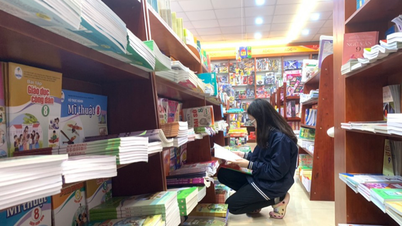
Looking back over the past five years since the 2018 General Education Program with its new textbooks officially began teaching in schools, public opinion has been stirred up on numerous occasions by the literary materials appearing in these Vietnamese language textbooks. For example, the poem "Bullying" by Nguyen The Hoang Linh, printed in the 6th grade Vietnamese Language and Literature textbook from the "Connecting Knowledge with Life" series, also caused controversy for many days. New works easily provoke conflicting opinions, even though these literary texts had to go through many rigorous rounds of evaluation before being included in the curriculum. Experts point to one reason for this as the "traditional" concept of teaching Vietnamese Language and Literature, which prevents many people from immediately accepting new texts, especially poems with flexible rhymes and rhythms unlike those they already knew and studied in previous textbooks.
The challenges facing teachers and schools.
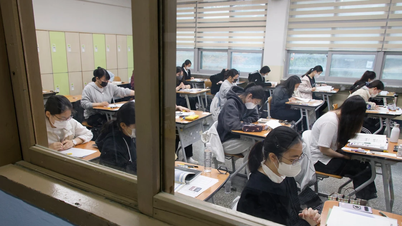
With the goal of innovating the teaching and learning of Literature as set by the education sector, the Ministry of Education and Training requires that the materials in textbooks not be used in Literature tests for junior and senior high school students starting from the 2024-2025 school year. This aims to overcome the situation where students only memorize lessons or copy content from available materials.
The policy is clear, but its implementation in practice will face difficulties, as not all teachers can find suitable texts to include in their tests. In particular, to avoid duplication in tests across classes within the same grade level, and between different school years, teachers will have to constantly update different texts to innovate the tests. This is clearly a significant challenge requiring teachers to possess sufficient professional competence to assess and accurately select appropriate materials, as well as dedication to their profession. As Associate Professor Bui Manh Hung shared, just a few texts, often literary texts, with differing opinions can create a public outcry. The newer the work (whether newly created or little known to the public), the more likely it is to provoke conflicting assessments.
Currently, online resources are readily available, but amidst this sea of information, selecting texts that truly meet the purpose and requirements of a test is not easy. A single mistake, such as choosing a text that is too long or too difficult for students, can cause significant problems. To avoid such pitfalls, Mr. Tran Van Toan, Head of the Literature Department (Hue National High School for the Gifted), suggests strengthening teacher training in the skills of selecting materials, formulating questions, and issuing precise and appropriate questions that align with the cultural standards and requirements set by the Ministry of Education and Training. Furthermore, schools need to prioritize reviewing periodic test papers, preventing a situation where everyone does as they please, which can easily lead to regrettable errors.
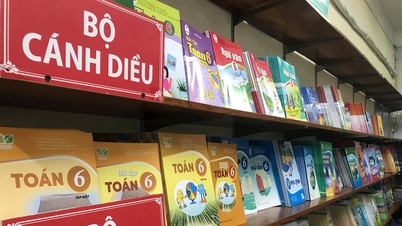
According to Ms. Nguyen Thi Van Hong, Principal of Chuong Duong Secondary School (Hoan Kiem District, Hanoi), when selecting teaching materials outside of textbooks, teachers must have the necessary skills to fully understand the materials they use. The school administration and subject departments must closely monitor the selection process to ensure the materials are accurate. One approach is that if the school chooses textbook A for teaching, they can select materials from textbook B for exam questions to ensure pedagogical accuracy and correct wording. Furthermore, diverse materials can be selected from official literary works. For example, when teaching the work "Southern Forest Land," teachers can use excerpts from other works not included in the textbook. Ms. Hong believes this approach helps to reduce the selection of inaccurate materials.
Source: https://daidoanket.vn/can-trong-voi-ngu-lieu-ngoai-sach-giao-khoa-10292377.html

![[Photo] Prime Minister Pham Minh Chinh receives the Governor of Tochigi Province (Japan)](/_next/image?url=https%3A%2F%2Fvphoto.vietnam.vn%2Fthumb%2F1200x675%2Fvietnam%2Fresource%2FIMAGE%2F2025%2F12%2F16%2F1765892133176_dsc-8082-6425-jpg.webp&w=3840&q=75)

![[Live] 2025 Community Action Awards Gala](/_next/image?url=https%3A%2F%2Fvphoto.vietnam.vn%2Fthumb%2F1200x675%2Fvietnam%2Fresource%2FIMAGE%2F2025%2F12%2F16%2F1765899631650_ndo_tr_z7334013144784-9f9fe10a6d63584c85aff40f2957c250-jpg.webp&w=3840&q=75)
![[Image] The tenacious fighting spirit of Vietnamese women's football](/_next/image?url=https%3A%2F%2Fvphoto.vietnam.vn%2Fthumb%2F1200x675%2Fvietnam%2Fresource%2FIMAGE%2F2025%2F12%2F17%2F1765990260956_ndo_br_4224760955870434771-copy-jpg.webp&w=3840&q=75)
























































Comment (0)