

Recently, on social media platforms like Facebook and TikTok, there has been a surge in videos and groups promoting the idea of drinking 200-500ml of pure lemon juice daily (equivalent to 3-6 lemons) to detoxify, lose weight, reduce fat, cure all kinds of ailments, and even potentially cure cancer and HIV.
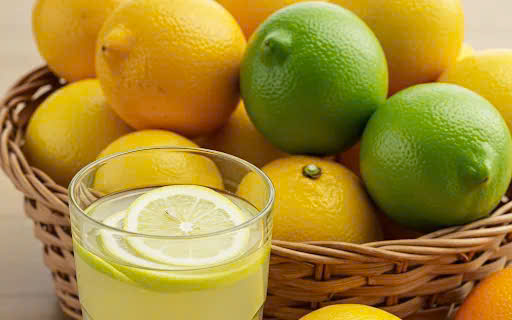 |
| Drinking large amounts of lemon juice can also increase the risk of kidney failure and kidney stones, and it is strongly advised that people with chronic kidney disease should absolutely not consume large quantities of lemon juice daily. |
Many online videos share the idea of mixing lemon juice with salt and drinking it in the morning on an empty stomach to detoxify, fight aging, improve skin, and cure various ailments.
Many people also spread rumors about the miraculous effects of lemons, such as drinking high doses of lemon juice (from 5-10 lemons) daily to help the body prevent toxins from entering, "kill bacteria and viruses," eliminate cancer cells, and cure kidney stones...
According to information from Gia An Hospital, a few days ago, Gia An 115 Hospital (Ho Chi Minh City) provided emergency treatment to a young male patient who suffered a stroke due to high blood pressure.
Previously, he had been hospitalized several times due to high blood pressure, and although he was prescribed medication, he stopped taking it when he felt better. This time, he unexpectedly collapsed in the bathroom one morning before taking his children to school. Seeing her husband lying unconscious, his wife called for emergency services and asked the security guard to help.
While waiting for the ambulance, she gave her husband blood pressure medication and squeezed lemon juice into his mouth for good luck. When the ambulance team arrived, the patient was drowsy but completely paralyzed on the left side, had lost his ability to speak, and his blood pressure was 248/184 mmHg.
A CT scan of the brain revealed a large brain hemorrhage, prompting intubation to protect the airway and emergency surgery. During intubation, the doctors had to suction out a significant amount of lemon juice and pulp that had accumulated in the pharynx.
Earlier, the emergency team of Gia An 115 Hospital also provided emergency care to a male patient over 50 years old who suffered a stroke at home. When the doctors reached the patient, he was already cyanotic and had stopped breathing.
When they discovered the patient had fallen into a coma, instead of calling emergency services, the family called another family member who was at work to come home and check on the patient. By the time that person arrived, the patient had already stopped breathing, and only then did they call for emergency services.
According to the emergency physician, during the intubation process, the patient vomited a large amount of lemon juice and pulp, indicating that the family had tried to give the patient lemon juice to drink in the hope of resuscitating him, instead of calling for emergency services. This worsened the patient's breathing difficulties and further delayed resuscitation efforts.
Despite chest compressions, manual ventilation, medication, and defibrillation, the patient's heart rate returned after 15 minutes, but a CT scan of the brain revealed severe cerebral edema due to prolonged hypoxia.
According to Dr. Nguyen Thang Nhat Tue, Head of the Emergency Department at Gia An 115 Hospital, strokes spare no one, and absolutely no one should try home remedies like squeezing lemon juice or giving someone something to drink to revive them; these are unscientific .
These methods are unhelpful and may even worsen aspiration, airway obstruction, sepsis, and, more importantly, waste the critical window for emergency resuscitation.
Regarding this trend, Dr. Le Thi Huong Giang, Head of the Nutrition and Dietetics Department at the 19-8 Hospital, stated that to date, there are no clinical studies or documents in the world's medical literature proving that drinking a lot of lemon water can cure cancer, treat HIV, alkalize the body, prevent stroke, increase energy, or detoxify the liver and kidneys.
According to this nutritionist, based on medical studies on citric acid, stomach pH, and mucosal damage, consuming 5-10 lemons per day, or 200-500ml of lemon juice, can cause stomach damage, ulcers, and gastrointestinal bleeding. This is because lemon juice has a pH of approximately 2.0-2.6, equivalent to a strong acid.
Studies in Digestive Diseases (2020) indicate that strong acids destroy the protective mucous layer of the stomach, increasing the risk of inflammation, ulcers, reflux, and potentially causing gastrointestinal bleeding in people with stomach problems. Consuming 5-10 lemons a day introduces an amount of acid far exceeding physiological tolerance levels.
Furthermore, consuming 5-10 lemons a day can cause electrolyte imbalance, calcium deficiency, and potassium loss, because high doses of citric acid increase calcium excretion in urine (risk of osteoporosis, kidney stones), and increase potassium excretion, leading to a risk of heart arrhythmias. This is especially dangerous for the elderly or those with underlying health conditions who consume high doses of lemon juice daily.
Dr. Giang also pointed out that drinking high doses of lemon juice increases the risk of kidney failure and kidney stones, and advised people with chronic kidney disease to absolutely avoid consuming large amounts of lemon juice daily. In addition, drinking high doses of lemon juice also increases the risk of choking, airway obstruction, and delays in emergency treatment in stroke cases.
Regarding the trend of drinking lemon juice to "alkalize the body," according to Dr. Giang, this is a pseudo-scientific concept. The human body regulates pH naturally through the kidneys and respiration. Ingesting acid does not make the body more alkaline; instead, it forces the body to work harder to neutralize it, easily leading to fatigue and metabolic disorders.
Experts also emphasized that lemons do not have the effect of eliminating toxins; the liver and kidneys are the organs that truly eliminate toxins, and they affirmed that lemons do not detoxify the liver, kidneys, or remove heavy metals.
To ensure people use lemons appropriately, experts advise against consuming more than 1-2 lemons per day and against drinking pure lemon juice. People with stomach problems, kidney disease, diabetes, or electrolyte imbalances should not drink lemon juice regularly.
People should absolutely not trust groups promoting "detoxification, alkalization, and healing with lemons" because the information lacks scientific basis and research, leading to serious consequences and wasting valuable treatment time. Those undergoing chemotherapy for cancer, with HIV, or with severe underlying conditions should adhere to their specialist doctor's treatment plan and should not use high doses of lemon juice as a substitute for treatment.
Lemons are only beneficial when used correctly – as a food, not a medicine. The public needs to be vigilant and avoid following misleading advice on social media, especially in emergency situations like strokes – where every minute counts and can determine a patient's life.
Source: https://baodautu.vn/can-trong-voi-thong-tin-uong-nuoc-chanh-lieu-cao-chua-bach-benh-d444709.html
![[Photo] Prime Minister Pham Minh Chinh receives Lao Minister of Education and Sports Thongsalith Mangnormek](/_next/image?url=https%3A%2F%2Fvphoto.vietnam.vn%2Fthumb%2F1200x675%2Fvietnam%2Fresource%2FIMAGE%2F2025%2F12%2F16%2F1765876834721_dsc-7519-jpg.webp&w=3840&q=75)
![[Photo] Prime Minister Pham Minh Chinh receives the Governor of Tochigi Province (Japan)](/_next/image?url=https%3A%2F%2Fvphoto.vietnam.vn%2Fthumb%2F1200x675%2Fvietnam%2Fresource%2FIMAGE%2F2025%2F12%2F16%2F1765892133176_dsc-8082-6425-jpg.webp&w=3840&q=75)
![[Live] 2025 Community Action Awards Gala](/_next/image?url=https%3A%2F%2Fvphoto.vietnam.vn%2Fthumb%2F1200x675%2Fvietnam%2Fresource%2FIMAGE%2F2025%2F12%2F16%2F1765899631650_ndo_tr_z7334013144784-9f9fe10a6d63584c85aff40f2957c250-jpg.webp&w=3840&q=75)
![[Image] Leaked images ahead of the 2025 Community Action Awards gala.](/_next/image?url=https%3A%2F%2Fvphoto.vietnam.vn%2Fthumb%2F1200x675%2Fvietnam%2Fresource%2FIMAGE%2F2025%2F12%2F16%2F1765882828720_ndo_br_thiet-ke-chua-co-ten-45-png.webp&w=3840&q=75)




























































































Comment (0)