The gold price gap is unlikely to narrow in the short term.
The significant price difference between domestic and international gold prices, along with gold speculation, is not unique to Vietnam but also occurs in several other countries. According to experts, Vietnam could study and learn from the experiences of countries with similar conditions to gradually improve and innovate its gold market management methods more effectively.
Báo Đắk Nông•19/05/2025
It is difficult to narrow the gold price gap due to continued supply shortages.
The price difference between domestic and international gold remains high, at around 18 million VND per tael – equivalent to the level before the State Bank of Vietnam implemented a series of measures to intervene in the gold market in 2024.
In its report to the National Assembly , the State Bank of Vietnam frankly acknowledged that one of the reasons for the significant difference between domestic and international gold prices is that the supply of gold bars on the market has not been supplemented since the beginning of 2025.
In addition, it cannot be ruled out that some businesses and individuals may take advantage of market fluctuations to speculate, inflate prices, and profit illegally.
Speaking to the press, Shaokai Fan – Regional Director for Asia-Pacific (excluding China) and Global Central Bank Director of the World Gold Council (WGC) – stated that Vietnam is not the only country experiencing a significant disparity between domestic and international gold prices.
The main reason stems from the fact that many countries have implemented policies to control gold imports, such as restricting imports or imposing high taxes, thereby causing an imbalance between supply and demand. He cited China as an example, where domestic gold prices are significantly higher than world prices.
According to Mr. Fan, gold speculation in Vietnam is not an isolated phenomenon but a common reaction in highly liberal markets. However, he warned that regulatory authorities need to implement strict controls to prevent excessive speculation, which could cause negative fluctuations in the market and investment environment.
In light of this situation, in Official Dispatch No. 64/CD-TTg dated May 13, 2025, Prime Minister Pham Minh Chinh requested the State Bank of Vietnam to closely monitor fluctuations in domestic and international gold prices, and to proactively implement market stabilization measures when necessary.
The Prime Minister also requested the State Bank of Vietnam to promptly announce the conclusions of the inspection of businesses and credit institutions trading in gold. The Ministry of Public Security was assigned to lead and coordinate with the State Bank of Vietnam and other relevant agencies to urgently implement strong measures to strictly handle violations of the law in gold trading activities such as smuggling, speculative profiteering, market manipulation, and illegal trading.
Nevertheless, Mr. Shaokai Fan noted that the Vietnamese people's preference for gold remains very strong, and the demand for gold investment is still robust. Therefore, if effective measures are not taken to increase the supply of gold, the price difference between domestic and international gold is likely to continue for some time.
Vietnam can study and learn from the experiences of countries with similar conditions to gradually improve and innovate its gold market management methods more effectively.
The flow of money into gold shows no sign of stopping.
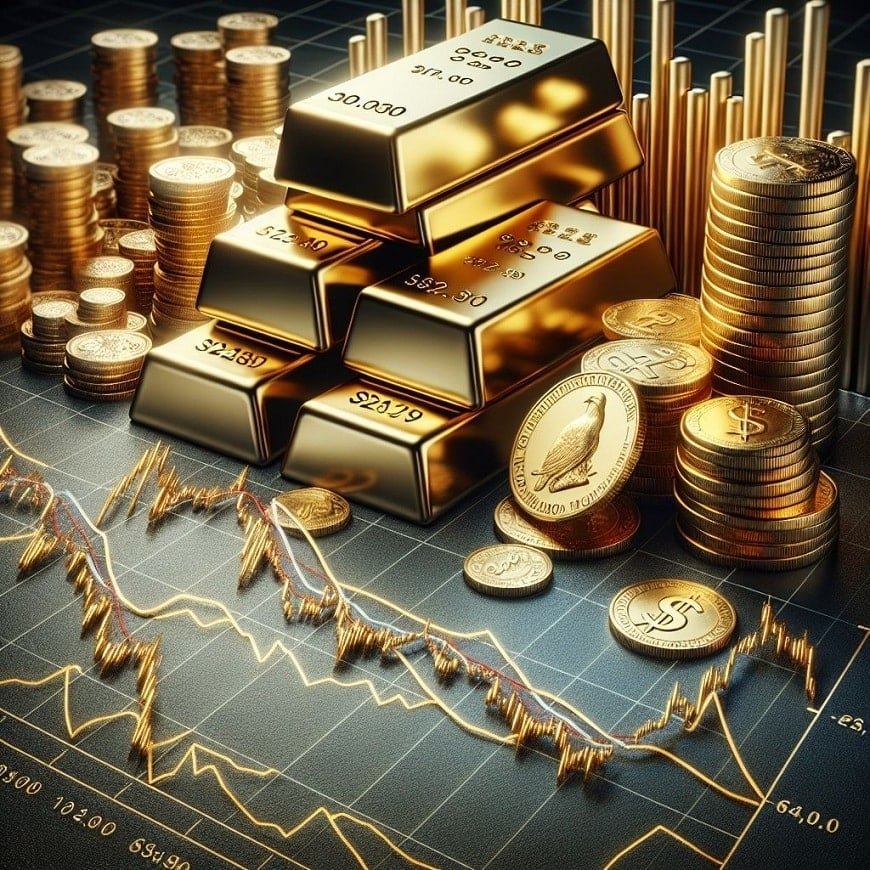
World gold prices once reached nearly $3,500 per ounce on April 22, 2025, but after the US and China made initial progress in trade negotiations, prices adjusted downwards to just over $3,200 per ounce. According to Shaokai Fan, such geopolitical and economic information can change constantly, making the cycles of gold price increases and decreases shorter and more unpredictable.
Mr. Nguyen Viet Duc – Director of Digital Business at VPBank Securities Joint Stock Company (VPBankS) – warned that investing in gold at the present time carries considerable risks, as the market often experiences sharp corrections after periods of rapid increase.
Nevertheless, many experts still assess the outlook for gold price increases in the medium and long term as very positive. Even if gold experiences downward pressure, the decline is usually not too deep because bottom-buying activity from large institutional investors is still waiting for opportunities to disburse more funds.
Data from the World Gold Council shows that by the end of Q1 2025, the total amount of gold held by ETFs had reached 552 tons – an increase of over 170% compared to the same period last year and the highest level since Q1 2022. Shaokai Fan predicts that inflows into gold ETFs will continue to increase in April 2025. Although there may be a slight decrease in May due to the impact of trade negotiations, he believes the overall trend from now until the end of the year will remain an increase in capital flows into gold investments.
Currently, the total value of gold held by ETFs has reached $345 billion – the highest level in history. In addition, demand for physical gold has also increased sharply globally, especially in regions such as the Middle East and China.
In the first quarter of 2025, China purchased 124 tons of gold – the second-highest quarterly figure in history, reflecting a shift by Chinese individual investors away from less attractive investment channels such as stocks and real estate.
Demand for gold from central banks also continues to remain high. It is estimated that net gold purchases from this group could exceed 1,000 tons in 2025. Since the beginning of the year, the central banks of Poland, China, Kazakhstan, and the Czech Republic have all been actively buying gold.
Notably, the Central Bank of Kazakhstan – which had typically sold gold when prices rose in previous years – has announced it will not sell and will continue to increase its gold reserves in the future.
Currently, gold accounts for only about 5–10% of the reserve asset portfolios of global central banks, meaning there is still significant room for further accumulation, especially given the continued instability of the US dollar and US government bonds.
In addition, the global economic and political situation continues to be complex and unpredictable, providing further support for gold prices.
Analysts believe that demand for gold is likely to continue to increase sharply in the near future, becoming a key factor in helping gold prices remain high or continue their upward trend.





![[Image] Hanoi's urban life under the challenge of a "scorching hot" environment](https://vphoto.vietnam.vn/thumb/1200x675/vietnam/resource/IMAGE/2026/05/25/1779706979265_nang-nong-t5-2026-minh-duy-7-4636-jpg.webp)






















































































Comment (0)