

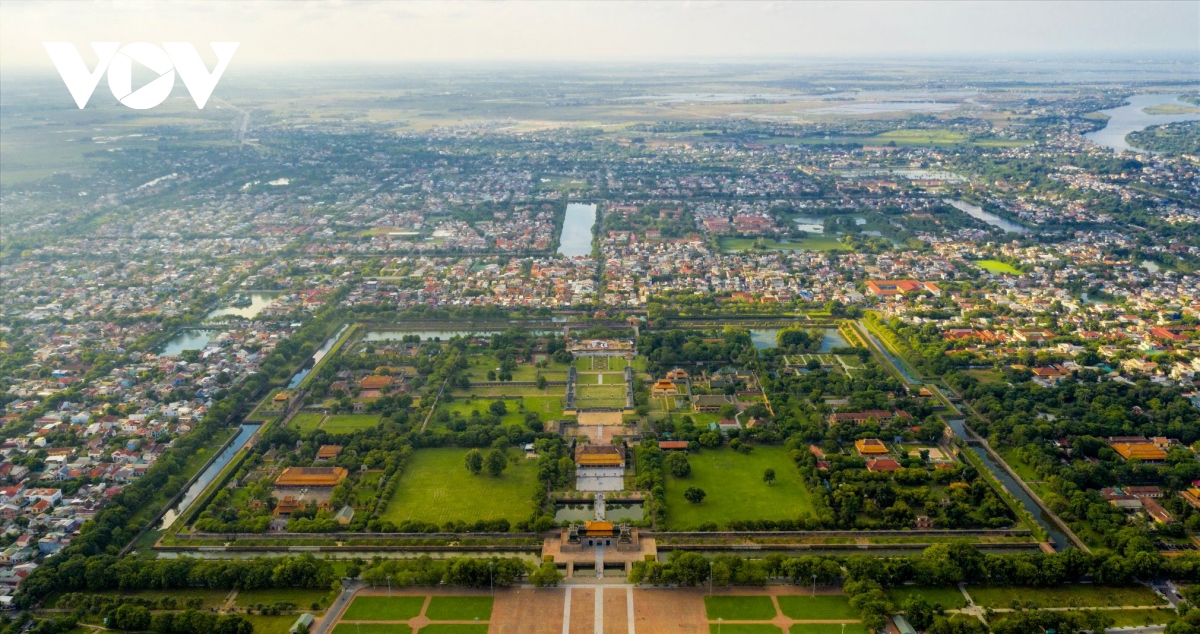
The Imperial Citadel has a nearly square plan, each side is about 600m, built of bricks, 4m high, 1m thick, surrounded by a protective moat, with 4 gates for entry and exit: The main gate (South) is Ngo Mon, the East has Hien Nhon gate, the West has Chuong Duc gate, the North has Hoa Binh gate. The bridges and lakes dug around the outside of the citadel are all named Kim Thuy.
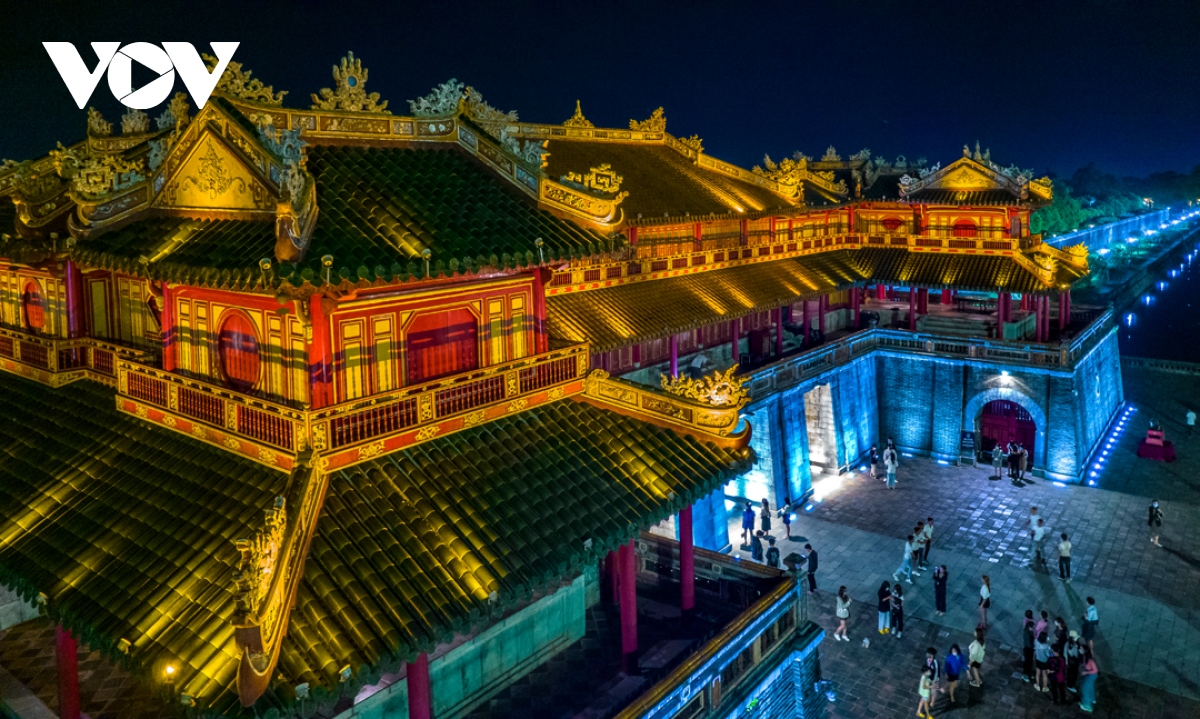
Ngo Mon is the main southern gate of Hue Imperial City, also considered the face of the Imperial City and the feudal dynasty. It is currently one of the architectural relics of the Nguyen Dynasty in the complex of Hue ancient capital relics. Ngo Mon - meaning "noon gate" - faces the south, is the largest of the four main gates of Hue Imperial City.
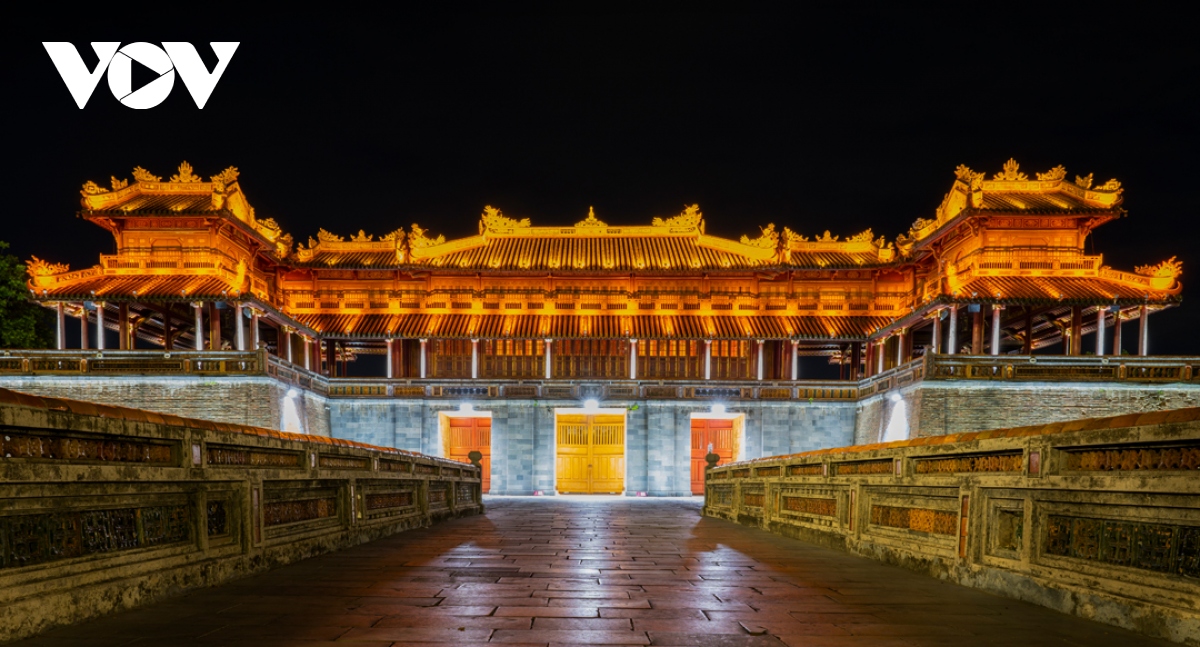
This is a ceremonial platform where many events of the Nguyen Dynasty took place, and is also a gate reserved for the king or ambassadors when they went to our country. On August 30, 1945, at the Ngo Mon building in Hue, the abdication ceremony of King Bao Dai - the last king of the feudal dynasty of Vietnam (Nguyen Dynasty) took place, handing over two symbols of royal power, the Emperor's seal and the sword representing military power to the representatives of the Provisional Government and the Viet Minh to become citizens of an independent country.
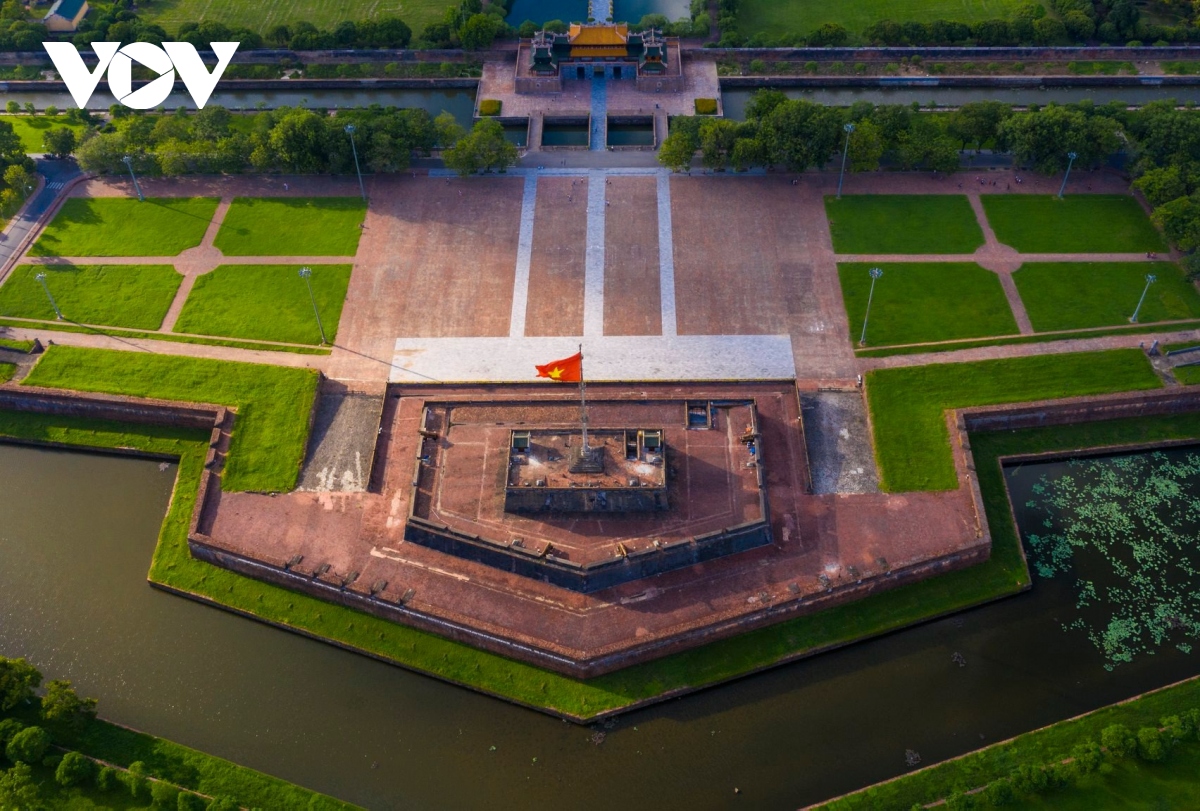
Ngo Mon is located in the South compared to the central position of the throne in Thai Hoa Palace. In terms of scale, this is the largest gate of the four gates of Hue Imperial City. Based on the compass of Eastern feng shui geography, the South belongs to the "noon" direction on the "ty - ngo" axis (North - South). The name Ngo Mon comes from there, meaning space and direction; not time as many people mistakenly think. Although it is the main gate, Ngo Mon is not used much because it is highly ceremonial. The gate is usually closed, only opened on special occasions such as when the King enters and exits the Imperial City with a royal procession, or on occasions of receiving important foreign envoys.
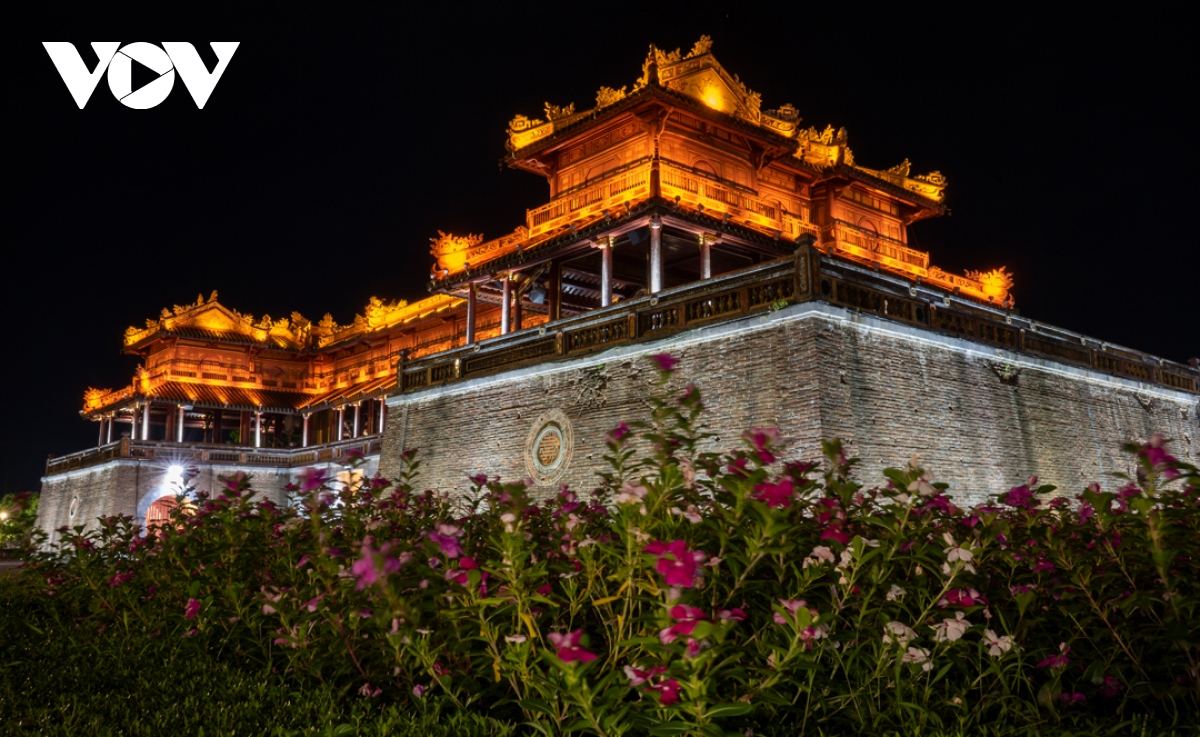
The Ngu Phung Tower is located above the platform, elevated by a 1.15m high platform system that also runs along the U-shaped platform. The tower has two floors, with a frame structure made of ironwood and 100 pillars. Some say that the number 100 represents the harmony of "yin and yang as one", while others say that it is a symbol of the power of hundreds of families.
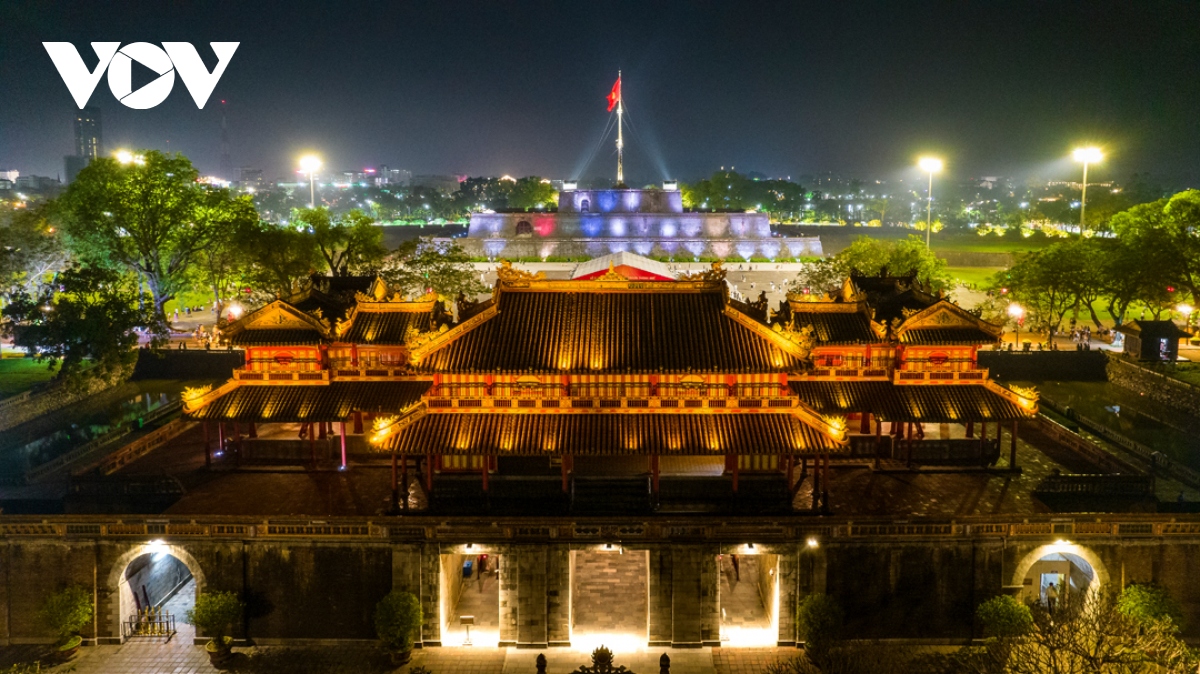
The roofs of the lower floors are connected together, running around to cover the corridor. The roofs of the upper floors are divided into nine sections. Of these, the central section of the Ngu Phung Tower is covered with yellow glazed tiles, where the king resides. The remaining eight sections are covered with blue glazed tiles.
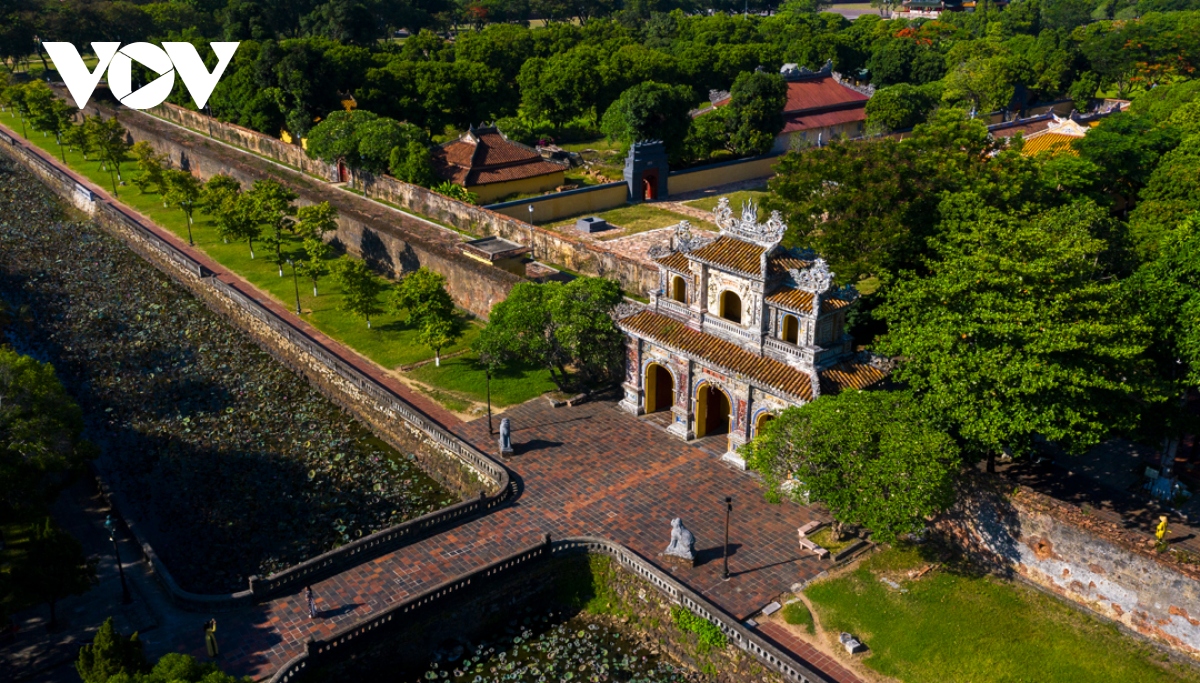
Hien Nhon Gate is located on the east side of Hue Imperial City, reserved for officials and men to enter and exit the Imperial City. Hien Nhon Gate was built in 1805, under the reign of King Gia Long. During the reign of King Minh Mang, in 1833, the gate was decorated with ceramic pieces. During the reign of Khai Dinh, it was restored once more. During the war in 1968, the gate was completely destroyed by bombs.
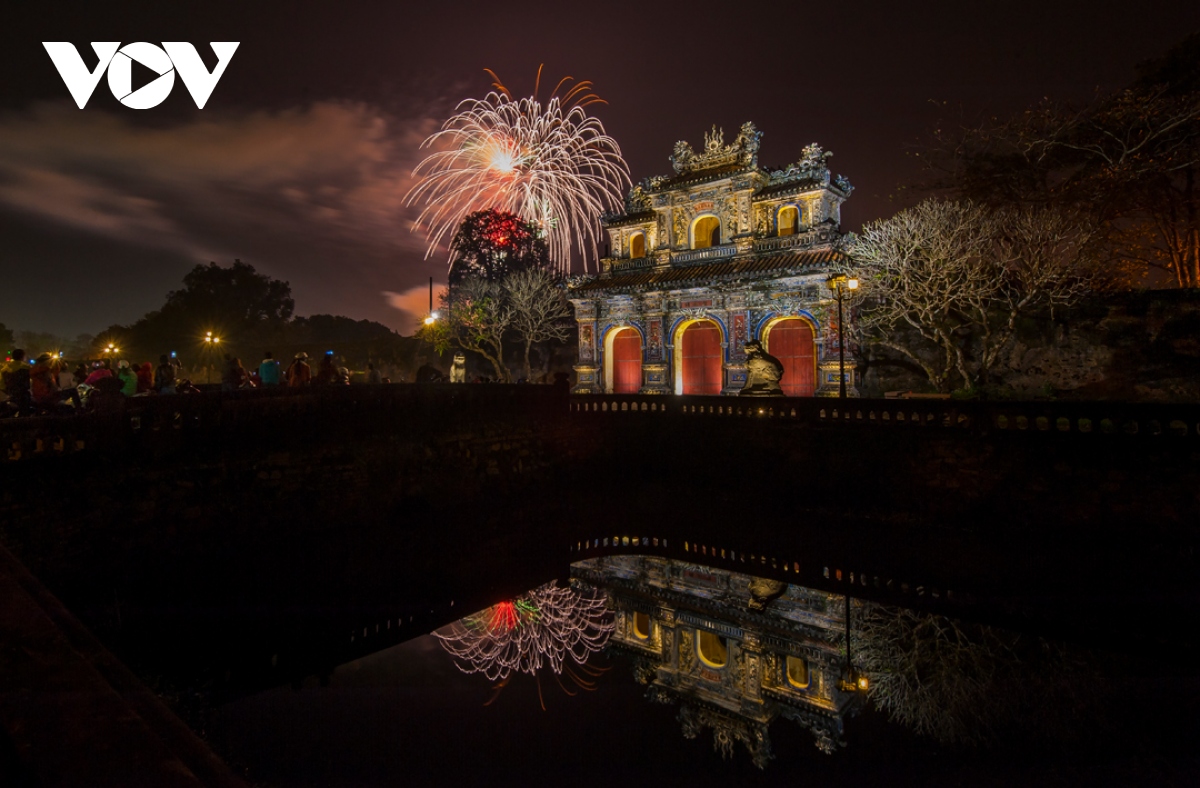
After 1975, the gate was restored to its original state. Today, Hien Nhon gate is used as an exit for tourists visiting the Imperial Citadel.
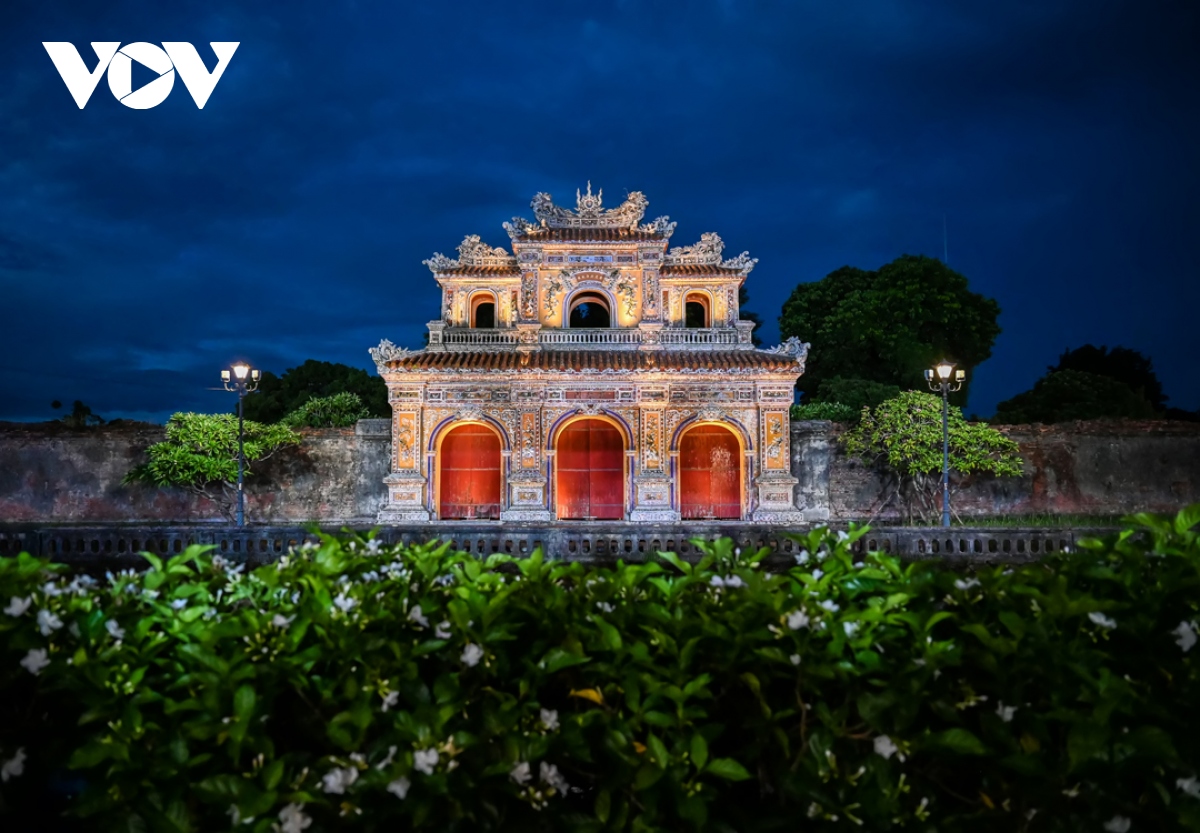
Chuong Duc Gate is the gate located on the west side of the Imperial City. In addition to its function as a gate for ladies in the palace to enter and exit, along with Tay Khuyet Dai, Chuong Duc Gate also contributes to the defense of the court and the royal family; at the same time, it creates a separation between the life in the palace and the outside society. The concept of "left men, right women, men are virtuous, women are virtuous" is an important principle in the architectural works of the Nguyen Dynasty.
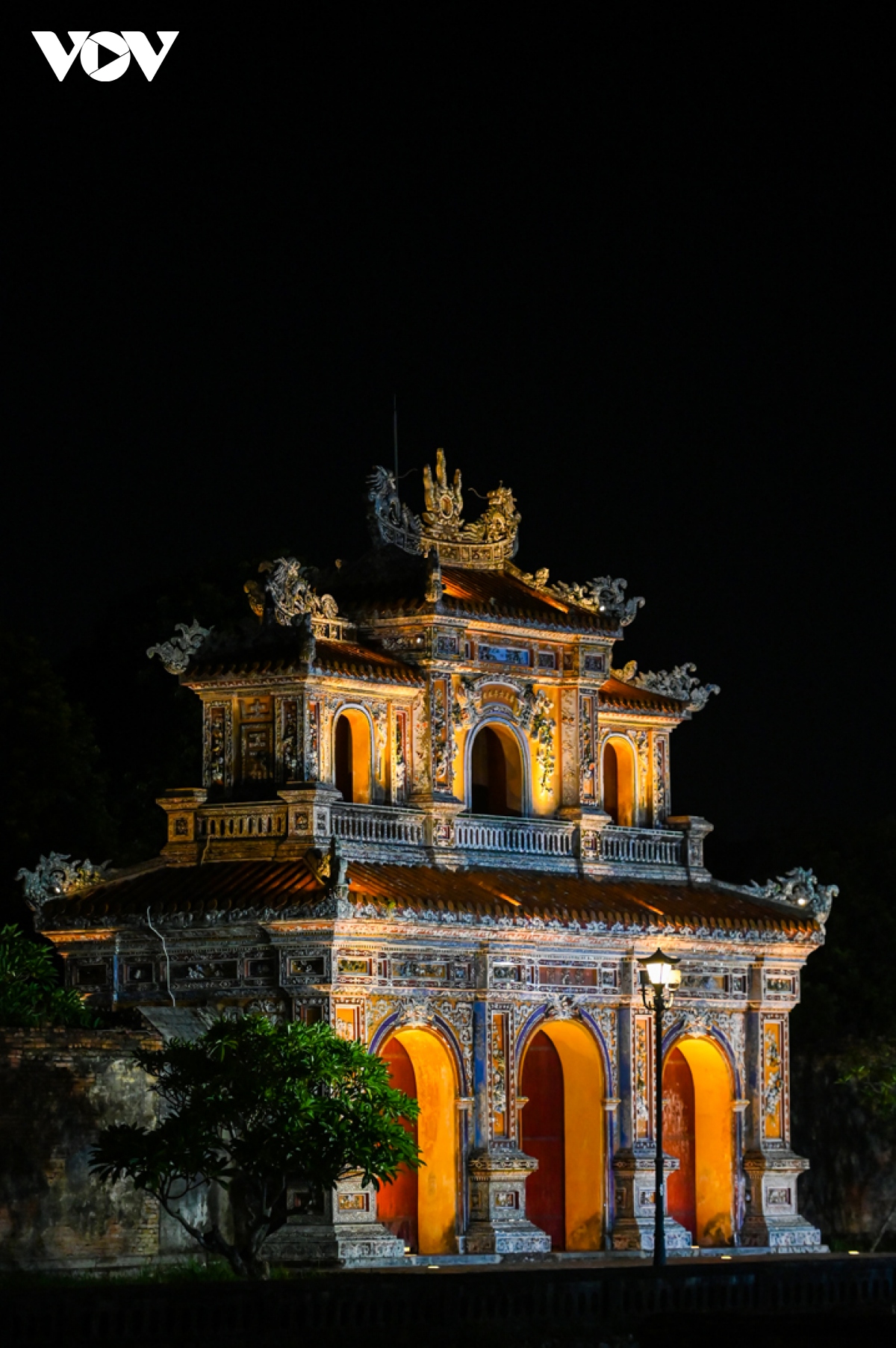
Chuong Duc Gate has three floors, on the pillars of the door body divided into many compartments, each compartment is decorated with many different themes, which are paintings and unique works of art. The roof system is covered with royal glazed tiles; the round tile head protrudes above and is embossed with the word "Tho" in a round frame, the sunken tile head below is embossed with a bat's head, this decorative motif is very popular in the relics of the Nguyen Dynasty with the meaning "Phuc Tho Khang Ninh".
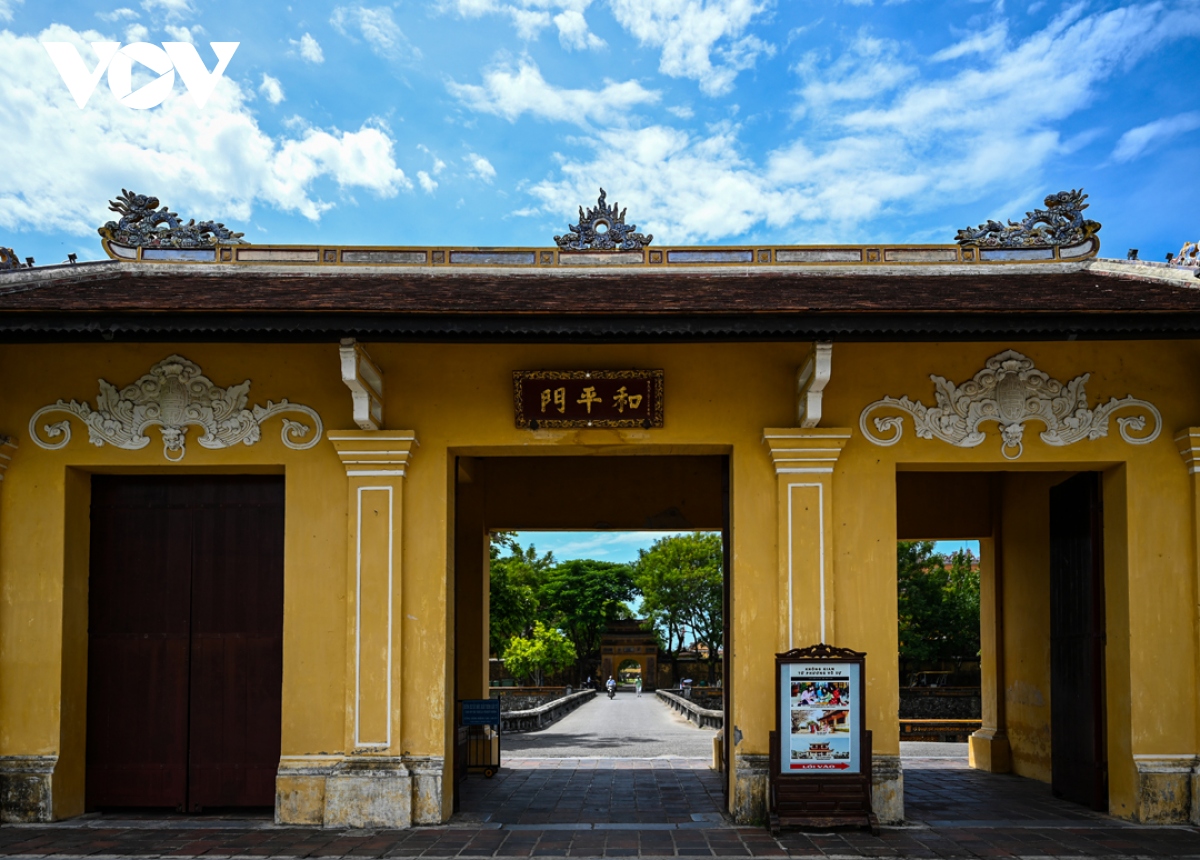
Hoa Binh Gate is the northern gate of the Imperial City, reserved for the king to go on picnics. Originally, this gate was called Cung Than Gate, built in the style of a three-door gate - a tower gate. In 1821, it was renamed Dia Binh Gate, and in 1833, it was renamed Hoa Binh Gate. In 1839, the king ordered the upper tower to be lowered. In 1894, under King Thanh Thai, it was restored again. Hoa Binh Gate has a rather special structure, a three-door gate built of bricks but with only one floor, the gate has a roof truss and a tiled roof like a palace. Originally, the Kim Thuy bridge connecting the gate across Noi Kim Thuy Lake to the front of Tuong Loan Gate of the Forbidden City was built in the style of "upper house lower bridge" with a tiled roof, but now this roof has been completely removed.
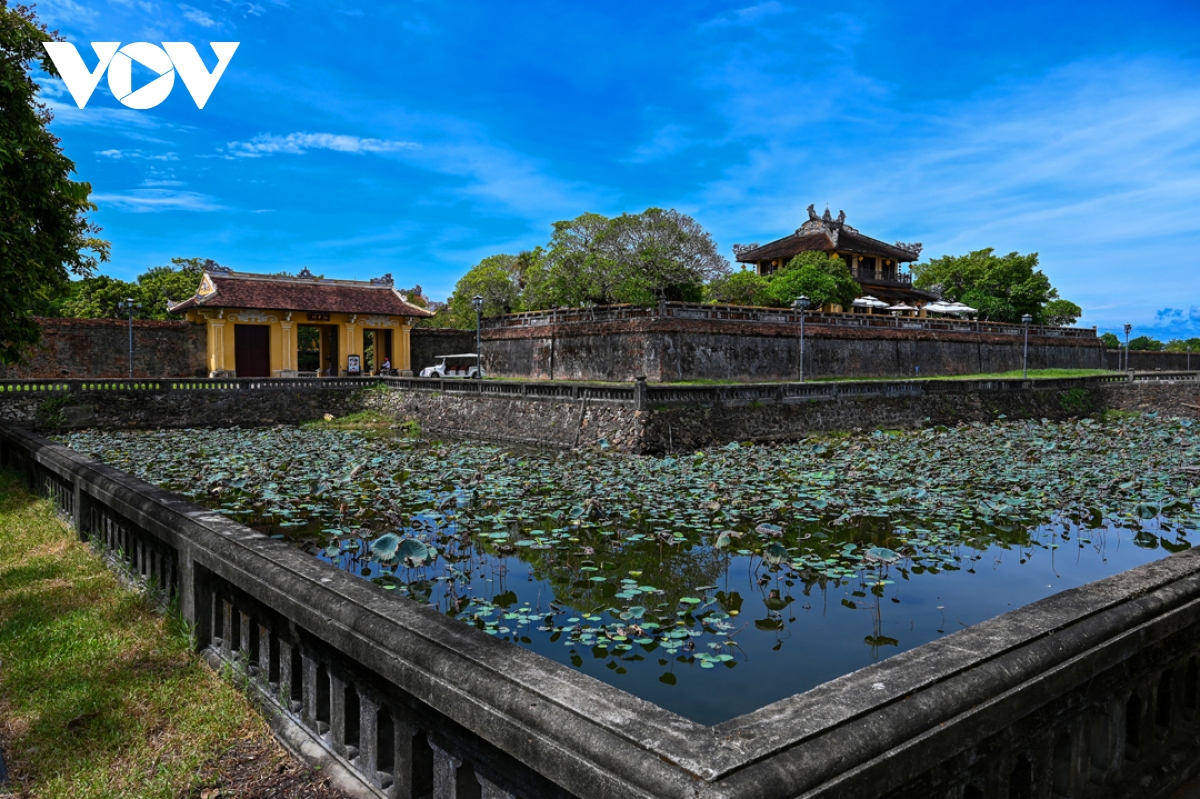
Commonly called "Back Gate", it leads from the Imperial City (Dai Noi) to Hoa Binh Street (now Dang Thai Than Street). The back entrance to the Imperial City, where King Bao Dai's house was built in a new architectural style, opposite Hoang Tung De's tower and the Citadel airport. Under the Gia Long dynasty, Hoa Binh Gate was called "Cung Than" Gate. Under the Minh Mang dynasty, it was changed to "Dia Binh Gate" (in 1821), and in 1833, it was renamed Hoa Binh Gate. This gate has a floor called "Hoa Binh Tower" also called "Hau Ho" or Hoa Binh Lake. Here, according to researcher Phan Thuan An, revolutionaries Tran Cao Van and Thai Phien secretly contacted King Duy Tan to launch the uprising in 1916, but failed. It should also be added that at the end of Hoa Binh Street, at the corner of Hien Nhon Street, there is a small building called Binh An Duong, which is where concubines, maids or eunuchs from the palace can come to recuperate when they are sick.
Source: https://vov.vn/van-hoa/di-san/chiem-nguong-4-cong-vao-hoang-thanh-hue-post1114709.vov

![[Photo] General Secretary To Lam receives Vice President of Luxshare-ICT Group (China)](https://vphoto.vietnam.vn/thumb/1200x675/vietnam/resource/IMAGE/2025/11/15/1763211137119_a1-bnd-7809-8939-jpg.webp)

![[Photo] Prime Minister Pham Minh Chinh meets with representatives of outstanding teachers](https://vphoto.vietnam.vn/thumb/1200x675/vietnam/resource/IMAGE/2025/11/15/1763215934276_dsc-0578-jpg.webp)




![[Video] Hue Monuments reopen to welcome visitors](https://vphoto.vietnam.vn/thumb/402x226/vietnam/resource/IMAGE/2025/11/05/1762301089171_dung01-05-43-09still013-jpg.webp)




















































Comment (0)