

Common mistakes made by the elderly when using medication.
Speaking at the seminar "Choosing Safe Medicine for Parents" held on July 24th, Dr. Dao Trong Thanh, Deputy Head of Department B, Friendship Hospital, said that elderly people in Vietnam often suffer from multiple chronic diseases simultaneously, partly due to unhealthy lifestyle habits and partly due to the aging process.
However, adherence to treatment is not high. Many patients stop taking medication on their own when they feel better. Dr. Thanh gave the example of hypertension, a chronic disease, meaning it is a long-lasting condition, so continuous and regular medication use is extremely important.

Dr. Dao Trong Thanh, Deputy Head of Outpatient Department B, Friendship Hospital (seated in the middle), and Pharmacist Nguyen Van Tien Duc, Director of Pharmacy, Pharmacity Pharmacy System, shared their insights at the seminar (Photo: Thanh Dong).
"The return of blood pressure to normal levels does not mean the disease is cured. Stable blood pressure is the result of consistent and long-term medication use, not just from taking medication for a few days. If you stop taking medication on your own, blood pressure can suddenly rise again, posing a high risk of serious cardiovascular complications such as stroke or heart attack," Dr. Thanh explained.
Furthermore, stopping and then resuming medication without following instructions can cause the body to react abnormally to the drug, reducing the effectiveness of treatment in subsequent instances. Stable blood pressure is the result of a persistent and consistent treatment process.
Similarly, according to Pharmacist Nguyen Van Tien Duc, Director of Pharmacy at Pharmacity pharmacy chain, a common mistake adults make when using medication is that they tend to assume that the treatment prescribed for people with seemingly similar illnesses can be applied to themselves. That is, they copy prescriptions from family and friends without specific instructions from a doctor.
"A very common situation – even with my parents – is that when they feel better and are stable after taking medication, they stop taking it on their own. Another mistake is that they often believe unofficial information, not from medical professionals like doctors or pharmacists, leading to improper medication use, causing risks and affecting the effectiveness of treatment later," Pharmacist Duc emphasized.
Dr. Thanh once again emphasized that arbitrarily stopping medication, especially during treatment, is very dangerous, particularly for chronic diseases such as hypertension, diabetes, or cardiovascular disease. Abruptly stopping medication can lead to serious, even life-threatening, complications such as stroke, kidney failure, hypertensive crisis, or heart failure.
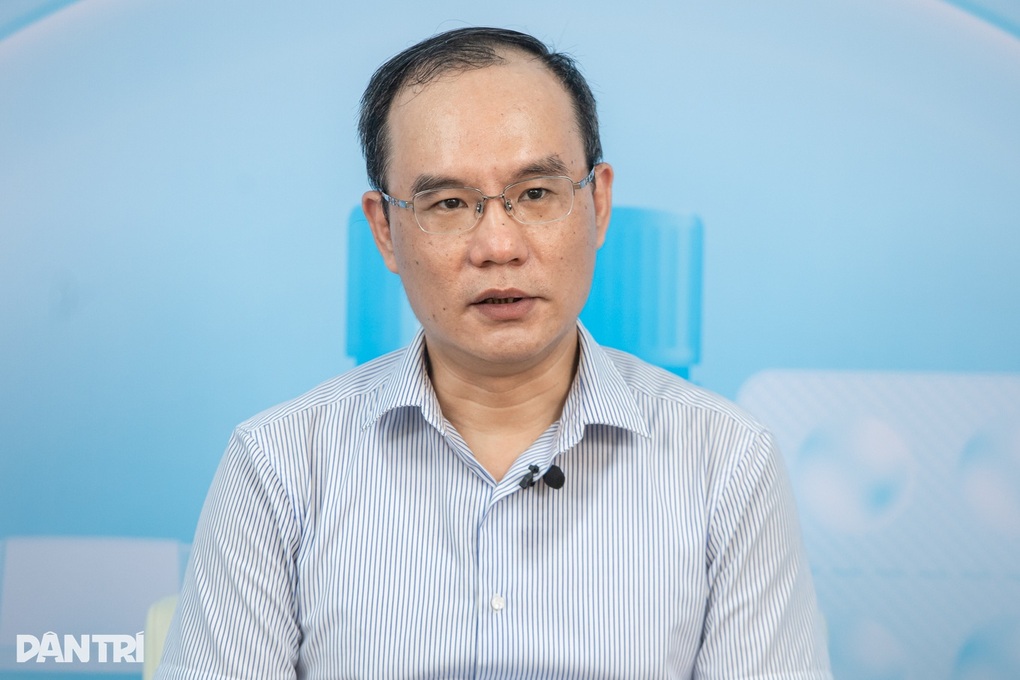
Dr. Thanh specifically advised patients not to stop taking their medication on their own (Photo: Thanh Dong).
In some cases, people arbitrarily stop taking Western medicine and switch to traditional Vietnamese medicine or dietary supplements, thinking they are "harmless," but this actually carries many risks. During storage, these medicines may use certain chemicals to prolong their shelf life, and these substances can still be harmful to the body.
Furthermore, traditional Chinese medicine cannot completely replace modern medical treatments. Western medicines have undergone rigorous research over many years, on various patient groups, and have been verified for both their therapeutic effects and side effects.
Conversely, traditional Vietnamese medicine or dietary supplements rarely have sufficient scientific data to prove their effectiveness, and they also carry the risk of adverse interactions with Western medicines that patients are already taking.
"Reusing old prescriptions is a very dangerous habit and is not recommended for older adults."
Firstly, old prescriptions are often no longer suitable because the patient's health condition has changed over time. Reusing them may no longer be effective and may even cause harm.
Secondly, some medications require dosage adjustments during treatment, as the liver and kidney functions of elderly people often decline with age. Without proper adjustments, continuing with older medications can lead to complications,” Dr. Thanh added.
Be extremely cautious when buying medicine online.
German pharmacists believe that buying medication, especially prescription drugs, through e-commerce websites or online apps requires extreme caution.
Firstly, prescription medications must be used appropriately, safely, and ideally exactly as prescribed by a doctor. Buying and using prescription medications without a doctor's prescription can lead to serious health consequences, especially for the elderly.
Secondly, when purchasing medication through apps or e-commerce platforms, it's crucial to choose sources with clear and transparent origins. Most importantly, there should be a team of pharmacists or healthcare professionals available to provide advice before, during, and after the purchase to ensure users receive the correct medication, according to the prescribed dosage, and are given accurate and timely instructions on its use.

According to a German pharmacist, safety should always be the top priority when using dietary supplements (Photo: Thanh Dong).
Based on practical experience, online drug sales channels can be used, but it's advisable to prioritize familiar pharmacies that you've purchased from before and that have a good reputation. When buying medicine online, you should provide a prescription or information about any new symptoms or manifestations so that the pharmacist understands your condition and can provide appropriate advice.
Furthermore, you should only buy medicine from vendors that have clear commitments regarding origin, provide guidance from pharmacists, and have clear invoices, labels, and prescription slips to ensure your rights and safety.
"Absolutely avoid buying imported medicines, those of unknown origin, or from places with no clear information and no one to take responsibility after the sale. This is especially risky for the elderly, who already have sensitive health and often take multiple medications at the same time," the expert emphasized.
The German pharmacist also noted that when using dietary supplements, safety should always be the top priority.
Safety here encompasses two elements: firstly, it must not cause harm, and secondly, it must be used correctly. "Correctly" means that the use must help improve health conditions, not cause side effects, drug interactions, or seriously affect the client's health. Furthermore, "correct" advice also means it must be tailored to each individual client.
The safety triangle helps older adults adhere to treatment.
For the most comprehensive healthcare, the German pharmacist mentioned the safety triangle model, which involves close cooperation between doctors, pharmacists, and families.
In this system, doctors play a crucial role in accurate diagnosis and treatment. Pharmacists closely monitor medication use and provide specific, appropriate guidance. Family members directly observe compliance and track initial treatment responses. Especially for the elderly, family members are the closest and most supportive throughout the medication process.
"Such a tripartite collaboration places the health of the client at the center, and this clearly demonstrates a humane approach: patients always receive comprehensive care and responsible support. This is an ideal model."

According to experts, comprehensive healthcare requires close cooperation between doctors, pharmacists, and family members (Photo: Thanh Dong).
However, in reality, there are still some obstacles in Vietnam today. To realize this model, accurate and timely information sharing and interconnection are necessary. The Ministry of Health is currently implementing several projects in this direction,” Pharmacist Duc said.
According to him, if in the future, with the patient's consent, doctors can access their medication history, pharmacists can access diagnoses, treatment instructions, and test results to provide more accurate advice, and families can monitor health progress and medication use, then addressing emerging issues will be much more timely and effective. This is especially important for the elderly.
This model is now quite commonly applied in many countries around the world, typically the model of family doctors combined with community pharmacists. When an elderly client experiences health problems anywhere – whether at home, while traveling, or elsewhere – the interconnected information system allows doctors or pharmacists to access their medical records, thereby providing quick and accurate advice and treatment.
Currently, at Pharmacity pharmacies, supporting patients with treatment adherence, monitoring, and post-medication care is a crucial issue. Pharmacity has implemented several technologies that can be applied to support patients. Specifically, through the Pharmacity application, customers can track their medication history and receive reminders to take their medication on time.
Additionally, after the consultation, if customers need more information or have questions, they can join community Zalo groups where pharmacists are available to provide support and answer directly.
In addition, solutions such as pill dispensing, pill boxes, and clear labeling have been implemented for a long time.
According to him, taking care of one's parents' health, especially regarding medication, is a responsibility that cannot be taken lightly.
First, we need to help parents understand the importance of using medication correctly.
Secondly, children should act as a bridge to help their parents understand medication and themselves. Explain to your parents what each medication is used for, how to use it, and what precautions to take. At the same time, encourage your parents to listen to their bodies and share any discomfort they experience, so that the treatment plan can be adjusted accordingly.
Third, always be there to support your parents throughout their treatment journey. Taking medication in older adults is a long process that requires patience, listening, and empathy.
Dr. Thanh also hopes that families will show concern and support for their parents, grandparents, and elderly relatives who are undergoing treatment. Caring for parents is not just about taking them to check-ups or reminding them to take their medication, but also about dedicating time to listen, support, and encourage them every day.
Another important point to note is that children and grandchildren should assist their parents in taking medication on time, at the correct dose, and in the correct quantity as prescribed. Because elderly people often have declining memory, they are prone to making mistakes. For example, the doctor might prescribe one pill, but the patient mistakenly thinks they are taking two, leading to an overdose and endangering their health.
Source: https://dantri.com.vn/suc-khoe/chon-thuoc-an-toan-cho-cha-me-nhung-dieu-can-dac-biet-chu-y-20250806095137697.htm






















![[Video] The craft of making Dong Ho folk paintings has been inscribed by UNESCO on the List of Crafts in Need of Urgent Safeguarding.](https://vphoto.vietnam.vn/thumb/402x226/vietnam/resource/IMAGE/2025/12/10/1765350246533_tranh-dong-ho-734-jpg.webp)


























































Comment (0)