

Over the years, the Party and the State have always paid deep attention to the development of education and training in border areas. However, for various reasons, the quality of education in border regions still has certain limitations. How to improve the quality of education in border areas remains a concern for the education sector, all levels of government, and every citizen.
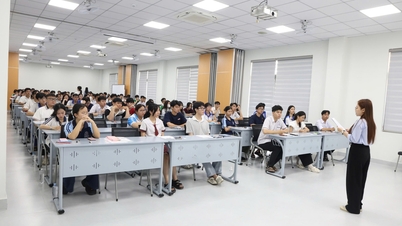
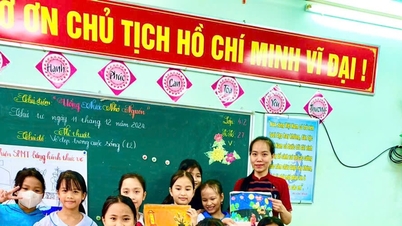
Y Jút Primary School (Buôn Đôn commune) has 700 students (equivalent to 27 classes). Besides the main school, the commune also has two branch schools in Jang Lành hamlet (5 km from the main school) and Đrăng Phốk hamlet (18 km from the main school). Mr. Hồ Sĩ Lâm, the principal of Y Jút Primary School, said that although the number of students at the two branch schools is small, they still have to arrange 5 classes to ensure teaching and learning. Therefore, the number of students in each class at the main school always exceeds the standard set by the Ministry of Education and Training (around 40 students per class). The school's facilities were built a long time ago, so many items are dilapidated, and the desks and chairs are damaged. Therefore, building a boarding school for primary and secondary levels will ensure better learning conditions for the students.
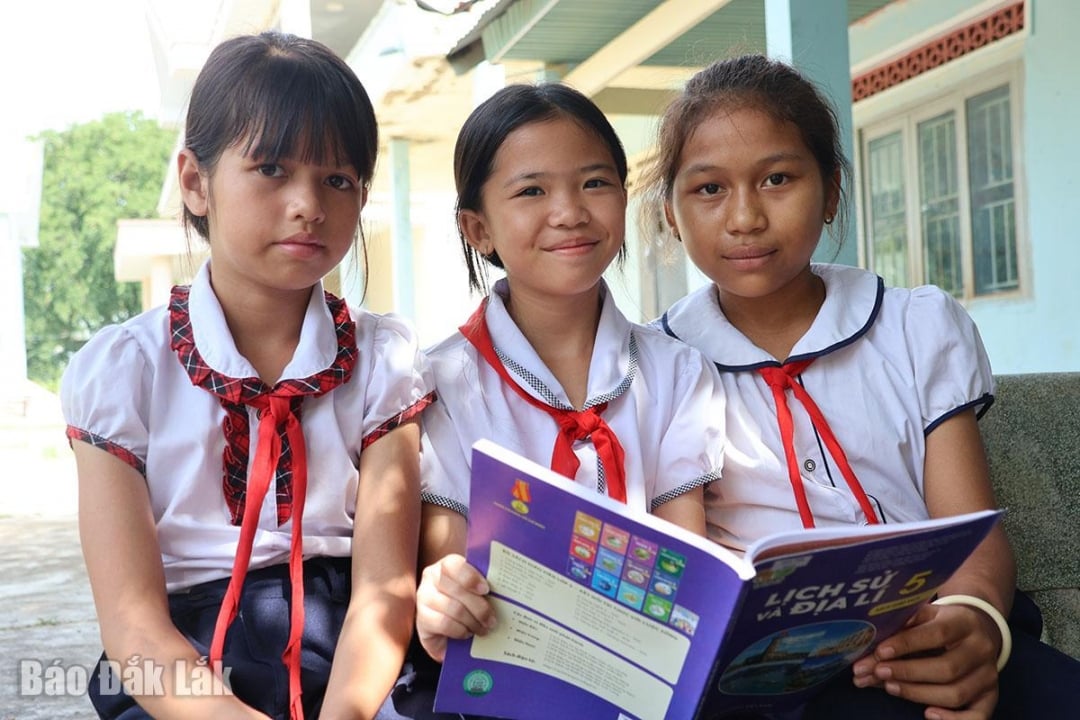 |
| A group study session for students of Y Jút Primary School (Buôn Đôn commune). |
Mr. Nguyen Quang Sang (Hamlet 3, Ea Bung Commune), whose children are attending primary and secondary school, shared: “Our house is far from the school, and some parents work in the fields for many days before returning home, so the children cannot go to school on their own. Therefore, the model of a boarding school for all levels, where students eat and live at the school, is suitable and meets the practical needs of parents.”
Building multi-level schools with systematic and synchronized investment in teaching and learning, along with accompanying boarding facilities for students and teachers, is a good solution to improve the quality of education in border areas in a comprehensive and synchronized manner, gradually narrowing the gap with other localities in the province.
Vo Thi Sau Secondary School (Buon Don commune) has 425 students (12 classes), of which more than 80% are ethnic minorities; many students live 10-18 km from the school, making transportation very difficult. Mr. Phan Xuan Hoat, the school's Deputy Principal, said: “The school has encouraged parents to send their children to stay with relatives near the school; and encouraged homeroom teachers to transport students, but these are only temporary solutions. Building a multi-level school where students can live on campus is a comprehensive solution to address current difficulties and obstacles, opening up opportunities to improve the quality of primary and secondary education in border areas.”
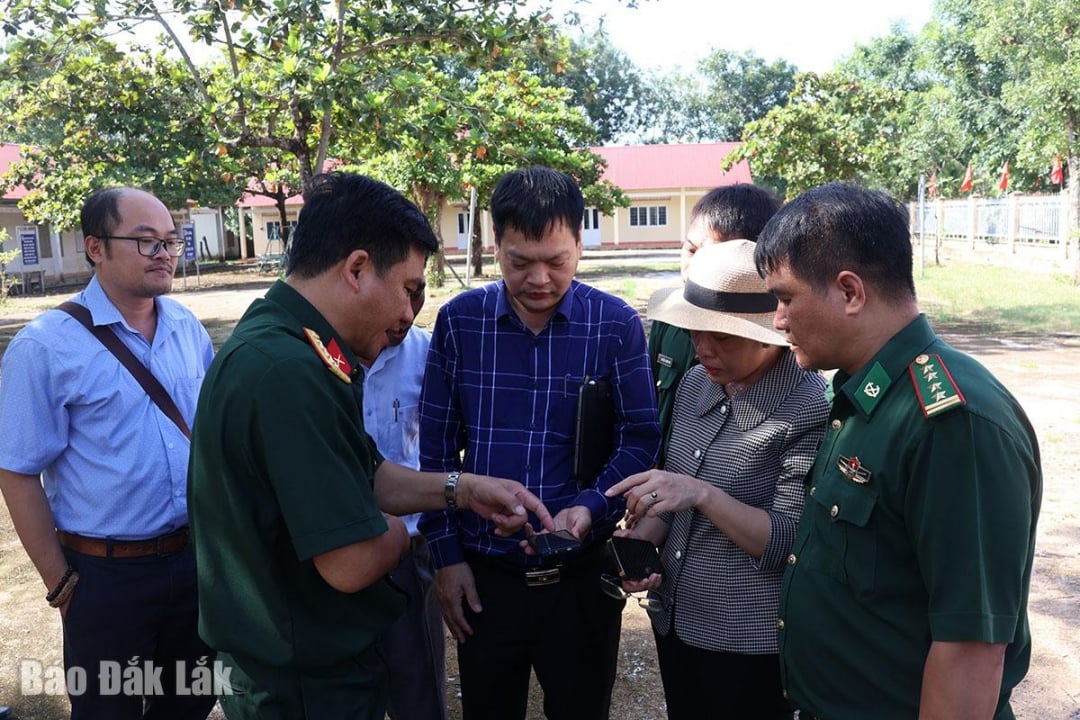 |
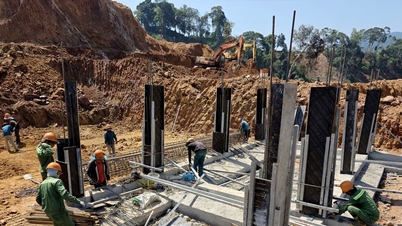
| The provincial delegation conducted a site survey for the construction of a multi-level boarding school in Ea Bung commune in early August 2025. |
Located about 150 km from the provincial center, Ia Lop is a border commune with particularly difficult economic conditions. The poverty rate in the commune reaches 54%, leading to many negative consequences, including high school dropout rates. According to Pham Duy Tinh, the principal of Tran Hung Dao Secondary School, the Party and State's policy of building a boarding school for primary and secondary students is an urgent solution that has received strong support from local parents and students. This policy will address the problem of student dropout by providing comprehensive care for students in terms of accommodation, transportation, and education; allowing parents to focus on their work with peace of mind. "As a commune where nearly 50% of students are from ethnic minority groups, studying in a boarding environment will help them integrate better. For teachers, it will give them more time to research and develop learning models suitable to the students' specific needs, gradually improving the quality of mass education," said Mr. Pham Duy Tinh.
| The Politburo 's Notice No. 81-TB/TW dated July 18, 2025, on the policy of investing in school construction for border communes, clearly states: Investing in school construction for land border communes is a key and important task in socio-economic development and the implementation of ethnic policies aimed at improving the intellectual level and quality of human resources, creating a source of cadres from ethnic minorities and localities, improving the material and spiritual lives of people in border areas, and contributing to strengthening national defense and security. |
Source: https://baodaklak.vn/xa-hoi/202508/chu-truong-hop-long-dan-f0e1dc3/
![[Photo] Prime Minister Pham Minh Chinh receives the Chinese Ambassador to Vietnam](https://vphoto.vietnam.vn/thumb/1200x675/vietnam/resource/IMAGE/2026/04/05/1775397481797_ndo_br_dsc-5512-jpg.webp)
















































































Comment (0)