

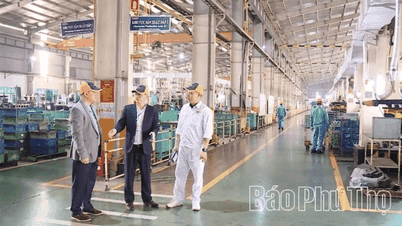
Double transformation is taking place strongly in the manufacturing sector.
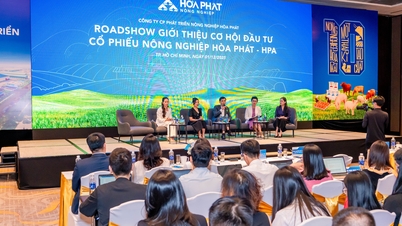
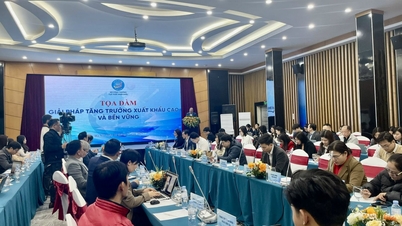
Speaking at the forum, Vice President of the Vietnam Chamber of Commerce and Industry (VCCI) Hoang Quang Phong stated that: In the context of globalization and the Fourth Industrial Revolution, the dual transformation – encompassing digital transformation and green transformation – is becoming a key factor in helping businesses enhance their competitiveness and move towards sustainable development.
According to the Ministry of Industry and Trade , the application of digital technology and smart energy management systems can help businesses reduce operating costs by 10-15%, increase productivity by 20%, and reduce CO₂ emissions by 5-8% annually. McKinsey & Company also estimates that digital transformation in manufacturing can boost labor productivity by up to 30% and cut supply chain costs by 15-20%.
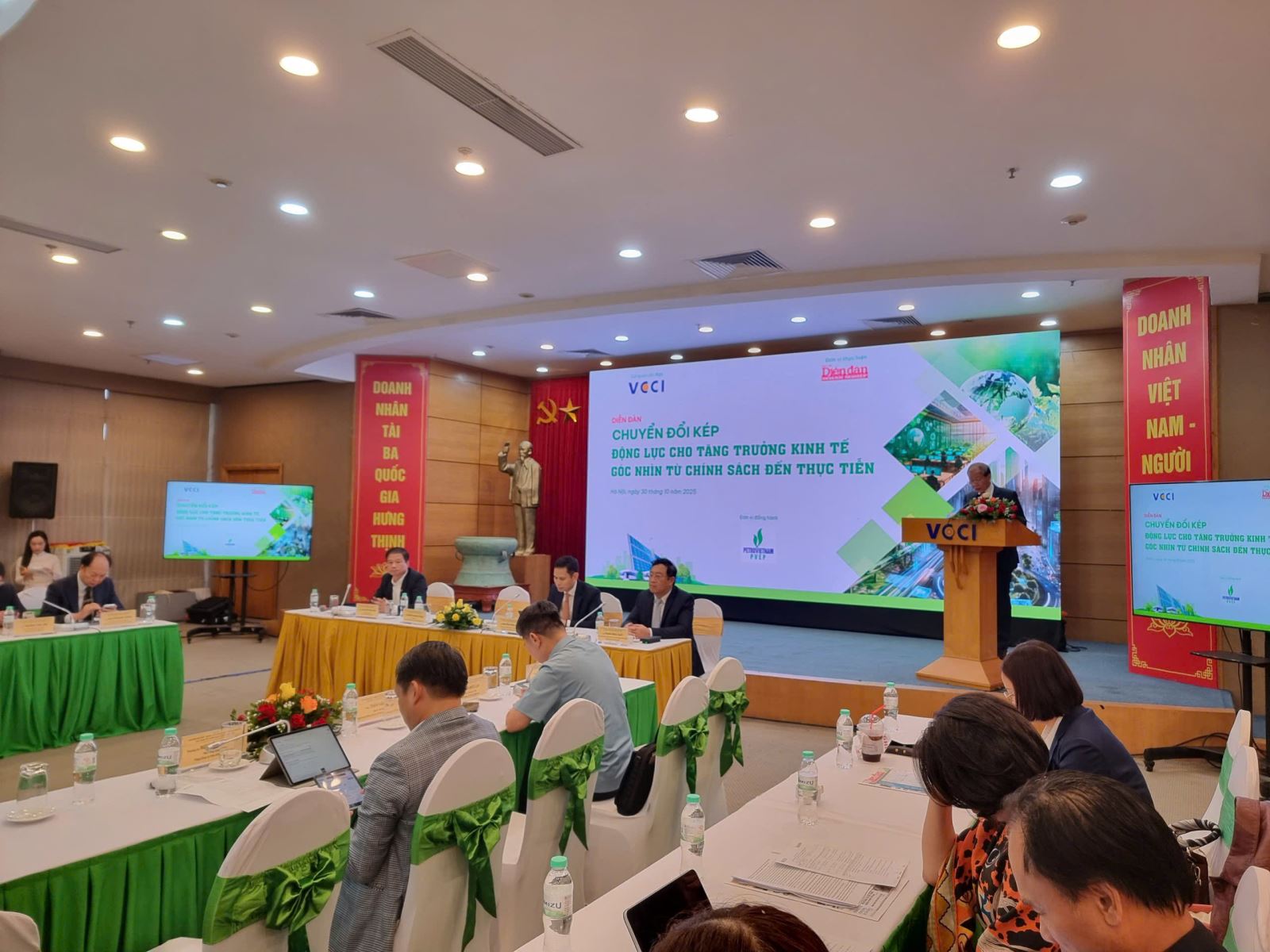
In reality, the digital transformation and green transformation are taking place vigorously in the manufacturing sector, not only helping to increase the internal capacity of businesses but also contributing to the fulfillment of national commitments on sustainable development and the Net Zero goal.
“Resolution No. 57-NQ/TW of the Politburo (2024) affirms: ‘Developing science, technology, innovation and national digital transformation is a top priority breakthrough and the main driving force of productivity growth,’” Mr. Phong said.
By 2030, the Resolution sets very specific targets: Total factor productivity (TFP) contributing over 55% to GDP growth; the digital economy accounting for at least 30% of GDP; over 40% of businesses engaging in innovation; Vietnam among the top 3 countries in Southeast Asia and in the top 50 countries worldwide in digital competitiveness.
By 2045, Vietnam aims to achieve a digital economy size of at least 50% of GDP, placing it among the top 30 countries in the world in innovation and digital transformation.
The draft document for the 14th National Congress, currently open for public consultation, also emphasizes the need to establish a new growth model, with science and technology, innovation, and national digital transformation as the main driving forces; and to perfect the development institutions associated with the simultaneous implementation of four transformations: digital transformation, green transformation, energy transformation, and transformation of the structure and quality of human resources.
Mr. Nguyen Hong Hien, Director of the Department of Science, Technology, Innovation and Digital Transformation, Central Policy and Strategy Board, stated that the lessons learned from many businesses show that growth rate is only truly valuable when supported by a sustainable foundation through the "key" of dual transformation.
Mr. Hien emphasized that digital transformation and green transformation help Vietnam not only accelerate but also develop steadily, aiming for sustainable double-digit growth based on productivity, technology, and innovation.
For businesses, digital transformation is a tool to increase efficiency, reduce costs, expand markets, and enhance customer experience; while green transformation helps save energy, reduce emissions, optimize resources, and meet the increasingly stringent ESG standards of the global market.
At the industry level, this integration creates a ripple effect, helping to form smart production, logistics, and energy chains, reducing input costs, improving output quality, and increasing export competitiveness.
At the national level, dual transformation opens up opportunities to enhance national competitiveness. When Vietnamese businesses simultaneously digitize and green, we not only produce more efficiently but also move closer to global standards in governance, environment, and technology.
Mr. Hien stated: "The dual transformation – digitalization and greening – is not just a slogan, but an inevitable direction for Vietnamese businesses to achieve double-digit growth and expand globally; it also helps businesses increase productivity, reduce costs, expand markets, enhance competitiveness, and contribute to fulfilling Vietnam's Net Zero 2050 commitment."
From a national perspective, this is also the overarching spirit of Resolution 57: rapid and sustainable development based on science, technology, and innovation, a breakthrough driving force for Vietnam's GDP to achieve sustainable double-digit growth in the new era.
The human element comes first.
Meanwhile, Mr. Pham Hong Quat - Director of the Department of Startups and Technology Enterprises (Ministry of Science and Technology) agreed with the view that dual transformation in businesses needs to be implemented simultaneously across four important areas related to mechanisms, human resources, solutions, and finance.
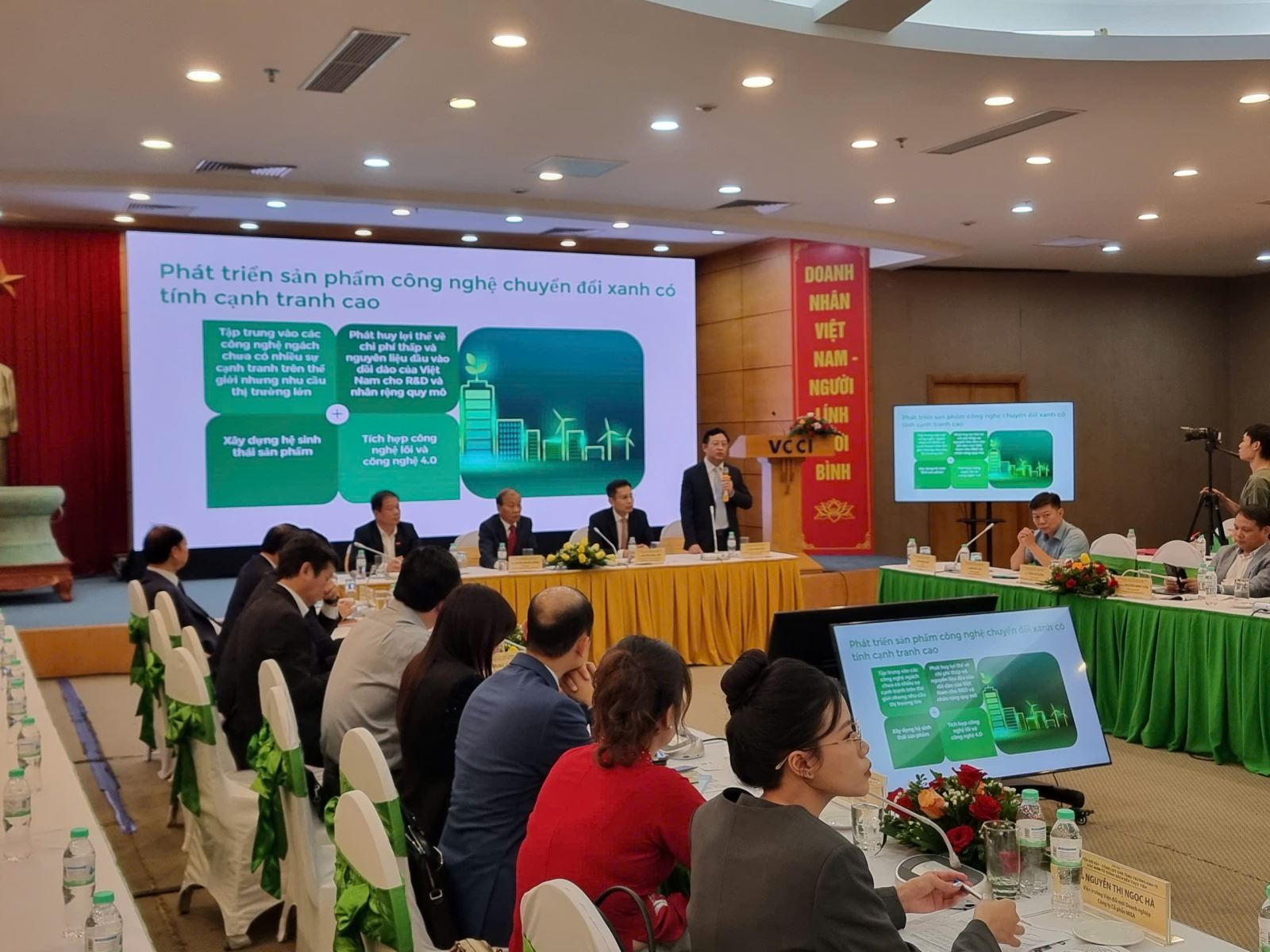
Regarding mechanisms and policies for dual transformation, according to the Director of the Department of Startups and Technology Enterprises, the Government has issued the Green Transformation Strategy and the National Digital Transformation Program. In reality, both digital and green transformations need to be implemented simultaneously to achieve the goal of optimizing resources for growth and sustainable development. While dual transformation is frequently discussed in many forums today, institutionally, there are still no mechanisms or policies in place for this parallel transformation.
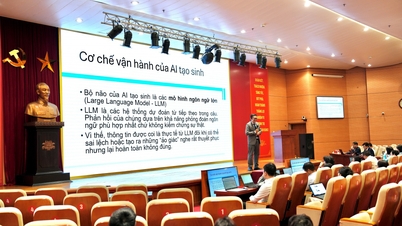
Green transformation and digital transformation are closely linked to innovation. According to Mr. Pham Hong Quat, implementing a dual transformation is essentially a transformation of business models, not simply the application of technology. In particular, current digital transformation is shifting towards AI transformation – a foundational technology and ecosystem business model – raising many issues regarding business growth models within enterprises. This requires a change, first and foremost, in mindset and perspective, and a new business model that enhances internal capabilities and meets the increasingly fierce regional and global competition.
With this perspective, the Director of the Department of Startups and Technology Enterprises emphasized that the human factor plays a crucial and decisive role in the double transformation, while technology only serves as a tool for implementation. Therefore, before discussing the double transformation in businesses, it is necessary to address the transformations in the mindset and awareness of entrepreneurs. Based on the reality of fundraising for startups in recent times, Mr. Pham Hong Quat shared: investors look at the mindset and capabilities of entrepreneurs and business leaders before investing capital.

At the forum, representatives from associations and businesses stated that, in terms of policy, Resolution No. 57-NQ/TW and Resolution No. 68-NQ/TW of the Politburo have clearly defined the direction for promoting the development of the private economic sector through innovation, digital transformation, green transformation, and sustainable business – aiming towards the goal of Vietnam becoming a developed, high-income country by 2045. These resolutions have been and are being concretized through various mechanisms and policies to support businesses.
However, many opinions at the forum also suggested that a gap still exists between policy guidelines and their practical implementation. For the dual transformation to truly become a driving force for growth, stronger involvement from the business community is needed – not only in the role of implementers but also as creators and innovators.
"The recommendations and suggestions from the event will be compiled by VCCI and submitted to the Government and relevant ministries and agencies to improve policies and create more favorable conditions for businesses in the process of sustainable development," said Mr. Hoang Quang Phong.
Source: https://baotintuc.vn/kinh-te/chuyen-doi-so-va-chuyen-doi-xanh-tao-dong-luc-tang-truong-ben-vung-20251030180807923.htm

![[Image] Leaked images ahead of the 2025 Community Action Awards gala.](/_next/image?url=https%3A%2F%2Fvphoto.vietnam.vn%2Fthumb%2F1200x675%2Fvietnam%2Fresource%2FIMAGE%2F2025%2F12%2F16%2F1765882828720_ndo_br_thiet-ke-chua-co-ten-45-png.webp&w=3840&q=75)
![[Photo] Prime Minister Pham Minh Chinh receives Lao Minister of Education and Sports Thongsalith Mangnormek](/_next/image?url=https%3A%2F%2Fvphoto.vietnam.vn%2Fthumb%2F1200x675%2Fvietnam%2Fresource%2FIMAGE%2F2025%2F12%2F16%2F1765876834721_dsc-7519-jpg.webp&w=3840&q=75)



































































Comment (0)