

Lepironia articulata ( scientific name: Lepironia articulata) is a herbaceous plant characterized by its hollow stem, thriving in wetlands, acidic soils, or saline soils. In the Mekong Delta, Lepironia articulata is naturally distributed in Long An and Dong Thap provinces, and is particularly dense in the swamps and marshes of Phu My – currently home to the largest area of natural Lepironia articulata in An Giang province.
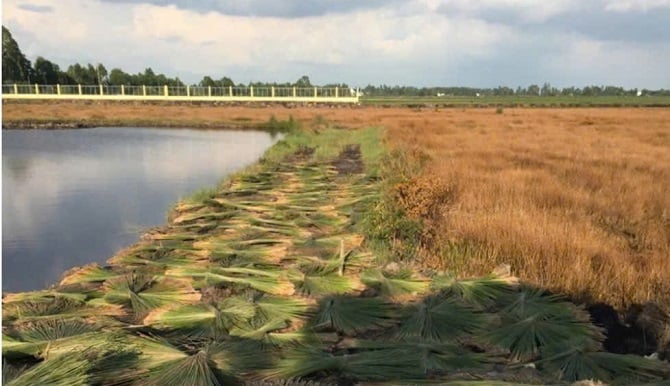
The Phu My swampy area is home to the largest concentration of natural sedge grass in An Giang province today.
The Phu My sedge grassland covers hundreds of hectares, stretching along the low-lying areas bordering the border. Not only is it a unique ecosystem that helps regulate water, limit erosion, and provides a habitat for many native birds, fish, and reptiles, but the sedge grassland is also an important source of livelihood for hundreds of households. According to local people, the sedge harvesting season takes place from December to March of the following year, when the grass stalks reach the appropriate length and toughness for crafting handicrafts.
For generations, the craft of weaving sedge grass in Phu My has not only been an economic activity but also an integral part of the local people's cultural life. Previously, products made from sedge grass were mainly used for daily life, such as sleeping mats, rice baskets, and other sieves. Today, thanks to creativity and improved skills, artisans can create dozens of different items: sedge grass conical hats, fashionable baskets, handbags, mats, eco-friendly straws, decorative items, and more.
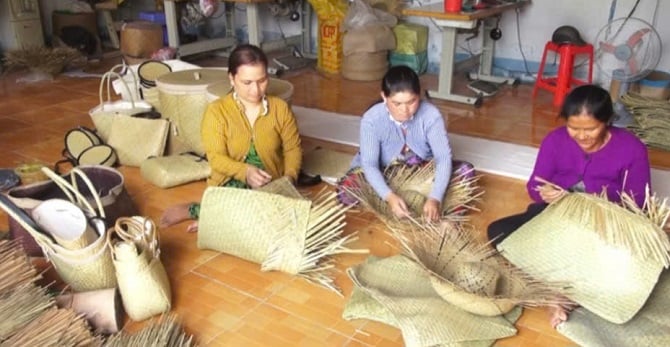
The Phu My Grassland Women's Cooperative attracts a large number of members.
The crafting process requires meticulous attention to detail. After harvesting, the sedge grass is dried for several days until it reaches its natural yellow color. Next, the grass is dyed, boiled until soft, and cleaned to increase its flexibility. Once the material meets the standards, artisans proceed to twist, weave, and shape it according to the design. Most of the work is done manually, relying heavily on the skill and experience of the craftsman. Each product therefore bears the mark of creativity and dedication, showcasing the distinctive dexterity of women in the Mekong Delta.
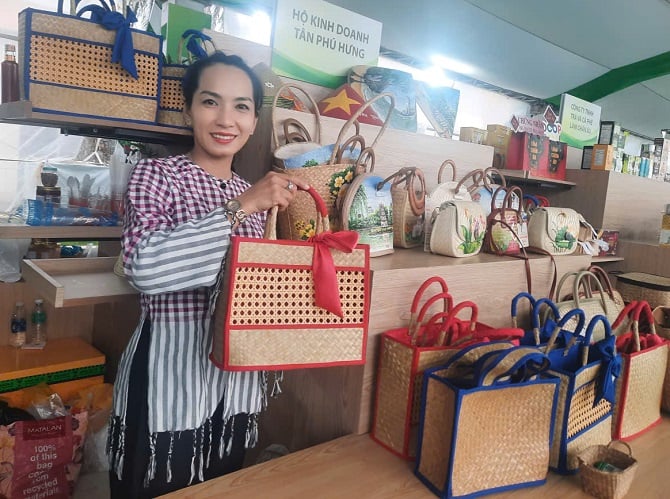
Phu My sedge grass products were displayed at the recent An Giang Provincial Party Congress.
According to Ms. Nguyen Thi Mong Quyen, Director of the Ha Tien Trade and Tourism Promotion Center, a noteworthy point is that the craft of weaving sedge grass in Phu My and Giang Thanh communes not only generates income but also contributes to environmental protection. Sedge grass is a natural material that regenerates quickly and is easily biodegradable, so products made from sedge grass help reduce plastic waste in daily life.
During the production process, artisans use virtually no chemicals, consume little energy, and are in line with the green economic development orientation that does not pollute the environment. “Many households earn a more stable income from weaving sedge grass compared to seasonal agricultural production. The elderly, housewives, and young people can all participate, contributing to job creation and retaining local labor,” Ms. Quyen shared.
Notably, Phu My commune has established the Phu My Sedge Grass Women's Cooperative, playing a crucial role in elevating the traditional craft. Currently, the cooperative attracts many female members who work seasonally. Members receive support in purchasing raw materials, technical training, design, and market connections. As a result, Phu My's sedge grass products are increasingly valued for their quality, aesthetics, and durability.
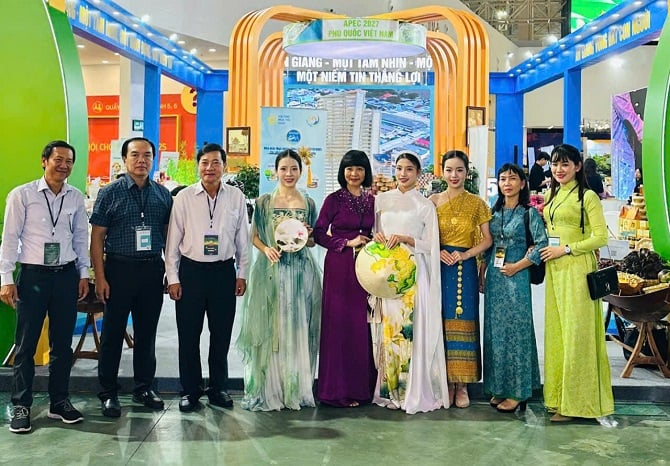
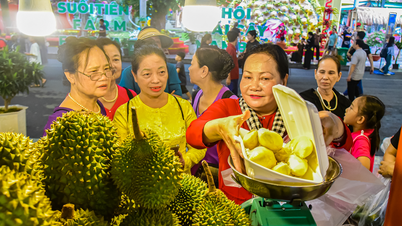
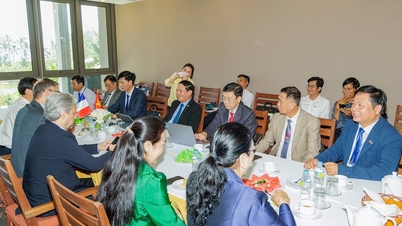
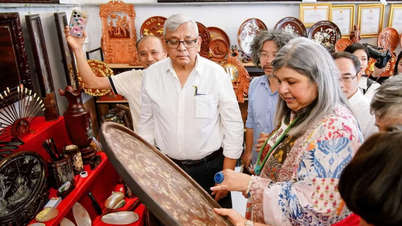
Ms. Quang Xuan Lua (wearing a purple ao dai) - Director of the An Giang Investment, Trade and Tourism Promotion Center, along with other members, participated in the Autumn 2025 trade fair in Hanoi.
According to Ms. Quang Xuan Lua, Director of the An Giang Provincial Investment, Trade and Tourism Promotion Center, Phu My's sedge grass products are gradually improving in quality and diversifying in design. Many products have met the standards to participate in OCOP programs and trade fairs inside and outside the province. Some items have even been ordered for export by handicraft businesses, opening up opportunities to bring local products to the international market.
"Currently, the cooperative has dozens of regularly active members and attracts many seasonal workers during peak periods. This is considered an effective model in developing the community economy while preserving the natural heritage of the sedge grassland area," Ms. Lua assessed.
According to Ms. Lua, in the context of modernization and competition from industrial products, preserving and developing the craft of weaving sedge grass is of great importance. Not only does it help people stabilize their income, but this traditional craft also contributes to preserving long-standing cultural values, demonstrating the close connection between people and nature in the Mekong Delta region.
With the inherent potential of the vast sedge grasslands, the skill of the artisans, and the support of cooperative models, the sedge weaving craft in Phu My promises to continue to develop strongly, contributing to the goal of building a sustainable and environmentally friendly local economy.
Source: https://doanhnghiepvn.vn/kinh-te/chuyen-giu-hon-nghe-o-thu-phu-co-bang-mien-tay/20251121100523514








































































Comment (0)