

Brain tumors are of two types: benign and malignant. Benign tumors, while abnormal growths of brain cells, are not cancerous. Malignant tumors, on the other hand, are cancerous and can spread cancer cells throughout the body via the bloodstream and lymphatic system, according to the UK health website Medical News Today .
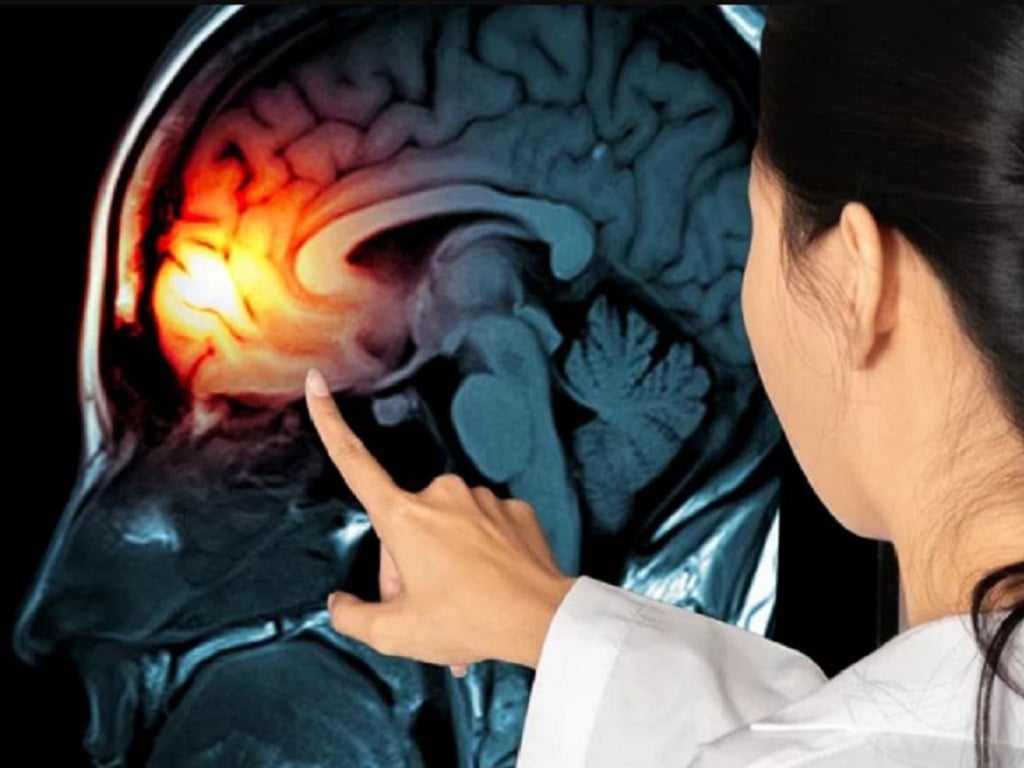
If a severe, persistent headache doesn't go away, the patient should see a doctor immediately because it could be a symptom of a brain tumor.
Brain tumors develop silently and may take years for noticeable symptoms to appear. Only then do patients seek medical attention and discover they have a brain tumor. In many cases, the cancerous tumor has progressed, making treatment extremely difficult.
One reason for the delay in diagnosis is that brain tumor symptoms are easily confused with other conditions. These symptoms include headaches, a feeling of discomfort in the head, difficulty sleeping, difficulty concentrating, and problems with writing, speaking, or remembering. In addition, some people experience a loss of interest in daily activities and poor social interaction.
Furthermore, as brain tumors grow larger, they compress areas of the brain, leading to characteristic symptoms such as nausea, vomiting, severe and persistent headaches, often in the morning. In addition, patients may experience blurred vision, drowsiness, seizures, and changes in behavior and personality.
Brain tumors can also cause neurological problems such as impaired vision or paralysis on one side of the body. If the tumor increases intracranial pressure, it can obstruct the flow of cerebrospinal fluid around the brain and spinal cord, leading to dangerous complications.
The symptoms of brain tumors are quite varied. Many of these symptoms, such as nausea, vomiting, and blurred vision, are easily mistaken for common health problems. Depending on the location, size, and degree of nerve compression by the tumor, patients will experience different characteristic symptoms.
However, if a patient experiences persistent headaches or prolonged nausea and vomiting, they should see a doctor immediately. Regardless of the cause, diagnosis and treatment are necessary, according to Medical News Today .
Source link
![[Image] Leaked images ahead of the 2025 Community Action Awards gala.](/_next/image?url=https%3A%2F%2Fvphoto.vietnam.vn%2Fthumb%2F1200x675%2Fvietnam%2Fresource%2FIMAGE%2F2025%2F12%2F16%2F1765882828720_ndo_br_thiet-ke-chua-co-ten-45-png.webp&w=3840&q=75)
![[Photo] Prime Minister Pham Minh Chinh receives the Governor of Tochigi Province (Japan)](/_next/image?url=https%3A%2F%2Fvphoto.vietnam.vn%2Fthumb%2F1200x675%2Fvietnam%2Fresource%2FIMAGE%2F2025%2F12%2F16%2F1765892133176_dsc-8082-6425-jpg.webp&w=3840&q=75)
![[Live] 2025 Community Action Awards Gala](/_next/image?url=https%3A%2F%2Fvphoto.vietnam.vn%2Fthumb%2F1200x675%2Fvietnam%2Fresource%2FIMAGE%2F2025%2F12%2F16%2F1765899631650_ndo_tr_z7334013144784-9f9fe10a6d63584c85aff40f2957c250-jpg.webp&w=3840&q=75)
![[Photo] Prime Minister Pham Minh Chinh receives Lao Minister of Education and Sports Thongsalith Mangnormek](/_next/image?url=https%3A%2F%2Fvphoto.vietnam.vn%2Fthumb%2F1200x675%2Fvietnam%2Fresource%2FIMAGE%2F2025%2F12%2F16%2F1765876834721_dsc-7519-jpg.webp&w=3840&q=75)




























































![[Photo] Prime Minister Pham Minh Chinh attends the Vietnam Economic Forum 2025](https://vphoto.vietnam.vn/thumb/402x226/vietnam/resource/IMAGE/2025/12/16/1765893035503_ndo_br_dsc-8043-jpg.webp)






































Comment (0)