

.jpg)
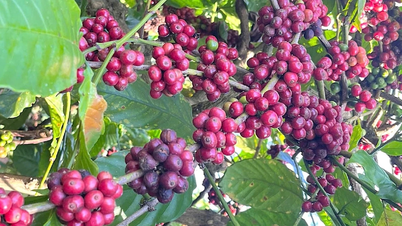
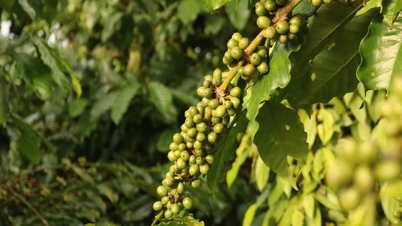
During this time, most coffee growers in the province are carrying out post-harvest care and fungal disease treatment for their coffee plantations. This coincides with the dry season, which runs from November and December to March and April of the following year. This is also the period when coffee plants flower, set fruit, and nurture young fruit.
Mr. Nguyen Trong Lap's family, residing in Nam Ra residential area, Dong Gia Nghia ward, owns 1 hectare of coffee plantation. After the harvest, in early January, he diligently prunes branches, clears away dry leaves and fruit, disinfects the soil to prevent the spread of fungal diseases in the garden, and waters the plantation.
Mr. Lap explained that after harvesting, coffee plants often lose strength due to the long process of nourishing the fruit and branches. Therefore, caring for the coffee plants at this time is a crucial factor in determining future coffee yields. He prunes thin branches, old branches that no longer bear fruit, and some large branches infested with borers. Mr. Lap affirmed that this will help the coffee plants recover quickly, concentrate nutrients on the most productive branches, and thus help the trees develop a balanced and airy canopy. After harvesting, the plants have been dry for nearly a month, so he is watering them for the first time to encourage bud differentiation, flowering, and fruit setting more evenly.
Mr. Tran Hong Ha's family in Quang Tin commune has nearly 4 hectares of coffee trees currently in production. As in previous years, after harvesting, Mr. Ha cleans the plantation, prunes the branches to shape the canopy, helping the coffee trees photosynthesize better and reducing the risk of fungal diseases. Mr. Ha emphasizes that after a year of fruit production, coffee trees need sufficient nutrients to enter the stages of flower bud differentiation, flowering, and fruit development. Therefore, he has balanced the amount of fertilizer to provide just the right amount for the trees. His family applied the first fertilizer application after harvest, using phosphorus mixed with a small amount of potassium, combined with watering to help the trees absorb nutrients easily and promote concentrated flower bud differentiation for better fruit setting.
According to the Sub-Department of Agricultural Development (Department of Agriculture and Environment), the unit recently issued a document guiding people on post-harvest care of key crops, including coffee. The recovery period for coffee at the beginning of the dry season is crucial and decisive for the yield and quality of the next crop, as it coincides with the period of flower bud differentiation, flowering, and young fruit setting. Therefore, after harvesting coffee, farmers need to proactively inspect their gardens, apply timely and scientific care measures, prioritizing the use of composted organic fertilizers with microbial enzymes to stimulate root development, ensuring stable growth and high yields; and improve soil quality by balancing nutrient components. At the same time, farmers should apply irrigation methods to coffee plants after harvest to promote effective flower bud differentiation. In addition, farmers need to focus on developing landscape coffee models, integrated crop and pest management, intercropping with fruit trees, and forest belts in the orchards to create shade, reduce water evaporation, regulate the orchard's ecosystem, and aim for sustainable development.
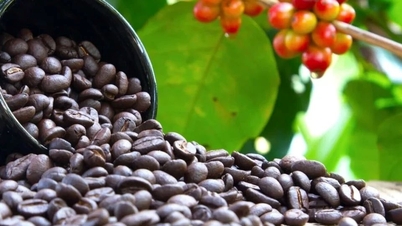
Coffee is the province's main crop, covering an area of 327,000 hectares (accounting for 45.02% of the country's total coffee area), with an estimated production of over 1 million tons in 2025 (accounting for 50.49% of the country's total coffee production). Therefore, the province places great importance on properly caring for this crop to ensure productivity and product quality.
Source: https://baolamdong.vn/de-ca-phe-ra-hoa-dau-trai-nhieu-416759.html



![[Photo] General Secretary and President To Lam presides over a meeting on preparations for the review of one year of operation of the three-tiered government system.](https://vphoto.vietnam.vn/thumb/1200x675/vietnam/resource/IMAGE/2026/06/02/1780391821195_a1-bnd-4595-9717-jpg.webp)



















































































Comment (0)