

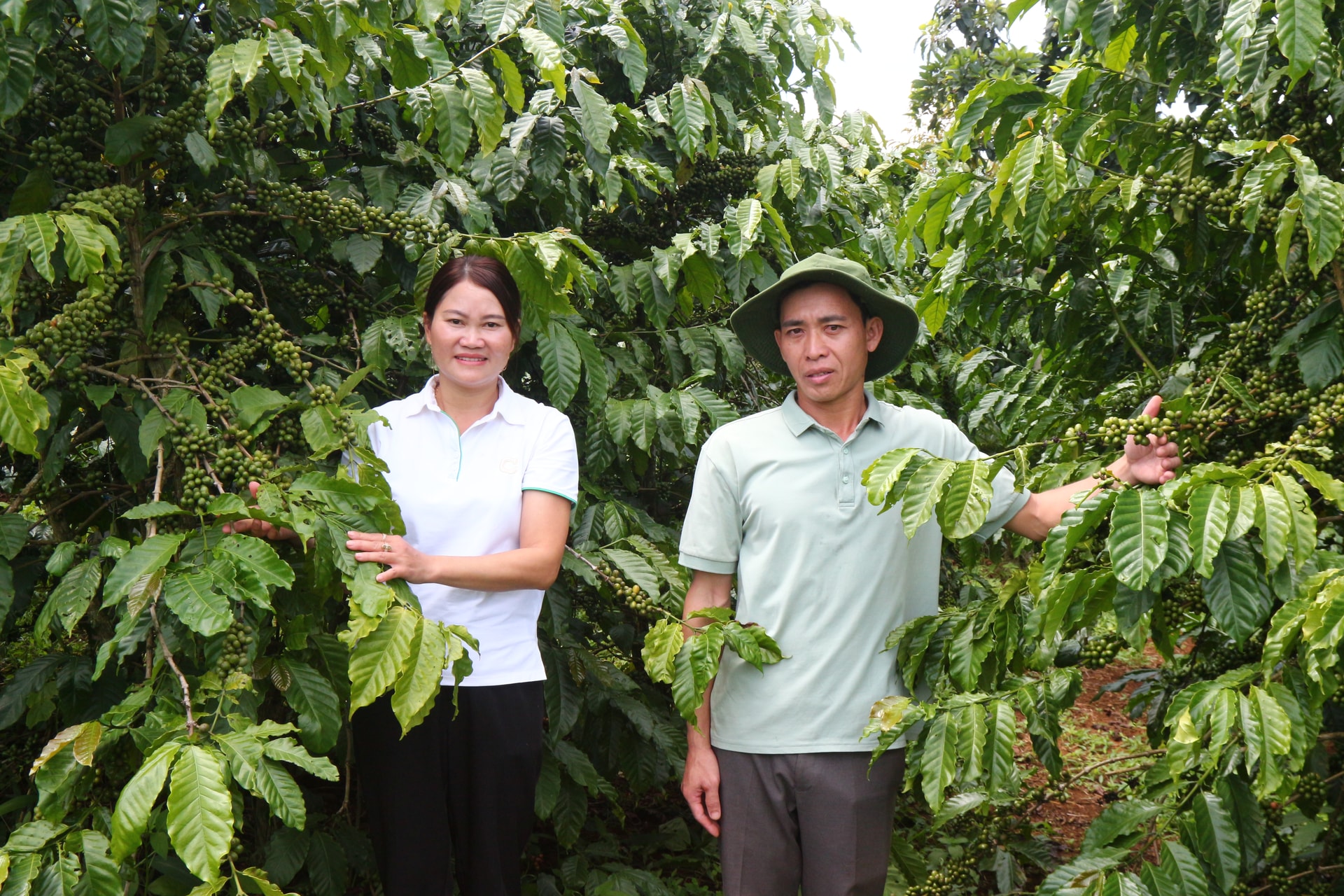
Luxury cars and spacious houses thanks to coffee.
Nature has blessed Di Linh, Bao Lam, and Bao Loc with a climate and soil suitable for growing coffee. Based on historical records, coffee has taken root in this land for about 150 years. Since the French chose the Di Linh plateau to establish coffee plantations, and then spread to the Bao Loc and Bao Lam areas, this plant with its bitter yet fragrant taste has been cultivated on vast hillsides.
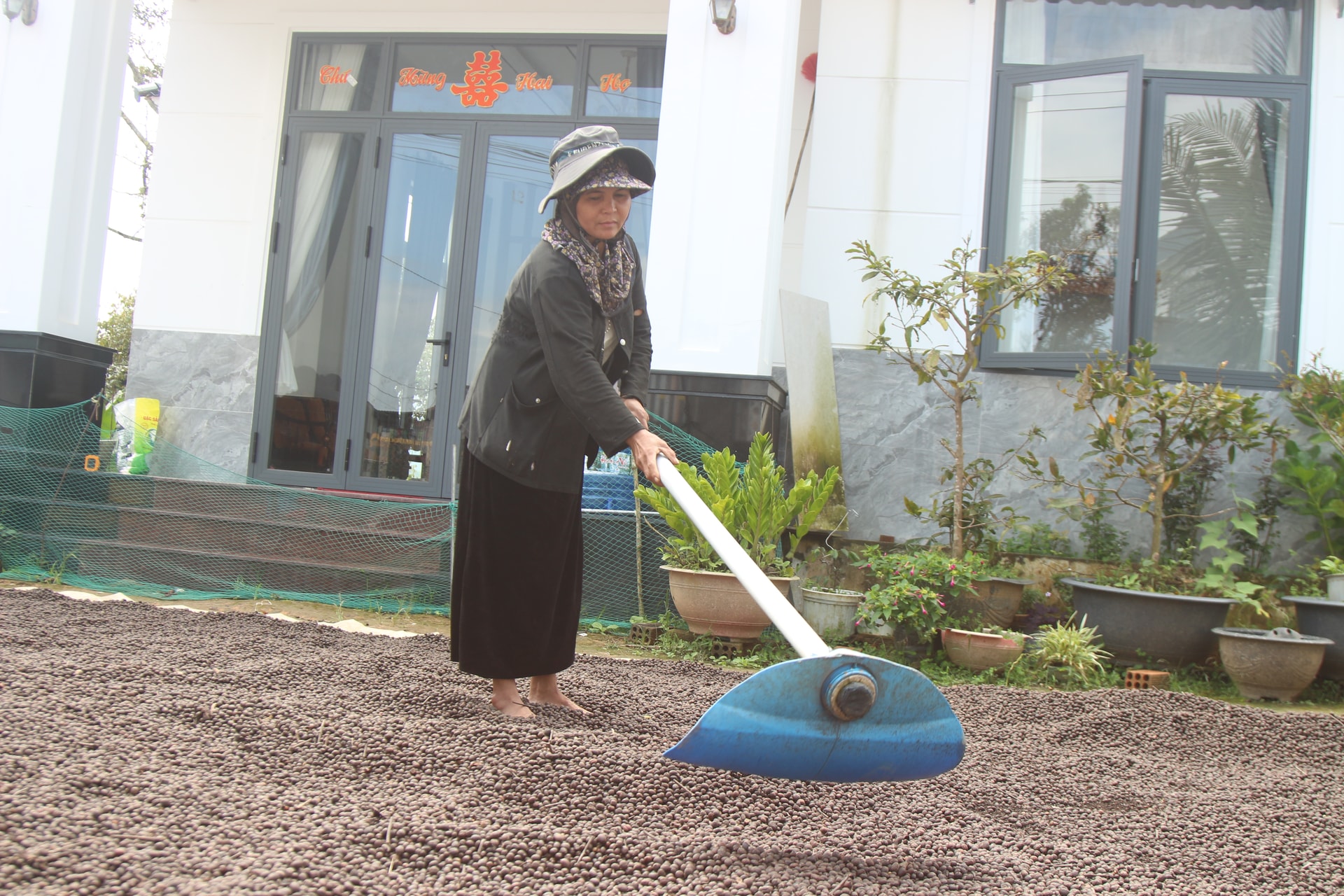
At dawn, the fire in Ka Luc's house in Loc Nam village, Hamlet 3, was already burning. She woke up early to prepare meals and get ready to dry the coffee beans. For the past three years, thanks to coffee, her family has had enough to eat and save. Ka Luc's spacious house still has very new paint. She said, "Thanks to the coffee harvests, we were able to build a big house. The days of hunger are over, we have enough to eat and save, and our children have something to start their own families with."
For example, the K'Brối family in Hòa Ninh commune earns 2-3 billion VND per year thanks to coffee. K'Brối said that since coffee was first grown in Di Linh, the local people have remained loyal to this crop. After many years of price fluctuations, thanks to good harvests and high prices in recent years, the people have truly transformed their lives, buying cars and building new, spacious houses.
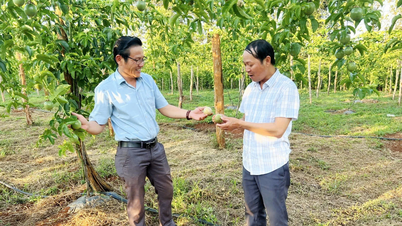
During a field trip to write the article "The Billionaire Tay Village" for the Lam Dong Newspaper, I witnessed firsthand the transformation brought about by this crop in Bao Lam 1. Just quoting the village head, Nong Van Huong, reveals the difference: "The first residents settled here nearly 40 years ago. In the beginning, people grew tea for processing, but later, farmers switched to growing coffee. Through the ups and downs of prices, the people still maintain the same area of about 287 hectares/212 households, carrying out replanting and grafting new varieties. Good harvests and good prices have helped the people become well-off and wealthy, turning the village into a billionaire village, with most earning billions of dong. The village alone owns 50 cars worth billions of dong; this year's coffee harvest has resulted in even more new cars and houses."
These results are thanks to the attention of the Party, the State, and local authorities who have implemented agricultural promotion policies to encourage the development of coffee cultivation in ethnic minority areas, aiming to promote settled farming and poverty reduction over several periods. These include various solutions implemented by local authorities such as: organizing seedling nurseries and supplying seedlings directly to people in remote areas for new planting; providing support with fertilizers, pesticides, agricultural supplies, machinery, and tools; and training to improve techniques. As a result, the area of coffee cultivation in the southern Central Highlands has continuously increased.
Be more proactive with… the market
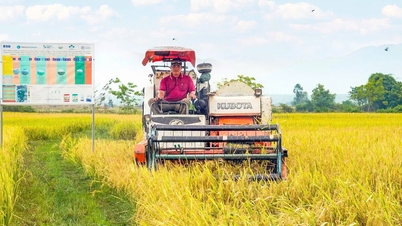
Just before the Lunar New Year of 2026, the issue resurfaced when coffee prices sometimes dropped to around 95,000 VND/kg (green coffee beans), but according to local farmers, producing coffee at 70,000-80,000 VND/kg (green beans) was still profitable. In fact, in the villages of the Southern Central Highlands, growers have now invested in machinery to separate the beans and even process their own clean coffee to sell on the market.
The Loc Tan area, now Ward 2 of Bao Loc, is home to the Ma and K'ho ethnic groups, with approximately 2,800 hectares of coffee plantations. Coffee is currently in high demand and fetching good prices, providing many families with substantial incomes. Mr. K'Bet, Secretary of the Party Branch of Residential Group 38, stated: “Our residential group currently has 184 households, mainly Ma and K'ho people. The lives of our people are changing day by day, thanks to cultivating coffee as the main crop, which has enabled many families to accumulate wealth.”
During his visits to the villages of the Ma and K'ho ethnic groups with K'Nir, the former Deputy Secretary of the Party Committee of Loc Tan commune (old), he was always enthusiastic because the people had equipped themselves with machinery to produce high-quality coffee beans. According to K'Nir, the Ma and K'ho people in the area have bought many irrigation machines, pesticide sprayers, and coffee hulling machines. Typically, 3 or 4 households will share one hulling machine, while households with larger areas will have their own machines to be more independent. Thanks to this, the people can store their coffee beans, waiting for higher prices to sell them, thus being more proactive in the market.
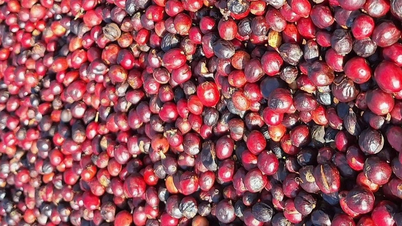
In many areas of Bao Loc, Bao Lam, and Di Linh, coffee growers in general, and ethnic minority communities in particular, often take their harvested coffee beans to drying facilities to preserve their natural flavor, attractive color, and moisture content. This helps save production costs and improve quality to meet export demands in many countries.
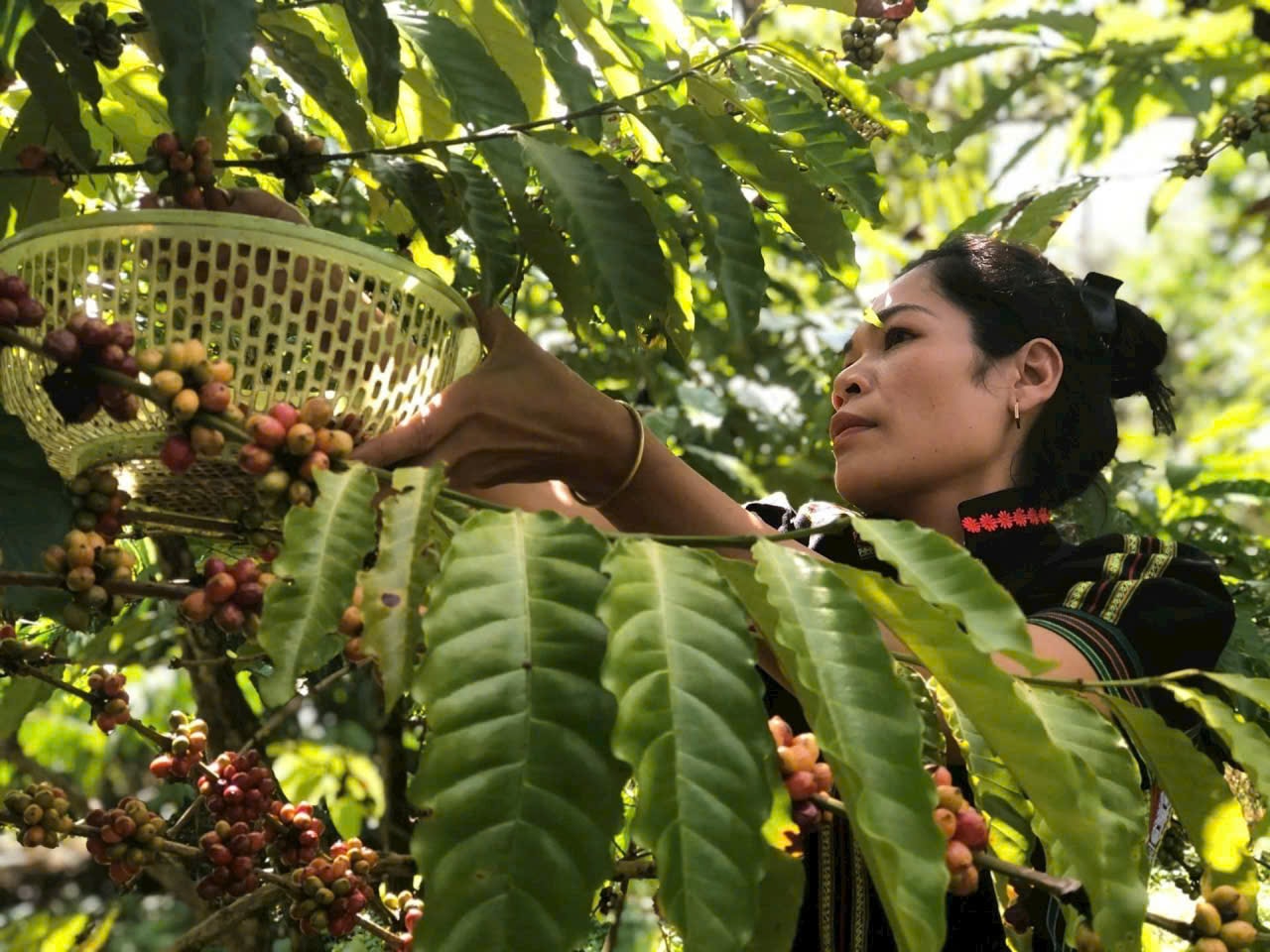
To be more proactive in the market and to independently determine the value of her labor from planting and caring to harvesting, the K'ho woman has produced a clean coffee product that is favored by many. During the coffee harvest season, after the cherries ripen to a red color, Ms. Ka Nhuy in Bao Lam 3 commune harvests and dries the whole fresh coffee cherries until the moisture content in the coffee beans is 12-13%. After grinding and removing the outer shell, she dries them again, then removes broken, black, and shriveled beans, separates the parchment, lightly roasts them for 3-5 minutes to reduce moisture, rinses them, and ferments them in traditional rice wine jars. These jars are used for fermenting rice wine and still retain a faint aroma. The coffee beans are filled to the jars, fermented for 6 months, then ground and processed into the final product. Good coffee combined with good jars results in a product with a rich, intoxicating aroma of the mountains and forests. Currently, Ms. Ka Nhuy is very successful with this model and is known to many customers both within and outside the province.
Not only are coffee growers investing independently to proactively manage the market, but in the Di Linh, Bao Lam, and Bao Loc areas, local authorities have also established numerous production linkages, cooperatives, and specialized organic coffee growing regions. Many households from the Ma, K'ho, Tay, and Nung ethnic groups participate in these production models. This ensures the supply of materials for planting and caring for coffee, as well as the market for the product.
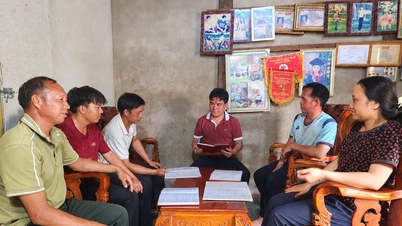
In interviews about the changes in the lives of ethnic minority groups such as the Ma, K'ho, Tay, and Nung in the Di Linh, Bao Lam, and Bao Loc areas, commune leaders all affirmed that in recent years, thanks to the bumper coffee harvest and good prices, the lives of the people have changed miraculously, with the construction of spacious houses, the new rural areas showing many positive changes, and a warm and prosperous Tet holiday.
Source: https://baolamdong.vn/giot-dang-tren-mien-dat-ngot-421913.html

![[Image] Hanoi Police officially crowned champions of V-League 2025/2026](https://vphoto.vietnam.vn/thumb/1200x675/vietnam/resource/IMAGE/2026/05/31/1780244769054_ndo_br_039d561b692be875b13a-jpg.webp)


























![[Photo] The General Secretary, President and his wife begin their state visit to the Philippines.](https://vphoto.vietnam.vn/thumb/1200x675/vietnam/resource/IMAGE/2026/05/31/1780230559452_anh-man-hinh-2026-05-31-luc-19-28-11.png)




































































Comment (0)