

Built during the reign of Ly Thai To (1010 - 1028), Quan Thanh Temple was one of the four temples guarding the four gateways to Thang Long citadel at that time. Quan Thanh Temple guarded the north (Bach Ma Temple guarded the east, Voi Phuc Temple guarded the west, and Kim Lien Temple guarded the south).
The structure has undergone numerous renovations, and its current architectural style largely dates from the Nguyen Dynasty in the 19th century, comprising: a triple gate, a courtyard, a front hall, a middle hall, and a rear sanctuary. Above the central gate of the triple gate is a bas-relief of the god Rahu from Indian mythology, who allegedly swallowed the moon and sun, causing lunar and solar eclipses. This represents the integration of Vietnamese beliefs. Furthermore, the wooden architectural details of the temple are exquisitely carved, reflecting the artistic style of the Le Dynasty.
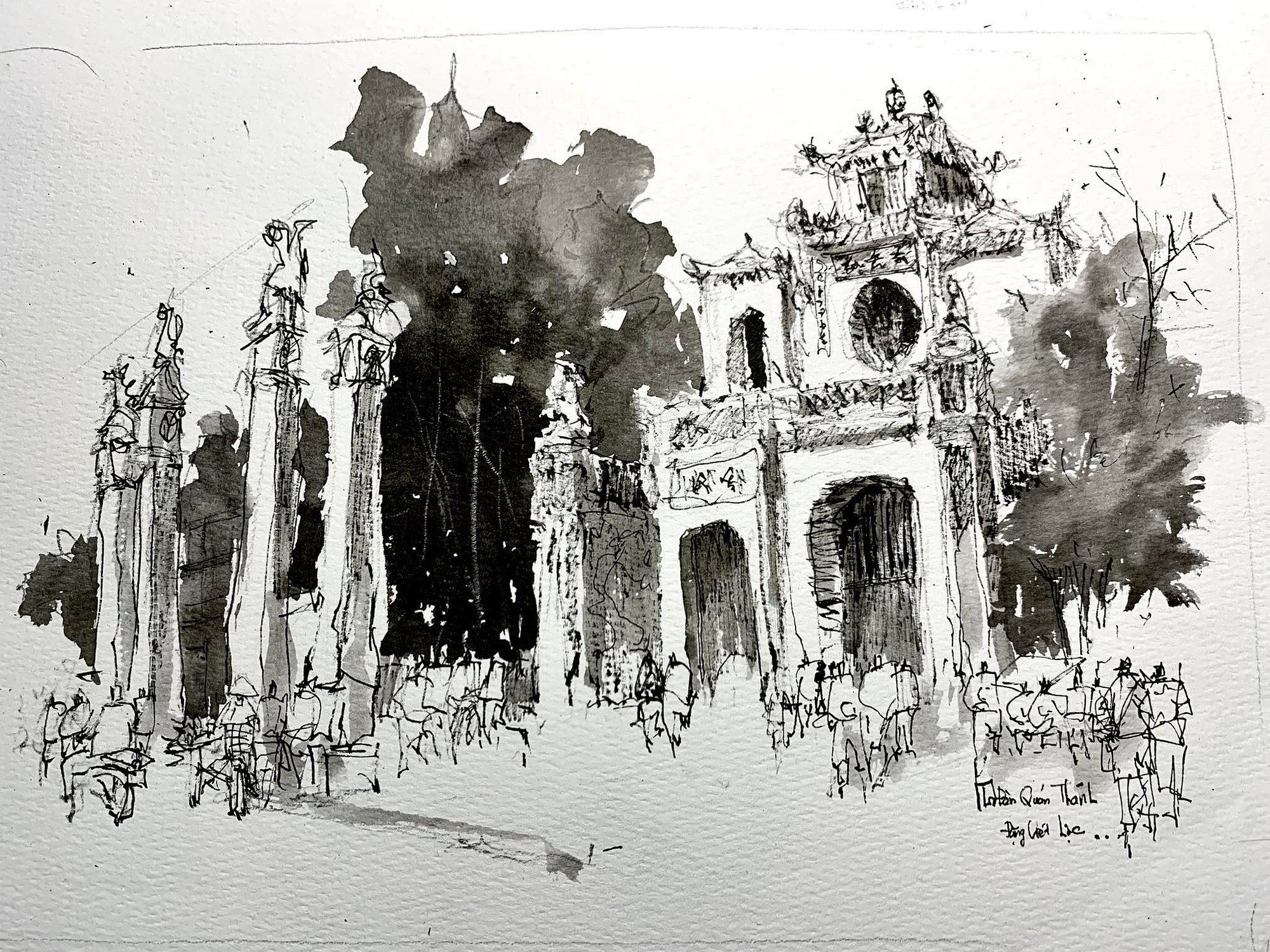
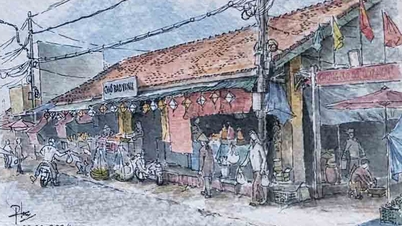
Sketches by artist Dang Viet Loc
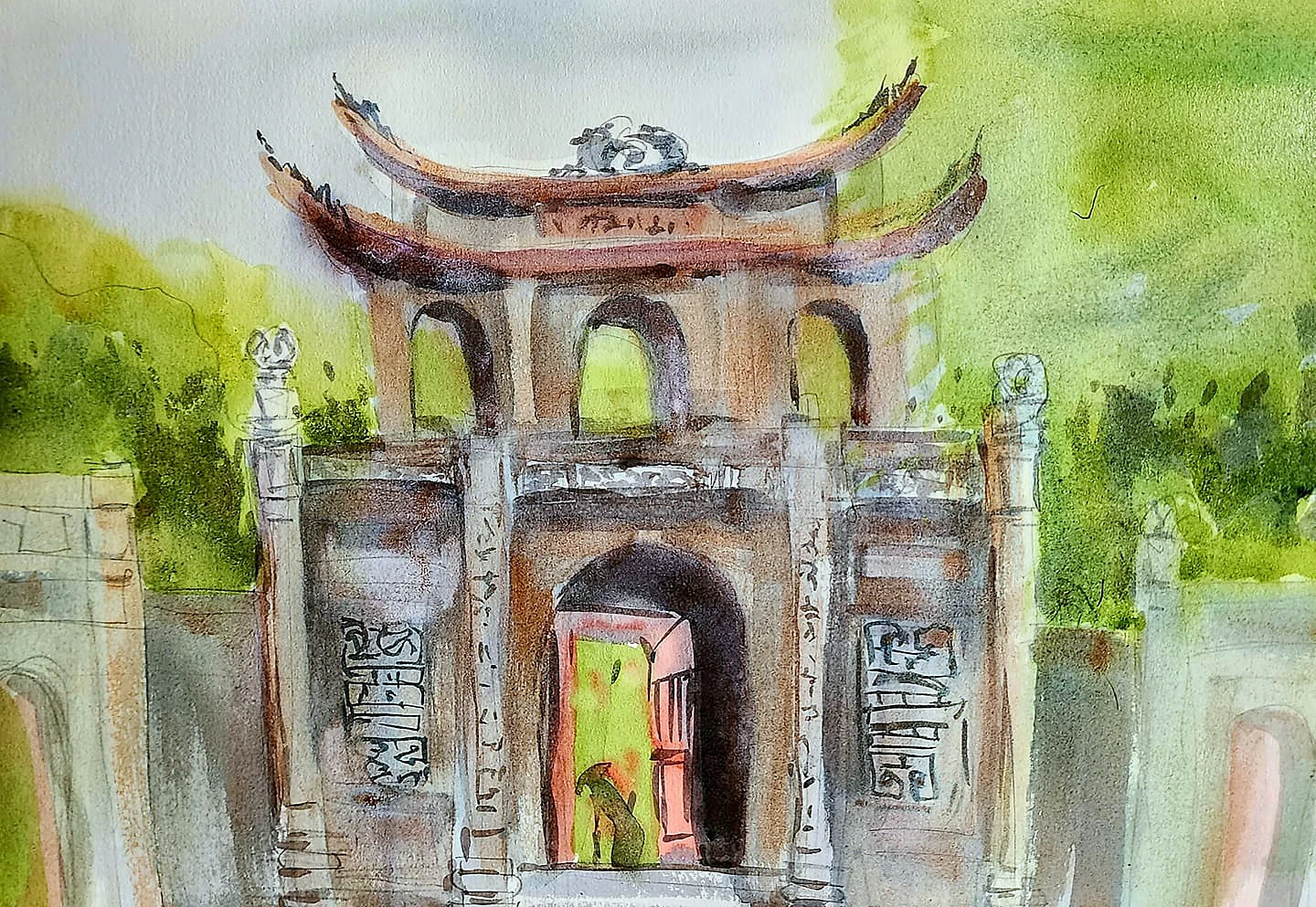
Sketch by architect Phung The Huy
Quan Thanh Temple is dedicated to Huyen Thien Tran Vu, a deity who repeatedly helped the Vietnamese people fight foreign invaders and assisted An Duong Vuong in defeating demons during the construction of Co Loa Citadel. In 1677, during the reign of King Le Hy Tong, the wooden statue of Huyen Thien Tran Vu was replaced with a nearly 4-meter-tall, 4-ton bronze statue. This is a unique sculptural work, showcasing high-level bronze casting and statue carving techniques.
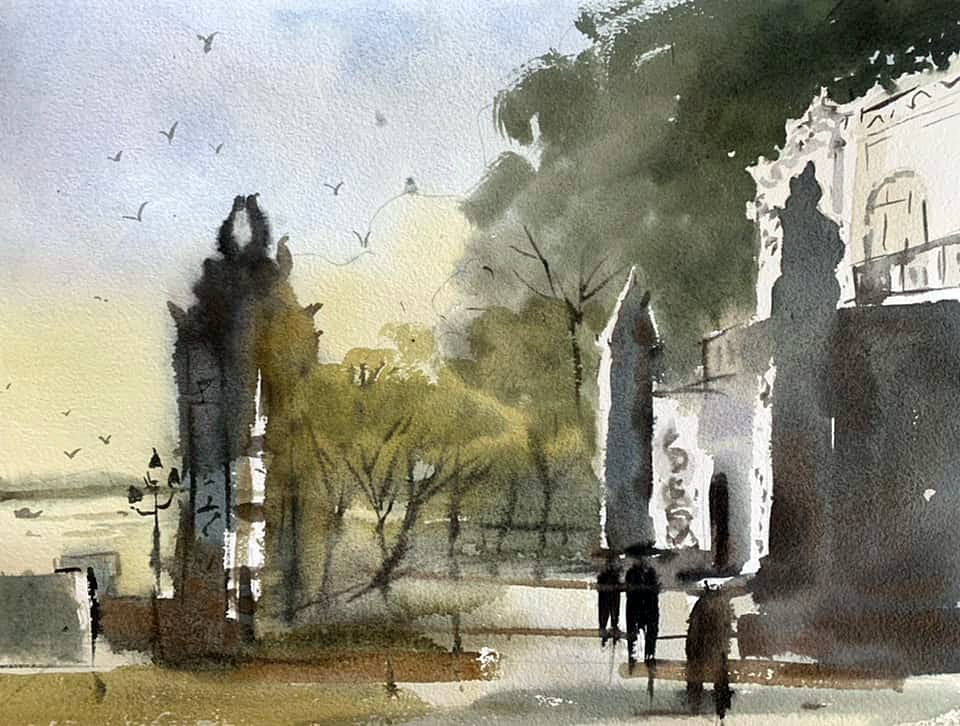
Sketches by architect Nguyen Khanh Vu
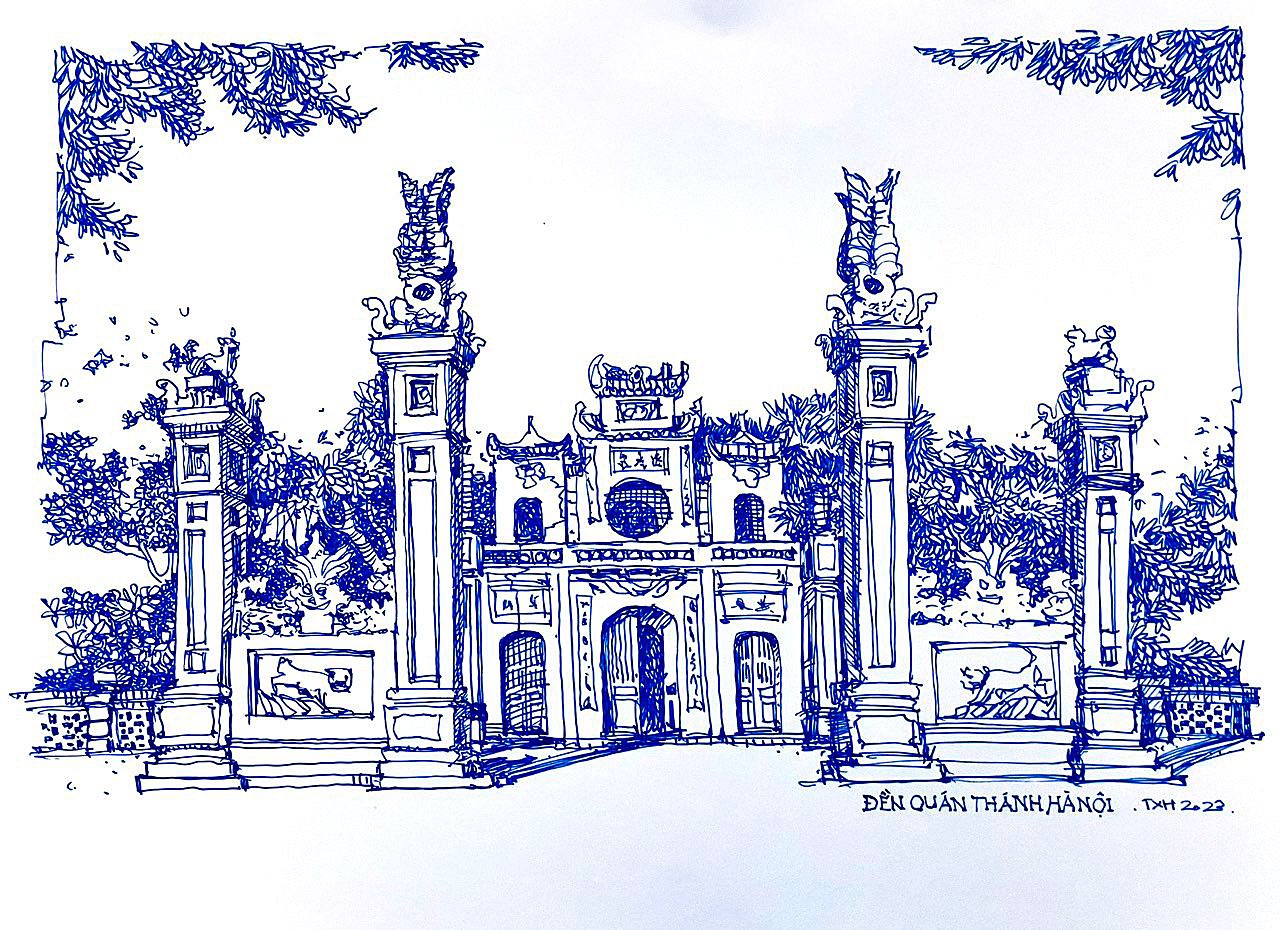
Sketch by architect Tran Xuan Hong
In the 19th century, King Minh Mạng renamed it Chân Vũ Quán (this name is carved in Chinese characters on the roof of the triple-arched gate. The horizontal plaque in the main hall still bears the old name, Trấn Vũ Quán).
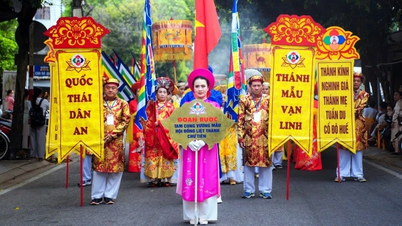
The site was recognized as a special national monument in 2022. Every year, the Quan Thanh Temple festival takes place on the 3rd day of the 3rd lunar month.
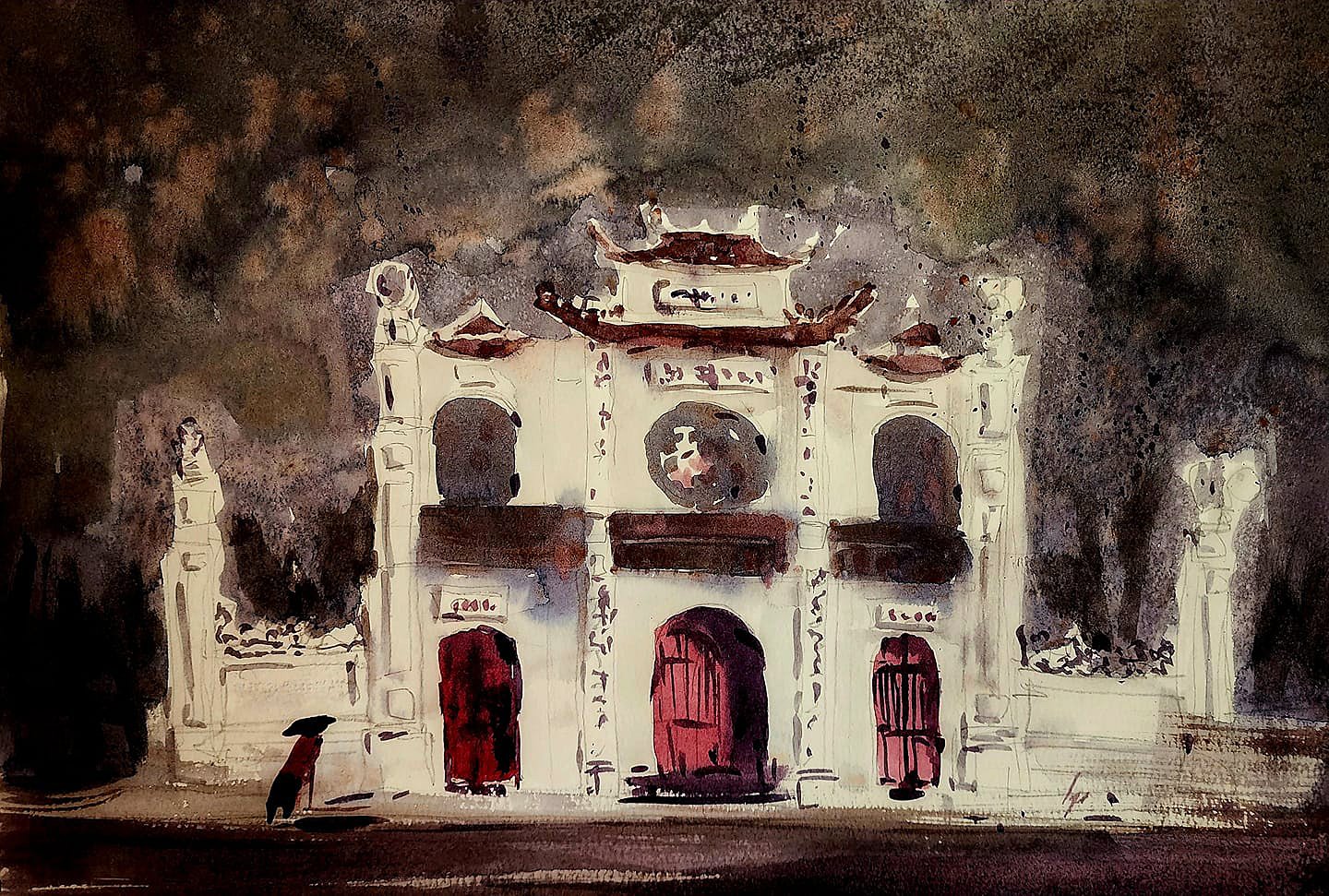
Sketch by architect Phung The Huy
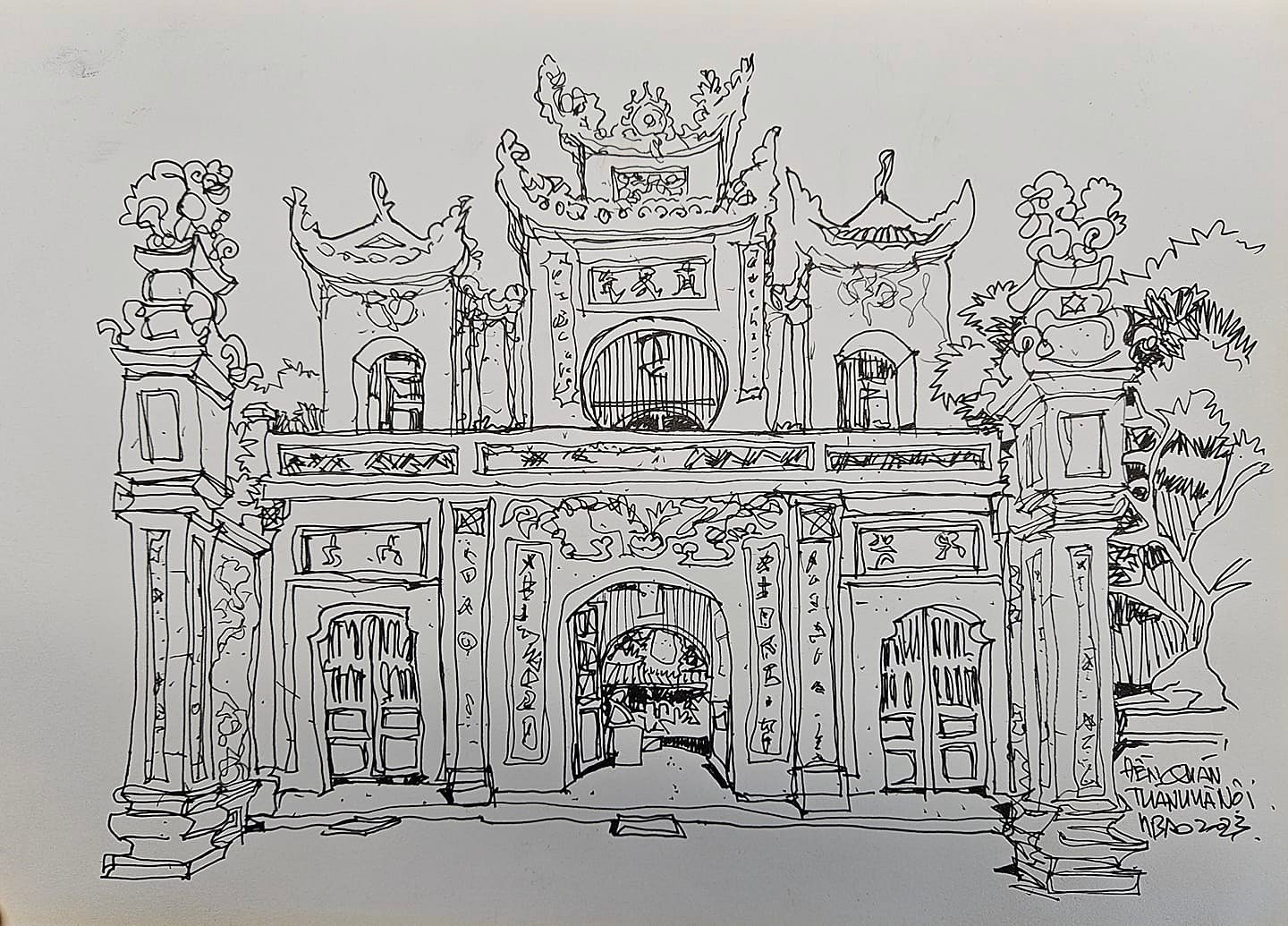
Sketch by architect Bui Hoang Bao
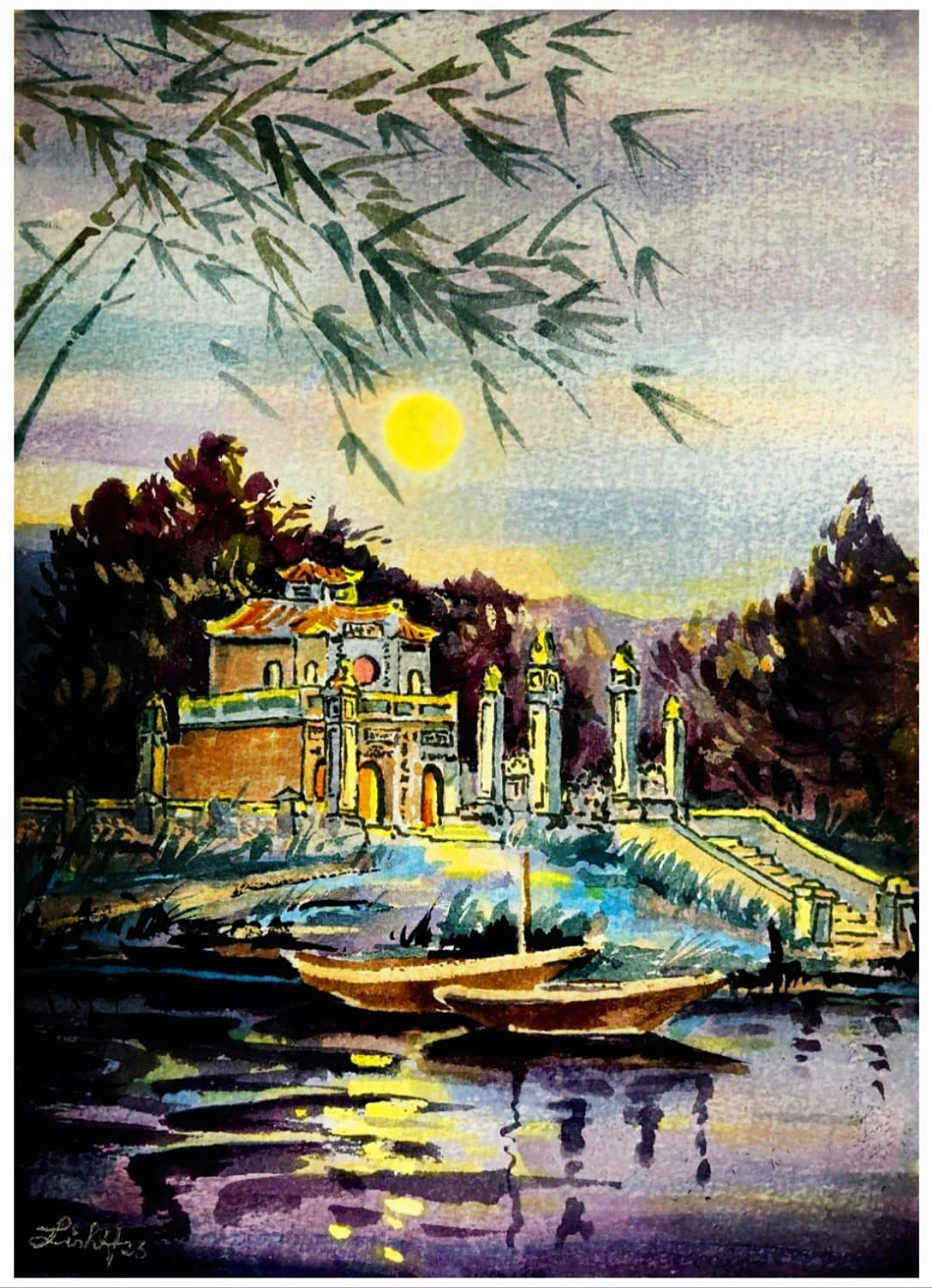
Sketches by architect Linh Hoang
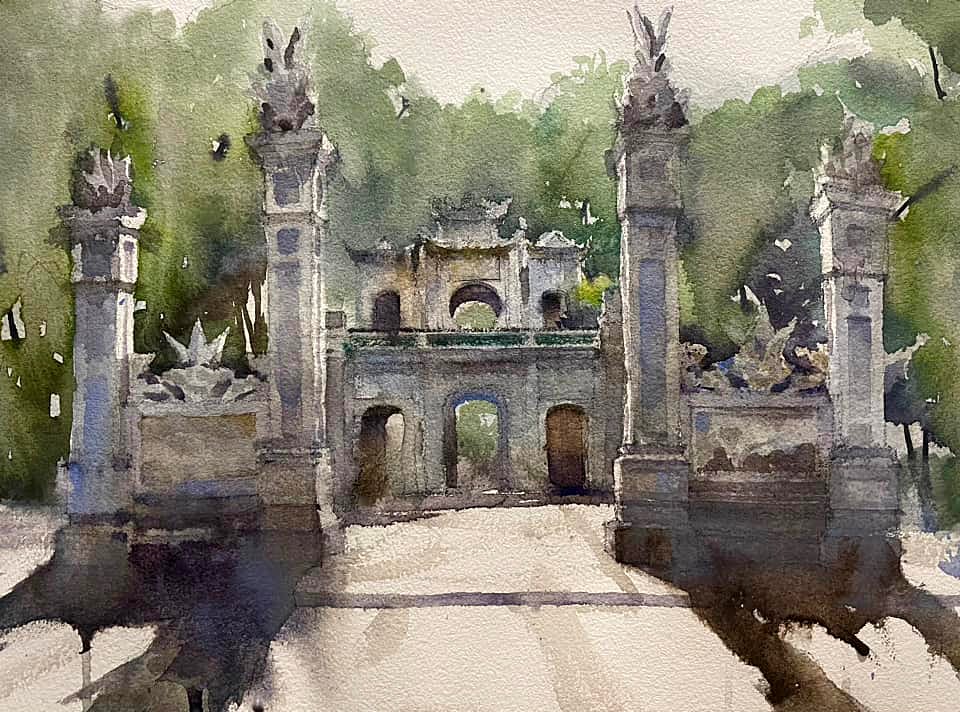
Sketches by architect Dang Phuoc Tue
(*): The original quote is: "The bamboo sways in the twilight moon / The bell of Tran Vu rings, the rooster crows at Tho Xuong" by Duong Khue (1839 - 1902)
Source link



![[Photo] “Red Journey” 2026: Vietnamese Youth Continue Building the Bridge of Friendship Between Vietnam and China](https://vphoto.vietnam.vn/thumb/1200x675/vietnam/resource/IMAGE/2026/04/20/1776629730866_4055880775670638308-9618-4200-jpg.webp)









































































Comment (0)