

The brilliant national bourgeoisie of the early 20th century
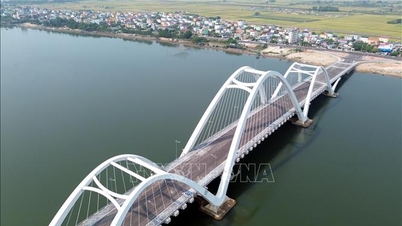
From the late 19th and early 20th centuries, when the French began their colonial exploitation and construction of bridges, roads, and other infrastructure, Mr. Bach Thai Buoi knew how to partner with the French, supplying materials for the largest railway line in Indochina at the time, starting with the historic Long Bien Bridge. With his capital steadily increasing, unwilling to let money sit idle, he established a company and boldly shifted his focus, leasing three ships and operating two waterways.
Today, Vietnamese business owners are very clear about the strategy for "active cash" and "dead cash," avoiding inventory and raw materials, and seeking to maximize profits from "active cash." However, at the beginning of the 20th century, when business was entirely in the hands of Western merchants, Bach Thai Buoi's bold "making money generate more money" mindset helped him quickly become a wealthy businessman, one of the "four great tycoons" of Indochina.
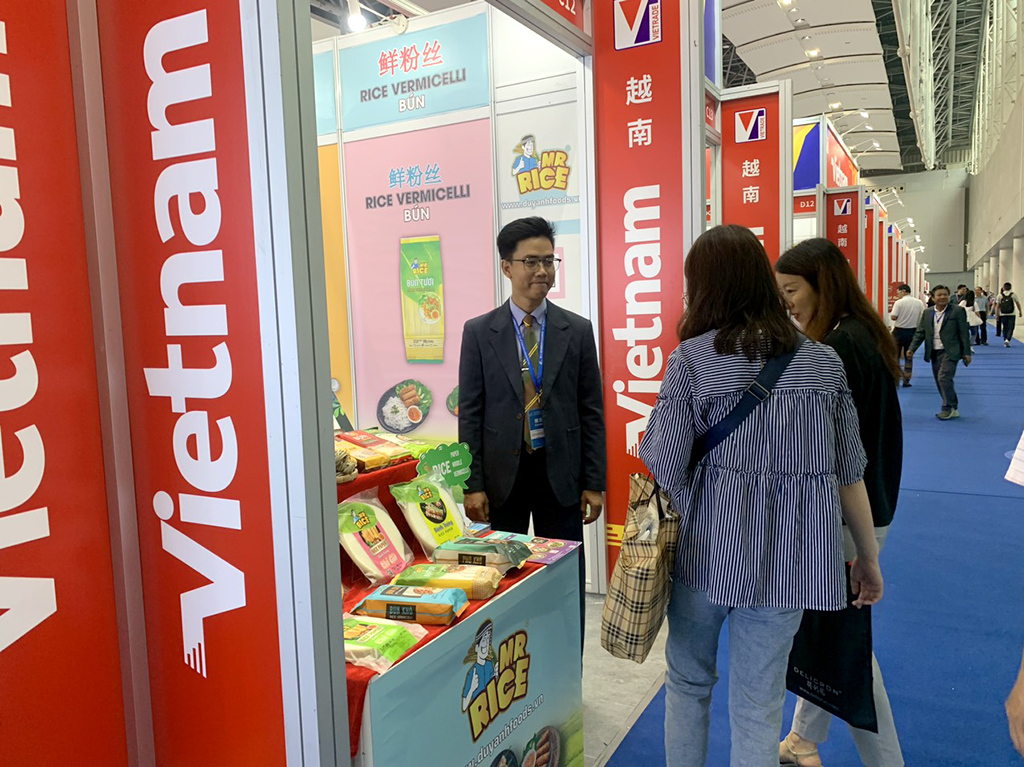
Vietnamese businesses showcase rice-based products at an international trade fair.
In 1940, Mr. Trinh Van Bo was considered one of the wealthiest people in Hanoi, frequently trading with famous merchants in the Indochina region, owning a textile factory, numerous properties, and more.
After 10 years, Bach Thai Buoi owned nearly 30 ships and barges of various sizes, operating on most of the waterways in Northern Vietnam, and on over 17 domestic and international shipping routes, reaching as far as Hong Kong, Japan, the Philippines, China, and Singapore. Notably, he bought six ships from a bankrupt French shipping company and named them Lac Long, Hong Bang, Trung Trac, Dinh Tien Hoang, Le Loi, and Ham Nghi. The very act of naming these ships demonstrates this businessman's strong sense of national pride. Therefore, the title "King of Ships" Bach Thai Buoi is recorded in legend alongside other patriotic capitalists of the nation in the early 20th century.
During this period, Vietnam also witnessed the introduction of many light industries from the French, such as shipbuilding, metallurgy, and painting. To serve their colonial expansion and dominance in Indochina, the French implemented numerous road and housing projects, leading to a growing demand for construction materials.
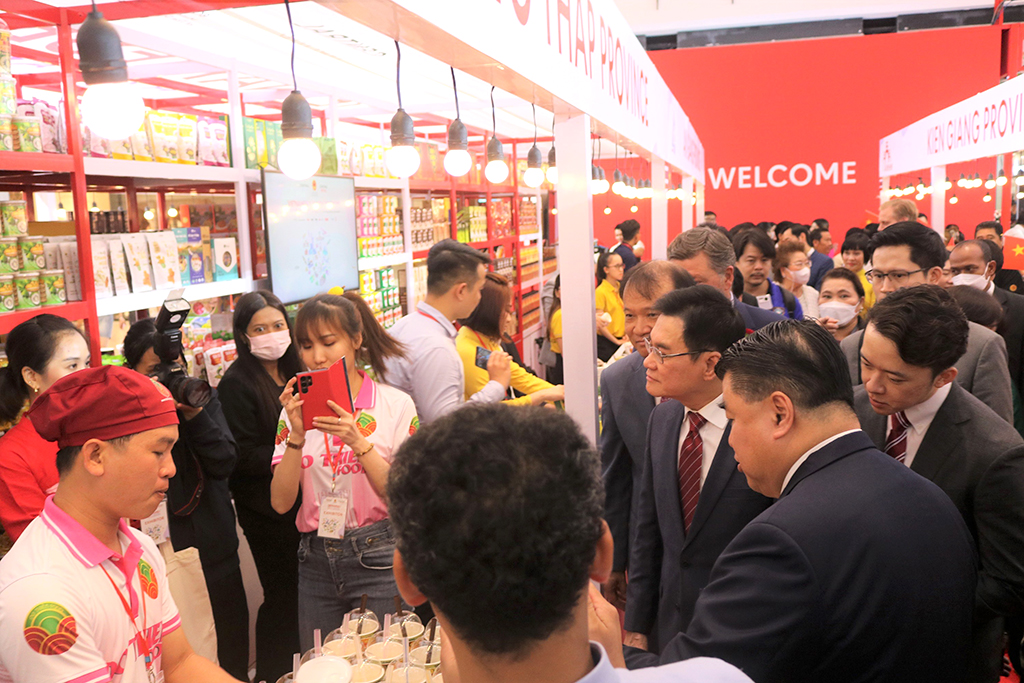
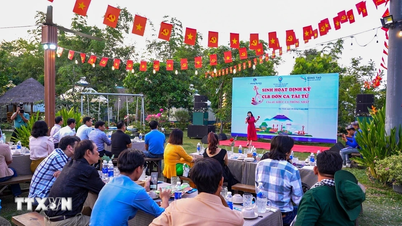
Vietnam Week in Thailand 2023
Mr. Nguyen Son Ha was the first Vietnamese businessman to see a great business opportunity in the paint industry while working for a French paint company in Hai Phong . He studied Western paint-making techniques, read French books, researched diligently, and started his own business selling paint, painting houses, and creating signs. Gradually, he quietly developed his own paint product. By the age of 26, businessman Nguyen Son Ha owned the Gecko Paint Company in Hai Phong. However, lacking a brand name, he struggled to compete with the French, so he became a distributor for a French paint company and quickly spread his Résistanco brand paint throughout the country through the French company's sales network.
Today, it would be quite common for a Vietnamese businessman to say that whoever controls the distribution system wins. However, in the early 20th century, Mr. Nguyen Son Ha "defeated the French" with this mindset, which truly shows the thinking of someone with innate business acumen and talent.
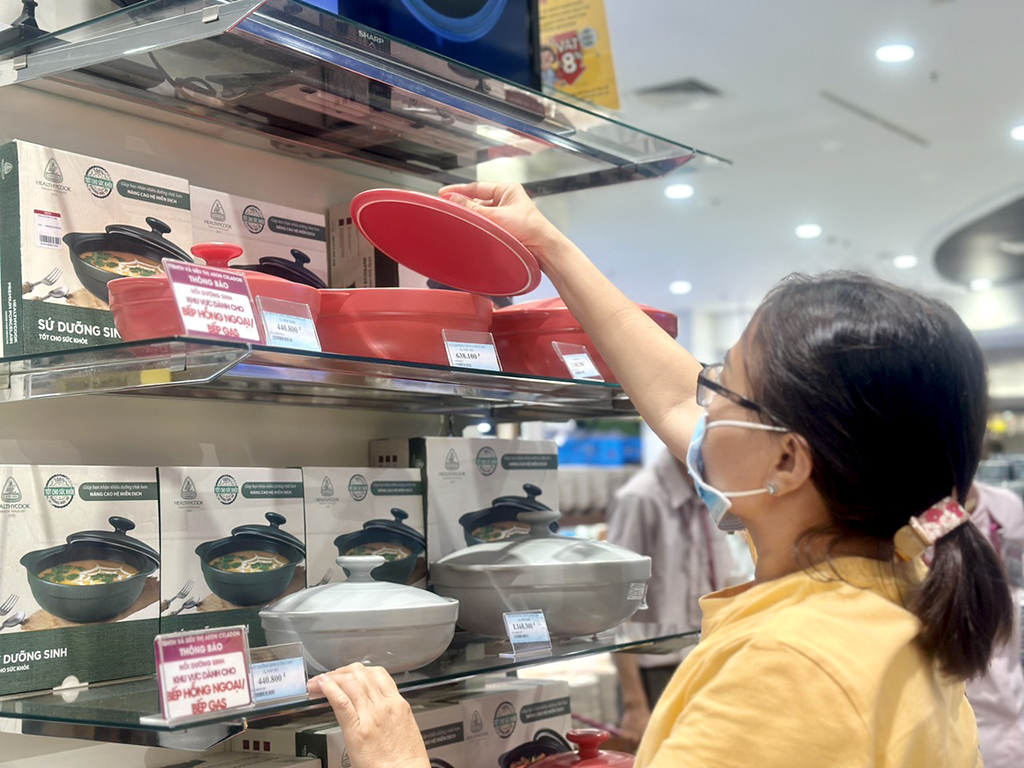
Many Vietnamese businesses have successfully brought Vietnamese products and brands to the international market.
If figures like Bach Thai Buoi and Nguyen Son Ha were a source of pride for Vietnamese merchants in the early 20th century, when Vietnam was still a colony, then the noble deeds of merchants like Ngo Tu Ha, Do Dinh Thien, and Trinh Van Bo, who donated their vast fortunes to the country, are also deeply moving and worthy of respect. Before the August Revolution, the renowned Ngo Tu Ha printing house in Hanoi was a benefactor to patriotic intellectuals who wanted to print books and newspapers. For many years, this printing house quietly supported the printing of books, newspapers, documents, and leaflets supporting the Viet Minh in the years before 1945. Then, the first banknotes of the Democratic Republic of Vietnam, which the people commonly called "Uncle Ho's banknotes," were also produced at the Ngo Tu Ha printing house.
In particular, after 1945, when the new government 's need for printing money increased, another patriotic capitalist, Mr. Do Dinh Thien, bought back the French printing house and donated it to the government to establish a printing facility on his family's plantation in Hoa Binh in 1946. However, he and his family chose a simple life, not settling in Hanoi. After 1945, abandoning all his property and assets in the capital, he moved his family and two young children to Viet Bac, joining the Revolution during the nine-year long resistance war and handing over the printing house to the Hanoi City Resistance Committee.
For example, in the case of the Trinh Van Bo family and national capitalist, during the "Gold Week" campaign launched by President Ho Chi Minh in September 1945, Mr. Bo's family donated 5,000 taels of gold to the Revolution, more than 90% of their family's assets, nearly double the government's treasury at that time. During this same "Gold Week," Mr. Nguyen Son Ha, the owner of the Gecko paint company, also donated 10.5 kg of gold and silver jewelry to the Revolution along with his wife and children.
Vietnamese entrepreneurs in the new era
Today, Vietnam, as an independent, integrated nation with an open economy, boasts a growing number of talented entrepreneurs such as the nationalistic capitalists Bach Thai Buoi, Ngo Tu Ha, and Nguyen Son Ha, who have established their brands in the global market. This is exemplified by VinFast, a Vietnamese car brand, being listed on the US stock exchange. Furthermore, the ecosystem of the VinGroup conglomerate, founded by businessman Pham Nhat Vuong, has built numerous major brands in the fields of healthcare, education, science, and more. Notably, the VinFuture Foundation, founded and funded by Mr. Pham Nhat Vuong and his wife, has been in operation for three years. Its core activity is organizing the VinFuture Award – the first global science and technology award initiated by Vietnamese people and one of the most valuable annual awards in the world. After two seasons, 16 scientists have been honored. In 2022, the VinFuture award, worth $3 million, was given to an invention connecting global network technology, laying the foundation for modern economic and social development.
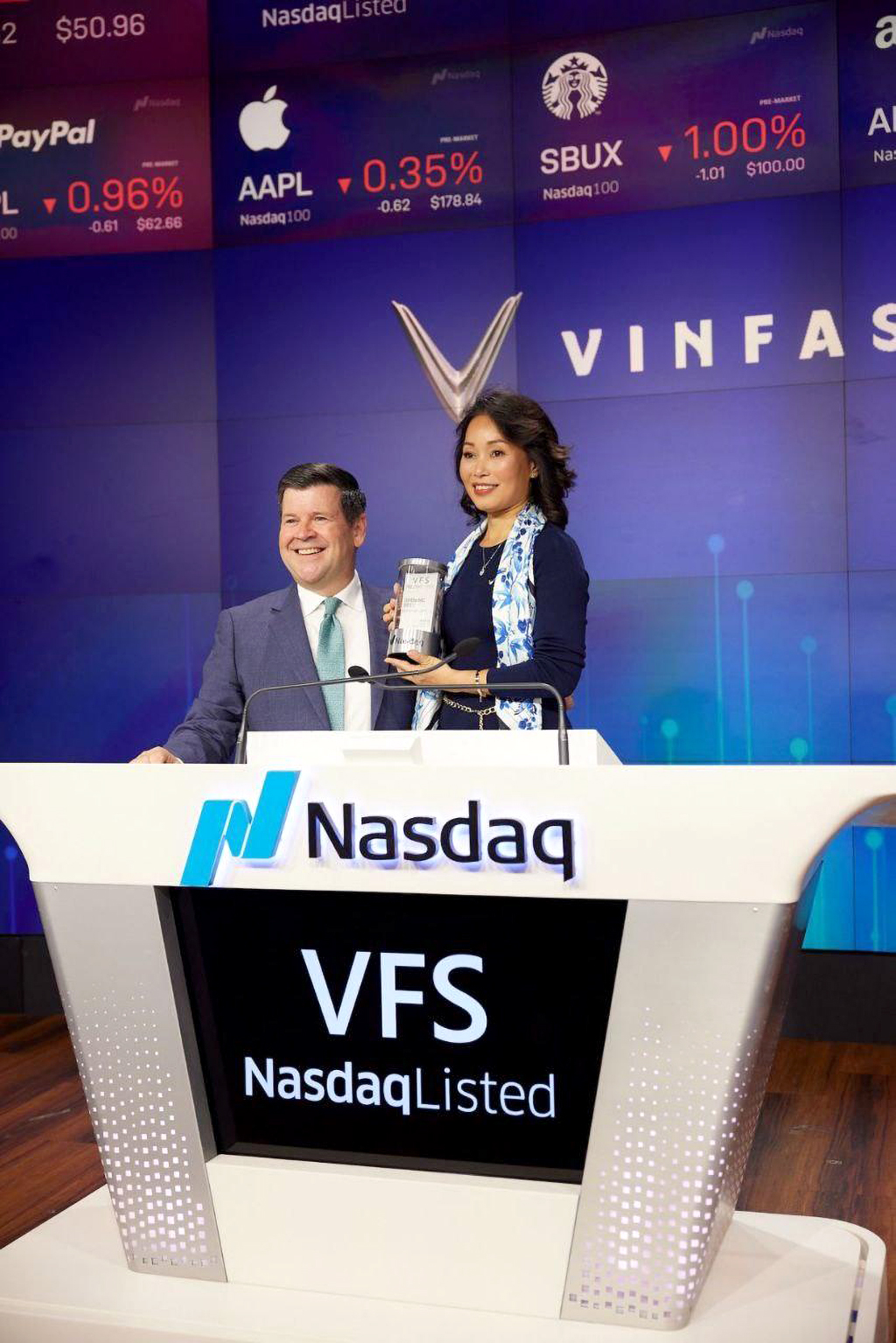
VinFast is listed on the Nasdaq stock exchange in the United States.
In the technology sector, particularly semiconductor technology, which Vietnam hopes will attract foreign investment for development, FPT University, part of the FPT Group chaired by businessman Truong Gia Binh, has announced the establishment of a Semiconductor Department to address the shortage of high-quality human resources in Vietnam. In 2022, FPT announced the establishment of FPT Semiconductor, a chip design and manufacturing company, and is now capable of mass production. The group's plan for the next two years is to supply 25 million chips globally. In fact, Mr. Truong Gia Binh introduced the FPT brand to the US market in 2008 and has become a partner of over 300 global clients, including more than 30 Fortune 500 companies. Recently, at the Vietnam-US Summit on Innovation, FPT also announced plans to invest $100 million and nearly 1,000 employees in the US by the end of this year. With this new investment, FPT aims to achieve billion-dollar revenue from the US market by 2030.
In late September, Vinamilk, the Vietnam Dairy Products Joint Stock Company, headed by businesswoman Mai Kieu Lien as General Director, signed a memorandum of cooperation with two leading companies in the distribution and import of milk and agricultural products in China to bring its products to this massive market. Vinamilk is the first Vietnamese company to export powdered milk to the Middle East market with its Dielac brand. Vinamilk is also one of the pioneering investors to invest abroad in branches in the US, Laos, Cambodia, and the Philippines. Building factories in these countries is not only a success for a brand, but also a milestone for the Vietnamese dairy industry in its journey to bring "made in Vietnam" dairy products to the world.
Similarly, Trung Nguyen Coffee Joint Stock Company, owned by businessman Dang Le Nguyen Vu, with its Trung Nguyen Legend brand, is continuing to expand its presence in developed countries and is quickly gaining attention from coffee lovers. On September 29th, the first Trung Nguyen Legend coffee shop opened in Little Saigon (California, USA). Thus, the US is Trung Nguyen Legend's second largest market, after China. Prior to this, Mr. Dang Le Nguyen Vu's group attracted attention with its openings in Shanghai (China) in September 2022 and July 2023. Just six months after opening in Shanghai, a city with hundreds of large and small coffee brands from China and around the world, Trung Nguyen Legend ranked among the top coffee shops in Shanghai in the "Must Try" category and as the number one hottest coffee shop on West Nanjing Road on Dazhongdianpin, the leading app for food and beverage reviews.
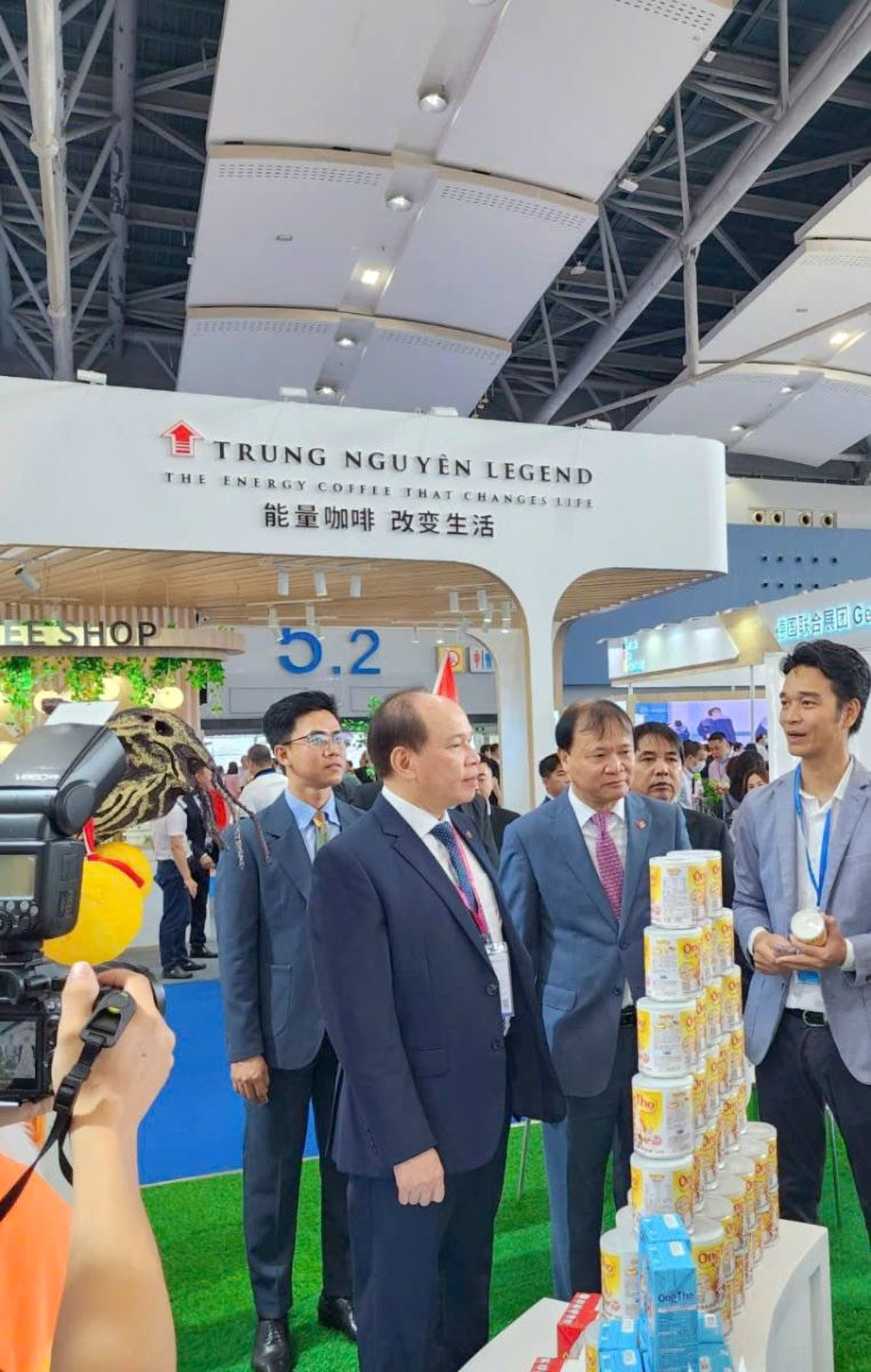
Trung Nguyen coffee at a major trade fair in China.
Businessman Dang Le Nguyen Vu has ambitious plans to expand his franchise network in the Chinese market to 1,000 stores. Prior to China and the US, the company has successfully franchised in Singapore and Japan, and may open stores in South Korea in the near future…
Over the years, on the international stage, Vinamit dried jackfruit, Phuc Sinh pepper, Hung Vuong seafood, and other Vietnamese products have consistently made a splash and firmly established themselves in many major markets. The path to global success for Vietnamese businesses and brands is becoming increasingly open and vibrant.
Without strong Vietnamese businesses, it's difficult to attract large corporations to build their nests.
Associate Professor Dr. Nguyen Manh Quan, Director of the Institute for Enterprise Development Research, commented that the growth of the business community this year has been significantly affected by a "fragmented world." War, recession, epidemics… some of the causes of which occurred several years ago have had an even greater impact. The most visible effects are declining exports and a frozen real estate market… Therefore, even talented entrepreneurs, who were once very skilled in building financial infrastructure for businesses and had prestige in the global financial market… are facing considerable difficulties. They are even under considerable pressure to maintain their position and reputation in the domestic and international markets, forcing them to sell off shares, or even sell everything, to operate and develop. This is very regrettable. But the resilience of entrepreneurs in these difficult times is something we must appreciate and value.
"Instead of wallowing in gloom over a fragmented world, shouldn't we proactively create and move towards a brighter future? Many businesses have been somewhat wasteful in recent times by not taking advantage of opportunities to revitalize their teams, improve their systems, reorganize and strengthen their human resource training... to find new opportunities," Mr. Quan suggested.
According to Mr. Quan, the government has implemented timely policies, particularly those related to capital policies for businesses. However, the "top-down" approach is causing impatience among businesses.
"We talk a lot about attracting foreign investment to Vietnam, and about domestic businesses having the opportunity to participate in global supply chains. But what exactly are we doing to help these businesses that are short on capital but have abundant enthusiasm and ambition?" Mr. Quan questioned, arguing that the quality of international investors investing in Vietnamese private enterprises is constantly improving. These dynamic private enterprises are a crucial reason why major global financial groups and large, reputable investment funds have established a presence and base in Vietnam. Without strong Vietnamese businesses, it would be difficult for these "eagles" from other countries to easily enter the market. Therefore, supporting and assisting domestic businesses to overcome difficulties and enhance their position domestically and internationally should be considered an urgent and decisive task, not a scattered one as it is currently.
The reality is that, due to stagnant or even unproductive business conditions, many enterprises have lost enthusiasm and passion. This lull creates many disadvantages for overall development. We need to reflect and quickly utilize this time to improve capabilities and train personnel in preparation for the upcoming period.
Associate Professor Dr. Nguyen Manh Quan , Director of the Institute for Enterprise Development Research
Source link


![[Photo] General Secretary and President To Lam meets with National Assembly delegates from ethnic minorities.](https://vphoto.vietnam.vn/thumb/1200x675/vietnam/resource/IMAGE/2026/04/20/1776696701056_a1-bnd-8331-3342-jpg.webp)
![[Image] National Assembly discusses the implementation of the socio-economic development plan.](https://vphoto.vietnam.vn/thumb/1200x675/vietnam/resource/IMAGE/2026/04/20/1776696707422_ndo_br_img-20260420-185419-jpg.webp)

















































Comment (0)