

Innovating development thinking
Professor, Dr. Phan Trung Ly, former Chairman of the National Assembly's Law Committee, fully agrees with the structure and content of the Draft Political Report, as well as the major policies and guidelines outlined in the document. He assesses that the draft is strategically oriented, comprehensive, profound, and practical, reflecting the Party's high sense of responsibility towards the people and the future development of the country.
Among the key tasks and solutions, Mr. Phan Trung Ly paid particular attention to the task of perfecting institutions and building a socialist rule of law state in Vietnam, with the crucial point lying in reforming legislative thinking. This is because legislative thinking will determine the quality of institutions and the capacity of the rule of law state.
According to Mr. Phan Trung Ly, in recent years, the legislative process has achieved many outstanding achievements, with the legal system becoming increasingly complete and encompassing almost all aspects of life; the National Assembly becoming more professional in its legislative process; and the roles of the people, businesses, and academics expanding. However, from a political and legal science perspective, there are still fundamental "bottlenecks".
Specifically, the "bottleneck" in legislative thinking stems from the fact that lawmaking is still heavily focused on administrative management, failing to shift strongly towards a constructive and development-promoting mindset; many regulations still tend to "legalize" management measures instead of creating an open legal framework for innovation, integration, and digital transformation. The bottleneck in legislative process and techniques leads to a lack of scientific rigor in program planning, drafting, appraisal, and verification; the situation of "making laws and amending laws simultaneously" remains common, reducing the stability of the legal system. Furthermore, there are many shortcomings in institutional coordination among agencies in the legislative process, mechanisms for public consultation and feedback, and the public's opinion remains superficial and lacks scientific depth. Mr. Phan Trung Ly affirmed that to build a modern rule of law state, Vietnam needs a comprehensive reform of legislative thinking and the lawmaking process.
Studying the draft documents of the 14th National Congress, Professor and Doctor Tran Ngoc Duong, former Deputy Head of the National Assembly Office, was most impressed by the content of "continuing to innovate development thinking" of the Party. This content reflects intellectual vision, serving as a guiding light, leading the country into the era of technology, competition, and development.
Mr. Tran Ngoc Duong assessed that the draft document for the 14th Party Congress has quite fully, comprehensively, and profoundly reflected the issue of continuing to innovate development thinking in the new context of the world and the country, demonstrating strong political determination in continuing to innovate thinking and development to help the country overcome difficulties and challenges, seize new opportunities to make the country a developing country with upper-middle income by 2030 and a developed country with high income by 2045.
According to Mr. Tran Ngoc Duong, in the new era, the issue of continuing to innovate development thinking needs to be expressed as a major viewpoint in the draft document, because this is a major theoretical issue that has guiding significance throughout the entire content of the draft Political Report. At the same time, it is necessary to clarify the content and specific issues of "continuing to innovate development," such as: from a management mindset of "command and authority" to one of "creation and service"; from a "centralized" mindset to one of "decentralization and delegation" to localities; from a purely economic development mindset to one of "sustainable and inclusive" development; from a mindset of evaluating based on "quantity" to one of evaluating based on "quality"... The draft document needs to more clearly define development thinking in the new era as a constructive, proactive, adaptive, and creative mindset, replacing the administrative, command-based, authoritative, dependent, and passive mindset; This is a continuous and ongoing requirement, not a temporary task.
Mr. Tran Ngoc Duong also suggested adding and clarifying the issue of continuing to innovate development thinking in some sections of the draft. In Section III, continuing to build and complete the synchronous institutional framework for rapid and sustainable national development, the new draft emphasizes orientations for improving the institutional framework in various fields but does not address the new institutional building mindset such as "development-oriented thinking" that puts businesses and people at the center. In Section V on the strong and comprehensive development of culture and people, it is necessary to concretize the thinking that investing in culture is investing in development, and to innovate thinking about human development in the context of artificial intelligence, the digital economy, and the digital transformation of a globalized society… In Section VI on building a national, modern education system on par with the region and the world, it is necessary to add content on comprehensively reforming the content and methods of teaching by applying digital technology, and to strongly integrate information technology in the teaching, learning, and management of education…
It is necessary to emphasize and specify certain points.
According to Dr. Nguyen Danh Chau (Vietnam Bar Association), the draft document for the 14th National Congress of the Communist Party of Vietnam was meticulously and scientifically prepared, containing many new points that reflect the strategic vision, innovative thinking, and comprehensive, systematic approach of the Party. The document's form, structure, and layout are rigorous, scientific, highly comprehensive, and directional, demonstrating political determination and the aspiration for a prosperous and happy nation, steadily advancing in the new era. The document fully reflects the will, aspirations, and beliefs of cadres, Party members, and the people, creating social consensus and affirming the strength of national unity under the Party's leadership; while also frankly pointing out limitations, their causes, and proposing appropriate directions, goals, tasks, and solutions for the next stage of development. In particular, during the preparation of the Congress documents, the 10th Plenum of the 13th Central Committee unanimously agreed to integrate the content of three separate documents into a single document, the "Political Report of the 13th Central Committee." This is a new approach that ensures streamlined content, overcomes duplication, enhances conciseness, and simultaneously guarantees the political orientation of the guidelines, practicality, and actionability, while also ensuring ease of study, understanding, memorization, and implementation.
Mr. Nguyen Danh Chau also expressed his agreement with the contents of the draft document regarding the outstanding results in the 5 years of implementing the Resolution of the 13th Party Congress and the 40-year journey of the Party's reform, the shortcomings and limitations pointed out in the draft, and suggested clarifying the limitations in the fields of health and education, emphasizing the responsibility of setting an example for officials, especially leaders, in overcoming "institutional bottlenecks," "term-based thinking," and "group interests."
After studying the draft document of the 14th National Congress of the Communist Party of Vietnam, Mr. Phan Van Lam (ASEAN Institute of Law and Economics) expressed his agreement with the contents regarding economic development in the draft document. However, regarding the goals and targets for socio-economic development in the period 2026-2030, with a vision to 2045, especially breakthrough targets such as an average GDP growth of 10% per year, labor productivity, the proportion of the digital economy, and the requirement to restructure the economy associated with green transformation, energy transformation, digital transformation, and sustainable development, Mr. Phan Van Lam suggested that emphasis should be placed on issues such as: Institutions and regulations to reduce interference, negativity, time, costs, and criminalization of economic relations and paperwork; increasing transparency and competition, supporting reforms; ensuring property rights, enforcing contracts, and rapid bankruptcy and restructuring; Mobilizing and allocating capital effectively, shifting public investment towards "quality and timeliness," prioritizing digital infrastructure, energy, logistics, and green cities; developing long-term capital markets; ensuring sufficient and clean energy...
Mr. Phan Van Lam also suggested that the draft document needs to clarify new perspectives on the development of culture, people, education, science and technology, and innovation, viewing these as strategic breakthroughs to enhance endogenous capacity and national competitiveness; and propose specific solutions to build an open, flexible, internationally integrated education system, fostering a generation of Vietnamese citizens with knowledge, character, and resilience in the new era. Mr. Phan Van Lam shared that culture is the foundation, people are the center, and knowledge and creativity are the driving forces; therefore, it is necessary to shift from growth based on resources such as cheap labor to growth based on productivity, data science, technology, and management. In addition, there needs to be open, flexible, and integrated education, shifting from "input management" to ensuring output quality; from "degrees" to competence and skills; and from "one-time training" to lifelong learning. Regarding digital culture and digital citizenship, it is necessary to emphasize honesty, discipline, creativity, respect for the law, social responsibility, digital skills, foreign languages, finance; ethics and data security in the age of AI.
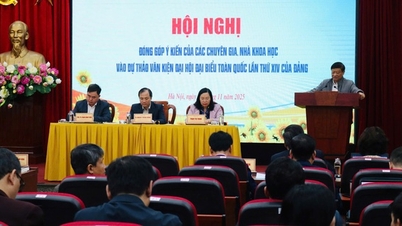
The opinions of Vietnamese legal experts and lawyers demonstrate dedication, responsibility, intelligence, and practical experience in the legal field, contributing to the building of a socialist rule of law state, judicial reform, and the improvement of the legal system.
Source: https://baotintuc.vn/chinh-phu-voi-nguoi-dan/doi-moi-toan-dien-ve-tu-duy-trong-xay-dung-va-hoan-thien-the-che-20251029171757986.htm
![[Photo] Prime Minister Pham Minh Chinh receives the Governor of Tochigi Province (Japan)](/_next/image?url=https%3A%2F%2Fvphoto.vietnam.vn%2Fthumb%2F1200x675%2Fvietnam%2Fresource%2FIMAGE%2F2025%2F12%2F16%2F1765892133176_dsc-8082-6425-jpg.webp&w=3840&q=75)


![[Photo] Prime Minister Pham Minh Chinh receives Lao Minister of Education and Sports Thongsalith Mangnormek](/_next/image?url=https%3A%2F%2Fvphoto.vietnam.vn%2Fthumb%2F1200x675%2Fvietnam%2Fresource%2FIMAGE%2F2025%2F12%2F16%2F1765876834721_dsc-7519-jpg.webp&w=3840&q=75)
![[Image] Leaked images ahead of the 2025 Community Action Awards gala.](/_next/image?url=https%3A%2F%2Fvphoto.vietnam.vn%2Fthumb%2F1200x675%2Fvietnam%2Fresource%2FIMAGE%2F2025%2F12%2F16%2F1765882828720_ndo_br_thiet-ke-chua-co-ten-45-png.webp&w=3840&q=75)










































![[Photo] Prime Minister Pham Minh Chinh attends the Vietnam Economic Forum 2025](https://vphoto.vietnam.vn/thumb/402x226/vietnam/resource/IMAGE/2025/12/16/1765893035503_ndo_br_dsc-8043-jpg.webp)
























Comment (0)