

These robust reforms are providing tangible impetus for businesses, helping to reduce costs, remove barriers, and expand production and business activities, thereby contributing to economic growth.

142 legal documents were issued.
The institutional building efforts of the Ministry of Industry and Trade are achieving outstanding results, demonstrating a spirit of innovative thinking and groundbreaking action. During the 2021-2025 period, the Ministry of Industry and Trade spearheaded the development and submission for promulgation of over 250 legal documents and regulations related to major industry policies, including 5 laws, 51 decrees, and more than 20 important strategies, plans, and programs.
In 2025 alone, the Ministry developed 142 legal documents – a record high – including 4 laws, 2 resolutions of the National Assembly ; 47 decrees, 7 decisions of the Government and the Prime Minister, and 82 circulars. Also during the 2021-2025 period, the Ministry abolished 95 procedures, amended 347 procedures, and decentralized hundreds of procedures; 100% of administrative procedures are provided at levels 3 and 4.
According to Tran Huu Linh, Director of the Department of Domestic Market Management and Development (Ministry of Industry and Trade), institutional building is a top priority for the department. In 2025, the department has been tasked with developing nine decrees and at least two circulars – an unprecedented volume, reflecting the principle that "policies must precede implementation." These decrees fall into three categories: trade infrastructure; goods subject to conditional business regulations; and market inspection and supervision.
Experts believe that such institutional breakthroughs have strengthened the legal foundation for areas under the management of the Ministry of Industry and Trade. These documents have a broad scope of application, directly impacting businesses in various economic sectors and people's lives, contributing to the timely institutionalization of the Party's guidelines and the State's policies.
According to Tran Van Hieu, Director of DACE Agricultural Development and Environmental Consulting Company, the Ministry of Industry and Trade's efforts to build and improve the institutional framework in recent times have created a significant transformation in agricultural export activities, helping businesses significantly reduce time and costs and increase their ability to meet the stringent standards of international markets. Accordingly, regulations on traceability, food safety, and cross-border trade have been amended and supplemented, enabling businesses to be more proactive when negotiating with partners and simultaneously reducing risks in customs clearance. "These innovations open up great opportunities for Vietnamese agricultural products to improve quality, expand markets, and increase competitiveness," Mr. Tran Van Hieu emphasized.
Creating a favorable environment for businesses to thrive.
Alongside institutional development, the Ministry of Industry and Trade is also stepping up its law enforcement efforts. Deputy Chairperson of the National Competition Commission (Ministry of Industry and Trade), Tran Thi Mai Huong, emphasized that reforming the development and enforcement of laws is a key task for the agency. The National Competition Commission's goal is to create a transparent and modern legal framework, thereby enhancing market supervision capacity and protecting consumer rights. The National Competition Commission is strengthening inter-agency coordination and promoting cooperation with social organizations and business associations in disseminating legal information. A key focus is also on promoting digital transformation, building databases, and establishing a system for quickly receiving and processing consumer complaints.
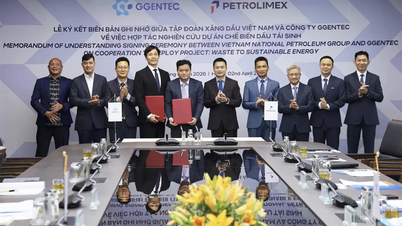
According to Tran Huu Linh, Director of the Department of Domestic Market Management and Development, the Department aims to basically complete the legal infrastructure serving investment and business by 2028. In 2026, the Department will advise on the drafting of two ordinances to be submitted to the National Assembly: the Ordinance on Market Management (amended) to address new forms of commercial fraud; and the Law on Derivative Commodity Transactions, a modern model to support price forecasting and market stability. However, Director Tran Huu Linh emphasized that advising on the drafting of a large number of 8-9 decrees each year can only be achieved through close coordination between ministries, sectors, and industry associations. The petroleum sector is a prime example of reform efforts, having amended three decrees in just five years and will soon consolidate them into a single unified decree, ensuring transparent operation according to market mechanisms.
According to Deputy Director of the Legal Department (Ministry of Industry and Trade) Bui Thi Binh Giang, the overarching goal of the industry is to prioritize development, use law as a foundation, and consider institutions as a competitive advantage. The Ministry has required its units to review obstacles quarterly and prioritize the development of legislation through a systematic, scientific process, summarizing practical experiences, thoroughly assessing impacts, and widely soliciting opinions, ensuring that policies do not hinder production and business. In the implementation phase, the Ministry will continue to aggressively reduce and simplify administrative procedures in the 2025-2026 period and make breakthroughs in legal personnel, aiming to ensure a modern and transparent legal framework for the industry and trade sector. This is the basis for creating the most favorable environment for innovation, promoting businesses to expand production and business, and achieving sustainable development, thereby boosting economic growth.
Source: https://hanoimoi.vn/dot-pha-ve-the-che-cua-nganh-cong-thuong-dong-luc-tang-toc-kinh-doanh-724343.html

































![[Image] Close-up view of the 10-lane road connecting to Long Thanh Airport](https://vphoto.vietnam.vn/thumb/1200x675/vietnam/resource/IMAGE/2026/04/04/1775291871988_ndo_br_1-resize-5690-jpg.webp)



























































Comment (0)