Thuy's second home
"My life has been filled with nights of marching, days of crossing forests and streams, all to survive and treat the people here. I love this land, I love these poor but courageous people as much as I love my hometown of Hanoi ," Thuy wrote about Duc Pho in her diary (Dang Thuy Tram's Diary).
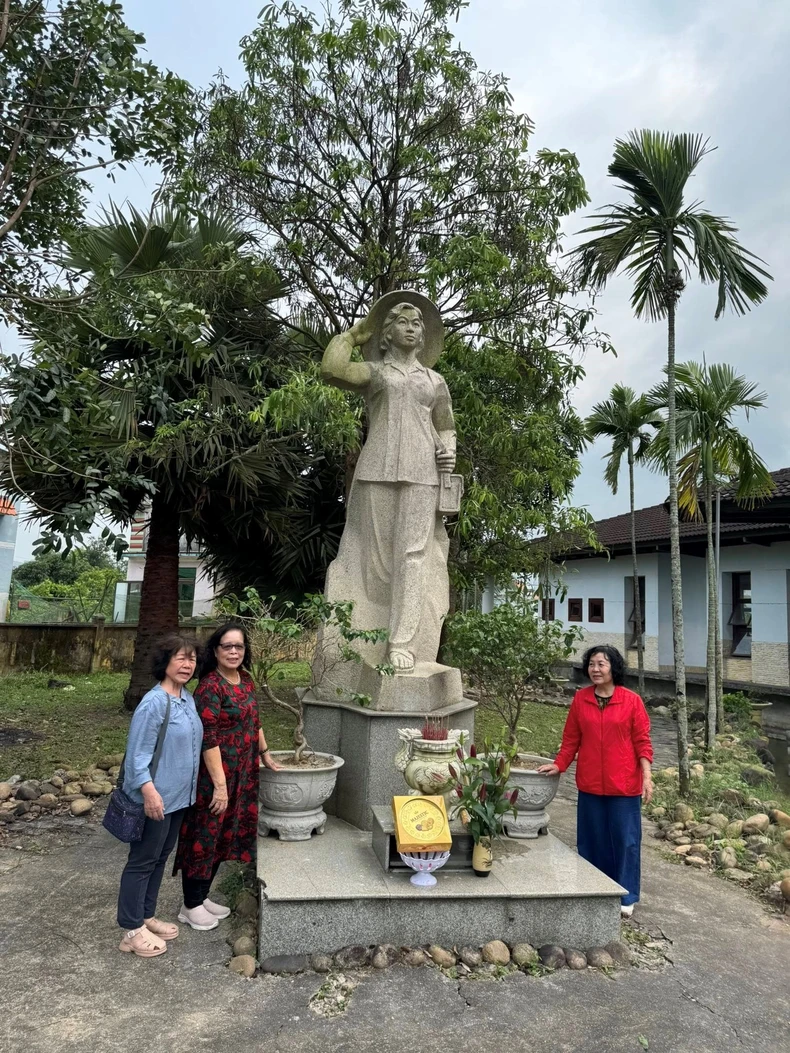
Located right on National Highway 1, about 50 km southeast of Quang Ngai city, near the sea, the Dang Thuy Tram Clinic is built in Pho Cuong commune, Duc Pho town. It is not only a place providing primary healthcare for the people and preserving the memory of Dr. Thuy, but also a place where future generations can better understand the patriotism, sacrifice, and compassion of this young female doctor. With two interconnected two-story buildings, the clinic grounds consist of two buildings: the right-hand side houses the examination and treatment area, while the left-hand side is a memorial house displaying mementos of the martyr and doctor Dang Thuy Tram. In front of the memorial house stands a stone statue depicting Dr. Thuy wearing a hat and carrying a first-aid bag.
Duc Pho, a coastal area of Quang Ngai province, bears indelible marks of history; soldiers and doctors like martyr Dang Thuy Tram fell here, leaving behind an example of patriotism and selfless sacrifice for the Fatherland.
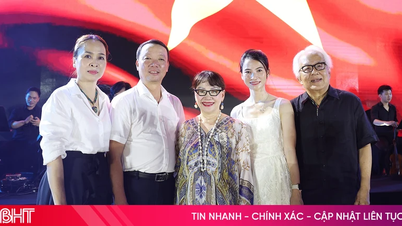
At the end of March, Thuy's three younger sisters: Phuong Tram, Hien Tram, and Kim Tram, along with Hien Tram's husband, returned to Duc Pho for the 50th anniversary of the liberation of Duc Pho (March 23, 1975 - March 23, 2025) and the 5th anniversary of the town's establishment. Although it had been several years since their last visit, many people here still recognized them as Thuy's family and relatives. And rightly so, because even as the years pass, the name Dang Thuy Tram has become a part of the memories, inextricably linked to this land. It was a very heartwarming return, for this is the place that forever holds the beautiful memories of the 28th year of the family; the land where the martyr and doctor Dang Thuy Tram lived, fought, and sacrificed her life.
Exactly 55 years ago, on this very land, during a night of bombing and shelling, the Duc Pho Clinic was attacked by American troops. A young female doctor fell, taking with her her unfulfilled dreams and boundless love for her comrades and the people. It wasn't until 2005, thanks to Fredric Whitehurst, a former American soldier, who returned her diary, that the story of Dr. Thuy became known, touching the hearts of peace-loving people around the world .
|
The three sisters stand beside the statue of martyr and doctor Dang Thuy Tram. |
Ms. Dang Kim Tram, the youngest sister of Dr. Thuy, said with emotion, "Every time I return to Duc Pho, my feelings well up. Dr. Thuy is laid to rest here, becoming a part of this land. Wherever we, her relatives, go, we are welcomed by the people as if we were family. That is a precious feeling that we always cherish and are grateful for."
Ms. Dang Phuong Tram, the second youngest sister who received the most letters from Thuy, confided: "The most profound memory is the first time our mother, Ms. Doan Ngoc Tram, returned here with Mr. Whitehurst, who had kept and returned Thuy's diary. That day, my mother, though old, was determined to climb to the place where Thuy sacrificed herself, traversing steep slopes and rugged mountain roads. She said: 'I must go to the place where my daughter fell, so that my heart can be at peace.'" Ms. Dang Hien Tram, the third youngest sister in Thuy's family, thoughtfully shared that the first time the family, consisting of dozens of people, came to Duc Pho, everyone was enthusiastic, climbing mountains and crossing fields, walking briskly. But now, only four remain, the youngest of whom is already 70.
Live on in the hearts of the people.
“When the war ends, we will not only have peace, but we will also have the right to love each other. To love this country, to love what we have contributed. A love that is not just words, but actions, sacrifices, the sweat and blood shed for a noble ideal.”
(Excerpt from Dang Thuy Tram's Diary)
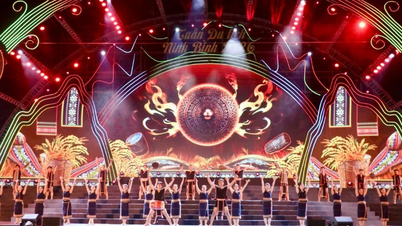
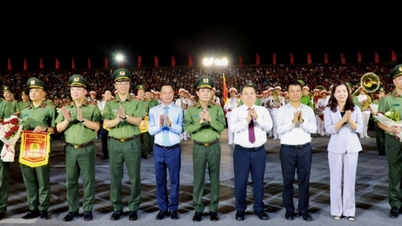
At October 8th Square, Thuy's relatives were all present at the ceremony commemorating the 50th anniversary of the liberation of Duc Pho. The special artistic program, themed "Duc Pho - The Heroic Epic Resounds Forever," was truly magnificent. Nearly 2,000 people attended, and the beautiful, modern stage recreated the hardships Duc Pho faced during the war and its strong development after liberation. And the sisters of Dr. Dang Thuy Tram were deeply moved and emotional as the speeches all mentioned her name, showing that, for the past 55 years, she has lived on in the hearts of the people here, just as she dedicated herself to Duc Pho and the country in each chapter of her diary: “When the war ends, we will not only have peace, but we will also have the right to love each other. To love this country, to love what we have contributed. A love that is not just words, but actions, sacrifices, drops of sweat and blood shed for a noble ideal.” (Excerpt from Dang Thuy Tram's Diary).
The diary entries and stories of martyr Dang Thuy Tram not only recount the emotions of a battlefield doctor but also offer profound lessons about humanity, resilience, the meaning of life, and love for her compatriots. As the years passed, Thuy's sisters returned to Duc Pho, continuing to share small stories about their sister, who was always the pride of the family. And it was this return, this loving presence, that revived in the hearts of the people of Duc Pho the image of a very familiar Dang Thuy Tram—not just a martyr, a doctor, a communist soldier, but also a daughter, a sister, a friend, still present in everyday life, through the pages of her diary, through memories, and through the feelings of those who remained.
“Returning to this land full of memories, holding hands with those who were once close to Thuy, and feeling the affection of today's younger generation for her truly moved us. It's as if Thuy never left this place. She is still here, in the hearts of the people of Duc Pho and in our hearts…,” Ms. Hien Tram shared emotionally.
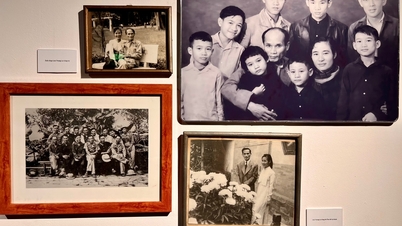
Sitting next to Mrs. Hien Tram, Mrs. Kim Tram, the youngest of the four sisters, recounted: “Our family life during the years 1956-1965 was so peaceful. On Sunday mornings, my sister Thuy would bring home a bouquet of flowers to put in a turquoise vase with folds resembling lotus leaves, usually white gladiolus or deep purple petunias, or lotus flowers if it was summer. How could we afford flowers? We were so poor back then! My mother would sit splitting water spinach next to my youngest son Quang (who passed away while doing postgraduate studies abroad) sitting in his wicker cart. My father (Dr. Dang Ngoc Khue) and my sisters Thuy and Phuong would be busy at the table drawing very large pastel pictures to illustrate my father’s anatomy lectures. The record player on top of the commot cabinet would play the Danube Bleu or the voices of Dalida or Yma Sumac…”
Then the US launched its destructive attacks on North Vietnam. In mid-1965, Dr. Ngoc Khue was transferred to reinforce Dong Anh Hospital (Hanoi) as Deputy Director, in charge of the surgical department. At this time, Thuy, a final-year medical student, volunteered to go to the South and was transferred to a special training class to prepare for work on the battlefield. During her three-month surgical internship, she requested to work at Dong Anh Hospital so that her father could mentor her – Mrs. Hien Tram recalled.
In her diary, Dr. Dang Thuy Tram recounts her longing for Hanoi and romantic memories of the city. Combined with her gentle Hanoi accent, many assumed she was from Hanoi. In reality, her father was from Hue, and her mother from Quang Nam. Thuy was born in Hue and moved to Hanoi with her family in 1956. Remarkably, the romanticism of their father, Dr. Ngoc Khue, and the adaptability of their mother, Mrs. Ngoc Tram, were inherited by all four daughters. They all knew how to embroider, draw, and cook delicious food. They enjoyed Russian and French literature such as *War and Peace*, *Anna Katerina*, *Quiet Flows the Don*, and *Eugenie Grandet*… And every night, they maintained the habit of reading before bed.
The family tradition has always been preserved and promoted by Dr. Dang Thuy Tram's sisters. Therefore, when Ms. Hien Tram revealed that they still see bouquets of white flowers that many young people place on Thuy's grave at Xuan Phuong Martyrs' Cemetery (Hanoi), we understood that the soul, the passionate heart, and the love of Dr. Dang Thuy Tram will live on forever, like the verses in her diary: "Who knows if, even if we die / For tomorrow, for a free country / Within us will still be the dream / And the unwavering love..."
Dr. Dang Thuy Tram's sisters have grown old with time, along with the daily and hourly changes of the country and the land of Duc Pho. Only one thing remains unchanged through the years: the deep affection of the people of Duc Pho, and more broadly, of the people of Vietnam, for the martyr and doctor Dang Thuy Tram. The image of the heroic martyrs who sacrificed their lives and fought wholeheartedly for the independence, freedom, peace, and happiness of the country and the nation will forever be etched in the hearts of every Vietnamese person... And in the gentle, lingering incense smoke at the Dang Thuy Tram Clinic, we feel as if Dr. Thuy is still here, amidst the peaceful land of Duc Pho.
Source: https://nhandan.vn/duc-pho-mai-nho-dang-thuy-tram-post871037.html












![[Video] Weather forecast for tonight and tomorrow, May 24, 2026: Widespread heatwave continues in Northern and Central Vietnam.](https://vphoto.vietnam.vn/thumb/402x226/vietnam/resource/IMAGE/2026/05/23/1779541331471_dem-23-png.webp)














































Comment (0)