

 |
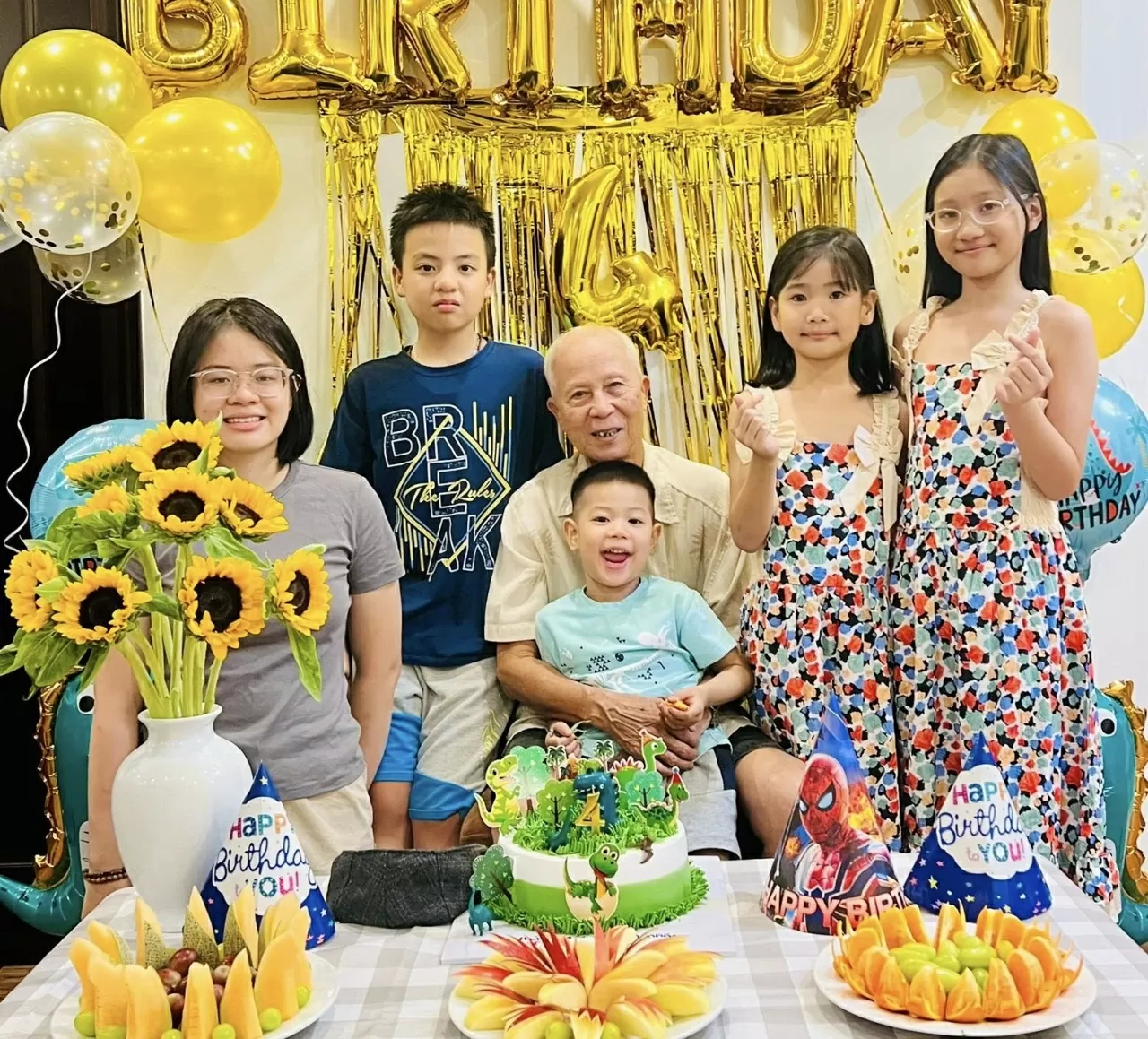
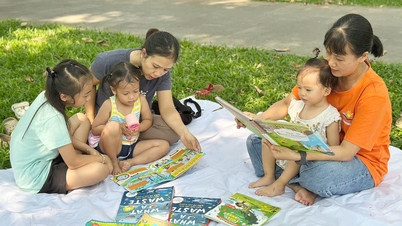
| A harmonious and loving family helps children feel safe and confident, making it easier for them to integrate and develop fully. (Photo: Tran Hao) |
Start with the smallest things.
Vietnamese Family Day (June 28th) is not only an occasion to honor the sacred value of the family home, but also an opportunity for us to reflect: the family is the first learning environment and has a significant influence on the formation of a child's personality.
From their earliest years, young children don't learn through books or school, but through how their parents behave in various situations. The way adults show warmth, listen attentively, and strike a balance between caring for their children and allowing them the freedom to explore , lays the first foundation for emotional intelligence.
Children don't grow up through dry moral teachings, but through the feeling of security in their parents' arms, through gentle encouragement when they stumble, or simply through the tender gaze when they try something new. These seemingly insignificant gestures are powerful messages.
An imperfect family can still be a safe haven if its members are listened to, allowed to express themselves, and empowered to fail, stumble, and get back up. In this busy, turbulent era filled with the intrusive influence of technology, perhaps the most precious thing a parent can give their children is not material possessions, but their complete presence: a word of encouragement when they are silent, a little patience in listening when they make mistakes.
| "No matter how society changes, the value of a strong family remains the root that nurtures individuals who are strong, ethical, and adaptable to life." |
Warm parental affection not only helps children feel comfortable and safe, but also enables them to recognize, understand, and regulate their own emotions. This ability is not innate but is developed through daily interactions. When children learn to remain calm in the face of difficulties, understand others, and act responsibly with their emotions, they will have a solid foundation for building healthy relationships, making sound decisions, and being resilient in the face of challenges.
Each person can start with the smallest things: a hug, a word of concern, an evening spent putting down the phone to listen to each other. Because the warmth of family not only nurtures the present but also builds the future – a future where people know how to love, how to live kindly, and how to take control of their own lives.
The family has always been the cradle that nurtures and shapes personality, profoundly influencing the psychological and social development of each individual. In the context of modern society, traditional values may be shaken, but the role of the family remains unchanged. No matter how society changes, the value of a strong family remains the root that fosters strong, ethical individuals capable of adapting to life.
A child raised in a loving, attentive, and supportive environment will have a healthy emotional foundation, strong communication skills, self-confidence, and high levels of self-reliance. Conversely, early childhood trauma, a lack of parental affection, or a violent and oppressive family environment often leave lasting consequences on social perception and behavior. Family, in its fullest sense, is not just a place to "be together," but a place to "belong together"—a place where each member is recognized, loved, and allowed to be themselves.
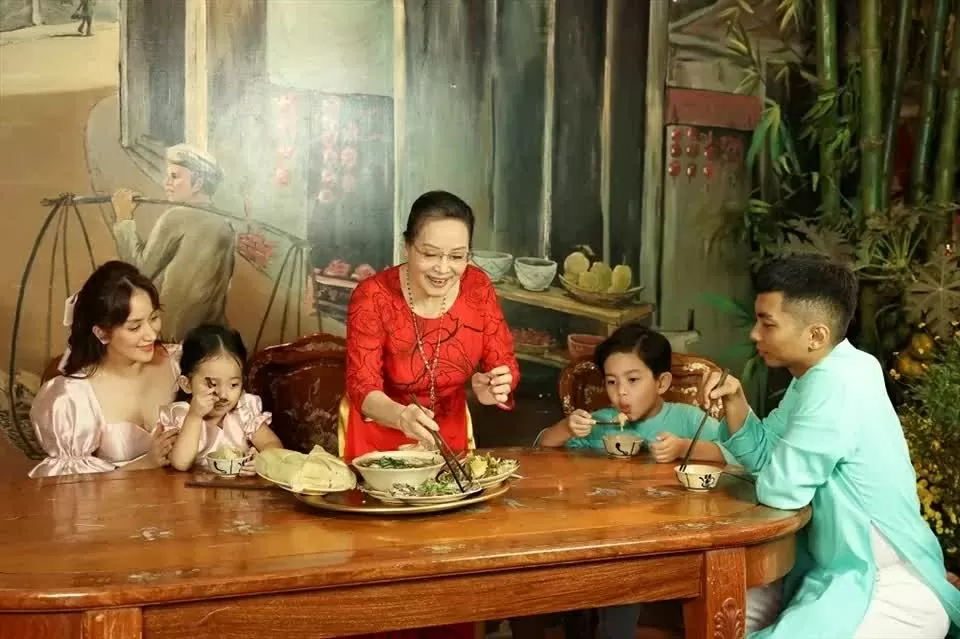 |
| No matter how modern life becomes, family will always be a key factor in shaping a good society. (Photo: Khanh Thi) |
Develop new elements that are appropriate for the times.
The development of modern society has brought about many changes in family structure. Nuclear families are gradually replacing the multi-generational extended family model, women are working more, single parenthood is becoming increasingly common, and gender roles within the family are becoming more flexible.
However, amidst all these changes, there are values that still need to be preserved, essential for the sustainable development of each family. These are unconditional love, mutual respect, responsibility among family members, and strong bonds of sharing. These values do not become outdated over time, but rather become even more precious in modern society.
Technological advancements, particularly in social media and smart devices, have profoundly changed how families connect with each other. On one hand, technology allows parents to talk to their children while away on business, enables grandparents to see their grandchildren via video calls, and allows the whole family to share moments online. However, on the other hand, many families today are emotionally distant as each person is engrossed in their own world on their phone.
Many parents are more engrossed in browsing the news than listening to their children's stories from school. Many children are more accustomed to confiding in social media than in their family. So how can we find a balance? The answer isn't to eliminate technology, but to use it purposefully, placing family at the center of our daily routines. Establish "no phone" time during meals, maintain evening conversations together, do chores with your children, or play games instead of each person glued to their phone.
In the context of integration and modernization, Vietnamese families face both challenges and opportunities to strengthen traditional values and adapt to the new era. Values such as filial piety towards parents, love for children, silent sacrifice, and mutual support remain beautiful hallmarks of Vietnamese culture. At the same time, Vietnamese families also need to cultivate new values such as gender equality in the division of responsibilities, listening instead of imposing, respecting differences instead of assimilation, and raising children through companionship rather than control.
A strong family isn't one without conflict, but one that knows how to dialogue, how to correct mistakes, and how to overcome challenges together. Family happiness doesn't come from material abundance, but from each person in the home feeling valued and supported when needed.
In today's fast-paced world, where pressure can easily cause people to break down, the family needs to be an even stronger support system. For the family to truly be a warm home, a foundation for shaping character and life values, each member has a responsibility not only to preserve but also to renew it.
The family is the first and most important environment in which each individual experiences life. Here, core values such as love, sharing, gratitude, respect, and responsibility are formed. The way parents communicate, behave, and educate their children directly influences how children perceive the world, form their life perspectives, and develop social skills. A harmonious and loving family helps children feel safe and confident, making it easier for them to integrate and develop holistically.
No matter how modern life becomes, the role of the family remains a key factor in shaping a good society. By preserving traditional values and building new elements suitable for the times, the Vietnamese family will continue to be a strong home, where all members find peace, happiness, and motivation to develop.
Source: https://baoquocte.vn/gia-dinh-thich-ung-trong-thoi-dai-moi-319242.html
![[Image] National Assembly discusses the implementation of the socio-economic development plan.](https://vphoto.vietnam.vn/thumb/1200x675/vietnam/resource/IMAGE/2026/04/20/1776696707422_ndo_br_img-20260420-185419-jpg.webp)


![[Photo] General Secretary and President To Lam meets with National Assembly delegates from ethnic minorities.](https://vphoto.vietnam.vn/thumb/1200x675/vietnam/resource/IMAGE/2026/04/20/1776696701056_a1-bnd-8331-3342-jpg.webp)











































































Comment (0)