

My Long rice paper craft village (Nghia Huan hamlet, Luong Phu commune, Vinh Long province; formerly My Thanh commune, Giong Trom district, Ben Tre province) has long been considered the cradle of the traditional rice paper making profession of the coconut land. After more than a century, the flame of the profession is still preserved by many households, despite market fluctuations, rising production costs and increasing pressure to make a living.
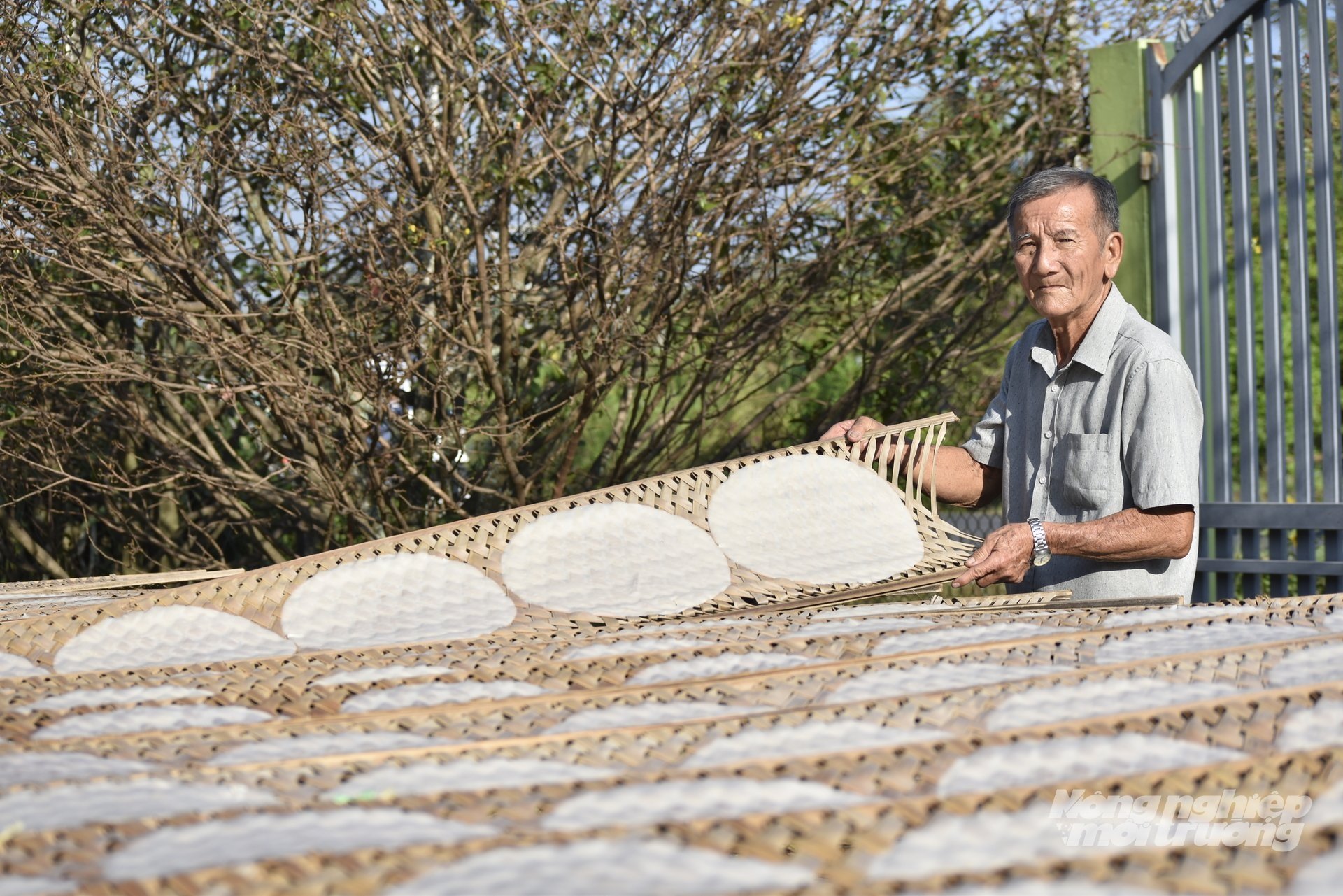
My Long rice paper village is over 100 years old. Photo: Minh Dam.
Stay up late and wake up early to keep the traditional profession alive
Every year, from the beginning of the 10th lunar month, My Long rice paper village begins its peak production period to meet the demand for consumption during the Lunar New Year. In many households, rice paper making usually starts from 1-2 am.
Ms. Nguyen Thi Thuy, who has been involved in the profession for many years, said that the entire process of making rice paper is still done manually. Some people light the fire to cook the flour, some spread the rice paper, some dry the rice paper, each step requires meticulousness and many years of experience. "Usually I work alone, earning a few hundred thousand. During Tet, my husband helps. The job is hard but I get used to it, seeing the beautiful rice paper makes me happy," she shared. Her family's products are mainly consumed in An Giang , Dong Thap and Can Tho, markets that really favor the taste of traditional rice paper.

Ms. Nguyen Thi Thuy said she makes rice paper all year round, but the market becomes more bustling at the beginning of the 10th lunar month. Photo: Minh Dam.
According to local people, My Long rice paper making has a history of more than 100 years. Previously, the craft village had nearly 400 households producing, but now there are only more than 60 households remaining. Although the income is not high, many families are still attached. Because, the craft is not only a source of livelihood but also a legacy of their ancestors, a culinary culture of the ancient Ben Tre land and Vinh Long today.
Mr. Nguyen Thanh Tung (75 years old) still makes rice paper regularly according to the requests of his regular customers. Nearly half a century of working in this profession has helped him deeply understand the cultural value of maintaining the profession. “The price of raw materials has increased, the profit is not much, but I still do it. This is my family’s traditional profession, it would be a pity to give it up,” he confided.
Sharing the same view, Mr. Nguyen Thanh Huy, a family who has been doing the job for many generations, believes that the greatest value of My Long rice paper making is to help people be self-sufficient in income, while at the same time preserving the unique flavor of their homeland. “This job is hard but there is something to rely on. Preserving the job means preserving the village culture,” he said.
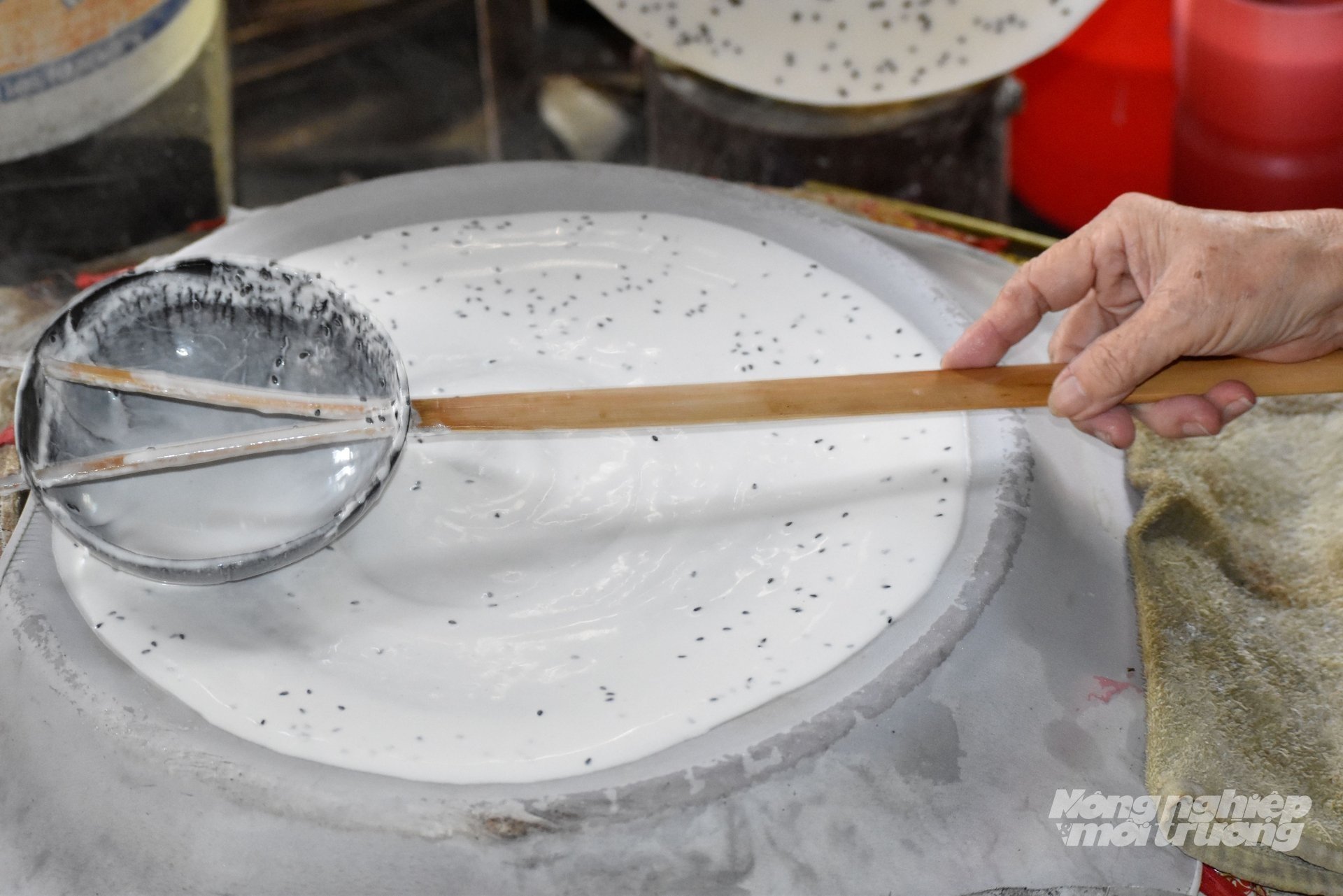
The cakes are hand-made. Photo: Minh Dam.
Many challenges surround craft villages
Despite its long tradition, My Long rice paper making is facing a series of challenges. The price of raw materials, especially coconut rice, has increased 2-3 times compared to the same period last year, while the selling price of rice paper is only about 50,000 VND per dozen and is difficult to increase because it depends on the domestic market. This makes the income of workers increasingly modest and makes it difficult to attract young workers.
Most of the production households still maintain manual methods, small scale. The whole commune has only 6 establishments applying semi-industrial methods using electric machines, but the cake drying stage still depends on the weather, leading to unstable productivity and quality. The number of skilled artisans is decreasing, the risk of lack of successors in the future is considered a big problem for the locality.
According to Mr. Ngo Tan Quyen, Vice Chairman of the People's Committee of Luong Quoi Commune, the government has implemented many support measures to maintain and develop the craft village. My Long rice paper products have achieved 3-star OCOP certification and the craft village was recognized as a national intangible cultural heritage in 2018, which is an important advantage in promoting and building the brand.
The locality is coordinating with relevant departments to support technological improvements suitable to traditional production characteristics; connecting consumption, building collective brands and expanding markets. “Despite ups and downs, the commune is still determined to preserve the craft village, because this is a part of the local soul,” Mr. Quyen emphasized.
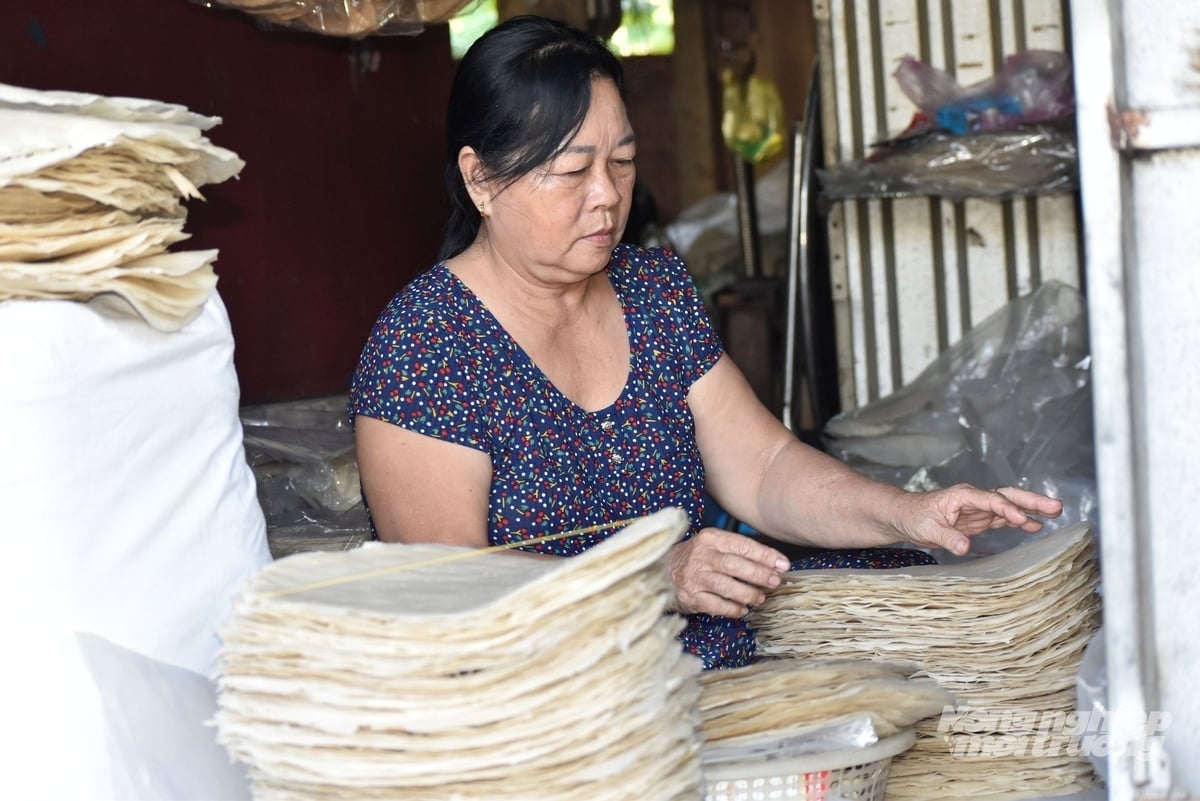
Put the cakes in storage bags and deliver them to sales agents in the provinces. Photo: Minh Dam.
Associated with the policy of developing rural industries
Recently, the Chairman of the People's Committee of Vinh Long province assigned departments and branches to implement the program to preserve and develop Vietnamese craft villages in the 2021-2030 period according to Notice 688 of the Ministry of Agriculture and Environment.
The announcement emphasized that rural industries are a unique economic sector, contributing to job creation, income increase, livelihood diversification and cultural value preservation. Many models linking production - tourism - e-commerce have been formed, supporting the restoration of traditional crafts and OCOP development. However, craft villages still face many limitations such as small scale, short value chains, declining human resources, inconsistent national data and a small number of successor artisans.
The Ministry orients many key tasks: developing industries associated with culture - tourism - national brand; each product needs to tell the story of local culture and reach out to international playgrounds.
In terms of institutions, it is necessary to review and amend Decree 52/2018/ND-CP on developing rural industries in the direction of "greener, more digital, reaching further", build a set of criteria for sustainable craft villages, integrate green growth goals, circular economy, digital transformation and OCOP criteria into craft village development.
The Ministry also requested the construction of a database and digital map of craft villages to serve planning and tourism; develop human resources, honor artisans and train the next generation.

My Long rice paper making was recognized as a national cultural heritage in 2018. Photo: Minh Dam.
At the same time, research on the formation of a craft village innovation center, organizing festivals and displaying products using new technology. Regarding the market, the orientation is to expand consumption through e-commerce, smart logistics and possibly deploy the campaign "One million digital orders for craft villages" to improve the digital sales capacity of establishments, cooperatives and artisans.
This orientation opens up great opportunities for craft villages such as My Long rice paper to receive more systematic support in terms of market, technology, digital transformation and sustainable development. My Long rice paper is not only made from rice and coconut but is also the crystallization of labor, diligence and love of the craft of the people here. In the context of rural modernization, the perseverance of the My Long people is proof of the enduring vitality of the traditional craft. Preserving the craft means preserving the soul of the countryside, preserving the imprint of many generations and creating a foundation for the craft to continue to be passed on to the future.
Source: https://nongnghiepmoitruong.vn/giu-lua-nghe-banh-trang-my-long-d784174.html
![[Photo] Prime Minister Pham Minh Chinh and his wife meet the Vietnamese community in Algeria](https://vphoto.vietnam.vn/thumb/1200x675/vietnam/resource/IMAGE/2025/11/19/1763510299099_1763510015166-jpg.webp)
![[Photo] General Secretary To Lam receives Slovakian Deputy Prime Minister and Minister of Defense Robert Kalinak](https://vphoto.vietnam.vn/thumb/1200x675/vietnam/resource/IMAGE/2025/11/18/1763467091441_a1-bnd-8261-6981-jpg.webp)




























































Comment (0)