

AP reported on December 16th that a thick smog blanketed the capital New Delhi on December 15th, pushing air pollution levels in the area to their worst in weeks, disrupting traffic and affecting people's lives.
Dense fog caused more than 40 flights to be canceled and dozens more to be delayed. Officials said more than 50 trains to and from New Delhi were delayed by several hours.
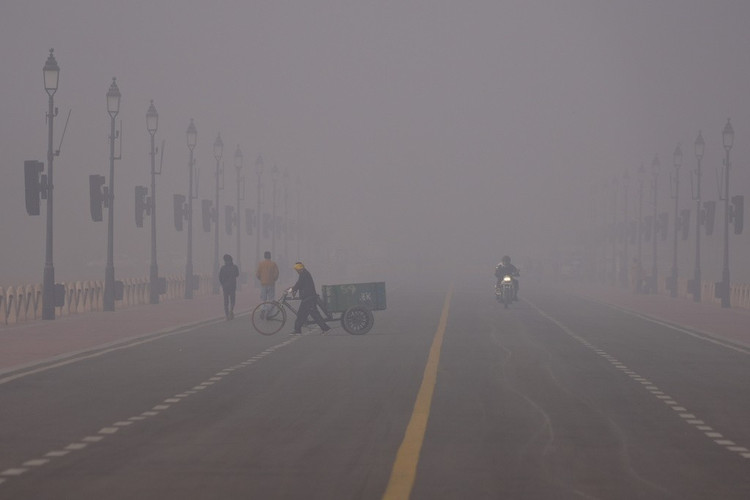
Health experts are warning people to avoid all outdoor activities as hospitals report an increase in patients experiencing respiratory problems and eye irritation.
“Currently, New Delhi is like a toxic gas chamber. Air purifiers can only help to a certain extent. It’s time for the government to come up with more long-term solutions,” said Dr. Naresh Dang at Max Healthcare.
Air pollution levels in Delhi have remained at "severe" for the past two days, which the government says could affect the respiratory systems of healthy individuals and seriously impact the health of those with heart or lung conditions.
“I’ve never seen this level of pollution. Last year when I came to Delhi, it was already facing pollution. This year it’s even worse. I can feel the smog when I breathe the air,” shared Tiam Patel, a tourist.
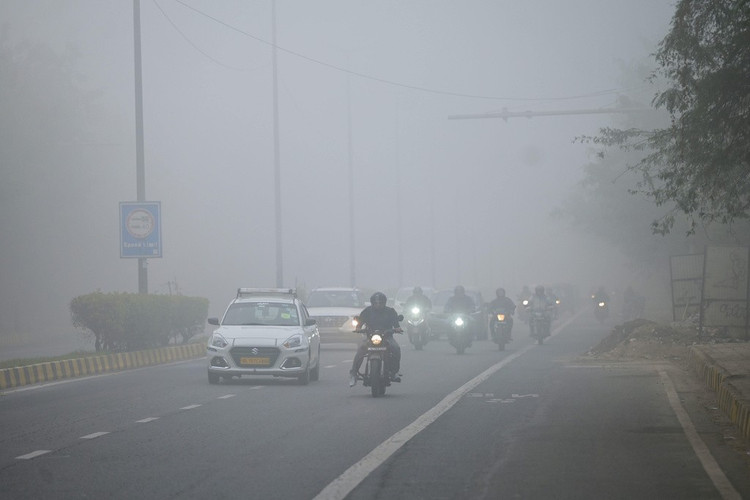
To curb pollution, Indian authorities have ordered a temporary suspension of construction activities and restricted the use of diesel generators and cars. Sprinkler systems have been deployed to control the smog. Many schools and offices have allowed students and workers to stay home.
However, environmentalists argue that the country's air pollution crisis requires long-term changes to be resolved.
During periods of severe air pollution, the government advises people to avoid going outdoors and to wear N95 masks when outside. Children, pregnant women, the elderly, and those with respiratory or cardiovascular conditions are at higher risk and should exercise extreme caution.
Source: https://khoahocdoisong.vn/hinh-anh-suong-mu-day-dac-bao-trum-thu-do-an-do-post2149076104.html

![[Photo] Prime Minister Pham Minh Chinh receives Lao Minister of Education and Sports Thongsalith Mangnormek](/_next/image?url=https%3A%2F%2Fvphoto.vietnam.vn%2Fthumb%2F1200x675%2Fvietnam%2Fresource%2FIMAGE%2F2025%2F12%2F16%2F1765876834721_dsc-7519-jpg.webp&w=3840&q=75)

![[Photo] Prime Minister Pham Minh Chinh receives the Governor of Tochigi Province (Japan)](/_next/image?url=https%3A%2F%2Fvphoto.vietnam.vn%2Fthumb%2F1200x675%2Fvietnam%2Fresource%2FIMAGE%2F2025%2F12%2F16%2F1765892133176_dsc-8082-6425-jpg.webp&w=3840&q=75)
![[Live] 2025 Community Action Awards Gala](/_next/image?url=https%3A%2F%2Fvphoto.vietnam.vn%2Fthumb%2F1200x675%2Fvietnam%2Fresource%2FIMAGE%2F2025%2F12%2F16%2F1765899631650_ndo_tr_z7334013144784-9f9fe10a6d63584c85aff40f2957c250-jpg.webp&w=3840&q=75)
![[Image] Leaked images ahead of the 2025 Community Action Awards gala.](/_next/image?url=https%3A%2F%2Fvphoto.vietnam.vn%2Fthumb%2F1200x675%2Fvietnam%2Fresource%2FIMAGE%2F2025%2F12%2F16%2F1765882828720_ndo_br_thiet-ke-chua-co-ten-45-png.webp&w=3840&q=75)



















































Comment (0)