

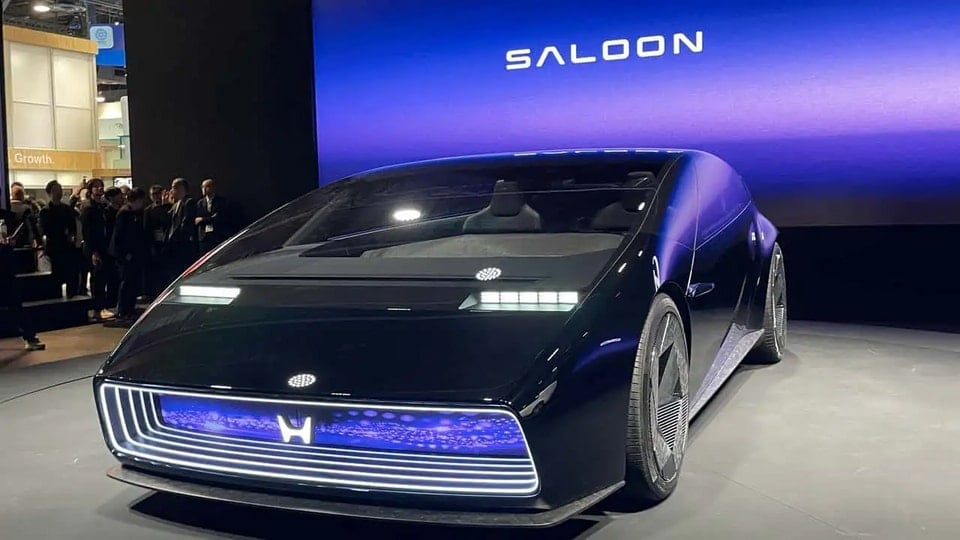
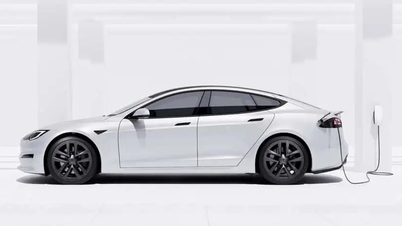
Honda has announced a roadmap for developing solid-state batteries for its next generation of electric vehicles, aiming for a range of 620 miles (997 km) per charge by the end of the decade. The technology, the company says, could reduce the size of the battery pack by 50%, make it 35% lighter, and reduce manufacturing costs by 25% compared to liquid lithium-ion batteries, while also being safer and charging faster thanks to the solid electrolyte. The announcement came at a meeting in Japan, shortly after Honda completed a pilot plant for solid-state batteries; the pilot line will start operating next month to develop a sustainable and scalable production plan.
Performance goals and roadmap
Honda’s first solid-state battery-powered EVs are expected to have a range of 620 miles (997 km), which is double that of many mainstream cars today. After 2040, the range target will increase to 776 miles (1,249 km), accompanied by a sharp reduction in size, weight, and cost.
The nature of solid electrolytes is not as volatile as liquid solvents, which promises to reduce safety risks and allow for higher energy density. Honda says its solid-state batteries can receive significantly higher charging speeds, contributing to shorter charging stops on long trips.
| Category | Goals/Parameters |
|---|---|
| Range of operations (end of decade) | 620 miles (about 997 km) |
| Range (after 2040) | 776 miles (about 1,249 km) |
| Battery pack size | 50% off |
| Mass | 35% lighter |
| Production costs | 25% off |
| Safety | Higher promise thanks to solid electrolyte |
| Fast charging | Significantly higher speeds (claimed) |
Key technical barriers
Despite the potential, Honda acknowledges the challenges of industrialisation. According to Honda R&D engineer Takeshi Ueda, the prototype cells are currently only about 1/100th the size needed to fit in a car. The urgent task is to scale them up to 100 times larger and put them into mass production.
In addition, typical problems with solid-state batteries still exist: the ceramic insulator layer is at risk of cracking during the manufacturing process; dendrites forming in the powder electrolyte can cause short circuits; strict humidity control requirements increase energy costs. These are the bottlenecks that many solid-state battery projects on the market are having to solve.
Honda's approach to manufacturing
To overcome the barrier, Honda simultaneously deployed multiple solutions at the process level:
- Using roll forming technique to create thin, uniform electrolyte layer at high speed.
- Adopting continuous mixing process, the slurry production speed is 3 times faster than traditional batch mixing method.
- Enclose each stage in separate climate-controlled areas, to reduce operating energy for the entire line.
Completing the pilot plant and starting the line next month is a key step to verify the stability of the process, fine-tune parameters and evaluate the ability to scale up to large-scale production.
Vision beyond 2040 and expected impacts
After 2040, Honda aims to continue pushing the range limit to 776 miles (about 1,249 km), while reducing size, weight and cost. If these milestones are achieved, the EV experience could change dramatically in terms of driving range and charging time, while requiring significantly less space for battery installation.
Honda describes solid-state batteries as a “game changer” in the electric vehicle era, according to Keiji Otsu, president of Honda R&D Co. However, the extent of the “game changer” depends directly on the company solving problems of mass production, durability over time and cost.
The global competitive landscape
Honda is not the only one, but many other major manufacturers such as Toyota, Nissan, Stellantis, BMW and Volkswagen are also pursuing the goal of commercializing solid-state batteries. This race is expected to determine the technological superiority in the next decade, thereby shaping the experience and price of mass-market electric vehicles.
Conclude
Honda is on a clear path: perfecting its test line, scaling the cells from about 1/100th the size of a practical battery cell, and optimizing the process to reduce energy costs and manufacturing risks. The target numbers—620 miles by the end of the decade and 776 miles after 2040—if achieved would make EVs competitive. The rest is to overcome technical hurdles like ceramic cracking, dendrites, and humidity control before solid-state technology can be widely deployed in commercial vehicles.
Source: https://baonghean.vn/honda-pin-the-ran-muc-tieu-997-km-giam-25-chi-phi-10313338.html
![[Photo] Prime Minister Pham Minh Chinh receives President of Cuba's Latin American News Agency](/_next/image?url=https%3A%2F%2Fvphoto.vietnam.vn%2Fthumb%2F1200x675%2Fvietnam%2Fresource%2FIMAGE%2F2025%2F12%2F01%2F1764569497815_dsc-2890-jpg.webp&w=3840&q=75)



































































































Comment (0)