

The program requires a minimum of approximately 1.23 million billion VND to be mobilized.
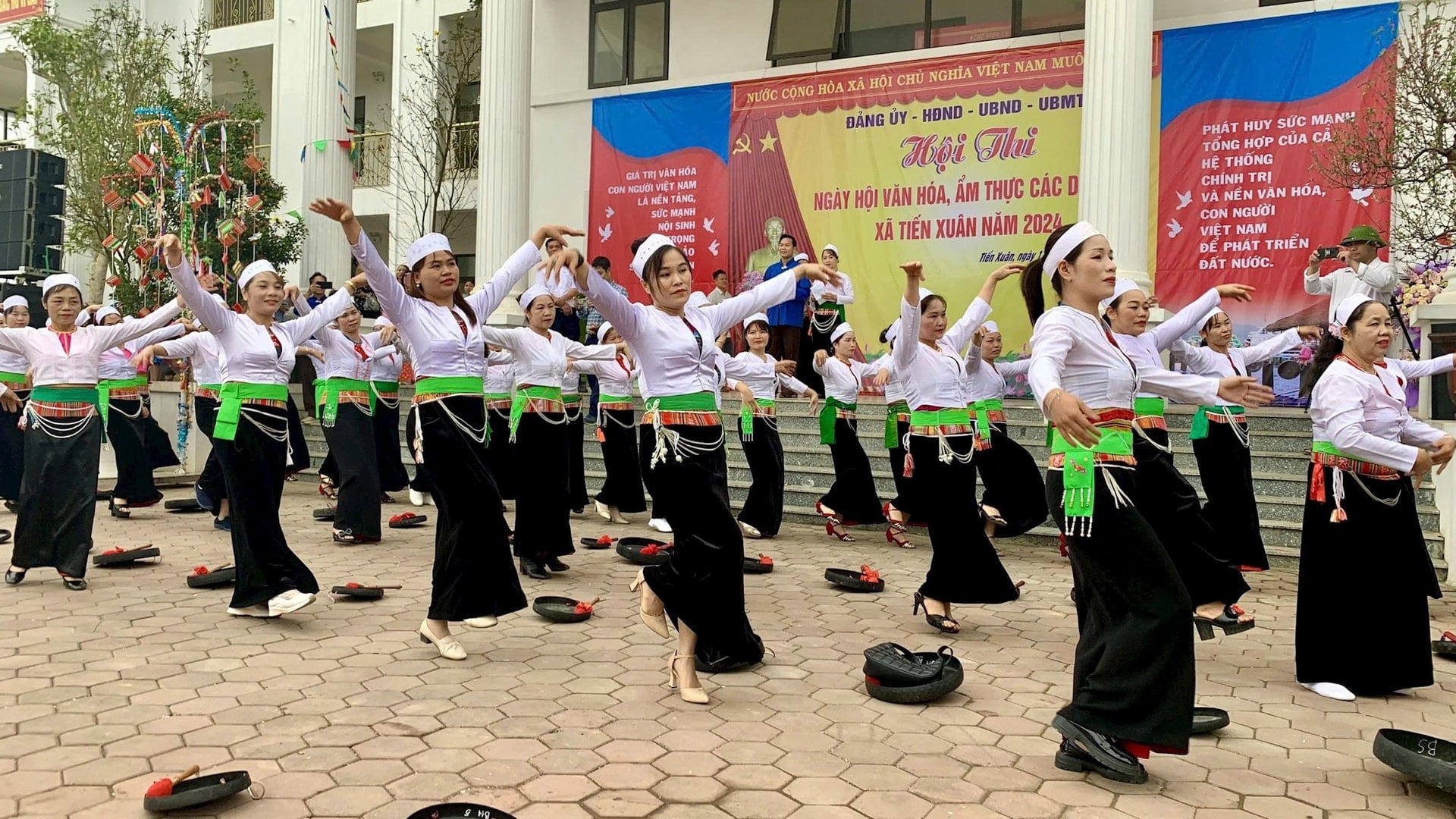
The 15th National Assembly has just passed a Resolution approving the investment policy for the National Target Program 2026-2035. Photo: CTV
Minister of Agriculture and Environment Tran Duc Thang stated that the finalization of the draft Resolution was based on the conclusions of the National Assembly Standing Committee regarding the acceptance and explanation of the draft; the opinions of the Standing Committee of the National Ethnic Council; and the reports summarizing the opinions discussed in the working groups and in the plenary session.
The first revision concerns the overall objectives of the Program, which have been adjusted to align with the major orientations of the Party and the State. This emphasizes building modern, prosperous, beautiful, and sustainable new rural areas, linked to urbanization and climate change adaptation. Simultaneously, the program aims for comprehensive development in ethnic minority and mountainous regions, and for multidimensional, inclusive, and sustainable poverty reduction. The assessment and determination of the feasibility of targets for the 2026-2035 period have also been further refined.
Regarding the scope and beneficiaries, the draft has been revised to clearly prioritize particularly disadvantaged communes and villages; ethnic minority and mountainous regions; and security zones, border areas, and islands. The principles for allocating central government budget funds have been revised to give stronger priority to the aforementioned particularly disadvantaged areas. Simultaneously, the spirit of maximum decentralization to local authorities is emphasized, coupled with appropriate resource allocation.
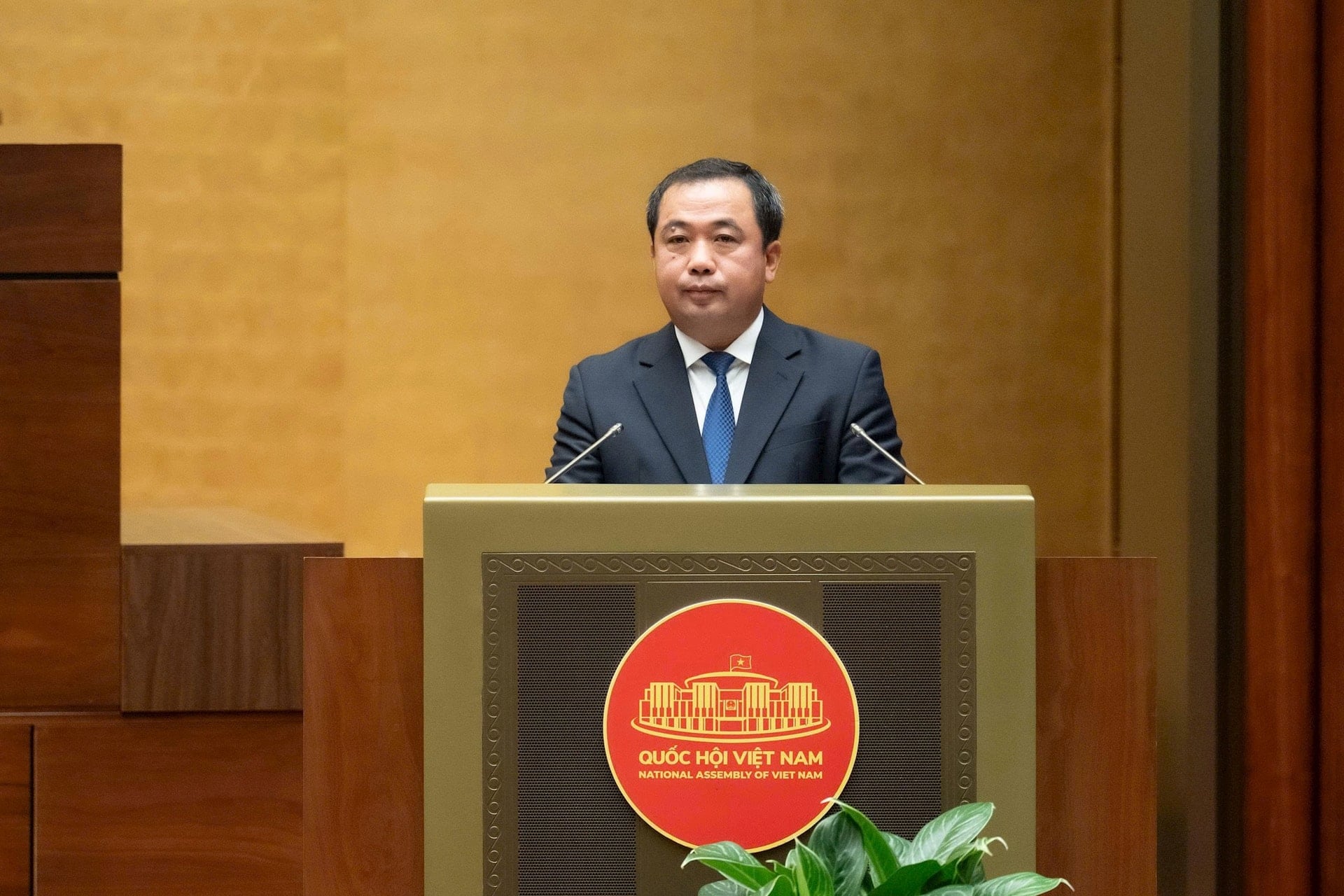
Minister of Agriculture and Environment Tran Duc Thang presents the report on receiving feedback, explaining, and revising the draft Resolution. Photo: Quochoi.vn
Regarding solutions and management mechanisms, the draft adds more flexible regulations within the authority of the Government and the Prime Minister. During the feasibility study phase, the lead agency for each component and specific content will be identified to ensure clear accountability and responsibility. Furthermore, the draft also includes several specific mechanisms to provide localities with greater initiative and flexibility in implementation, tailored to the unique conditions of each region.
The government affirms that integrating the three national target programs will not disrupt or neglect any policy, while continuing to prioritize the development of ethnic minority and mountainous regions. The government is committed to implementing the program decisively and effectively, aiming for the ultimate goal of improving people's lives and ensuring that people, especially those in disadvantaged areas, have a prosperous and happy life.
The total capital for the program in Phase I (2026-2030) is expected to be at least 1.23 million billion VND; for Phase II (2031-2035), based on the results of the program in the 2026-2030 period, the Government will submit to the National Assembly a proposal for the resources to implement the program in the 2031-2035 period.
The program aims to build modern, substantive new rural areas, linked to urbanization and climate change adaptation; develop rural economies in a green, circular, and ecological direction, linked to agricultural restructuring, digital transformation, and innovation; promote the leading role of people, communities, and economic sectors; and ensure national defense, security, and social order, especially in strategic areas, border regions, and islands.
The program consists of two components. The first component comprises general contents implemented nationwide, focusing on building new rural areas, achieving sustainable poverty reduction, and developing the socio-economic conditions of ethnic minority and mountainous regions. This includes 10 groups of contents implemented across the country, prioritizing poor communes, ethnic minority areas, and mountainous regions.
The second component includes: Specific contents for socio-economic development in ethnic minority and mountainous areas, comprising 5 groups of contents...
Comprehensive development of ethnic minority and mountainous regions.
Chairman of the National Assembly's Ethnic Affairs Council, Lam Van Man, stated that the Council unanimously agreed on the necessity of merging three national target programs on building new rural areas, sustainable poverty reduction, and socio-economic development in ethnic minority and mountainous regions into a single national target program for investment over a 10-year period, from 2026-2035.
"This merger will contribute to reducing policy overlaps, target groups, and geographical areas; overcoming existing shortcomings and limitations in the implementation of the three programs in the 2021-2025 period; improving investment efficiency, and focusing and prioritizing resources for the most disadvantaged areas, ethnic minority areas, and mountainous regions," Mr. Lam Van Man emphasized.
Regarding funding for the program, the National Assembly's Ethnic Affairs Committee basically agreed with the Government's proposal on the total capital and the plan for supplementing funding for the program, and requested the Government to promptly develop a plan for supplementing funding from the beginning of the term. At the same time, the Government should reconsider and recalculate the structure and proportion of counterpart funding to suit the practical situation of localities, especially disadvantaged provinces, ethnic minority areas, and mountainous regions; the principle of capital allocation should clearly demonstrate a focus and priority of resources for ethnic minority and mountainous regions; and research should clearly allocate resources to each component and content of the program.
In Hanoi, the National Target Program for Socio-Economic Development of Ethnic Minority and Mountainous Regions for the period 2021-2030, with Phase 1 from 2021-2025, is a landmark policy decision for ethnic minority and mountainous regions, demonstrating the profound concern of the Party and the State for these regions.
This is not just an economic investment program, but also a comprehensive strategy to improve the material and spiritual lives of the people and strengthen national unity. To date, Hanoi has allocated 2,421.857/2,664.238 billion VND for 190/210 projects, including 2,341.620/2,558.22 billion VND for basic construction investment in 156/174 projects, with cumulative disbursement of 1,956.496 billion VND reaching over 83%.
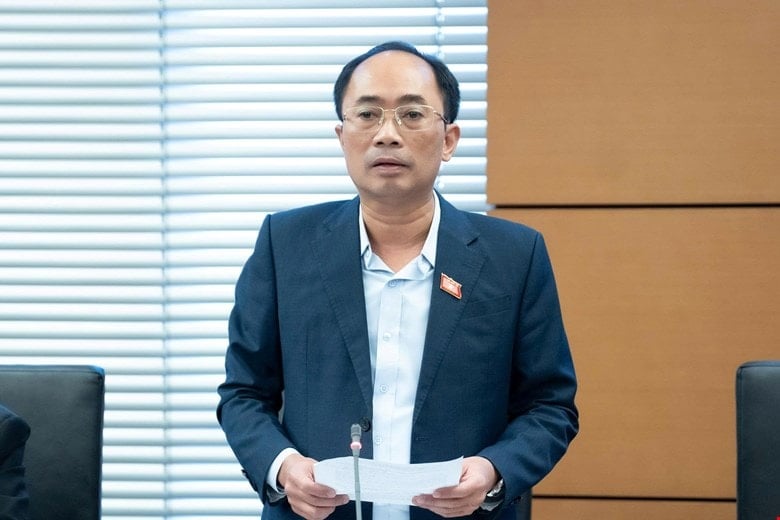
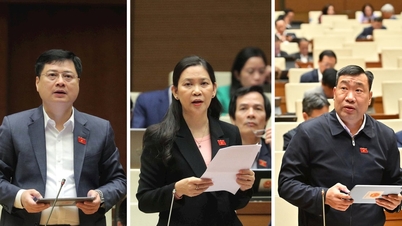
Delegate Le Nhat Thanh (Hanoi Delegation) delivers a speech. Photo: Nhu Y
National Assembly representative Le Nhat Thanh (Hanoi delegation) stated that, based on monitoring and supervision in localities and feedback from grassroots levels, the practical implementation of the three national target programs in the past period still has many shortcomings, limitations, difficulties, and obstacles that need to be assessed and identified to serve as a basis for improving the program in the next phase. Based on this, the representative agreed on the necessity of merging the three national target programs into one program to overcome these inadequacies and concentrate resources, increasing the proactive role of localities.
Delegates agreed with the Government's view that a "development boost" is needed and should start from ethnic minority and mountainous regions. Therefore, delegates argued that there should be a consistent focus and priority of resources for socio-economic development in these areas, with the central budget playing a crucial and decisive role.
National Assembly delegate Nguyen Hai Trung (Hanoi delegation), Deputy Minister of Ethnic Minorities and Religions, expressed strong agreement with the policy of merging the three national target programs into one overall program to ensure consistency, avoid overlap, and improve the efficiency of management and implementation.
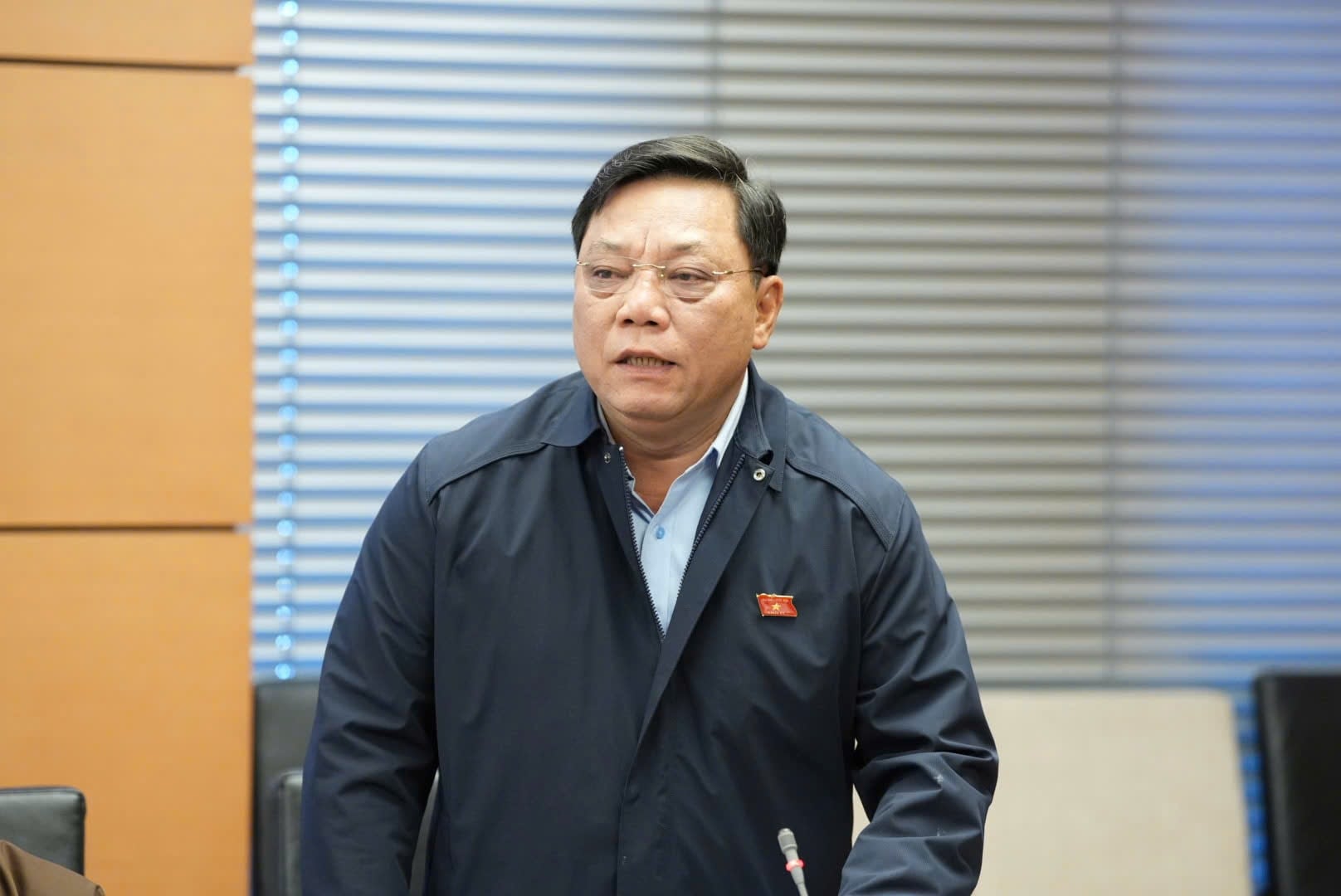
Delegate Nguyen Hai Trung (Hanoi Delegation), Deputy Minister of Ethnic Minorities and Religions, delivers a speech. Photo: Nhu Y
Regarding the management, operation, and implementation mechanisms, delegates proposed dividing the program into two distinct components. Specifically, the first component, comprising general content (10 items), should be chaired by the Ministry of Agriculture and Environment. The second component, consisting of 5 specific items directly related to ethnic minorities and mountainous regions, should be chaired by the Ministry of Ethnic Minorities and Religions.
Concerned about infrastructure development and population stability, delegate Hoang Van Cuong (Hanoi delegation) stated that many mountainous areas are currently facing the risk of flash floods and landslides, directly affecting the lives of the people. Therefore, the draft should prioritize relocating residents, forming safe village clusters, thereby investing in synchronized infrastructure and ensuring sustainable livelihoods for the people.
Deputy Prime Minister Nguyen Hoa Binh stated that the core poverty areas are currently mainly inhabited by ethnic minorities. While previous poverty reduction programs were implemented nationwide, this program now needs to focus investment on these areas to help ethnic minority communities improve their lives and achieve sustainable poverty alleviation.
Therefore, the three integrated programs will focus on increasing investment in disadvantaged areas, ethnic minority areas, and mountainous regions until 2035, instead of the National Target Program for socio-economic development of ethnic minority and mountainous regions which will only be implemented until 2030; at the same time, improving implementation efficiency, bringing support policies into life quickly, ensuring that people receive timely and tangible benefits.
Source: https://hanoimoi.vn/huong-toi-giam-ngheo-da-chieu-bao-trum-ben-vung-727008.html
![[Live] 2025 Community Action Awards Gala](/_next/image?url=https%3A%2F%2Fvphoto.vietnam.vn%2Fthumb%2F1200x675%2Fvietnam%2Fresource%2FIMAGE%2F2025%2F12%2F16%2F1765899631650_ndo_tr_z7334013144784-9f9fe10a6d63584c85aff40f2957c250-jpg.webp&w=3840&q=75)
![[Photo] Prime Minister Pham Minh Chinh receives Lao Minister of Education and Sports Thongsalith Mangnormek](/_next/image?url=https%3A%2F%2Fvphoto.vietnam.vn%2Fthumb%2F1200x675%2Fvietnam%2Fresource%2FIMAGE%2F2025%2F12%2F16%2F1765876834721_dsc-7519-jpg.webp&w=3840&q=75)
![[Photo] Prime Minister Pham Minh Chinh receives the Governor of Tochigi Province (Japan)](/_next/image?url=https%3A%2F%2Fvphoto.vietnam.vn%2Fthumb%2F1200x675%2Fvietnam%2Fresource%2FIMAGE%2F2025%2F12%2F16%2F1765892133176_dsc-8082-6425-jpg.webp&w=3840&q=75)
![[Image] Leaked images ahead of the 2025 Community Action Awards gala.](/_next/image?url=https%3A%2F%2Fvphoto.vietnam.vn%2Fthumb%2F1200x675%2Fvietnam%2Fresource%2FIMAGE%2F2025%2F12%2F16%2F1765882828720_ndo_br_thiet-ke-chua-co-ten-45-png.webp&w=3840&q=75)






































![[Photo] Prime Minister Pham Minh Chinh attends the Vietnam Economic Forum 2025](https://vphoto.vietnam.vn/thumb/402x226/vietnam/resource/IMAGE/2025/12/16/1765893035503_ndo_br_dsc-8043-jpg.webp)


















Comment (0)