

Defining the distinctive cultural identity of the region.
The reorganization of administrative boundaries not only has socio -economic significance but also opens up a new space for promoting and defining the unique cultural identity of the region. This is the time to re-evaluate cultural values not only as a "static asset" that needs preservation, but also as a soft resource and a driving force for sustainable development in the new context.
Cultural experts agree that, with a sound strategy, the consolidation of provincial-level administrative units would optimize resource utilization, improve the quality of heritage preservation, and encourage interaction and mutual support among local cultures.
Associate Professor Bui Hoai Son, a full-time member of the National Assembly 's Committee on Culture and Society, commented: Culture is not something that can be measured in numbers, but rather the soul of each region, its customs, traditions, and stories passed down from generation to generation. Concerns about the potential erosion of cultural identity when administrative maps change are justified, but the important thing is how we approach it. Rearranging is not the end, but a new opportunity.
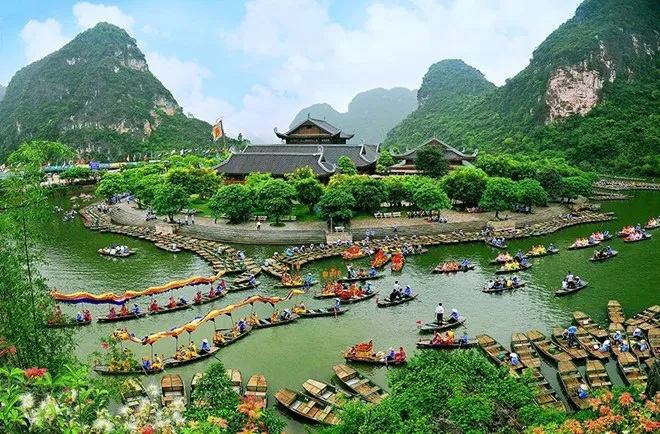
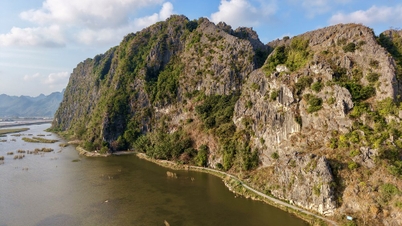
For example, the consolidation of Ha Nam, Nam Dinh, and Ninh Binh provinces is opening up a strategically important development space in the heart of the Red River Delta. With its unique geographical location, this area possesses multiple layers of value in terms of cultural heritage, ecological resources, and scenic spots such as Trang An, Phu Day, Tam Chuc, and Vu Ban.
The similarities in beliefs, history, and customs among the provinces are a significant advantage. When merged, the essence of Nam Dinh province with its tradition of academic excellence, football, and textiles; of Ha Nam province with its Quy Son folk singing and village festivals, while simultaneously developing modern industry; and of Ninh Binh province – a hub of ecotourism and culture with the Trang An World Heritage Site – will create rich regional cultural values, both inheriting traditions and strongly adapting to the new era.
Mr. Nguyen Manh Cuong, Director of the Department of Culture and Sports of Ninh Binh province, believes: "The merger of the three provinces is an opportunity to redefine unique cultural values, creating a foundation for a regional cultural industry development strategy."
Similarly, the case of Bac Giang and Bac Ninh – two neighboring provinces with many similarities in Kinh Bac culture – also raises many expectations. Bac Ninh province is the cradle of Quan Ho folk singing, a representative intangible cultural heritage of humanity, while Bac Giang province stands out with its folk festivals, ancient temples and pagodas, and folk songs and dances with the characteristics of the midland region.
The arrangement of these two localities, if it happens, will create a large "Quan Ho cultural axis," helping to strengthen the preservation and promotion of the heritage, and at the same time expand the space for community cultural practice.
Pillars of sustainable development
From a development perspective, culture is no longer limited to preservation but is increasingly recognized as a pillar of sustainable development. Distinct cultural advantages can complement each other, creating a strong shared cultural identity. Culture is not only a tool for identifying a locality but also becomes a driving force for the development of creative economic sectors.
One of the biggest advantages of this arrangement is the expansion of development space and the reduction of petty competition between localities. Through close coordination, provinces can leverage each other's strengths, build large-scale cultural and artistic centers, organize national-level festivals, thereby attracting investment and creating a ripple effect.
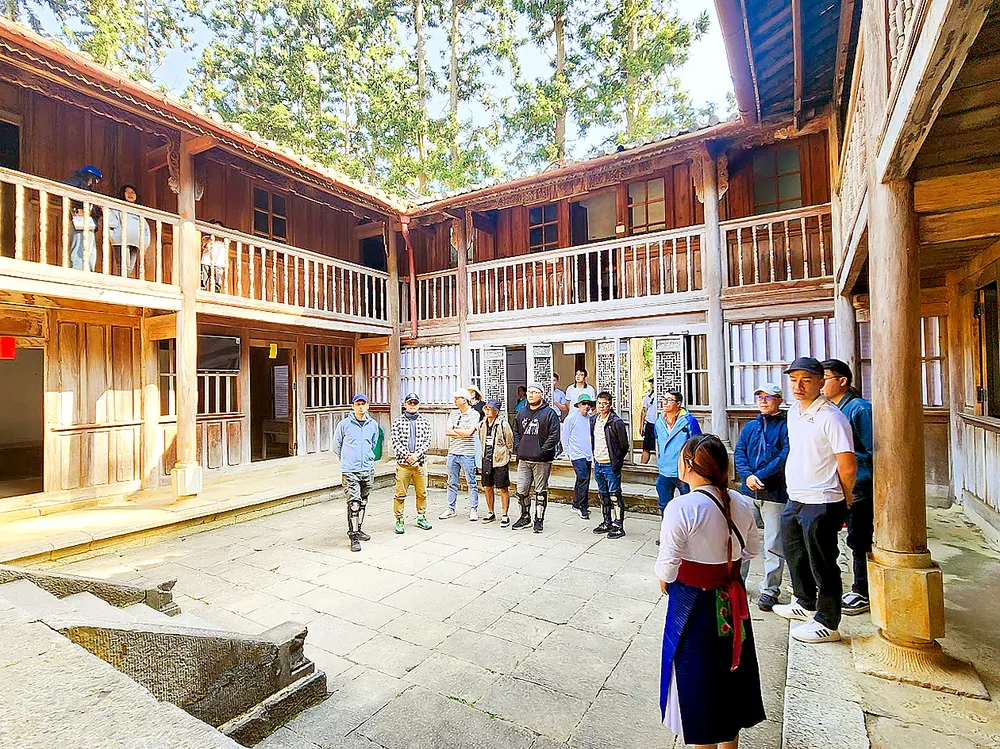
In the case of mountainous provinces like Ha Giang and Tuyen Quang, it can be seen that arrangement does not equate to assimilation. These two provinces share the commonality of having multi-ethnic populations and distinctive mountainous cultural identities, but each has its own unique features: Ha Giang, the northernmost point, boasts the unique Mong and Dao cultures; while Tuyen Quang stands out with its revolutionary heritage, the Thanh Tuyen festival, and the system of ancient village communal houses in the Viet Bac region.
With proper planning, the merger could create a cultural center in the northern mountainous region, where ethnic cultural values are both preserved and promoted in the development of tourism, education, and cultural industries.
Mr. Nguyen Manh Cuong, Director of the Department of Culture and Sports of Ninh Binh province, believes that the merger of the three provinces of Ha Nam, Nam Dinh, and Ninh Binh is an opportunity to redefine unique cultural values, creating a foundation for a regional cultural industry development strategy. These provinces all possess distinct strengths, from festivals and traditional crafts to historical relics and natural landscapes. With a sound regional linkage strategy, these elements will create a new identity that is both inherited and innovative, adapting to modern trends.
Dr. Tran Huu Son - Director of the Institute for Applied Cultural and Tourism Research:
The challenge lies in ensuring that cultural exchange becomes creative, rather than blurring identity. This largely depends on the policymakers and how they mobilize the community to actively participate in conservation.
Associate Professor Dr. Nguyen Thi Thu Phuong - Director of the Vietnam Institute of Culture, Arts, Sports and Tourism:
Inconsistent mechanisms and policies, unbalanced development among destinations, pressure on the environment and heritage preservation, and a shortage of high-quality human resources are all obstacles that need to be considered. In the short term, it is necessary to develop a heritage destination map, connect festivals, traditional craft villages, and inter-provincial tourism routes to develop a genuine and effective cultural industry.
Cultural expert NHAM HUNG :
After the reorganization, the administrative and tourism spaces have expanded. This is a favorable condition and a golden opportunity for tourism development and cultural promotion in the new situation. The challenge is how to build a chain of linkages and create distinctive, unique tourism and cultural products, especially those from urban, riverine, and garden tourism.
In my opinion, it is necessary to redesign the tourism map and communication strategy after the merger as soon as possible to provide practical guidance and information to tourists. At the same time, a strategy to boost promotion on social media platforms, search engines, digital maps, etc., is also needed.
MAI AN - TUAN VU wrote
Source: https://www.sggp.org.vn/khong-gian-moi-cho-van-hoa-cat-canh-post800883.html

![[Photo] General Secretary and President To Lam presides over a working session with the Central Policy and Strategy Committee on the development of the materials industry.](https://vphoto.vietnam.vn/thumb/1200x675/vietnam/resource/IMAGE/2026/05/21/1779359935432_a3-bnd-3129-1412-jpg.webp)






















































Comment (0)