

 |
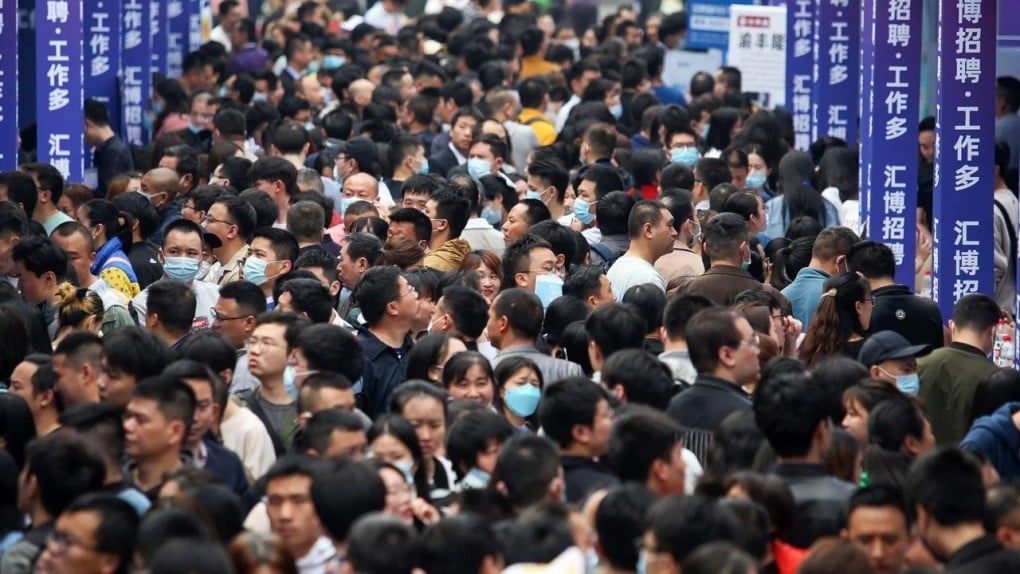
| A crowded scene at a job fair in Chongqing, China, on April 11. (Source: CNN) |
Record high youth unemployment rates
In April 2023, youth unemployment reached a new high, and there are signs that it could worsen in the coming months as millions of new college graduates enter the labor market.
CNN estimates that this summer, approximately 11.6 million college graduates will enter the already crowded job market.
Bruce Pang, chief economist for Greater China at Jones Lang LaSalle Inc., commented: "Pressure from recent university graduates will increase around July."
In April, the unemployment rate for young people aged 16-24 in China's urban areas surged to 20.4% – the highest level according to official data since 2018.
Goldman Sachs Group Inc. estimates that approximately 6 million young people in China are unemployed, 3 million more than before the Covid-19 pandemic.
In the US, the unemployment rate for those aged 16-24 is only 6.5%, while in the Eurozone, the unemployment rate for those under 25 is 14.3%.
Young people are in high demand for jobs in service industries, such as restaurants and retail – sectors that were hit hard during the pandemic, as China implemented strict control measures such as lockdowns and quarantines in many cities to curb infection.
Last year, China's economic growth slowed to 3%.
In recent years, Beijing's tightening of regulations in education , technology, and real estate has led to large-scale job losses, making these sectors less attractive options for young, ambitious job seekers.
In addition to the factors mentioned above, unemployment is also rising due to demographic changes. China now has more university graduates than ever before, and many are reluctant to take long-term, low-paying factory jobs instead of choosing work that matches their skills.
According to Louis Kuijs, chief economist for Asia Pacific at S&P Global Ratings, many companies remain cautious about increasing capital spending or hiring more people. He points out that "pressure on corporate profits and the uncertain pace of economic recovery" are key factors.
Duncan Wrigley, chief economist for China at Pantheon Macroeconomics, argues that the rising youth unemployment rate is due to a "skills mismatch" in the labor market.
Mr. Wrigley said: “Sustainable economic recovery is the best medicine for private sector sentiment. The government can do more to promote market-based reforms to revitalize the economy. This will allow the private sector to create more high-quality jobs in the long term, which could then address youth unemployment.”
The government is making efforts to create jobs.
Rising unemployment means lower incomes for young people and reduced spending on items like mobile phones, entertainment, and travel. This will decrease economic output.
Although difficult to quantify, according to Bloomberg , young people in China are a key driver of overall consumption in the economy. High unemployment rates affect confidence in the economy and could undermine productivity if this situation persists.
In China, unemployment is also fueling social discontent among young people. "Tang ping," also known as the "philosophy of lying still," is a phrase that has been frequently mentioned on the Chinese internet recently.
This trend refers to a sedentary lifestyle. Instead of working and contributing to social productivity; instead of striving for hard work, buying a house, or starting a family; this lifestyle encourages abandoning all goals and simply staying put.
Chinese President Xi Jinping has publicly condemned this lifestyle: "It is necessary to prevent the stagnation of social classes, promote the upward movement of society, create opportunities for more people to become wealthier, and improve an environment in which everyone participates, avoiding idleness."
In recent years, Beijing has been encouraging state-owned companies to hire more recent graduates by subsidizing businesses to recruit young people and trying to promote vocational education to address the skills gap in the economy.
Last month, the country also announced a detailed plan outlining measures to expand recruitment and provide subsidies to employers to encourage them to hire more.
The Guangdong provincial government has proposed a solution: sending 300,000 unemployed people back to their hometowns over two or three years to find work.
Michael Hirson, head of China research at 22V Research, wrote in a research report that these moves indicate the government is focusing on “direct and structural administrative solutions” rather than “relying on broad-based stimulus measures to try to attract jobs.”
However, Bloomberg argues that, ultimately, job creation will depend on stronger economic growth, particularly in the service sectors, where young people are dominant. While business and consumer activity have recovered since the world's second-largest economy reopened, spending has yet to return to pre-pandemic levels.
Private businesses will need to feel more confident about growth prospects before they invest in and expand their workforce.
Source









































































Comment (0)