

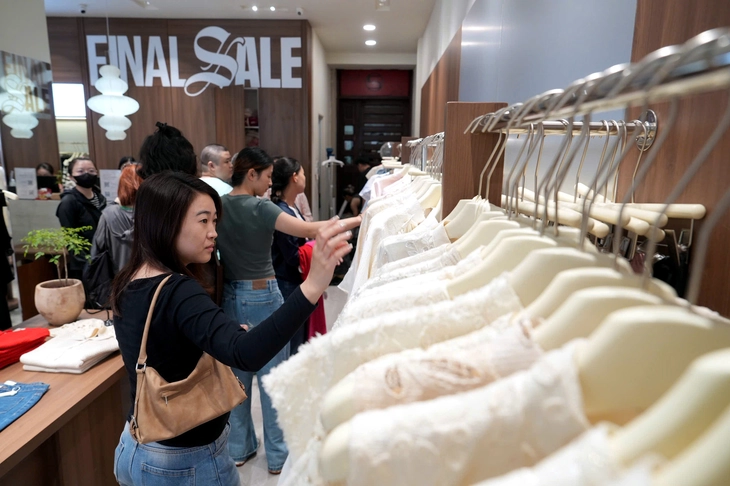
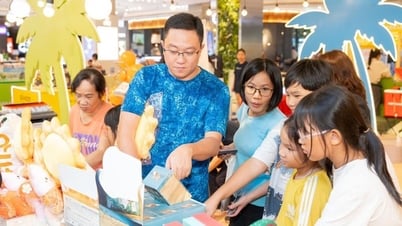
Changes in consumer shopping and spending habits are shaping the new economy - Photo: HUU HANH
Possessing cultural openness, a dynamic and creative lifestyle, the economic locomotive of Ho Chi Minh City is facing a great opportunity to develop and make the most of resources from the lifestyle economy.
VIP customers pay for a "lifestyle"
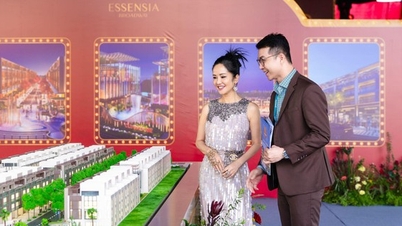
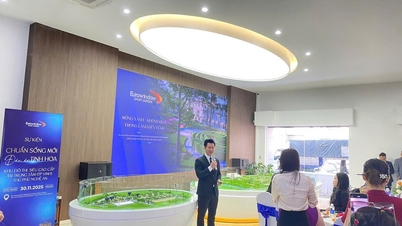
Present at a luxury apartment complex located right in the center of Ho Chi Minh City, Mr. Hai Binh and dozens of staff were busy completing every detail for the sophisticated party, filled with colorful flowers.
As guests enter, they immediately admire the green and modern technology products, immerse themselves in the melodious jazz tunes, enjoy food and drinks prepared by famous chefs, and directly feel the luxurious atmosphere and high-class lifestyle that the event conveys.
"Parties or workshops are the bridge to sell luxury real estate," Hai Binh revealed. Recently, he and his partners have also built spaces for potential customers to come learn how to make perfume, mix and enjoy tea with tea masters, to create a bonding experience with the same purpose.
Each event, depending on its nature, can be invested from several hundred million to billions of VND in the meticulous organization. This is considered reasonable when the price of each luxury real estate fluctuates from 20 to 70 billion VND depending on the area, location and many special attractive factors.
Accordingly, many families, after a period of hard work, have accumulated a relatively stable financial source and want to experience a more upscale lifestyle. For this group of customers, it is impossible to approach them by rushing to buy branded real estate, but need to go around through side events. Customers, including many young people, often bring their children and parents to enjoy the activities together.
Many experts in the real estate business say that this market is changing direction strongly, when the real estate model with high quality of life is becoming a new measure instead of area or pure material.
When quality of life becomes a trend and priority, it is leading to a clear shift in the demand for buying houses and real estate, from buying assets (accumulating assets) to buying for life experiences, and more importantly, improving the quality of life.
Mr. Mauro Gasparotti, Senior Director of Savills Hotels Southeast Asia, said that the trend of buying luxury real estate and hotels is clearly shifting. Consumers, especially the wealthy class, are prioritizing buying for experiences rather than purely material possessions.
If the Vietnamese real estate market takes advantage of its long coastline, rapid urbanization, and low luxury housing prices compared to the region, it will have a strong breakthrough.
For example, worldwide there are about 700 branded real estate projects put into operation, 800 projects are under development, showing the strongest growth ever. The branded real estate model (branded residences) scores points thanks to its international standard design, high-class services and stable property value. Meanwhile, the community's consumption trend is increasingly leaning towards a high-end experiential lifestyle, enjoying a higher level of quality.
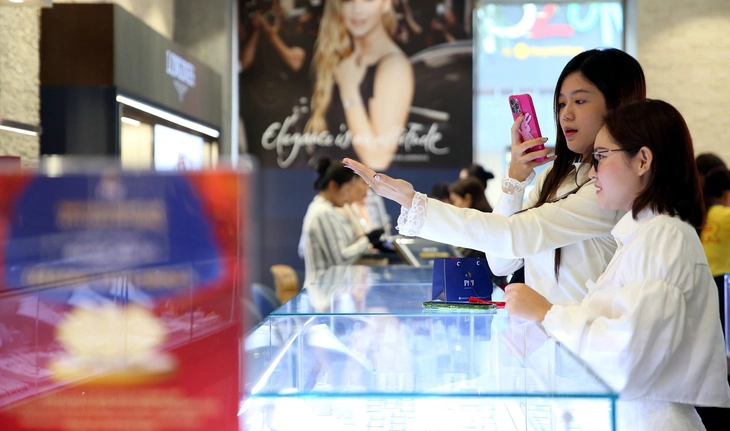
Lifestyle affects consumer spending - Photo: QUANG DINH
The driving force of the world's major cities, opportunities for Ho Chi Minh City
Lifestyle economy is becoming a new driving force for sustainable development and integration in Ho Chi Minh City. This model shows how cities and businesses differentiate themselves, increase their appeal and retain consumers through experiences and lifestyle.
Notably, after the merger, the GRDP (measuring the level of local economic development) of Ho Chi Minh City is estimated to reach about 2.7 million billion VND, making the city the first megacity in Vietnam, with a scale equivalent to a mid-sized economy in the ASEAN region.
Currently, many businesses in Ho Chi Minh City in the fields of technology, tourism, fashion , beauty, sports... are also promoting activities to bring diverse, new and useful experiences. This trend is consistent with the direction of many large cities in the world that choose to develop a lifestyle associated with local identity.
Typically, Tokyo (Japan) combines traditional culture with modern technology. Seoul (South Korea) creates attraction with K-pop music, beauty and digital retail. Bangkok (Thailand) exploits the night economy associated with entertainment. Or Singapore integrates lifestyle in urban planning with green space and personalized experiences.
In Southeast Asia, Malaysia is also pursuing economic development through lifestyle. According to the Tourism Malaysia Board, the country is promoting the implementation of "Visit Malaysia Year 2026", to promote the image of a modern, dynamic and deeply integrated country.
Not only expanding the market, Malaysia focuses on lifestyle segments such as experiential tourism, wellness (a lifestyle that focuses on comprehensive physical and mental health), luxury tourism, cuisine and the bleisure trend (combining business and leisure).
The government has allocated RM700 million (approximately VND3,700 billion) for the campaign, expecting to welcome 47 million visitors and achieve RM329 billion (approximately VND1,740 trillion) in revenue. The theme "Dreamlike Experience" emphasizes a multi-sensory journey, from nature, cultural heritage to contemporary art and signature cuisine.
As a tourist, Ms. Ai Nhu felt a typical lifestyle experience model in Kuala Lumpur is GMBB Mall, where she was impressed by the cashless and face-to-face shopping model. Many stalls have no sales staff, customers just need to scan the QR code to see samples, pay or order online and receive the product at home. This is also a case that Ho Chi Minh City can learn from.
Cultural exchange, novelty and the application of technology to enhance lifestyle experiences are helping many cities, typically Kuala Lumpur, become curious and attractive destinations and encourage tourists to spend more. These are also important suggestions for Ho Chi Minh City on the journey of developing a lifestyle economy.
Ms. Le Ngoc Mai, CEO of Unios Vietnam, gave an example: previously, light bulbs were only considered fast-moving consumer products. However, when the market saw the emergence of many well-designed brands, improved quality and aesthetics, users had more experiences and information spread strongly through the Internet, consumer behavior changed significantly.
Nowadays, electric lighting is not only a lighting solution but also an aesthetic and emotional factor, even supporting relaxation and re-energizing. This trend is most evident among young people, as the need for design and style spreads from the upper class to the middle class.
This also shows that even small items in the home can be exploited by businesses to increase value and improve business operations in the direction of lifestyle economics.
A lifestyle rich in experiences is not only for the super rich.
Sharing with Tuoi Tre , Ms. Thi Anh Dao, Marketing Director of Masterise Group, said that experience is currently the factor with the highest compound annual growth rate (CAGR).
Notably, young consumers (Gen Z) have recorded a strong increase in the past 5 years, with a 19% increase last year alone. In this value system, locality and urban green space are top priorities, followed by technology, utility value and social connection.
From an expert's perspective, as people's incomes improve, especially in large cities like Ho Chi Minh City, a good quality of life should not be limited to a small group like the super-rich, but should be extended to the wider community.
So, today’s luxury products are not only about design or tangible value, but also about wider access to service experiences, international operating standards. Where lifestyle is expressed through sophistication, personalization and emotional moments every day.
Source: https://tuoitre.vn/kinh-te-lifestyle-mo-vang-moi-cua-tp-hcm-20251129080502743.htm
![[Photo] Dan Mountain Ginseng, a precious gift from nature to Kinh Bac land](/_next/image?url=https%3A%2F%2Fvphoto.vietnam.vn%2Fthumb%2F1200x675%2Fvietnam%2Fresource%2FIMAGE%2F2025%2F11%2F30%2F1764493588163_ndo_br_anh-longform-jpg.webp&w=3840&q=75)









































Comment (0)