


Trainees participate in a training course on painting techniques on dried lotus leaves. Photo: THANH TIEN
The plant that "solves the problem" for farmers.
During the recent summer-autumn season, Mr. Le Van Bac, residing in Vinh Xuong commune, cultivated over 10 acres of lotus for seed pods. With decades of experience in lotus cultivation, he harvested approximately 800 kg of lotus seed pods per acre, earning a profit of over 3 million VND per acre. Thanks to his participation in a project to develop a sustainable value chain for lotus fiber products in Vietnam, aimed at supporting water conservation strategies for the Mekong Delta, Mr. Bac received technical support and an investment of 500,000 VND per acre. “Last season, I sold lotus seed pods at 9,000 VND/kg, making a profit of 2.5 million VND per acre. If I sold them at over 20,000 VND/kg as they are now, I could earn much more. Growing lotus is more laborious than growing rice, but the profit is much higher,” Mr. Bac said.
Joining the project with Mr. Bac, Mr. Tran Minh Duong, residing in Chau Long 8 hamlet, Chau Doc ward, cultivates over 21 acres of lotus for tubers. He is preparing to harvest lotus tubers at a price of 17,500 VND/kg. If the current price of lotus tubers is maintained, with an average yield of 700kg/acre, Mr. Duong could earn a profit of over 7 million VND/acre. “Growing lotus for tubers is hard work, dependent on many factors such as weather, seed quality, and many costs, but if the price of lotus tubers is good, farmers don't mind. For many years, many farmers in Chau Long 8 hamlet have grown lotus for tubers and earned a considerable income,” Mr. Duong shared.
As the coordinating unit for the project with the International Union for Conservation of Nature (IUCN), the Provincial Agricultural Extension Center actively provides technical support to help farmers master and effectively apply lotus cultivation techniques. Most parts of the lotus plant are used by humans, therefore the area planted with lotus is increasing, becoming a "lifeline" for farmers, helping them reduce their dependence on rice.
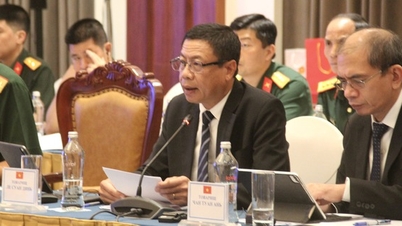
Deputy Director of the Provincial Agricultural Extension Center, Tran Thanh Tuyen, analyzed: “The price of lotus depends on the market. When participating in the project, farmers receive technical support and partial cost assistance, so they can feel secure. However, in the long term, it is necessary to establish cooperatives to connect farmers and form large production areas, with farmer representatives linking with businesses to ensure output.” Mr. Tran Thanh Tuyen believes that only when farmers participate in large-scale cultivation using proper techniques will the effectiveness of supporting the water storage strategy for the Mekong Delta be maximized, providing raw materials for a sustainable value chain from lotus cultivation. This is also an important first step for lotus cultivation to transform from an agricultural production model into an effective agricultural economic model.
Create more valuable products.
Besides supplying products such as roots, seeds, flowers, and stems to the market, the lotus plant is also a raw material for other economic activities. In the project to develop a sustainable value chain for lotus silk products in Vietnam, the World Conservation Organization, in collaboration with relevant agencies, organizes training courses to guide farmers on techniques for extracting lotus silk for weaving fabric, creating high-value fashion products for the market.
Mr. Tang Phuong Gian, field coordinator of the IUCN program in the Mekong Delta, said: “We opened training courses on lotus silk extraction for trainees in the Mekong Delta region and achieved positive results. In An Giang, we trained a number of trainees who are quite proficient and have already brought their products to market.” According to Mr. Gian, if a stable raw material area for lotus silk extraction can be established, it will create a green economy, helping to improve the lives of people in An Giang in particular and the Mekong Delta region in general.
Having received training in lotus silk extraction, Ms. Neang Chanh Da Ty, Head of the Khmer Brocade Weaving Cooperative in Van Giao commune, An Cu district, said: “I received support from the project to learn how to extract lotus silk and weave fabric from lotus silk in Hanoi, so I have mastered the technique. However, the current difficulty is that there aren't many households in An Cu commune that grow lotus to create a source of raw materials. I know that each vest woven from lotus silk is worth tens of millions of dong, so I want to develop the craft of weaving brocade from lotus silk.”
Not only lotus silk, but lotus leaves are also a material for creating highly artistic paintings. Within the framework of the project, Ms. Pham Thi Dieu Lien – an officer at the Tinh Bien Agricultural Technical Station – guided trainees in the technique of painting on dried lotus leaves. Ms. Dieu Lien shared: “Trainees were guided on techniques for selecting lotus leaves, processing them, recreating leaf colors, developing ideas, and painting themed pictures. I have lotus leaf paintings to supply to the market, attracting a specific customer base. If given the opportunity, dried lotus leaf paintings could become a product that brings high economic value to those involved in it.”
Assessing the potential for exploiting the diverse values of the lotus plant, Deputy Director of the Department of Agriculture and Environment Ho Thanh Binh stated: “The project to develop a sustainable value chain for lotus silk products in Vietnam, in addition to supporting people in adapting to climate change and supporting water storage strategies for the Mekong Delta region, also brings a new vision in exploiting lotus silk and leaves to create fashion products and artistic paintings. We will continue to support farmers in developing a green economy based on the lotus plant to improve people's lives.”
Source: https://baoangiang.com.vn/kinh-te-xanh-tu-cay-sen-a471835.html

























































Comment (0)