


The story is no longer about organizing a safe and civilized festival season, but about how Huong Pagoda is entering a new cycle of development with more effective management, promoting more sustainable values, and adapting more deeply to the increasingly high demands of modern society.
Tourist-centric approach
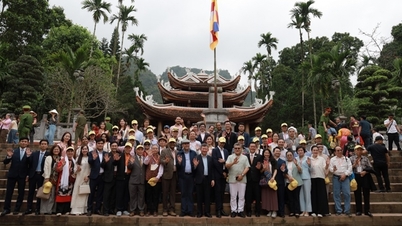
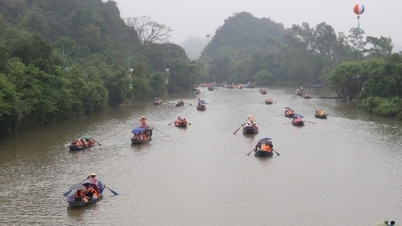
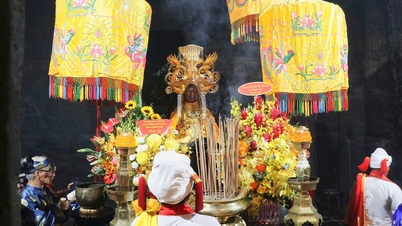
As one of the large-scale traditional festivals with a profound influence on the cultural and religious life of the people nationwide, and also a unique spiritual tourism product of the capital city, Huong Pagoda carries both heritage value and management pressure. Therefore, the 2026 festival season is seen as a strategic shift, clearly reflecting a change in the thinking about organizing festivals in conjunction with the development of cultural tourism.
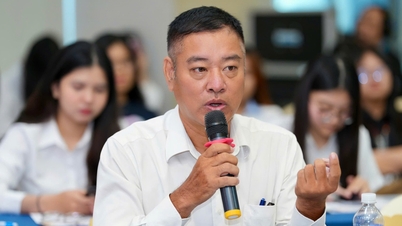
According to the Organizing Committee, the 2026 Huong Pagoda Traditional Tourism Festival will take place from February 18th to May 11th with the overarching theme of "Safety - Friendliness - Quality". Sharing information about this year's festival, Mr. Tran Duc Hai, Secretary of the Party Committee of Huong Son Commune, said: "Based on the resolutions and action programs of the Hanoi City Party Committee and the Huong Son Commune Party Committee, the Organizing Committee of the Huong Pagoda Tourism Festival has issued a plan for organizing and managing the 2026 Huong Pagoda Tourism Festival with the overarching theme as above, demonstrating a determination to innovate festival management thinking towards a civilized, professional, and sustainable approach throughout the year."
The festival was organized in accordance with the law, ensuring solemnity, safety, and civility, preserving and promoting the unique cultural, historical, and religious values of the Huong Son National Special Scenic Area. At the same time, the festival was identified as an important channel for promoting Huong Pagoda and Huong Son commune as a typical cultural and spiritual tourism destination of the capital city.
Notably, this year's approach places festival organization in close connection with the goal of developing year-round tourism, gradually reducing the seasonality that has existed for many years. "2026 is also the first year of the 2025-2030 term. We will focus on exploiting the value of cultural heritage in conjunction with local economic and social development, promoting the cultural industry, with cultural tourism as the main focus, and developing year-round tourism, overcoming seasonality and improving the quality of the tourism experience for visitors," Mr. Hai stated.
Furthermore, the quality of the 2026 festival is identified as a crucial foundation for further affirming the outstanding value of the Huong Son scenic complex, aiming towards the goal of submitting a proposal to the Government to recognize Huong Pagoda as a National Tourist Area in 2026, and moving towards completing the nomination dossier for UNESCO recognition as a World Cultural and Natural Heritage site in 2030.
Gradually shift towards smart management.
The most prominent highlight of this year's festival season is the increased application of information technology, digital transformation, and artificial intelligence in festival management and operation. This is considered a fundamental shift from traditional management methods to smart management, with the visitor experience at its center.
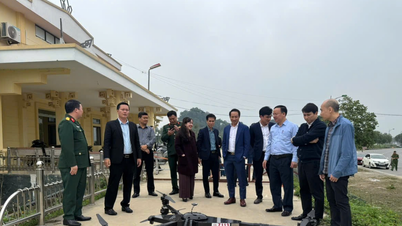
From the preparation stage, the local authorities coordinated with telecommunications companies to invest in network infrastructure and install AI camera systems at key locations to serve monitoring, management, security, safety, and transparency. Administrative, operational, and reporting activities were carried out on an electronic document management system; information about the festival was disseminated through multiple media platforms including newspapers, radio and television, and digital platforms.
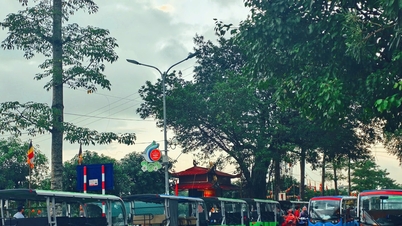
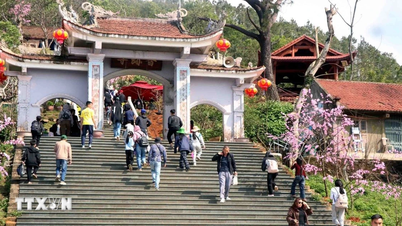
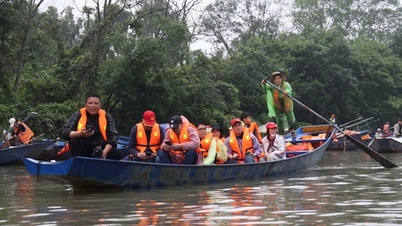
Notably, the management of entrance tickets and boat tickets is implemented synchronously using QR codes; a hotline is operated to receive feedback from tourists; and data on visitor numbers by time of day is collected and analyzed to proactively plan for regulation. In peak years, when the number of visitors can reach 45,000-50,000 per day, these technological solutions will help reduce the burden on the management system and contribute to improving the quality of the experience, limiting congestion and overcrowding.
A step in line with current trends is to promote the application of technology in tour guiding and interpretation. Besides the team of tour guides, automated guidance systems and QR code-based explanations help tourists proactively access information about historical sites, reducing manpower pressure during peak seasons and standardizing the content of presentations. The implementation of these solutions also demonstrates the local government's responsiveness in concretizing the central and city's policies on the development of science, technology, innovation, and national digital transformation into the practical management of traditional festivals.
Alongside digital transformation, the rectification of festival activities continues to be a central focus. Measures to ensure security, traffic safety, fire prevention, and rescue are strictly implemented. Management of services, stalls, premises, and environmental sanitation is strengthened; and acts of soliciting, price gouging, commercial fraud, and encroachment on historical sites are resolutely dealt with.
The beautification of the landscape and the creation of a unified identity within the culturally and spiritually significant heritage site are identified as key tasks, aiming to build an image of the festival as "bright, green, clean, beautiful, safe, and smart." This approach shows that the festival is no longer a seasonal affair, but a long-term management challenge for the heritage space.
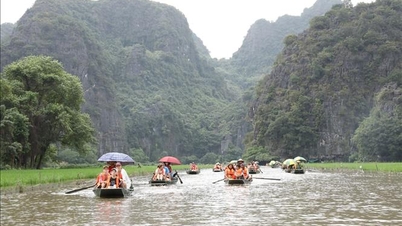
A noteworthy point in the 2026 plan is the orientation towards year-round tourism development at Huong Pagoda. From May to December, the locality will focus on developing cultural and spiritual tourism products, experiential tourism, and ecological tourism, linked to the four special national historical sites. Cultural, artistic, and sporting activities will be researched and organized in conjunction with characteristic periods such as Buddha's Birthday, the lotus and water lily seasons, creating additional attractiveness to encourage tourists to return outside of the main festival season.
Source: https://baovanhoa.vn/van-hoa/ky-vong-tu-nhung-thay-doi-203683.html


























































Comment (0)