

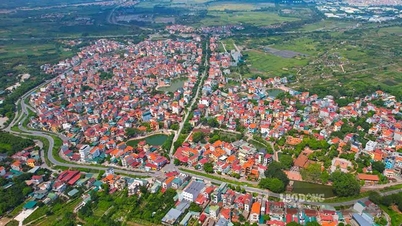
The campaign to enrich and clean up land data is being implemented nationwide by the Ministry of Natural Resources and Environment in coordination with the Ministry of Public Security and local authorities, aiming to complete the national land database, ensuring it is "accurate - complete - clean - vibrant - unified - shared". This is a concrete step in implementing the major policies of the Party and State on digital transformation, towards a modern, transparent land governance system that puts the people at the center.
A platform for serving the people faster and more transparently.
For many years, the Party and the State have considered the construction of a national land database as one of the six key pillars for developing e-government, moving towards digital government, digital economy , and digital society. Connecting and sharing data between ministries and agencies will innovate management methods, improve operational efficiency, and promote socio-economic development.
Resolution No. 57 of the Politburo on the development of science, technology, innovation, and national digital transformation has emphasized the role of data in modern governance. The government aims to ensure that by 2026, 100% of national databases will be reviewed, standardized, and capable of connectivity, sharing, and integration to serve administrative procedure reform and the provision of online public services.
According to Mr. Mai Van Phan, Deputy Director of the Land Management Department, Ministry of Natural Resources and Environment, building a national land database is an important foundation for all levels of government to serve the people faster and more transparently.
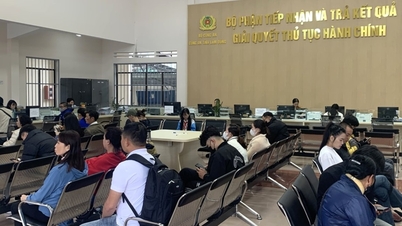
In the context of reorganizing the two-tiered local government model, complete and accurate land data will provide local authorities with the tools to process administrative procedures right at the commune, ward, and town levels. Citizens will no longer have to travel frequently, and documents will be processed electronically, saving time and costs.

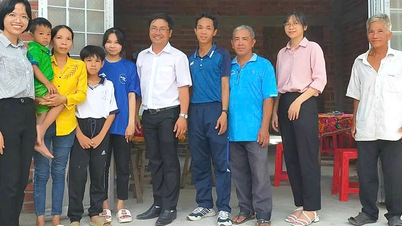
Complete and accurate land data will provide local authorities with the tools to handle administrative procedures right at the commune, ward, and town levels. (Photo: VNA)
Completing the land database not only serves transparent and efficient state management but also directly benefits citizens and businesses. When the data is "accurate, complete, clean, and active," land procedures can be processed through a one-stop mechanism at the National Public Service Portal, reducing time and costs while increasing transparency and accountability.
Citizen participation is a key factor.
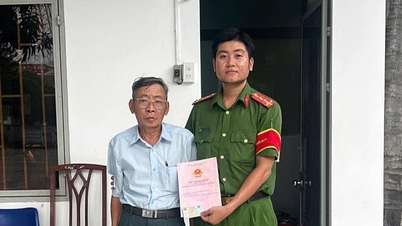
Mr. Phan stated that the participation and collaboration of citizens in providing, reviewing, supplementing, and verifying information with management agencies is highly commendable. This is an important step for the State and the people to jointly improve the national land database, better serving the resolution of administrative procedures and other online public services in the electronic environment.
For a long time, information about land users, including both land parcel data and personal information, has been compiled over different periods with uneven levels of standardization. Furthermore, people's unauthorized transactions or transfers using handwritten documents, without completing the procedures for ownership transfer or inheritance, have led to inaccurate and inconsistent data. Therefore, direct provision and verification of information by citizens is a key factor in ensuring the accuracy and integrity of the national land database.
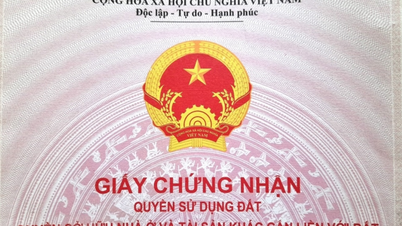
To declare their information, citizens only need to provide a copy of their land use right certificate and citizen identification card when requested by the task force; notarization is not required.
Notably, the Ministry of Public Security is collaborating with the Ministry of Natural Resources and Environment to develop a feature on the VNeID application that allows citizens to self-provide, check, and verify information about land and housing owners through the National Population Database. This facilitates convenient declaration, reduces paperwork, and ensures the safety and security of information.
Right from the plan's inception, the two Ministries developed a unified system of guidance documents and operational procedures for localities, while also requiring absolute safety and security during the data collection process.
Source: https://vtcnews.vn/lam-giau-lam-sach-du-lieu-dat-dai-vi-loi-ich-cua-chinh-nguoi-dan-ar972373.html
![[Photo] Prime Minister Pham Minh Chinh receives the Governor of Tochigi Province (Japan)](/_next/image?url=https%3A%2F%2Fvphoto.vietnam.vn%2Fthumb%2F1200x675%2Fvietnam%2Fresource%2FIMAGE%2F2025%2F12%2F16%2F1765892133176_dsc-8082-6425-jpg.webp&w=3840&q=75)
![[Image] Leaked images ahead of the 2025 Community Action Awards gala.](/_next/image?url=https%3A%2F%2Fvphoto.vietnam.vn%2Fthumb%2F1200x675%2Fvietnam%2Fresource%2FIMAGE%2F2025%2F12%2F16%2F1765882828720_ndo_br_thiet-ke-chua-co-ten-45-png.webp&w=3840&q=75)
![[Photo] Prime Minister Pham Minh Chinh receives Lao Minister of Education and Sports Thongsalith Mangnormek](/_next/image?url=https%3A%2F%2Fvphoto.vietnam.vn%2Fthumb%2F1200x675%2Fvietnam%2Fresource%2FIMAGE%2F2025%2F12%2F16%2F1765876834721_dsc-7519-jpg.webp&w=3840&q=75)
![[Live] 2025 Community Action Awards Gala](/_next/image?url=https%3A%2F%2Fvphoto.vietnam.vn%2Fthumb%2F1200x675%2Fvietnam%2Fresource%2FIMAGE%2F2025%2F12%2F16%2F1765899631650_ndo_tr_z7334013144784-9f9fe10a6d63584c85aff40f2957c250-jpg.webp&w=3840&q=75)





















































![[Photo] Prime Minister Pham Minh Chinh attends the Vietnam Economic Forum 2025](https://vphoto.vietnam.vn/thumb/402x226/vietnam/resource/IMAGE/2025/12/16/1765893035503_ndo_br_dsc-8043-jpg.webp)




























Comment (0)