


In 1602, Lord Nguyen Hoang established the Quang Nam garrison and appointed his sixth son as its governor (as an apprentice to succeed him). On his deathbed, Lord Nguyen Hoang instructed his sixth son, Nguyen Phuc Nguyen: “The land of Thuan Quang, to the north, is bordered by the formidable Ngang Mountain (Hoanh Son) and Gianh River (Linh Giang), and to the south by the sturdy Hai Van Mountain and Da Bia Mountain (Thach Bi Son). The mountains are rich in gold and iron, the sea is abundant in fish and salt; truly, it is a land for heroes to demonstrate their prowess.”
Our ancestors migrated south.
Thanks to the migration policies of enlightened rulers, various clans from the north gradually migrated south, forming villages in Quang Nam province. The formation of Vietnamese villages here began during the Tran dynasty. This is recorded in state historical documents as well as administrative and folk texts.
The stele of the Phan family church in Phong Thu village during the 13th year of Tu Duc (1861) recorded that the founding ancestor, in the 15th year of Quang Hoa of the Le dynasty (?), at the age of 43, obeyed the king's decree to "exploit the southern land, bring people to settle, and organize cultivation," and brought his wife and children to Quang Nam. He happily chose the Phong Thu area, settled the people, established a village, and cultivated the land. The stele of the six Nguyen, Than, Do, Cung, Tran, and Ngo clans in the Nha Cu/Cau area during the Thanh Thai era in the year Tan Suu (1901) also mentions that the founding ancestor had reclaimed the land there.
The stele at Bat Nhi village communal house, erected in the 13th year of Minh Menh's reign (1832), describes the formation of the village. "In the past, our village had nine clans who built the territory to form Bat Nhi commune. The land expanded, the population increased, creating three hamlets: Thai La, Dan Dien, and Binh Tri within Bat Nhi commune." The 17th-century book "O Chau Can Luc" mentions the place name Bat Nhi village: "showing honesty."
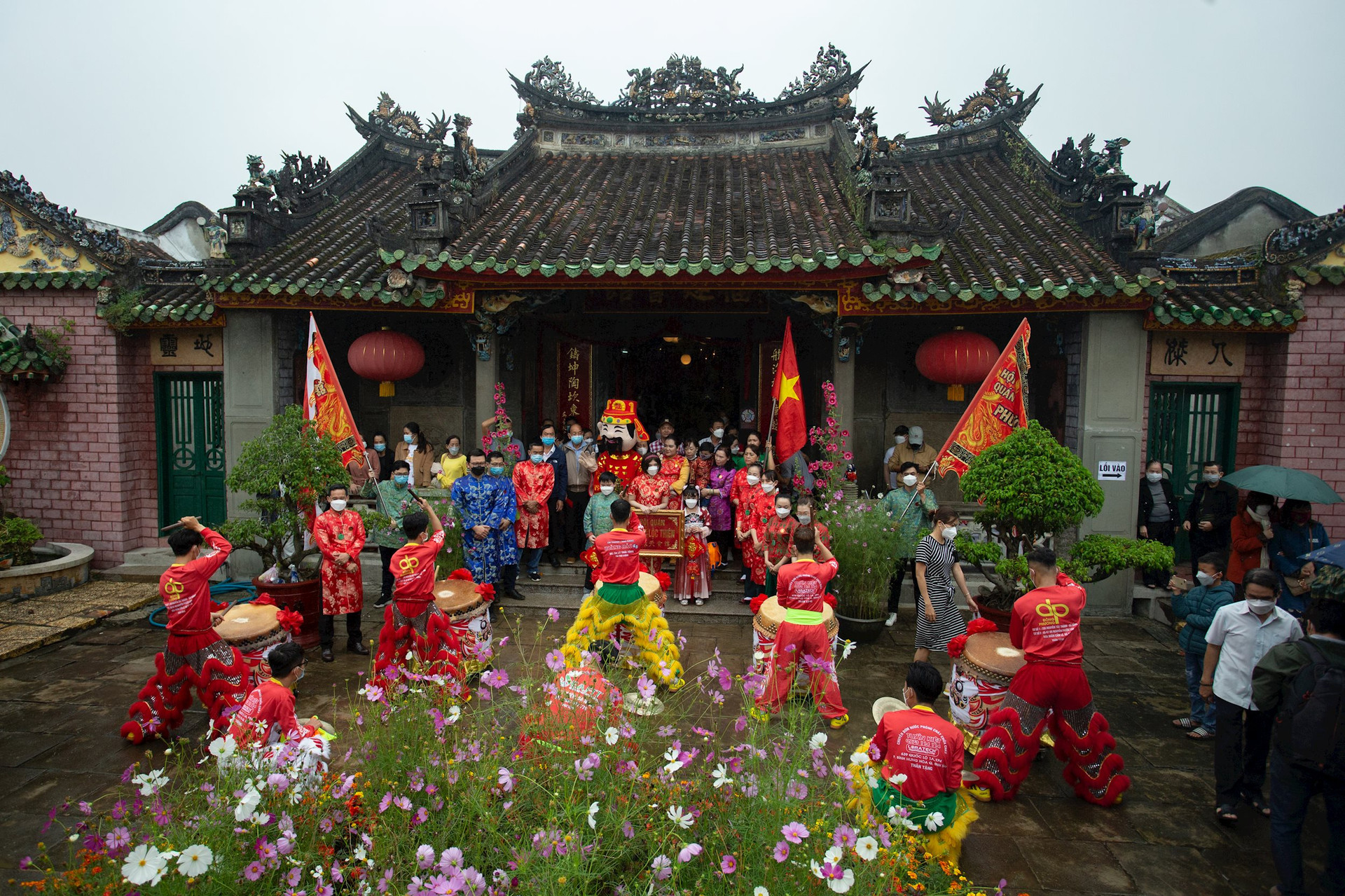
The mark of territorial expansion is evident in the ancestral clans within the villages. The stele at Ban Thach, erected in the second year of Khai Dinh (1917), recorded that the clans in the eastern section of Ban Thach commune, such as Nguyen, Vu, Le, Phan, Do, Tran, Vuong, Hoang, Luong, Mai, Diep, and Phan, had established temples to worship their ancestors and listed the names of the ancestors of each clan worshipped in the temples.
The inscription on the tombstone of the Truong Duc family in Lang Chau reads: "Lord Truong, originally from the North, migrated to the South during the Tran Dynasty. He cultivated this land, established a village, and gathered people to settle here, naming it Nam Cuong village. After settling and living there for a few years, he changed the name to Lang Chau village."
The first clan helped the later clan. A stele commemorating the merits of the Le clan, located in the same area as the aforementioned stele, states: “The Le clan were the first to settle and establish a livelihood in Lang Chau, Quang Nam province, our country. Upon arriving in the South, they received heartfelt assistance from Truong Quy Cong, the first village founder, as if he were their own brother.”
"Far away" gathering
Quang Nam province is the central point and also the heart of Vietnam, along the north-south axis; it connects mainland countries with island nations, forming a regional transit hub along the east-west corridor. With its favorable geographical location, coupled with the strategic vision of wise rulers, and the Nguyen lords' policies of winning hearts and minds and attracting foreign influence, Quang Nam became a land of opportunity and prosperity.
The bustling scene of international merchant ships at the Da Nang harbor at that time was captured by King Le Thanh Tong in his poem, "The five ancient ships sail with the sound of the Lo Hac River." Lo Hac refers to the name of an ancient country in what is now an island nation of Southeast Asia.
In 1523, a Portuguese man named Duarte Coelho came to Vietnam to negotiate trade. However, at this time, the political and social situation in Dai Viet was complex and chaotic due to its involvement with Mac Dang Dung, so the trade negotiations were unsuccessful. He then traveled south and settled in Quang Nam province in 1524.
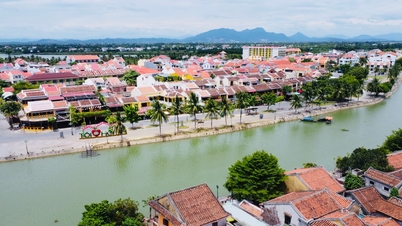
In 1535, Antonio da Faria (a Portuguese captain) of the ship Albuquerque anchored at the mouth of Da Nang harbor to rest and explore the area for a few days. He considered Hoi An an important trading and maritime center for the Portuguese. The British also visited Quang Nam province from 1613. The Dutch established a trading post in Hoi An in early 1636.
In the spring of 1719, Lord Nguyen Phuc Chu "visited the Quang Nam palace, reviewed the troops, then went to Hoi An town. Seeing a bridge to the west of the town, where merchant ships gathered, he named it Lai Vien Bridge and inscribed it on a golden plaque."
The painting "The sea-gazing watchtower with sails like woven threads, the Lai Vien bridge frequently crossed by horse-drawn carriages" from the Quang Nam Provincial Chronicle remains familiar to this day. The Lai Vien bridge, with its profound symbolic meaning, marks an important milestone in Quang Nam's role in the process of territorial expansion.
Source: https://baodanang.vn/mo-rong-ve-nam-3323824.html






![[QUIZ] Under what circumstances was Trịnh Công Sơn's passion for music "awakened"?](https://vphoto.vietnam.vn/thumb/402x226/vietnam/resource/IMAGE/2026/05/20/1779228580019_fb_thiet-ke-chua-co-ten-5072-jpg.webp)












![[Photo] Capturing the moment the tide recedes at Yen Binh Son rapids - a million-year-old scenic spot in Quang Ngai.](https://vphoto.vietnam.vn/thumb/1200x675/vietnam/resource/IMAGE/2026/05/19/1779175463885_yen9-1199-jpg.webp)
![[Photo] National Assembly Chairman Tran Thanh Man attends the groundbreaking ceremony for the National Highway 1A spatial axis project.](https://vphoto.vietnam.vn/thumb/1200x675/vietnam/resource/IMAGE/2026/05/19/1779161360398_ndo_br_bnd-1412-jpg.webp)
















































Comment (0)