

It's a win-win situation, with risks shared between both parties.
In the implementation of the Project to cultivate 1 million hectares of high-quality, low-emission rice, the issue of linking production and consumption has been identified as a crucial link for the Project to be effective and bring harmonious benefits to farmers, businesses, and localities. Experience over the years has shown that without solving the problem of linkage, even high-yield rice production will struggle to provide sustainable income for farmers.
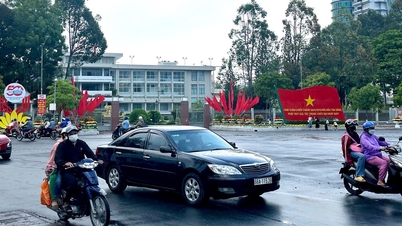
In Ho Dac Kien commune ( Can Tho City), before the project was implemented, the link between farmers and businesses was weak and lacked long-term commitments. Farmers mainly produced according to traditional practices, each working independently, and businesses purchased on a seasonal basis, leaving almost all the risks regarding prices and output to the rice growers.
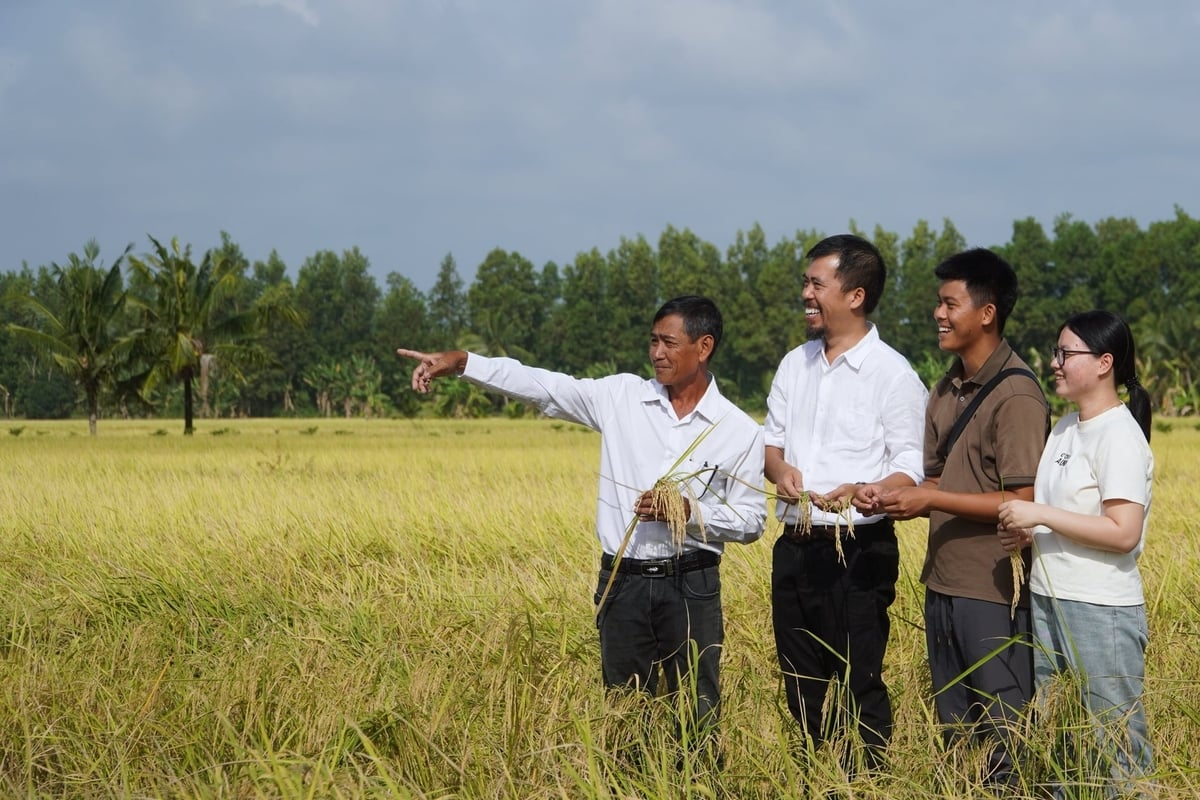
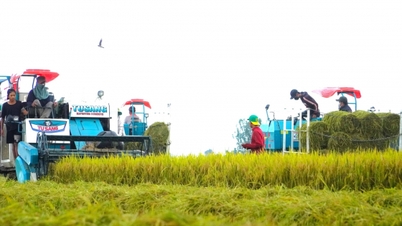
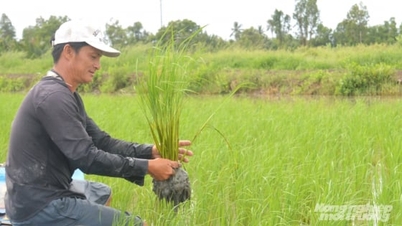
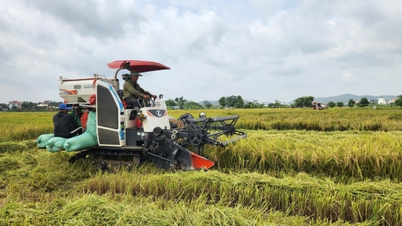
The rice fields of the 30/4 Cooperative (Ho Dac Kien commune, Can Tho city) have had their rice purchased by a partner enterprise for five production seasons. Photo: Kim Anh.
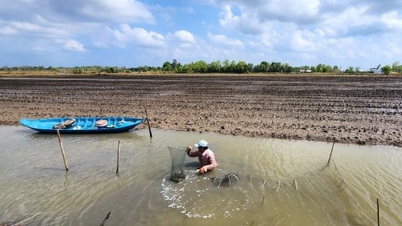
Mr. Nguyen Thanh Hieu, head of the Viet Rice Cooperative (Ho Dac Kien commune), said that before participating in the cooperative models, most members of the cooperative grew rice traditionally. There was no common plan for planting, fertilizing, and spraying pesticides; each household followed their own experience. When harvested, the rice was mainly sold to traders, and prices were unstable, entirely dependent on the market at any given time.
This situation means that rice production efficiency in Ho Dac Kien commune is not commensurate with the land's potential and creates difficulties for businesses when developing raw material areas.
Recognizing that linkages are a solution to increase farmers' income, the commune government has proactively reoriented production, helping farmers increase income and reduce costs through three pillars: shifting to high-value rice varieties; applying synchronized techniques in all stages; and strengthening linkages in a mutually beneficial way, with risks shared.
Mr. Nguyen Van My, Chairman of the People's Committee of Ho Dac Kien commune, affirmed: "Without venturing into the wider world, without innovating methods and abandoning old practices, development is impossible." With this spirit, the commune is stepping up propaganda and mobilization efforts to encourage farmers to participate in close cooperation with businesses. At the same time, the commune government is committed to "rolling out the red carpet" to welcome businesses to invest and cooperate with the local people.
On December 16th, in Ho Dac Kien commune, several cooperatives and agricultural groups in the area, cultivating rice according to the procedures of the 1 million hectare high-quality, low-emission rice project, signed a rice purchase agreement for the 2026-2027 period with TD Soc Trang Organic Rice Agriculture Joint Stock Company (Ong Du Rice brand).
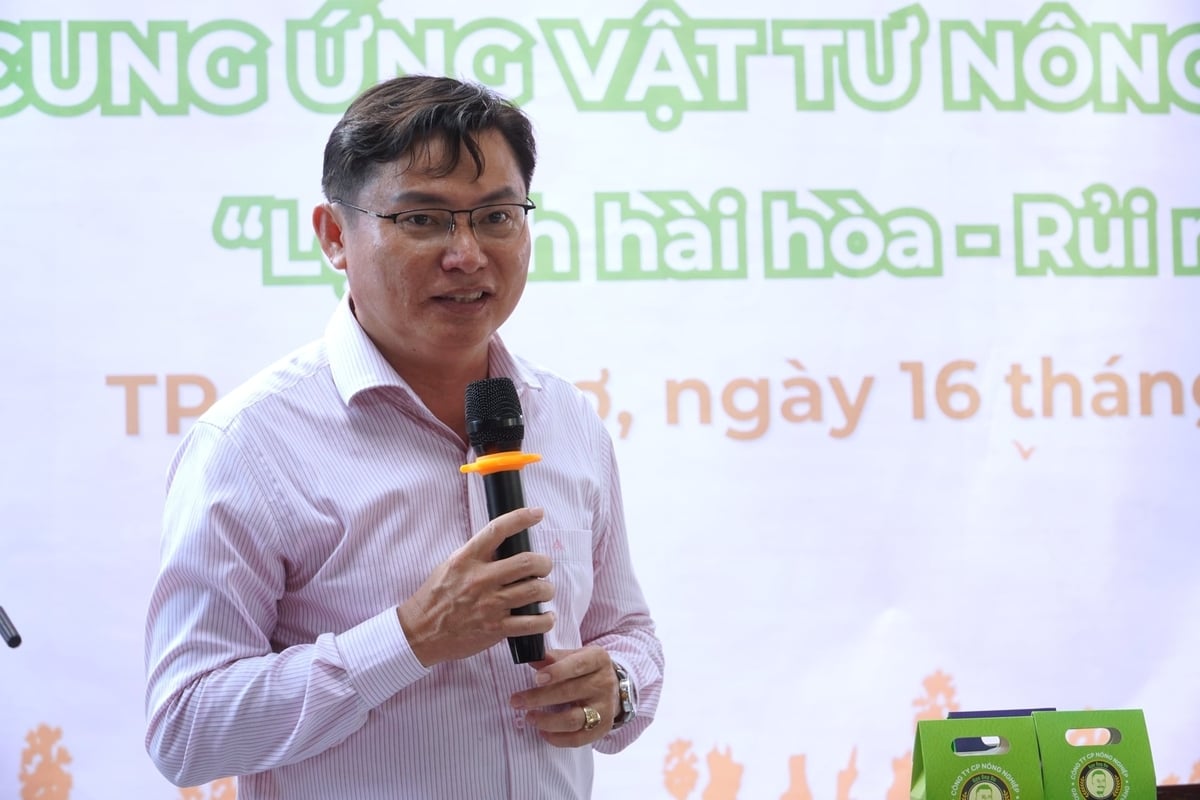
Chairman of the People's Committee of Ho Dac Kien commune pledged to create favorable conditions for farmers and businesses to develop a strong linkage. Photo: Kim Anh.
The company will purchase approximately 150 hectares of organically grown ST25 rice from three units: Dong Day Agricultural Cooperative (Thanh Thoi An commune), Viet Rice Cooperative, and 30/4 Cooperative (Ho Dac Kien commune).
According to the agreement, the company will purchase all of the ST25 rice crop at market price, and will also invest in certified seeds, organic fertilizers, and rice planting aircraft in advance. These investments will only be settled at the end of the season and will not accrue interest.
Forming a 1,000-hectare integrated farming area.
Mr. Le Minh Chi, head of the 30/4 Cooperative Group (Ho Dac Kien commune), said that having businesses guarantee the purchase of rice has created confidence and motivation for farmers to boldly produce according to low-emission processes.
To date, the cooperative has partnered with TD Soc Trang Organic Rice Agricultural Joint Stock Company to produce five consecutive crops, achieving stable yields, fewer pests and diseases in the rice, and reducing the number of pesticide sprayings.
“The adjacent field is cultivating OM18 rice, yielding about 800kg/1,300m2, with current rice prices ranging from 6,300 to 6,500 VND/kg. Meanwhile, ST25 rice, cultivated using high-quality, low-emission rice farming methods at the Cooperative, achieves a yield of 900-1,000kg/1,000m2. Businesses are purchasing it at 9,100 VND/kg. In addition, thanks to reduced input costs, profits have increased by approximately 3-4 million VND/1,300m2,” Mr. Chi said.
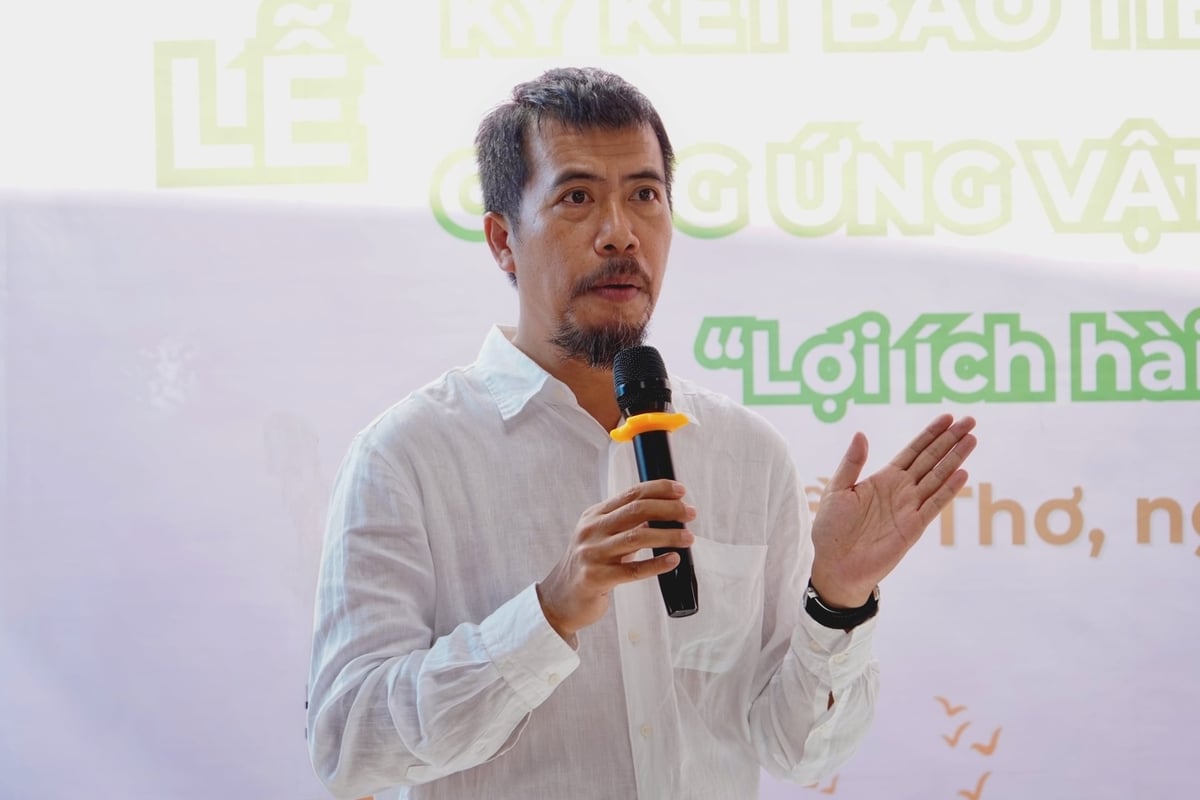
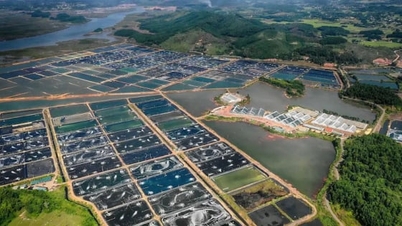
Mr. Tram Du, owner of the Ong Du Rice brand, shared his plans to build a self-contained rice milling factory right in the raw material area where the company is currently developing. Photo: Kim Anh.
After more than two years of implementation, TD Soc Trang Organic Rice Joint Stock Company has partnered with farmers to implement high-quality, low-emission rice cultivation processes and purchase their products from an area of approximately 1,000 hectares. The scope of this partnership is mainly concentrated in localities such as Ho Dac Kien, An Ninh, Tran De, Lieu Tu, Thanh Thoi An, Thanh Tri, and My Xuyen…
Mr. Tram Du, General Director of TD Soc Trang Organic Rice Joint Stock Company, said that the company has built the Ong Du Rice brand with a chain of 30 stores selling organically produced rice products nationwide.
Initially, businesses primarily purchased based on demand, without price commitments, making it difficult to establish sustainable raw material areas. However, with the implementation of the 1 million hectare high-quality, low-emission rice project, businesses boldly shifted to building strong linkages with farmers and cooperatives to control quality from the field to the store.
According to Mr. Du, the average profit from these collaborative models reaches 40-50 million VND/hectare, double that of traditional farming. Currently, the Ong Du Rice brand has established 30 branches in 36 provinces and cities nationwide and introduced its products into many large retail supermarket chains in Vietnam, creating a stable market for high-quality, low-emission rice.
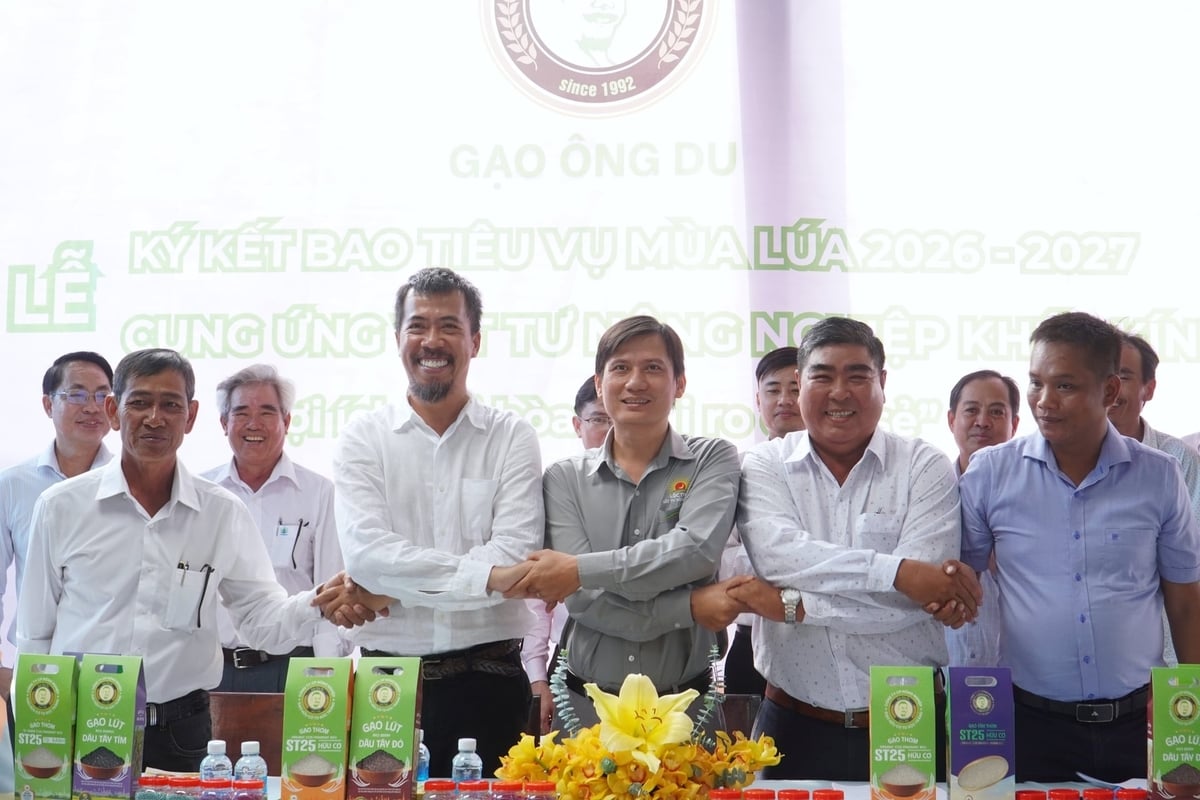
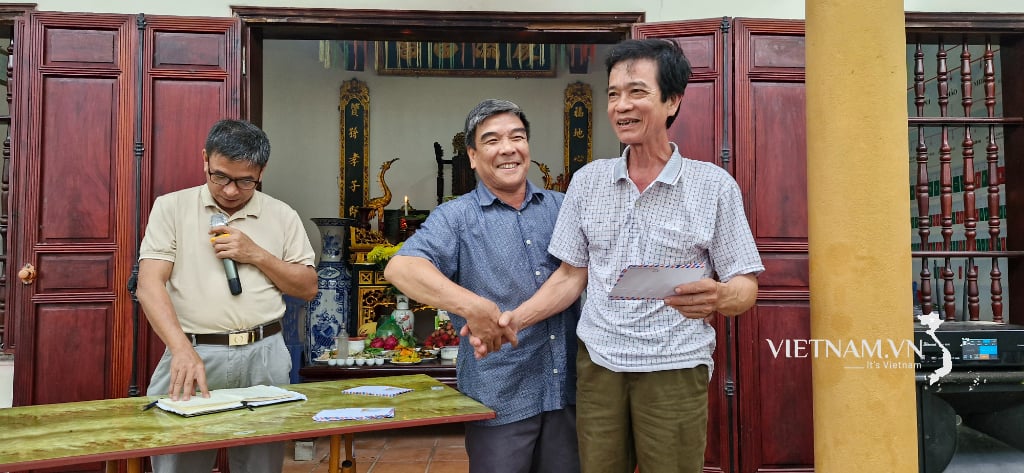
Several cooperatives and associations in Can Tho City have signed contracts to purchase rice from Ong Du Rice for the period 2026-2027. Photo: Kim Anh.
Mr. Du confided: "Initially, the transition was very difficult, especially persuading and guiding farmers to cultivate according to the established procedures. Thanks to the support of specialized agencies in Can Tho City and the local government, farmers saw clear benefits: fewer pests and diseases, stable yields, and good prices, thus agreeing to the transition."
The approach that Ong Du Rice is taking is somewhat similar to some of the linkage models that have been and are being implemented in the Mekong Delta. However, according to the company's leadership, the unique characteristic of the unit is building a sales chain with its own distinct identity, not doing business on a consignment basis but through large supermarkets and specialized sales systems. Thanks to this, consumers can easily identify the product as being produced from rice fields in Can Tho City, without any mixing with other types of rice.
Source: https://nongnghiepmoitruong.vn/mot-doanh-nghiep-can-tho-bao-tieu-1000ha-lua-thuoc-de-an-1-trieu-ha-d789767.html
![[Photo] Prime Minister Pham Minh Chinh receives the Governor of Tochigi Province (Japan)](/_next/image?url=https%3A%2F%2Fvphoto.vietnam.vn%2Fthumb%2F1200x675%2Fvietnam%2Fresource%2FIMAGE%2F2025%2F12%2F16%2F1765892133176_dsc-8082-6425-jpg.webp&w=3840&q=75)

![[Image] Leaked images ahead of the 2025 Community Action Awards gala.](/_next/image?url=https%3A%2F%2Fvphoto.vietnam.vn%2Fthumb%2F1200x675%2Fvietnam%2Fresource%2FIMAGE%2F2025%2F12%2F16%2F1765882828720_ndo_br_thiet-ke-chua-co-ten-45-png.webp&w=3840&q=75)
![[Photo] Prime Minister Pham Minh Chinh receives Lao Minister of Education and Sports Thongsalith Mangnormek](/_next/image?url=https%3A%2F%2Fvphoto.vietnam.vn%2Fthumb%2F1200x675%2Fvietnam%2Fresource%2FIMAGE%2F2025%2F12%2F16%2F1765876834721_dsc-7519-jpg.webp&w=3840&q=75)
![[Live] 2025 Community Action Awards Gala](/_next/image?url=https%3A%2F%2Fvphoto.vietnam.vn%2Fthumb%2F1200x675%2Fvietnam%2Fresource%2FIMAGE%2F2025%2F12%2F16%2F1765899631650_ndo_tr_z7334013144784-9f9fe10a6d63584c85aff40f2957c250-jpg.webp&w=3840&q=75)































![[Live] Closing Ceremony and Award Presentation for the "Impressive Vietnam Tourism" Video/Clip Creation Contest 2025](https://vphoto.vietnam.vn/thumb/402x226/vietnam/resource/IMAGE/2025/12/17/1765974650260_z7273498850699-00d2fd6b0972cb39494cfa2559bf85ac-1765959338756946072104-627-0-1338-1138-crop-1765959347256801551121.jpeg)














Comment (0)