

Recognizing the One Commune One Product (OCOP) program as a key solution to enhance the value of agricultural products and increase people's income, Lam Giang commune in Lao Cai province is striving to shift its production mindset from small-scale to concentrated commodity production. However, to realize the existing potential of its land and climate into standardized products, the locality faces many challenges that need to be addressed comprehensively.
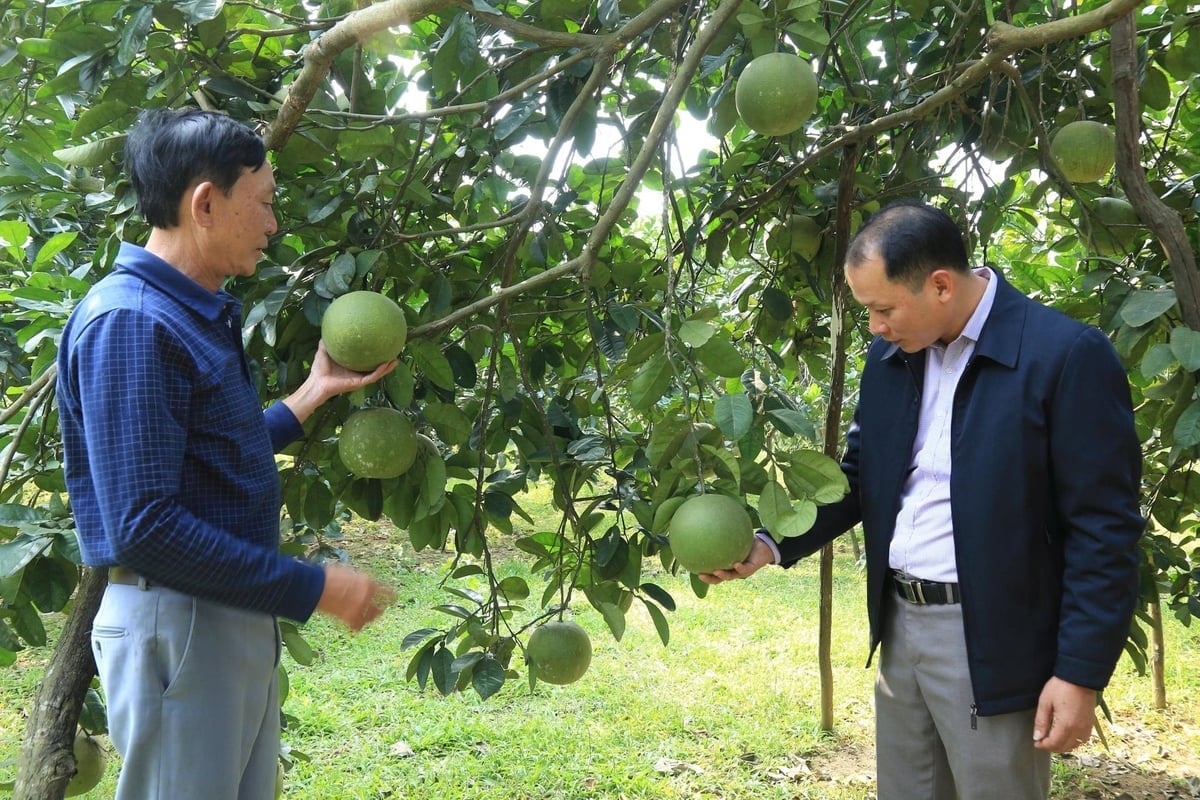
Despite its great potential for agricultural and forestry development, Lam Giang commune currently only has one OCOP (One Commune One Product) product. Photo: Thanh Tien.
Great potential, but only one OCOP product so far.
The current Lam Giang commune was formed by merging Lang Thip commune and the former Lam Giang commune. The commune has a total natural area of nearly 180 square kilometers, comprising 21 villages. Lam Giang's geographical characteristics offer many favorable conditions for the development of a comprehensive agricultural and forestry economy , possessing a large forest area suitable for forestry and medicinal plant cultivation under the forest canopy.
In addition, the commune has fertile alluvial plains along the Red River, enriched annually by sediment. The soil here is considered very suitable for developing fruit trees and short-term crops. Despite the great potential, the actual development of local specialty products according to OCOP standards has not yet reached its full potential.
To date, the commune only has one product that has achieved OCOP 3-star standard: the green-skinned pomelo of Mr. Vu Gia Bien's family in Phu Lam village. This number is still modest compared to the scale of the commune's diverse agricultural products and the wide variety of crops it produces. However, the appearance of this first OCOP product has initially affirmed the quality, unique characteristics, and correct direction in enhancing the value of local agricultural products.
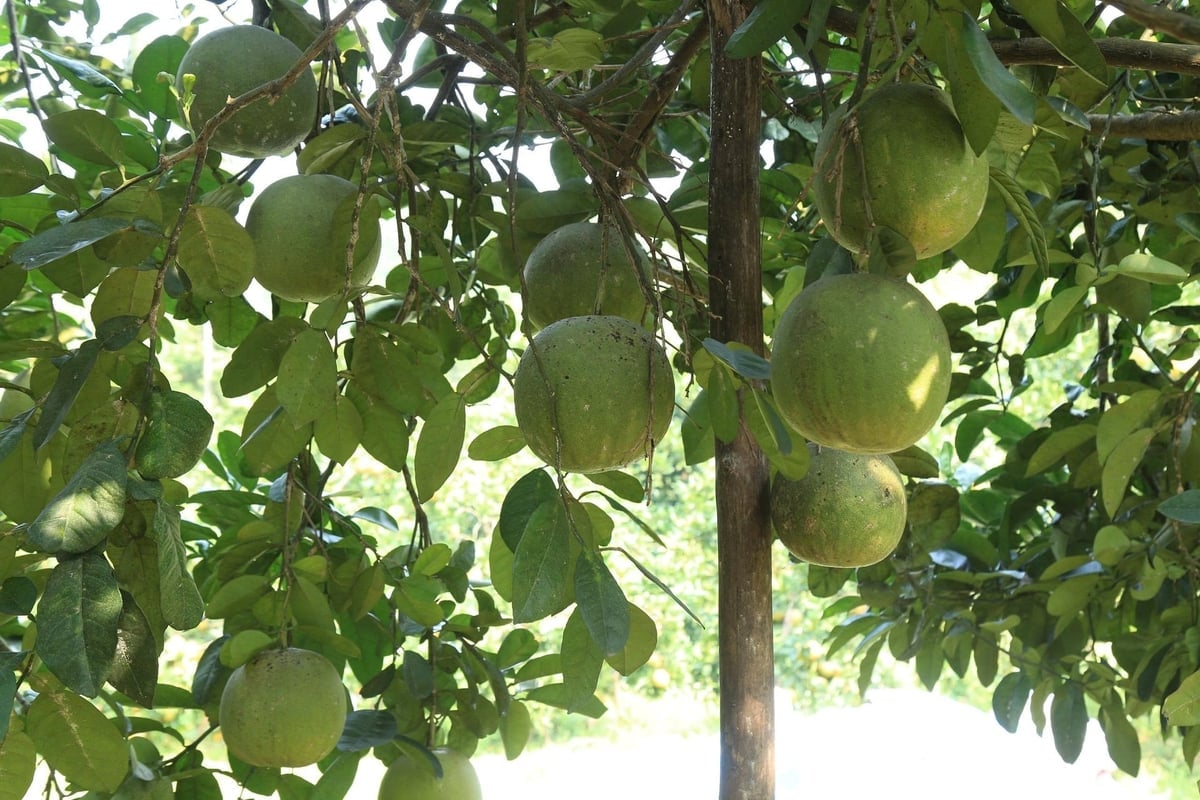
The green-skinned pomelos from Mr. Vu Gia Bien's farm meet the OCOP 3-star product standard. Photo: Thanh Tien.
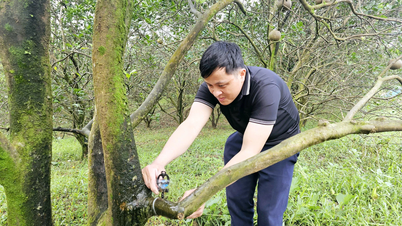
To understand the process of creating an OCOP-certified product, one needs to look at the actual farming methods at Mr. Vu Gia Bien's model farm. Unlike traditional farming practices that often overuse chemicals to reduce labor, Mr. Bien applies organic farming processes, strictly adhering to food safety and hygiene requirements.
Regarding farming techniques, Mr. Bien emphasized the principle of "saying no to herbicides." Instead, his family uses a lawn mower to remove weeds regularly. This mechanical method, although more labor-intensive, offers a dual benefit: it retains the necessary soil moisture while protecting beneficial microorganisms in the soil, creating an environment for sustainable plant growth.
Regarding plant nutrition, Mr. Bien prioritizes the use of organic fertilizers that have been composted for 3 to 4 months or microbial organic fertilizers. This rigorous technical process is the core element that helps Lam Giang green pomelo products meet the criteria of OCOP products, satisfying consumer demand for safety and quality.
Although the green pomelo cultivation model has proven economically effective, scaling it up on a large scale still faces many obstacles. According to local farmers, pomelo is a demanding crop, requiring growers to have a thorough understanding of cultivation techniques and systematic investment.
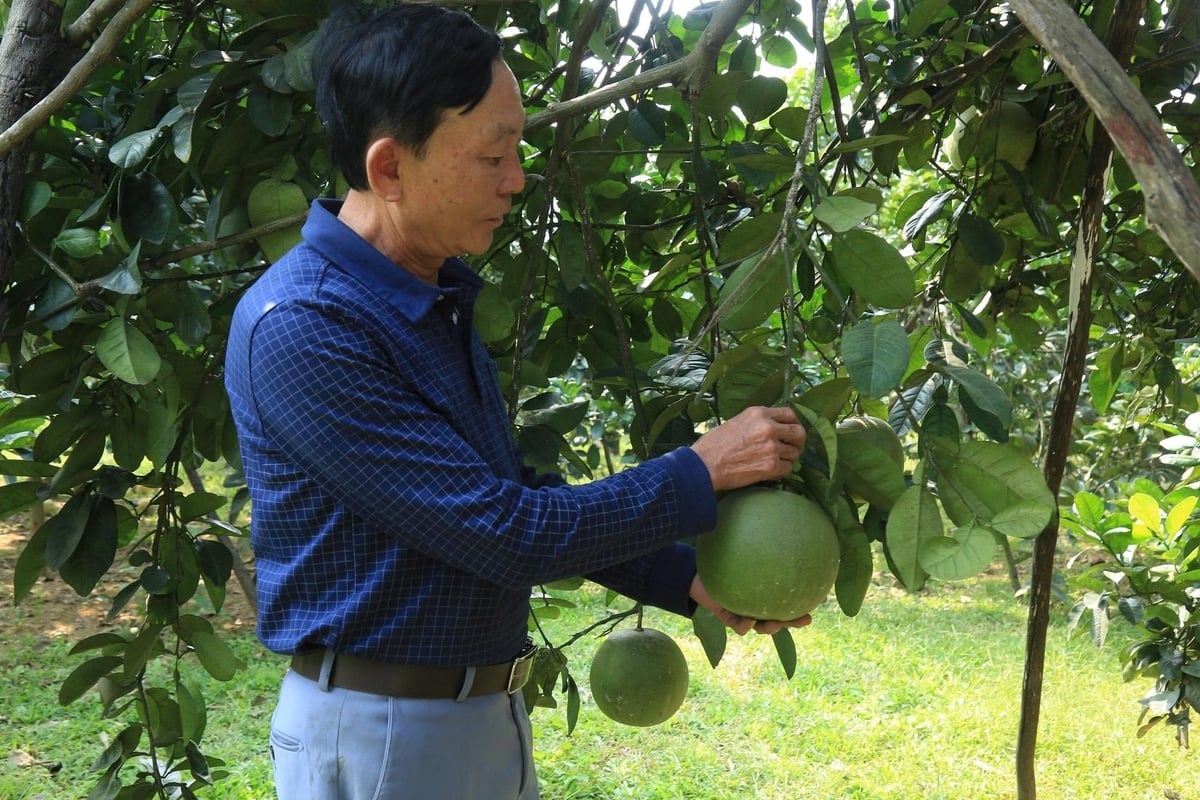
Due to a lack of capital and technical expertise, many households have been unable to expand their production scale. Photo: Thanh Tien.
The biggest challenge currently facing the people of Lam Giang is the initial investment cost. Reclaiming hilly and riverside land for fruit tree cultivation requires significant capital for leveling the ground, improving irrigation systems, and purchasing seedlings. Many households, despite wanting to diversify their crops, are hesitant due to concerns about risks and lack of capital.
Mr. Bien and many other households petitioned the government to implement policies supporting farmers with preferential loan packages, financial assistance for land leveling, and the supply of high-quality, disease-free seedlings.
Besides capital, the scale of production is also a crucial factor in the economic equation. Small-scale production makes it difficult for farmers to access large markets and often leads to price manipulation by traders. Only when many households participate in production, forming concentrated commodity zones with large and stable output, can localities attract large businesses and traders to purchase their products. The formation of specialized farming zones is also a prerequisite for building brands, enhancing product value, and increasing sustainable income for the people.
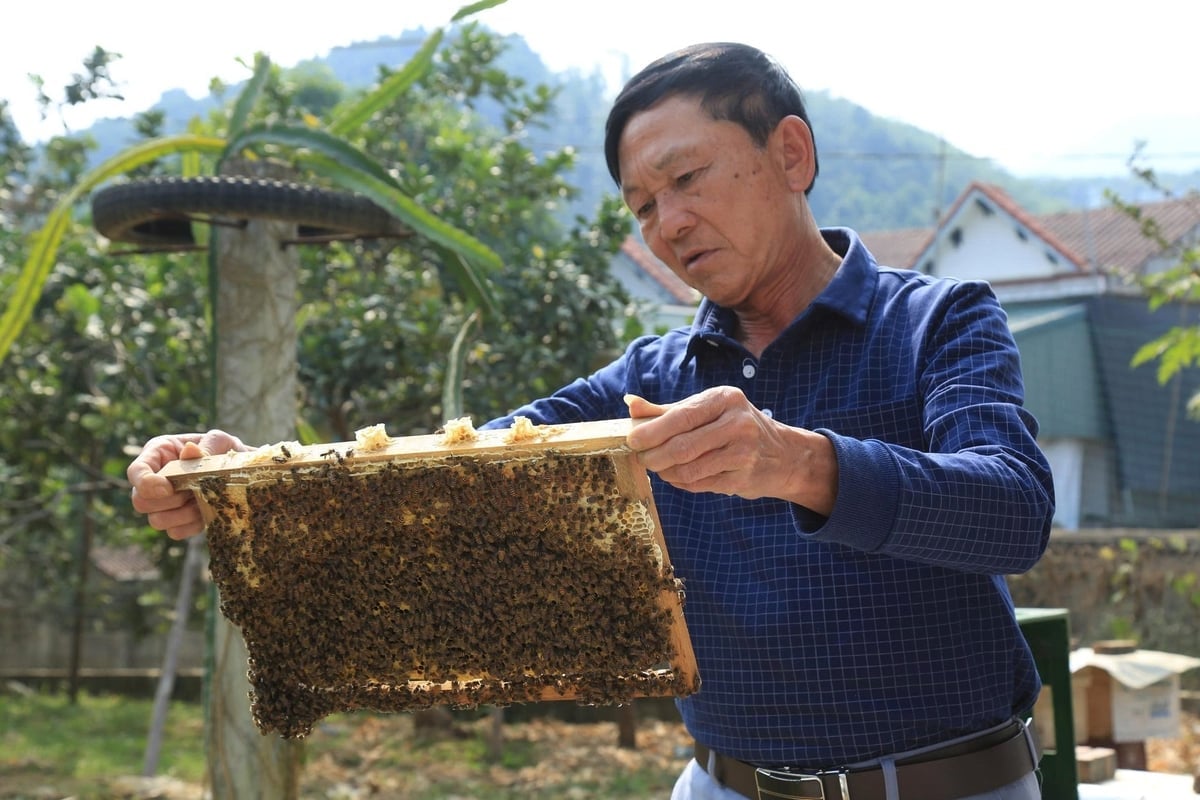
Honey products are also a strength of the Lam Giang mountain region. Photo: Thanh Tien.
Product diversification, development of green agriculture.
Field surveys show that Lam Giang commune also possesses great potential for developing a diverse range of other OCOP products. The commune has already established several areas for growing high-value fruit trees and medicinal plants such as longan, lychee, royal banana, and organic cinnamon… Besides crop cultivation, beekeeping for honey production is also thriving, providing stable income for dozens of households. These are important raw materials for the locality to build dossiers for subsequent OCOP products.
Regarding future strategic direction, Mr. Khong Van Hau, Vice Chairman of the People's Committee of Lam Giang commune, affirmed that the locality will continue to focus on comprehensive and sustainable economic development. The goal is to restructure the agricultural sector, shifting from a quantity-oriented production mindset to one that emphasizes quality, efficiency, and added value.
"The commune will promote rural economic development associated with building smart and modern new rural areas. Special attention will be paid to developing green agriculture, high-tech agriculture, and developing OCOP products from key agricultural products and specialties such as longan, lychee, banana, honey, etc.," Mr. Hau said.
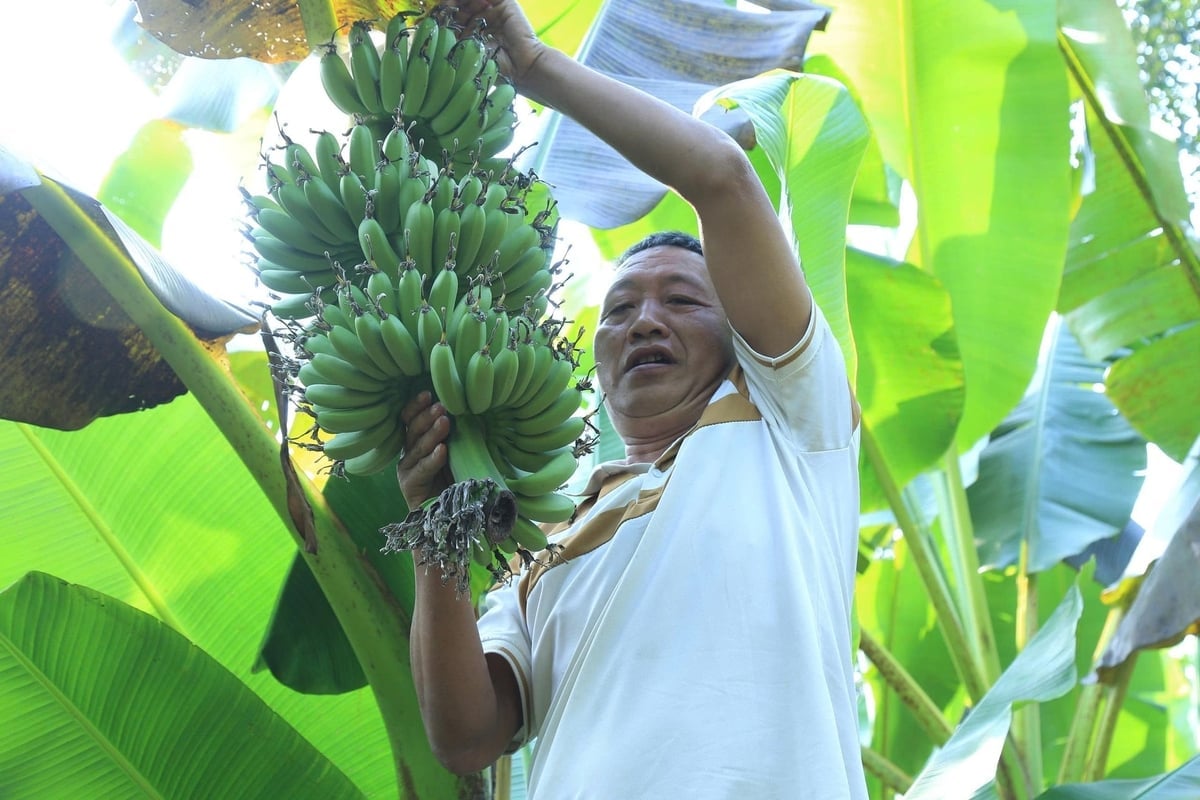
Lam Giang commune aims to develop its key agricultural products into OCOP (One Commune One Product) products to increase their value. Photo: Thanh Tien.
Alongside regional production planning, the Lam Giang commune government has also identified brand building and product promotion as a key task. Standardizing products according to OCOP criteria, attaching traceability labels, and listing products on e-commerce platforms are considered crucial solutions for expanding the consumer market.
The development of OCOP products in Lam Giang is not simply a movement, but a strategic direction to effectively exploit land resources and improve the farming skills of the people. The initial success of the green pomelo product and the clear directions of the local government are important foundations for Lam Giang to achieve the goal of sustainable poverty reduction and change the face of the rural economy in the coming period.
Source: https://nongnghiepmoitruong.vn/tiem-nang-lon-dua-nong-san-chu-luc-cua-xa-lam-giang-thanh-san-pham-ocop-d788940.html

![[Photo] Prime Minister Pham Minh Chinh receives Lao Minister of Education and Sports Thongsalith Mangnormek](/_next/image?url=https%3A%2F%2Fvphoto.vietnam.vn%2Fthumb%2F1200x675%2Fvietnam%2Fresource%2FIMAGE%2F2025%2F12%2F16%2F1765876834721_dsc-7519-jpg.webp&w=3840&q=75)
![[Image] The tenacious fighting spirit of Vietnamese women's football](/_next/image?url=https%3A%2F%2Fvphoto.vietnam.vn%2Fthumb%2F1200x675%2Fvietnam%2Fresource%2FIMAGE%2F2025%2F12%2F17%2F1765990260956_ndo_br_4224760955870434771-copy-jpg.webp&w=3840&q=75)
![[Photo] Prime Minister Pham Minh Chinh receives the Governor of Tochigi Province (Japan)](/_next/image?url=https%3A%2F%2Fvphoto.vietnam.vn%2Fthumb%2F1200x675%2Fvietnam%2Fresource%2FIMAGE%2F2025%2F12%2F16%2F1765892133176_dsc-8082-6425-jpg.webp&w=3840&q=75)
![[Image] Leaked images ahead of the 2025 Community Action Awards gala.](/_next/image?url=https%3A%2F%2Fvphoto.vietnam.vn%2Fthumb%2F1200x675%2Fvietnam%2Fresource%2FIMAGE%2F2025%2F12%2F16%2F1765882828720_ndo_br_thiet-ke-chua-co-ten-45-png.webp&w=3840&q=75)
![[Live] 2025 Community Action Awards Gala](/_next/image?url=https%3A%2F%2Fvphoto.vietnam.vn%2Fthumb%2F1200x675%2Fvietnam%2Fresource%2FIMAGE%2F2025%2F12%2F16%2F1765899631650_ndo_tr_z7334013144784-9f9fe10a6d63584c85aff40f2957c250-jpg.webp&w=3840&q=75)







































![[Live] Closing Ceremony and Award Presentation for the "Impressive Vietnam Tourism" Video/Clip Creation Contest 2025](https://vphoto.vietnam.vn/thumb/402x226/vietnam/resource/IMAGE/2025/12/17/1765974650260_z7273498850699-00d2fd6b0972cb39494cfa2559bf85ac-1765959338756946072104-627-0-1338-1138-crop-1765959347256801551121.jpeg)














Comment (0)